What happens when one of Japan’s most celebrated anime directors takes the reins of the most revered high-fantasy universe in cinematic history? For over two decades, Middle-earth on screen has been defined by the breathtaking landscapes of New Zealand and live-action grandeur. Yet, the jaw-dropping preview of The Lord of the Rings: The War of the Rohirrim has completely shattered expectations across the entertainment world, proving that traditional Japanese hand-drawn animation might just be the most electrifying canvas for J.R.R. Tolkien’s legendary lore yet.
Set roughly 183 years before the events of The Fellowship of the Ring, this groundbreaking feature film bridges the visionary craftsmanship of legendary director Kenji Kamiyama (renowned worldwide for Ghost in the Shell: Stand Alone Complex and Blade Runner: Black Lotus) with executive producer Peter Jackson and franchise architect Philippa Boyens. As anticipation surges to a fever pitch, anime enthusiasts and Tolkien scholars alike are discovering that this daring cinematic project is far more than a spin-off; it is an epoch-defining anime masterclass.
The Untold Saga of Helm Hammerhand and the Siege of the Hornburg
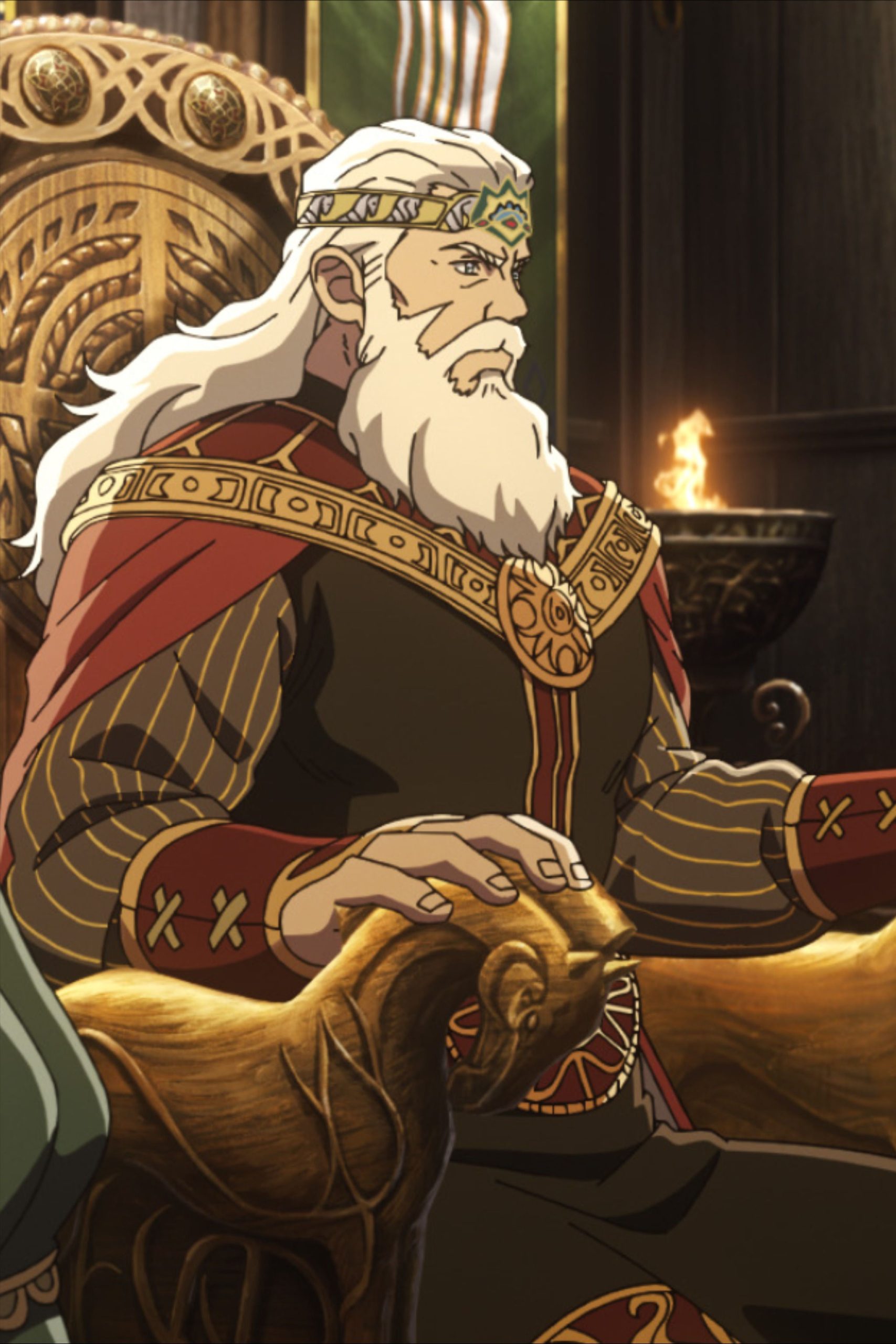
While casual viewers recognize Helm’s Deep as the fortress where King Théoden made his heroic stand, few know the tragic and blood-soaked legend behind its name. The Lord of the Rings: The War of the Rohirrim explores the tumultuous reign of Helm Hammerhand, the ninth King of Rohan, voiced with seismic authority by acclaimed actor Brian Cox (Succession).
The conflict ignites when Freca, an arrogant Dunlending lord of royal Rohirric blood, attempts to muscle his way onto the throne of Edoras by demanding a marriage between his cunning son Wulf and Helm’s daughter, Hèra. When Helm kills Freca with a single bare-knuckle punch during a bitter council meeting, Wulf swears absolute annihilation upon Rohan. What follows is a brutal war of survival that pushes the Horse-lords to the precipice of ruin, forcing Helm and his people to seek refuge in the mountain stronghold of the Hornburg during the unforgiving Long Winter.
Hèra: A Fierce Protagonist Forged in Blood and Snow
At the beating heart of this animated saga stands Hèra, brought to vibrant life by voice actress Gaia Wise. While Tolkien’s original appendices left Helm’s daughter unnamed, screenwriters Phoebe Gittins and Arty Papageorgiou expanded her narrative into a multifaceted warrior and reluctant leader. Unlike conventional fantasy heroines, Hèra is neither a passive royal maiden nor an invincible fantasy trope. She embodies the fiercely resilient warrior culture of the Rohirrim, battling on horseback and commanding shield walls amidst freezing blizzard conditions.
Her desperate struggle against Wulf, voiced with chilling nuance by Luke Pasqualino, serves as the driving emotional engine of the narrative. Wulf is not a mindless Orc chieftain; he is a vengeful tactician driven by personal vendetta, leading an army of Dunlendings, Mercenaries, and terrifying Oliphaunts to burn Rohan to ash. Much like how modern anime blockbusters on Haikyu!! The Dumpster Battle harness deep personal rivalries, the friction between Hèra and Wulf delivers staggering dramatic weight.
Kenji Kamiyama and Sola Entertainment: The Marriage of Anime and Western Fantasy
Bringing Middle-earth into the anime medium required an animation studio capable of honoring Peter Jackson’s iconic visual language while delivering hyper-fluid action sequences. Produced by Joseph Chou and animated by Tokyo-based Sola Entertainment, the production blends hand-drawn 2D artistry with cinematic depth of field. Every cavalry charge, axe swing, and sweeping vista of the Riddermark resonates with historical weight and physical consequence.
The visual execution echoes the ambition seen in other revolutionary anime adaptations covered on why Dandadan is breaking the internet, where visionary direction turns classic tropes into sensational visual fireworks. Under Kamiyama’s meticulous eye, the film maintains complete continuity with Wētā Workshop’s iconic armor designs and Alan Lee’s conceptual illustrations, guaranteeing that longtime fans feel immediately grounded in Tolkien’s mythos.
Miranda Otto Returns as Éowyn: Bridging Two Golden Ages of Fantasy
In a deeply emotional touch that links the animated prequel to the classic film trilogy, Miranda Otto reprises her role as Éowyn, serving as the story’s narrator. Her spoken introduction provides mythic resonance, framing Helm Hammerhand’s tragic descent and Hèra’s courage as the ancient foundational legends that inspired her own stand against the Witch-king of Angmar centuries later.
This generational continuity enriches the entire tapestry of Middle-earth, proving that epic storytelling can seamlessly transcend artistic mediums, much like the generational clashes explored in JoJo’s Bizarre Adventure: Steel Ball Run. When Helm wanders into the freezing snow unarmed, striking fear into the hearts of Dunlending invaders like a vengeful snow wraith, the mythic atmosphere will leave viewers breathless.
Why The War of the Rohirrim Sets a Precedent for the Anime Industry
The worldwide release of The Lord of the Rings: The War of the Rohirrim marks an undeniable milestone in cinematic history. For decades, major Hollywood studios viewed anime as a niche format. Today, Warner Bros. Pictures and New Line Cinema have entrusted Middle-earth’s theatrical future to a Japanese animation crew.
- Authentic Tolkien lore: Faithfully adapted from the rich appendices of The Return of the King.
- A-list creative ensemble: Directed by Kenji Kamiyama with Brian Cox, Gaia Wise, and Miranda Otto leading the voice cast.
- Tactile hand-drawn animation: Gorgeous 2D aesthetics capturing visceral medieval combat and dynamic cavalry warfare.
- Seamless franchise canon: Full visual continuity with Peter Jackson’s Academy Award-winning live-action trilogy.
What Do You Think?
Are you excited to see Middle-earth come alive through Japanese animation? Do you think Kenji Kamiyama’s direction will open the door for more Tolkien anime epics, or do you prefer the classic live-action format? Drop your thoughts, favorite Middle-earth moments, and theories in the comments below!