Ever since the bittersweet, chromatic strings of Jolyne Cujoh’s saga faded into the melancholic downpour of Stone Ocean‘s finale, the global anime community has collectively held its breath. The original narrative tapestry of the Joestar bloodline, stretching across two centuries of tragic heroism and generational destiny, reached its structural and philosophical terminus. Yet, for seasoned acolytes of Hirohiko Araki’s fifty-year career, the reset of the universe was never an ending. It was merely the clearing of the canvas for the mangaka’s undisputed magnum opus: JoJo’s Bizarre Adventure: Steel Ball Run.
Consistently locked in a perennial duel with Kentaro Miura’s Berserk for the highest-rated manga of all time on critical platforms like MyAnimeList, Steel Ball Run (Part 7) transcends standard battle-shonen conventions. It is a grueling, 6,000-kilometer cross-country equestrian race spanning late-19th-century America, layered with transcendental physics, imperialist political intrigue, and profound existential rot. As whispers intensify across the industry regarding David Production’s developmental pipeline, the prospect of an adaptation is no longer a question of “if,” but an anxiety-ridden “how.” Bringing this sprawling western epic to television screens is the most hazardous, ambitious creative challenge the studio has ever faced.
The Seinen Evolution: Araki’s Unshackled Masterpiece
To understand the sheer magnitude of the Steel Ball Run discourse, one must examine its genesis. Launched in 2004 in Weekly Shonen Jump before swiftly shifting to the monthly publication Ultra Jump, the series marked a monumental turning point in Araki’s creative autonomy. Freed from the relentless deadlines, editorial censorship, and demographic guardrails of traditional youth magazines, Araki retooled his storytelling mechanics.
The pacing transformed from episodic tactical skirmishes into a panoramic, character-driven slow burn. Steel Ball Run isn’t just an alternative-timeline reimagining of the rivalry that started it all; it is a masterclass in atmospheric world-building. The gritty, dust-choked Americana of 1890—punctuated by sprawling salt flats, claustrophobic prairie snowstorms, and industrializing frontier towns—feels tangibly lived-in. Here, Araki fused period-piece romanticism with bizarre supernatural horror, casting aside the neon pop-art bravado of Diamond is Unbreakable and Golden Wind in favor of sepia-toned grit, chiaroscuro lighting, and brutal, visceral vulnerability.
Johnny Joestar and Gyro Zeppeli: Dualism, Disability, and Dark Determination
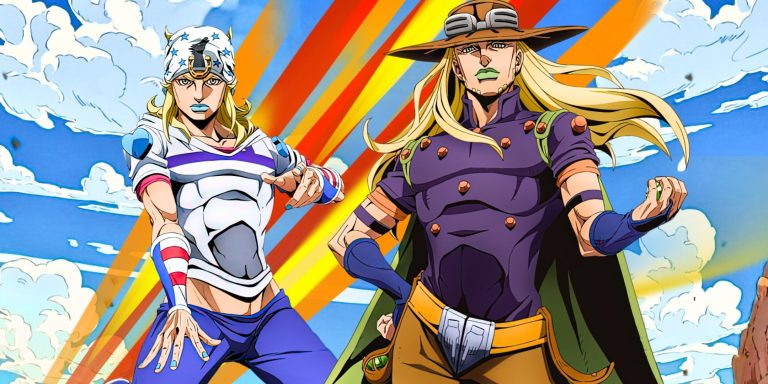
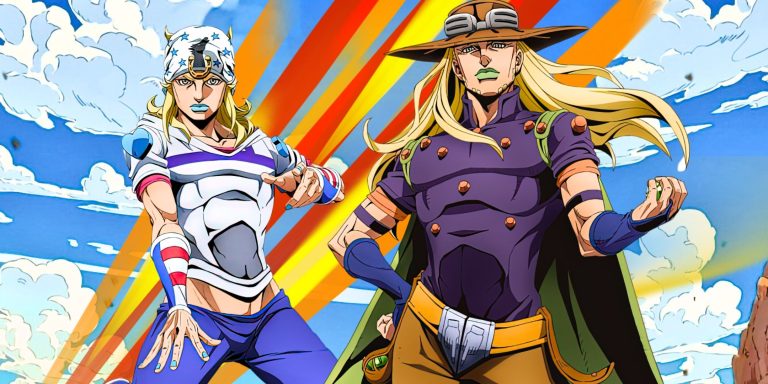
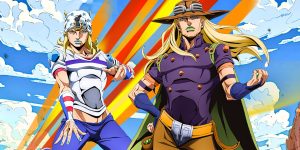
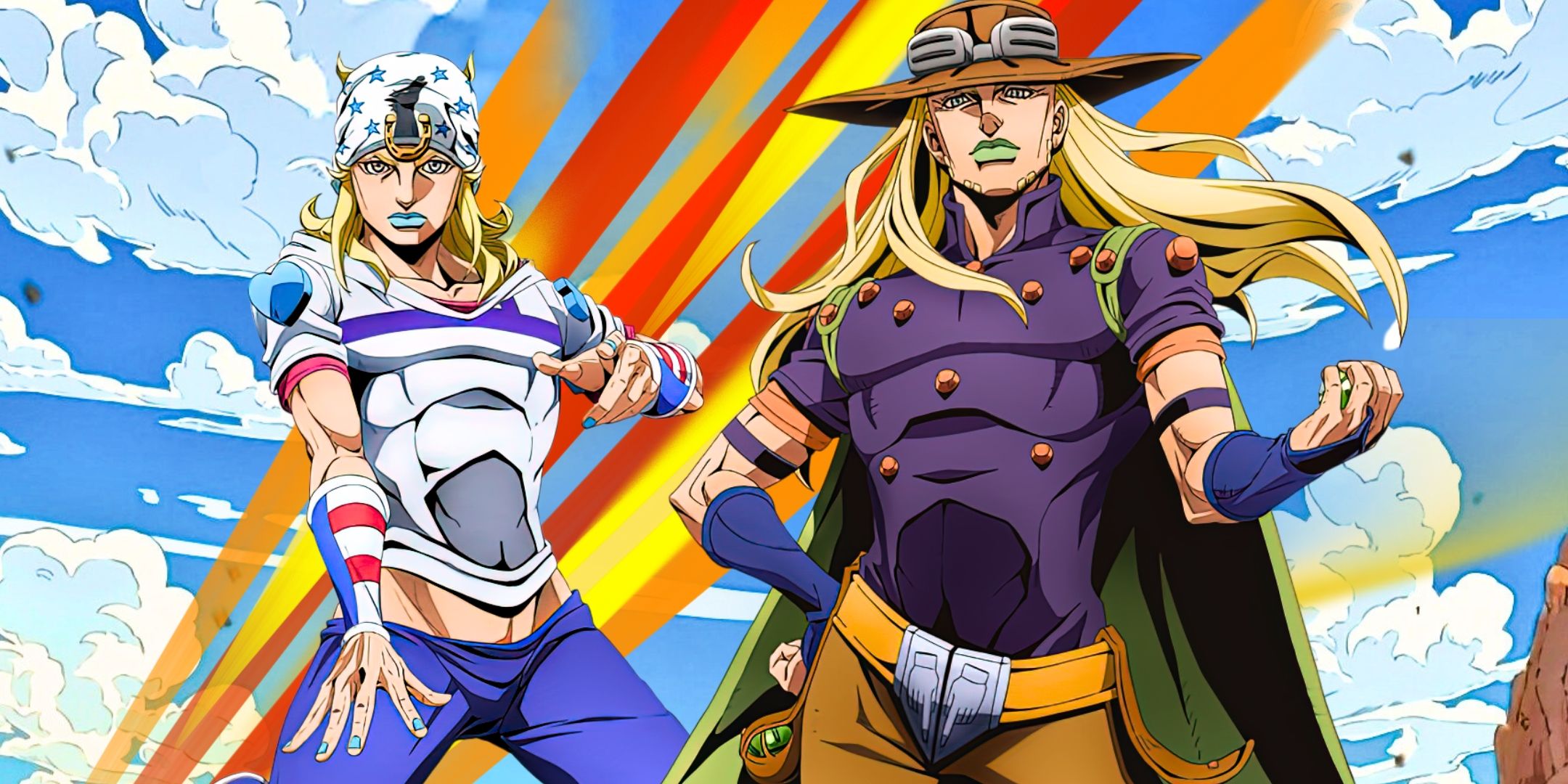
At the beating, bleeding heart of the series lies what is widely considered the finest character dynamic Araki has ever penned: the complex codependency between Johnny Joestar and Gyro Zeppeli.
A Protagonist Subverted: The Morality of Johnny Joestar
Johnny is a radical departure from the chivalric archetype established by his spiritual ancestor, Jonathan Joestar. Paraplegic, stripped of his prodigal jockey status by his own youthful hubris, and emotionally estranged from the world, Johnny begins the race not out of altruism or a quest for justice, but out of desperate, selfish yearning. When he touches Gyro Zeppeli’s mysterious rotating steel spheres and feels a momentary, kinetic twitch in his paralyzed legs, Johnny’s obsession is ignited.
Araki pulled no punches in framing Johnny’s psychological landscape. He is haunted by survivor’s guilt, driven by an unyielding “Dark Determination”—a recurring motif signaled by fire flickering in his hollow eyes. Johnny is prepared to deceive, sacrifice, and kill to reclaim what he lost. He is not a clean-cut hero; he is a broken man crawling across the dirt to reach the realm of the “zero,” fighting simply to return to a baseline of human dignity.
The Operatic Levity of Gyro Zeppeli
Balancing Johnny’s brooding cynicism is Gyro Zeppeli, a disgraced Neapolitan executioner’s son riding to win the race and secure an imperial pardon for an innocent boy sentenced to death. Flamboyant, prone to writing nonsensical musical compositions about cheese, and flashing steel-capped teeth engraved with “GO! GO! ZEPPELI,” Gyro provides the chaotic levity quintessential to the franchise. Yet beneath the eccentric bravado lies the crushing weight of duty, paternal failure, and generational trauma.
Their bond isn’t forged through instant camaraderie, but through miles of cold campfires, desperate standoffs, and the shared, esoteric study of The Spin. This ancient martial technique, an anatomical and physical discipline predicated on the mathematical perfection of the Golden Ratio, replaces Hamon and acts as a prelude to Stands. The interplay between Gyro’s philosophical mastery of the Spin and Johnny’s incremental Stand evolution through Tusk yields some of the most emotionally resonant climaxes in modern graphic literature.
The Equestrian Nightmare: David Production’s Technical Gauntlet
If fans are feverish with anticipation, animators are undoubtedly trembling. In the realm of 2D animation, the horse is a universally feared harbinger of production collapse. Capturing the anatomical fidelity, fluid skeletal gait, muscular contractions, and dynamic perspective shifts of a galloping steed requires an obscene volume of keyframes. Steel Ball Run does not feature one horse in a tranquil meadow; it demands dozens of horses colliding at full gallop through mud, hail, and river crossings, all while supernatural entities shred their environments to pieces.
David Production, despite their revered stewardship of the franchise since 2012, faces a monumental crossroads:
- The 3DCG Necessity: Hand-animating sixty-plus chapters of relentless equestrian chases across vast American landscapes is financially and physically unsustainable in the modern anime economy. The studio must inevitably deploy 3D CGI models for the horses and environmental sweeps.
- The Visual Seamlessness: The true challenge lies in execution. Can David Production emulate the hyper-stylized, cel-shaded harmony seen in projects like Orange’s Trigun Stampede or Kamikaze Douga’s legendary JoJo openings? Clunky, weightless CGI models clashing against meticulously hand-drawn 2D character models of Johnny and Gyro would shatter the immersive gravity the story mandates.
- Cinematic Direction: The camera work in Steel Ball Run is intensely cinematic, heavily influenced by Sergio Leone’s widescreen spaghetti westerns. David Production must capture low-angle tracking shots beneath thundering hooves without relying on cheap camera shakes or obfuscating speed lines.
Funny Valentine and the Architecture of Modern Antagonism
Beyond the logistical nightmare of its horses, the buzz surrounding the adaptation is fueled by the prospect of bringing its central villain to life: the 23rd President of the United States, Funny Valentine. Armed with the multidimensional ability of Dirty Deeds Done Dirt Cheap (D4C), Valentine is a masterclass in ideological antagonism.
Valentine is not driven by cartoonish malice or sadistic bloodlust. He is an uncompromising, radical nationalist who views the trans-American race as a vehicle to secure the mummified relics of a saint, aiming to manifest a cosmic shield that deflects all misfortune away from the United States and onto the rest of the world. His infamous “First Napkin” philosophical monologue on social consensus and political hegemony remains one of Araki’s sharpest literary achievements. In an era where viewers crave morally complex, narratively justified villains, Valentine’s chilling patriotism presents a profound thematic foil to Johnny’s solitary, selfish path.
Crossing the San Diego Starting Line: What Lies Ahead?
The conversation surrounding Steel Ball Run isn’t merely about artistic fidelity; it is inextricably tied to release models. The anime sphere hasn’t forgotten the fragmented, momentum-killing “batch release” strategy employed by Netflix during Stone Ocean. A sprawling, episodic masterwork like Part 7 requires communal digestion. It thrives on weekly water-cooler discussions, theoretical breakdowns of the Golden Rectangle, and collective trauma over mid-race casualties. For Steel Ball Run to claim its rightful throne in the mainstream zeitgeist, David Production and its distribution partners must restore the traditional weekly episodic broadcast format.
Hirohiko Araki fundamentally altered the DNA of comic storytelling when he laid ink to Johnny Joestar’s dusty journey. It is a story of resurrection, of flawed, bleeding mortals wrestling with divinity, physics, and historical fate. As the rumbling of hooves draws closer to the horizon, the pressure on David Production is historic. But if they conquer this final, wild frontier, they won’t just deliver the greatest JoJo adaptation to date—they will deliver one of the defining television achievements of the modern anime era.
How do you think David Production should tackle the equestrian hurdle? Do you believe Part 7 can surpass Golden Wind’s legendary anime run? Drop your thoughts, theories, and favorite Gyro jokes in the comments below!