When the melancholic notes of Duffy’s “Distant Dreamer” faded over the ocean-swept finale of Stone Ocean in late 2022, a collective, breathless realization rippled across the anime landscape: the classic Joestar lineage had reached its definitive, universe-resetting horizon. For over a decade, David Production has shepherded Hirohiko Araki’s genre-defying generational saga with monastic devotion, elevating quirky cult manga mannerisms into global pop-culture gospel. Yet, among the initiated, every previous installment—from the Victorian melodrama of Phantom Blood to the neon-tinted tragedy of Florida’s Green Dolphin Street Prison—has merely functioned as an extended prologue for the true promised land: JoJo’s Bizarre Adventure: Steel Ball Run.
Currently resting comfortably near the pinnacle of MyAnimeList’s all-time highest-rated manga rankings, Part 7 is routinely hailed as Araki’s undisputed magnum opus. It is a work of breathtaking literary ambition that ditches the familiar suburban haunts and urban sprawls for a sun-bleached, blood-soaked, 1890s transcontinental race across the American frontier. But as rumors, trademark whispers, and speculative leaks reach a fever pitch, an existential question hangs over the industry: Can David Production actually adapt an epic that represents both narrative perfection and an animator’s logistical nightmare?
The Reinvention of Araki: Seinen Emancipation and the Golden Rectangle
To understand the immense buzz surrounding a potential Steel Ball Run anime, one must first recognize the structural metamorphosis Part 7 represented in Araki’s career. Serialized initially in Weekly Shonen Jump before migrating to the monthly, mature-skewing pages of Ultra Jump in 2005, the narrative was suddenly unshackled from the grueling weekly deadline grinder and rigid demographic censorship. The monthly canvas granted Araki expansive real estate for intricate paneling, cinematic cross-hatching, and profound thematic maturation.
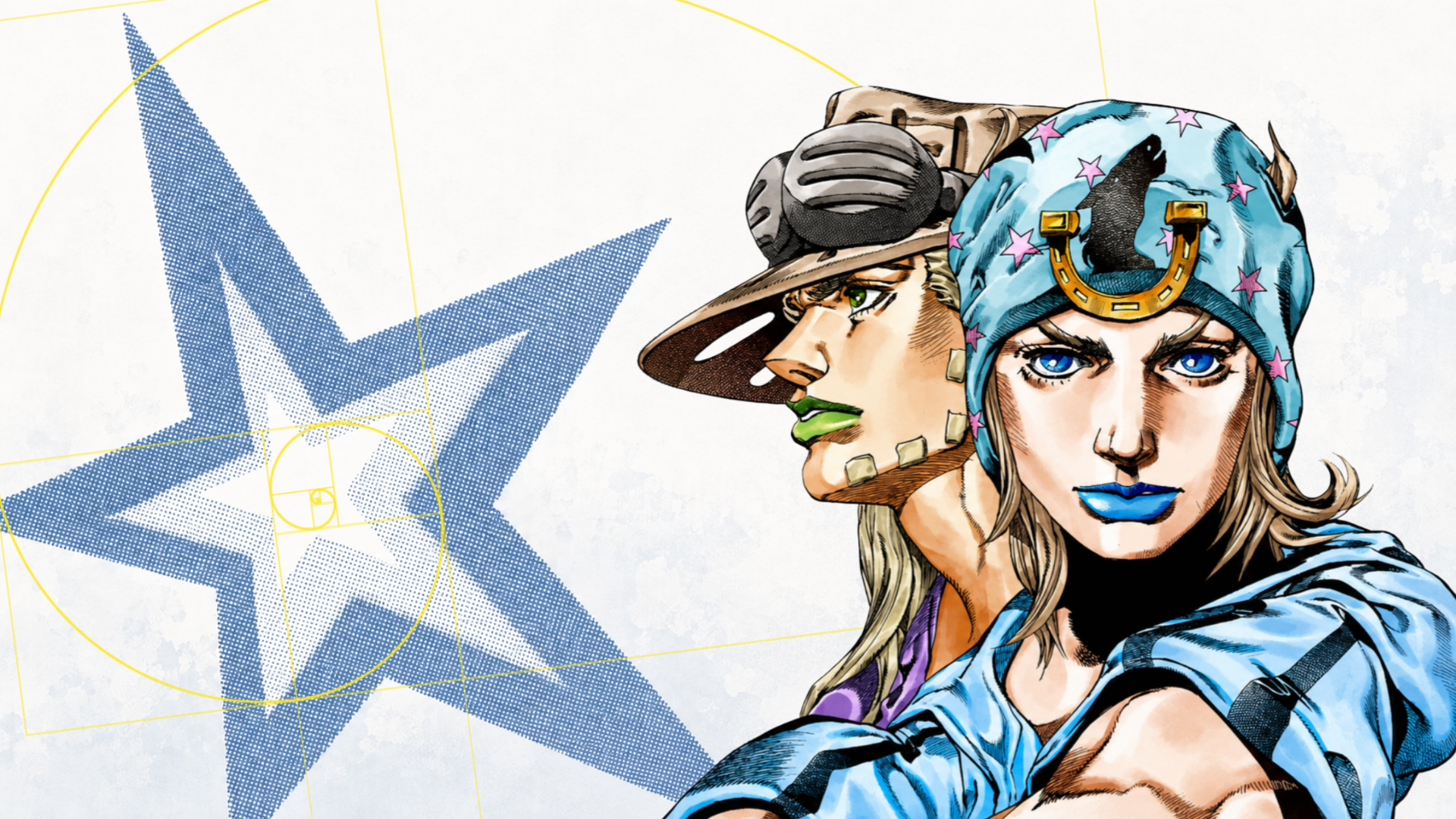
The core conceit is deceptively straightforward: eccentric promoter Steven Steel organizes a grueling, 6,000-kilometer horseback race across North America, boasting an astronomical $50 million grand prize. Yet beneath the dust and gunpowder lies an esoteric supernatural conspiracy centered on the search for the scattered, mummified relics of a divine holy figure. Power systems undergo their most radical evolution since the introduction of Stands in Stardust Crusaders. Enter the Spin—a sacred, forgotten rotational technique rooted in the mathematical perfection of the Fibonacci sequence and the Golden Rectangle.
From Shonen Brawls to a Grand Historical Mythos
Unlike previous parts that often adhered to an episodic “Stand-user of the week” structure, Steel Ball Run functions as a continuous, sprawling road novel. The setting is not merely cosmetic; 19th-century America becomes an active participant in the narrative, thick with existential dread, encroaching industrialism, and native folklore. By intertwining supernatural Stand warfare with authentic historical texture, Araki elevated his quintessential bizarre flair into high literary drama.
Johnny Joestar and Gyro Zeppeli: A Masterclass in Psychological Dualism
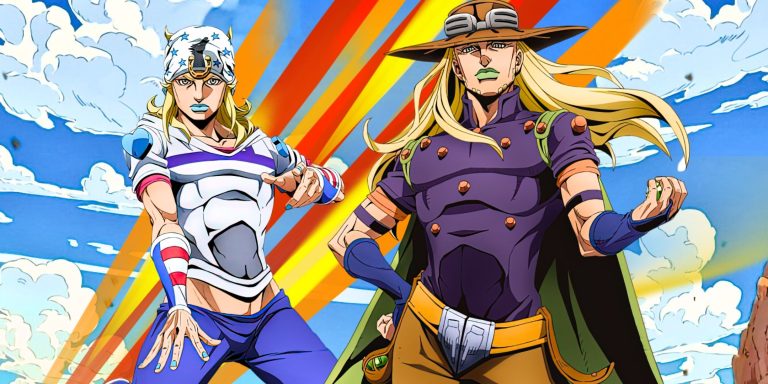
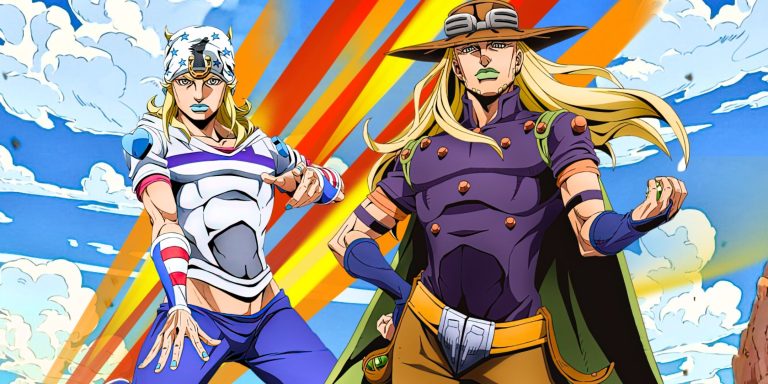
At the beating heart of the adaptation frenzy is the series’ central partnership—a dynamic universally regarded as Araki’s finest character writing. In a stark departure from the righteous stoicism of Jonathan Joestar or the slick infallibility of Jotaro Kujo, protagonist Johnny Joestar enters the race broken. A former horse-racing prodigy whose hubris, vanity, and pettiness resulted in a shooting that left him paraplegic, Johnny is an embittered outcast fueled not by altruism, but by a desperate, selfish yearning to find physical and spiritual redemption.
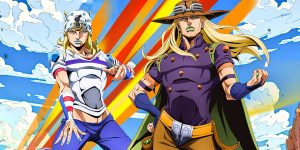
Enter Gyro Zeppeli, an eccentric Neapolitan executioner wielding mystic vibrating steel balls, traveling under a facade of gold-toothed swagger, terrible puns, and operatic arrogance. Gyro rides to secure amnesty for a wrongfully condemned child back in Naples, bearing the crippling weight of inherited state duty. Their bond evolves far beyond the standard mentor-apprentice trope; it is an agonizing, codependent crucible where both men slowly salvage each other’s fractured humanity.
The Morality of ‘Dark Determination’
What makes Johnny so magnetic—and potentially controversial for a mainstream anime audience—is his terrifying moral ambiguity. Araki visually codes Johnny’s internal shifts through the chilling “flame of dark determination” in his eyes: a cold, sociopathic resolve that does not hesitate to kill anyone standing between him and his goals. Adapting this subtle psychological descent requires an emotional nuance rarely demanded by typical action shonen, demanding voice performances and visual direction that capture the sheer agony of moral decay and mutual vulnerability.
The Production Dilemma: The Dreaded Equestrian Hurdle
Why hasn’t David Production officially announced the project yet? The answer can be summed up in a single, terrifying word: horses. In the animation industry, quadrupeds—and horses in particular—are infamous for being the ultimate trial by fire. Their complex skeletal mechanics, shifting muscular volumes, and rhythmic gait cycles require an extraordinary volume of drawings to animate believably in hand-drawn 2D. Steel Ball Run does not merely feature occasional horse-riding; it is an uninterrupted cavalry charge across deserts, mountains, and rivers spanning dozens of high-speed duels.
CGI Integration vs. The Hand-Drawn Soul of JoJo
Industry insiders and fans alike know that full traditional 2D animation for dozens of galloping steeds across a projected 36-to-48-episode run is economically and physically unfeasible without catastrophic animator burnout. David Production faces an agonizing crossroads:
- The Full 3D Route: Utilizing sophisticated cel-shaded CGI models for horses and riders during wider race sequences, similar to Orange’s work on Trigun Stampede or MAPPA’s hybrid sequences in Attack on Titan. The danger? Alienating fans who cherish Araki’s organic, Michelangelo-inspired anatomical textures.
- The Hybrid Pipeline: Leveraging meticulously rendered 3D base assets painted over by key animators for mid-ground action, while strictly reserving lavish, hand-drawn 2D sakuga for close-ups, climactic clashes, and the signature color-shift sequences.
Given David Production’s proven track record of honoring Araki’s idiosyncrasies—along with their expanding technical prowess demonstrated in recent works like Undead Unluck and Fire Force—the studio is almost certainly taking its time to construct a proprietary digital pipeline tailored specifically to equestrian combat.
National Politics, The Corpse, and Global Reception
Beyond the technical Everest lies the narrative powder keg of its primary antagonist, Funny Valentine, the 23rd President of the United States. Armed with the reality-fracturing Stand Dirty Deeds Done Dirt Cheap (D4C) and an ideological philosophy centered on absolute, unapologetic American exceptionalism, Valentine complicates standard villain archetypes. His famous “First Napkin” monologue is a chillingly prescient critique of political hegemony and societal inertia.
Furthermore, the explicit presence of the Corpse Parts—heavily implied to belong to Jesus Christ Himself—intertwines religious iconography, nationalistic zealotry, and cosmic horror in ways that will inevitably test international broadcast standards and licensing sensitivity. A faithful adaptation cannot afford to sanitize these elements without compromising the spiritual weight that gives the narrative its profound resonance.
The Inevitable Frontier: When Will the Race Begin?
The anticipation surrounding Steel Ball Run is no longer merely fandom optimism; it is an industry eventuality. As anime continues its meteoric conquest of mainstream global entertainment, audiences are hungrier than ever for mature, auteur-driven stories that defy formulaic constraints. SBR is the apex of modern comic storytelling: an existential, dust-choked western masquerading as an eccentric sports race, fueled by divine intervention and human fallibility.
David Production holds the keys to the kingdom. If they can solve the kinetic puzzle of the equestrian race and capture the electric, soul-baring chemistry between Johnny and Gyro, Steel Ball Run will not simply be another successful seasonal adaptation—it will be an indelible monument in the history of serialized Japanese animation.
What are your biggest hopes—and deepest anxieties—for the inevitable Steel Ball Run anime adaptation? Do you trust David Production to nail the horse animation with hybrid CGI, or should they take all the time they need? Drop your thoughts, theories, and favorite Stand moments in the comments below!