In the pantheon of sequential art, few transitions carry the seismic weight of Hirohiko Araki’s pivot from the closing moments of Stone Ocean to the dust-swept plains of 1890s North America. For over two decades, JoJo’s Bizarre Adventure: Steel Ball Run has occupied an almost mythical status among manga readers, perpetually contesting the summit of critical acclaim on platforms like MyAnimeList alongside titans like Berserk and Monster. With the animated conclusion of the original Joestar lineage behind us, the spotlight turns to David Production with an intensity that borders on reverence. Adapting Steel Ball Run is not just the next logical phase in a multi-generational anime franchise; it is David Production’s ultimate creative trial—an ambitious undertaking that balances artistic grandeur, structural re-invention, and what might be the single most technically punishing production barrier in modern television anime.
A Trans-Continental Odyssey: The Seinen Rebirth of Araki’s Universe
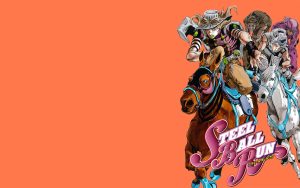
To understand the sheer fervor surrounding the prospective Steel Ball Run adaptation, one must trace Araki’s daring creative shift in the mid-2000s. Originally serialized in Weekly Shonen Jump before transitioning to the monthly demographic of Ultra Jump in 2005, Part 7 freed Araki from the grueling weekly deadline grinder and the thematic guardrails of traditional youth-oriented battle manga. The narrative landscape matured instantly. Shifting to an alternate universe allowed Araki to wipe the slate clean, ditching decades of accumulated lineage baggage for a reimagined, dust-caked Western epic: a coast-to-coast horseback race across the United States boasting a staggering fifty-million-dollar prize.
Yet, the Steel Ball Run race is merely the stage dressing for an existential pilgrimage. Beneath the sun-bleached grit and gunpowder lies a complex geopolitical hunt for the mummified relics of an unnamed Saint—heavily implied to be Jesus Christ. This narrative convergence transforms a high-octane trans-continental marathon into a layered meditation on destiny, divine providence, and Machiavellian patriotism. In moving away from the metropolitan streets of Morioh or the claustrophobic confines of Green Dolphin Street Prison, Araki painted his widest canvas yet: sprawling badlands, glacial blizzards, and infinite prairies that demand a production scale David Production has never previously attempted.
The Anatomy of a Duo: Johnny Joestar and Gyro Zeppeli
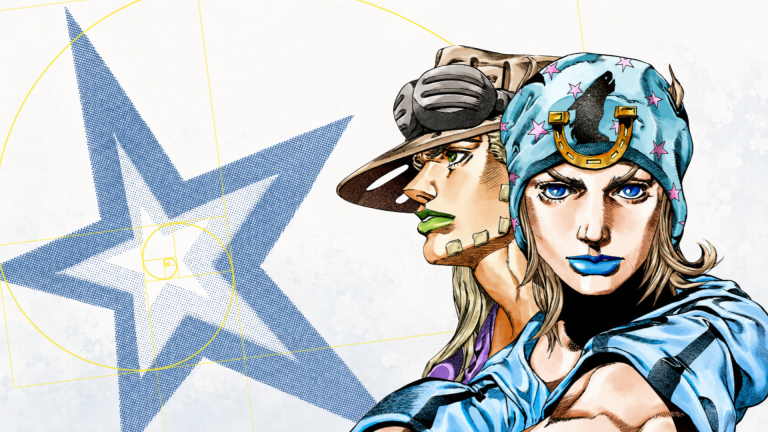
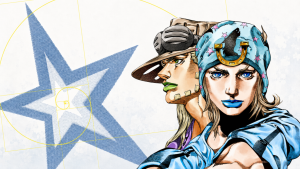
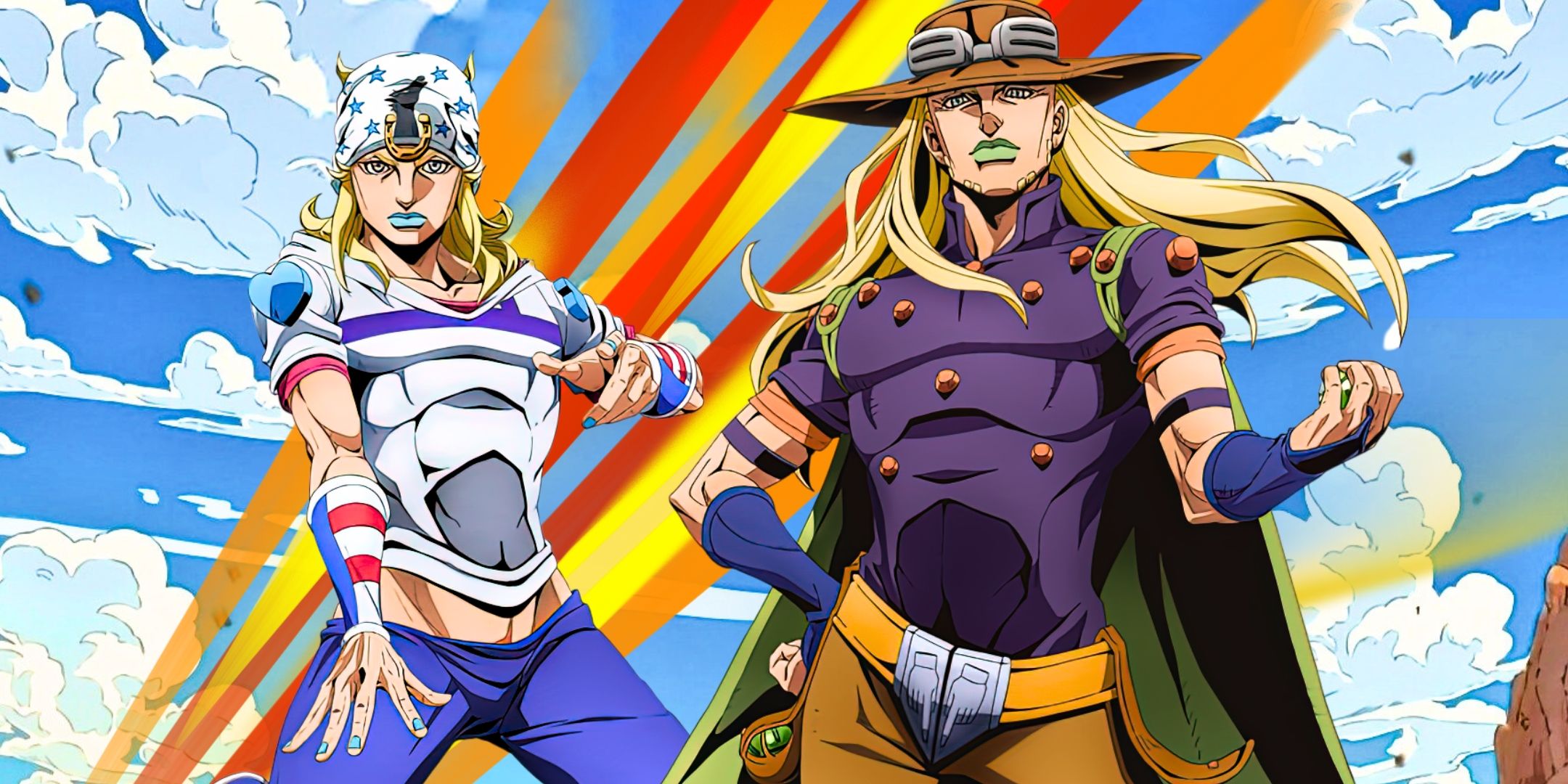
At the center of this storm stands what is universally recognized as Araki’s most emotionally complex protagonist duo. Unlike the unyielding moral righteousness of Jonathan Joestar or the effortless stoicism of Jotaro Kujo, Johnny Joestar enters the story deeply compromised, profoundly broken, and uncomfortably human.
From Prodigy to Paraplegic: Johnny’s “Dark Determination”
Once an arrogant horse-racing prodigy whose hubris cost him the use of his legs, Johnny is introduced not as an aspirational hero, but as a shell of a man driven by bitter despondency. His motivation to join the race is not rooted in justice, honor, or national pride; it is born from the desperate, electric epiphany that interacting with Gyro Zeppeli’s mystical technology causes his dormant muscles to twitch. Johnny’s trajectory is defined by what Araki frequently terms his “dark determination”—a ruthless, pitch-black resolve willing to sacrifice morality, allies, and his own soul to climb from “negative” back to “zero.” He is a raw, jagged subversion of the classic shonen lead, and rendering his internal turmoil will require voice talent and character animators capable of nuanced psychological drama.
The Executioner’s Grace: Gyro and the Golden Ratio
Acting as Johnny’s foil and reluctant mentor is Gyro Zeppeli, a disgraced Neapolitan royal executioner whose flamboyant theatrics, gold-capped teeth, and nonsensical gag songs conceal an agonizing crisis of conscience. Gyro rides to save an innocent child slated for political execution, embodying the classic tragic heroism of the Zeppeli lineage. Crucially, Gyro introduces the Spin—a physics-bending, sacred martial art utilizing the Golden Ratio to generate infinite rotational energy via steel spheres. As a mechanical system, the Spin acts as a thematic and functional evolution of Part 1 and 2’s Hamon, harmonizing natural geometry with Stand manifestations like Tusk and Ball Breaker. The creative chemistry between Johnny’s cynical desperation and Gyro’s eccentric nobility anchors the entire 130-chapter epic, providing emotional gravity amidst mind-bending stand encounters.
The Technical Nightmare: David Production’s Equestrian Crucible
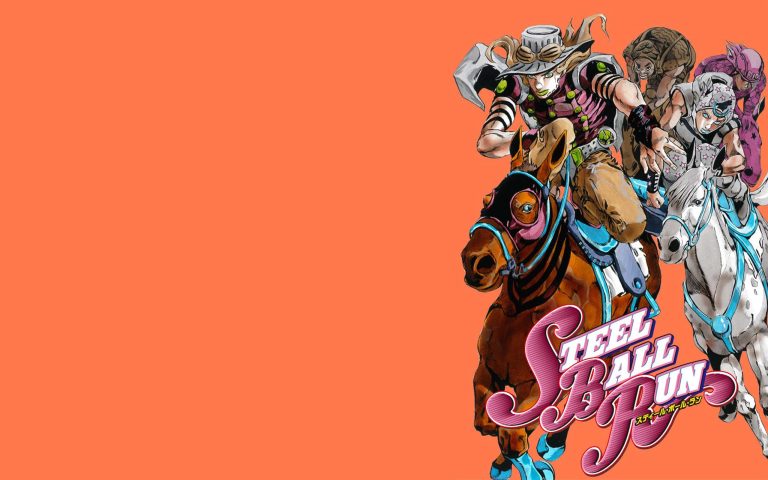
Why hasn’t an anime adaptation already dropped? The answer can be summed up in a single word: horses. In traditional hand-drawn 2D animation, dynamic quadrupedal locomotion is notoriously labor-intensive. Animating a single horse galloping smoothly across changing perspectives requires an immense understanding of muscular anatomy and biomechanics. Steel Ball Run does not merely feature horses as passive transport; it features dozens of them colliding at breakneck speeds, maneuvering through tight canyons, and sustaining brutal stand attacks across thousands of miles of dynamic terrain.
Historically, anime studios have turned to 3D CGI to handle equestrian crowds—frequently resulting in visually jarring, weightless sequences that clash against stylized 2D characters. For an adaptation of this pedigree, standard CG shortcuts could permanently alienate the fanbase. David Production faces an enormous pipeline challenge: they must either execute a revolutionary hybrid approach—akin to Orange’s nuanced 3D integration in Trigun Stampede or Wit Studio’s proprietary horse modeling in early seasons of Attack on Titan—or risk diluting the visceral speed and muscularity that Araki etched onto every page. The time elapsed since the finale of Stone Ocean suggests that pre-production for Part 7 is grappling with precisely this technological puzzle.
Patriotism, Multiverses, and the Philosophy of the First Napkin
A masterclass narrative is only as strong as its antagonist, and in President Funny Valentine, Araki delivered arguably the most charismatic villain in the entire franchise. Operating under the terrifyingly utilitarian Stand ability D4C (Dirty Deeds Done Dirt Cheap), Valentine can traverse parallel dimensions by being compressed between two surfaces. His goal is not megalomaniacal chaos, but absolute American hegemony, seeking to harness the Saint’s Corpse to deflect all national suffering onto the rest of the world.
Valentine’s legendary “First Napkin” monologue—a brilliant diatribe about power dynamics, societal order, and the illusion of free will—remains a watershed moment in manga writing. Pitting Johnny’s unapologetically selfish pursuit of healing against Valentine’s altruistically cruel, nationalistic mission creates a moral gray zone that completely obliterates traditional good-versus-evil dichotomies. Bringing this clash to the screen demands a cinematic touch that treats its philosophical themes with the same visual flair and weight as its reality-splitting Stand battles.
The Next Horizon
The transition to Steel Ball Run represents David Production’s defining moment. Moving past the controversial batch-release model that fractured the cultural momentum of Stone Ocean on Netflix, this adaptation demands a prestigious, event-style rollout—one that honors the monumental legacy Hirohiko Araki forged when he saddled his horses in San Diego over twenty years ago. The technical hurdles are terrifying, the narrative expectations are sky-high, and the legacy of modern anime’s most iconic bloodline hangs in the balance. When that starting gun finally fires, David Production won’t just be producing an anime; they will be tackling anime’s white whale.
Which creative direction do you think David Production should take: full hand-drawn 2D sakuga for the horses, or an evolved, high-end 3D hybrid pipeline? And who belongs in your dream voice cast for Johnny and Gyro? Let us know in the comments below!