



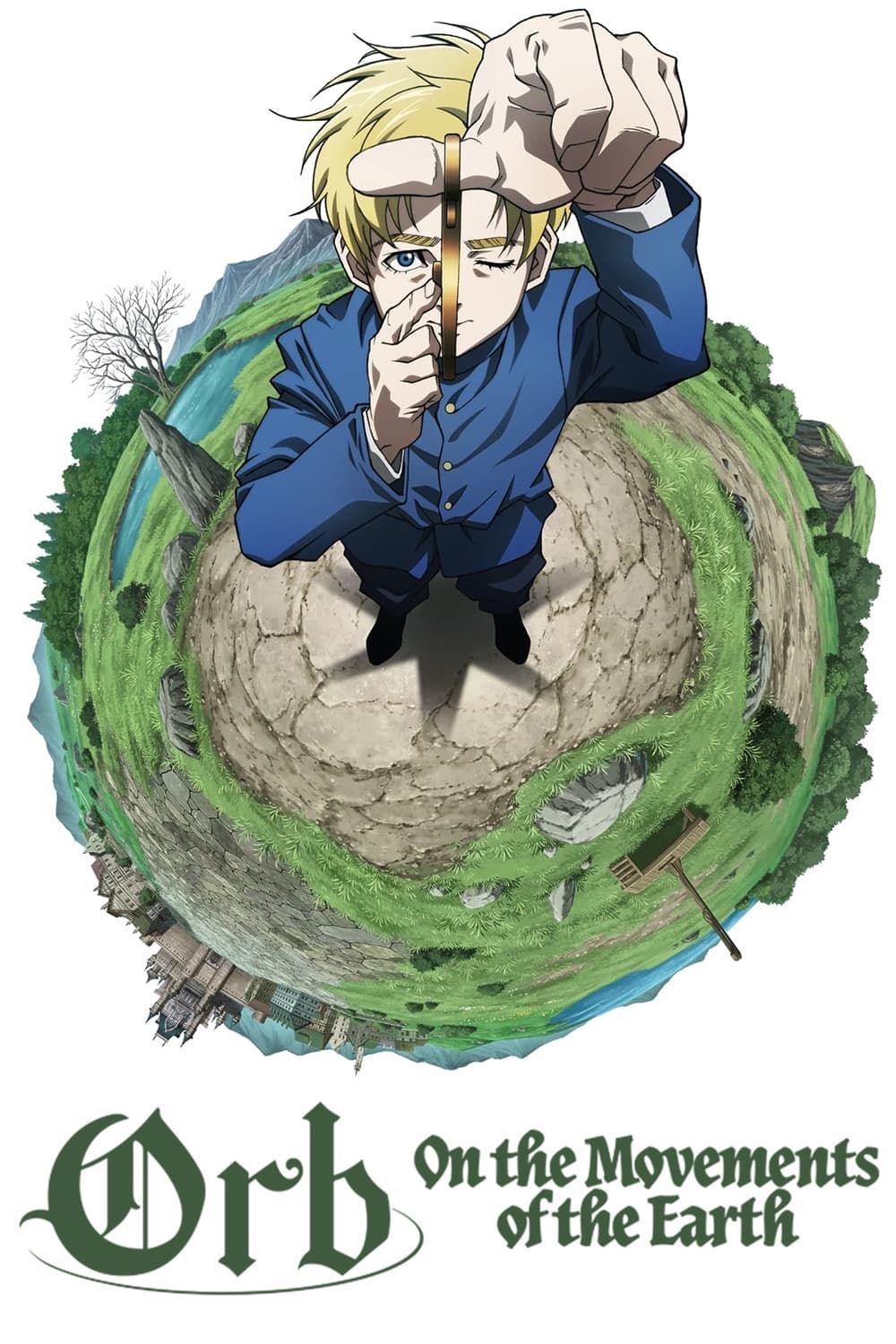
What would you sacrifice if discovering the objective truth about the cosmos was punishable by death? In an anime landscape heavily dominated by repetitive power-fantasy tropes, isekai reincarnations, and cookie-cutter battle tournaments, legendary studio Madhouse has just unleashed something so daring, intellectually electrifying, and philosophically devastating that it is fundamentally rewriting expectations for modern television animation. That masterpiece is Orb: On the Movements of the Earth (Chi: Chikyuu no Undou ni Tsuite), adapted directly from the critically acclaimed manga by master storyteller Uoto.
From its opening minutes, this historic psychological drama pulls no punches. Transporting viewers straight into the unforgiving reality of fifteenth-century Poland, where any cosmological theory contradicting geocentrism is stamped out as mortal heresy, the series follows child prodigy Rafal, his enigmatic mentor Hubert, and the terrifying inquisitor Nowak. The result is an unrelenting clash between human intellect, personal devotion, and tyrannical religious authority that has ignited fiery debates across online forums worldwide. Much like our previous deep dives into anime adaptations breaking standard conventions such as Dr. STONE Science Future and the visual spectacle of Black Butler: Emerald Witch Arc, Orb proves that intellectual grit and historical intrigue can captivate audiences far more deeply than straightforward action spectacles.
A Deadly Pursuit of Heliocentrism: The Conviction of Rafal and Hubert
At the center of this tragic yet awe-inspiring narrative is Rafal, a brilliant twelve-year-old scholar groomed for an illustrious theological career by the church. Rafal possesses an uncanny gift for logic and astronomical calculations, yet he suppresses his doubts to ensure personal comfort and safety. However, everything collapses when he crosses paths with Hubert, a disgraced former scholar released on parole after years of brutal torture for dabbling in forbidden cosmological research.
Instead of bowing to fear, Hubert shares his clandestine mathematical models with Rafal—calculations asserting that the Earth is not the stationary center of creation, but rather an orb revolving gracefully around the Sun. Hubert’s conviction is infectious: heliocentrism represents not merely mathematical precision, but sublime, breathtaking universal beauty. When Rafal peers through the crude astrolabes and realizes the pristine elegance of this theory, his world fractures irreparably. In a society where questioning doctrine warrants burning at the stake, seeking scientific truth becomes the ultimate act of mortal rebellion.
The Terror of the Inquisition: Nowak and the Heavy Price of Knowledge
What elevates Orb: On the Movements of the Earth beyond a conventional historical drama is its refusal to shy away from psychological terror. Enter Nowak, a veteran church inquisitor whose ruthless diligence and pragmatic brutality make him one of the most chilling antagonists seen in modern anime. Nowak does not torment scholars out of mindless cruelty or sadism; rather, he genuinely believes that heresy is a virulent plague threatening the immortal souls of mankind.
Through Nowak’s relentless investigations, Madhouse crafts unbearable tension. Every whispered conversation in a shadowed cathedral, every hidden journal buried under soil, and every smuggled astronomical record carries lethal stakes. Characters are forced to make unfathomable choices: renounce the mathematical truth they have witnessed with their own eyes to preserve their lives, or face gruesome public execution while passing their forbidden research to the next generation of truth-seekers.
Why Madhouse and Uoto Have Set a New Benchmark for Seinen Anime
Studio Madhouse—renowned for legendary prestige productions like Death Note, Monster, and Frieren: Beyond Journey’s End—brings astonishing restraint and emotional depth to this adaptation. Directed with surgical precision, the animation contrasts bleak, candle-lit monastic cells with sweeping, majestic night skies dotted with shimmering constellations. The sound design underscores this thematic struggle, punctuated by haunting choral arrangements and Sakanaction’s vibrant opening theme “Kaiju,” which perfectly captures the burning kinetic energy of human inquiry against suffocating silence.
Unlike standard narratives with a single immortal hero, author Uoto structures Orb as an generational relay race of ideas. Truth is not an individual triumph, but an unbroken chain passed from one bloodied pair of hands to another. Each scholar who falls into the clutches of the Inquisition manages to preserve a fragment of calculation, a hidden lens, or an unyielding spark of conviction that paves the path toward eventual enlightenment.
What Do You Think?
Is Orb: On the Movements of the Earth already cementing itself as an all-time classic seinen masterpiece, or do you prefer more action-oriented historical fiction? Would you have had the courage to sacrifice everything for scientific truth like Rafal and Hubert, or would you have stayed quiet to survive the Inquisition? Share your unfiltered thoughts in the comments below, join our community discussion on social media, and don’t forget to bookmark wibux.com for all your daily anime news and breakdowns!




One thought on “Orb: On the Movements of the Earth Shatters Anime Conventions: Why Madhouse’s Bold Masterpiece Is Breaking the Internet”