Ever since the bittersweet, reality-altering finale of Stone Ocean landed on screens in late 2022, a singular, echoing chant has vibrated through every corridor of the global anime community: “Part 7 when?” In an era saturated with prestige seasonal adaptations and blockbuster cinematic releases, few unannounced projects carry the mythic, almost spiritual weight of Hirohiko Araki’s magnum opus, JoJo’s Bizarre Adventure: Steel Ball Run. Consistently jockeying for the runner-up spot on MyAnimeList’s all-time highest-rated manga rankings, Part 7 isn’t merely the next chapter in a generational franchise; it is a seismic cultural pivot—a reinvention that transformed Araki from an eccentric shonen luminary into one of the most daring avant-garde storytellers in contemporary sequential art.
Yet, as the buzz swells around trademark renewals, cryptic animator tweets, and anniversary milestones, David Production finds itself staring down its greatest creative crucible yet. Bringing Steel Ball Run to dynamic, kinetic life requires scaling an animation Everest. Between the deconstruction of western tropes, the metaphysical complexities of the “Spin,” and the notorious technical nightmare of equestrian movement, the road to 1890 America is paved with intoxicating ambition and unprecedented challenges.
The Seinen Paradigm Shift: Why Steel Ball Run Stands Alone
To understand the near-fanatical reverence surrounding a prospective Steel Ball Run anime, one must understand the crucible from which it emerged. Debuting in Weekly Shonen Jump in 2004 before transitioning to the monthly seinen imprint Ultra Jump in 2005, Part 7 liberated Araki from the grueling pressures and demographic shackles of traditional youth-oriented manga. The canvas expanded dramatically. The pace slowed, the psychological grit deepened, and the violence took on a haunting, visceral realism.
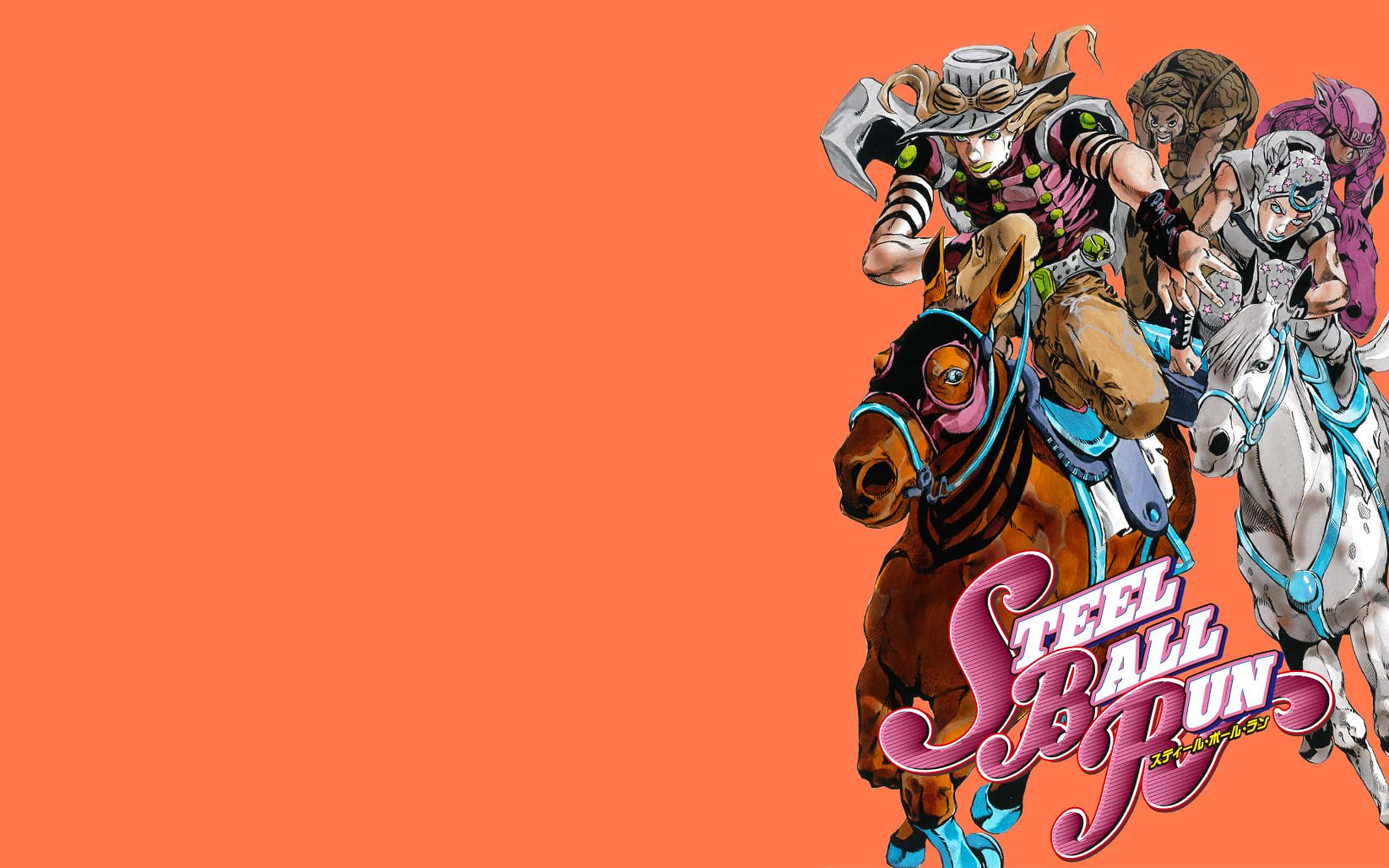
Set against the backdrop of a grand, grueling 6,000-kilometer cross-country horse race spanning from San Diego Beach to New York City, Steel Ball Run presents an alternate history drenched in Americana, manifest destiny, and cosmic body horror. The titular $50 million race is not merely an athletic contest; it is a brutal crucible that strips its eccentric participants down to their rawest, ugliest, and most sublime instincts. For David Production—a studio that has meticulously adapted Parts 1 through 6 with pop-art flair and surgical fidelity—adapting this specific work marks the beginning of an entirely distinct stylistic era.
From Hamon to the Golden Ratio: The Mechanics of the Spin
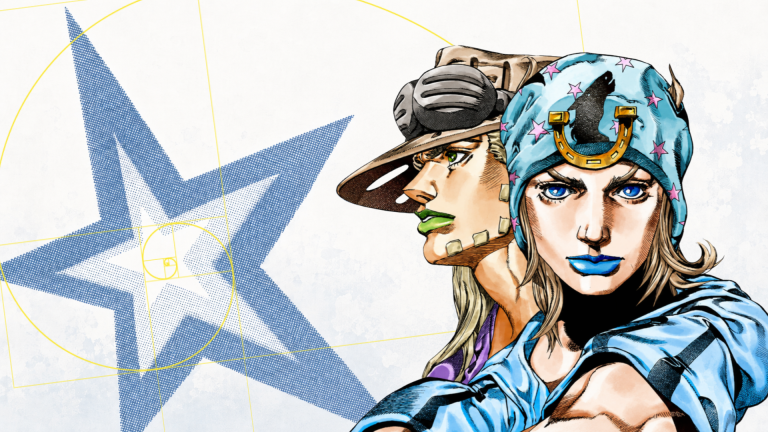
Nowhere is this evolution clearer than in Araki’s reinvention of his foundational magic system. While Stands remain the quintessential visual language of JoJo, Steel Ball Run introduces the “Spin”—a mystical rotational martial art deeply rooted in Renaissance mathematics, anatomical knowledge, and the natural world’s Golden Ratio. Developed by the royal executioners of the Kingdom of Naples, the Spin acts as both a thematic callback to Part 1 and 2’s sunlight-breathing Hamon and a massive leap forward into high-concept metaphysical combat.
Visualizing the Spin in motion will demand unprecedented ingenuity from David Production’s art directors. From the visual distortion of flesh and stone to the mathematical spirals trailing Gyro Zeppeli’s dual steel spheres, translating a concept so intensely abstract into fluent, high-octane 2D/3D sequences will require the same boundary-pushing experimentation that defined the psychedelic beatdowns of Golden Wind.
Johnny Joestar and Gyro Zeppeli: Flawed Deconstructions of the JoJo Hero
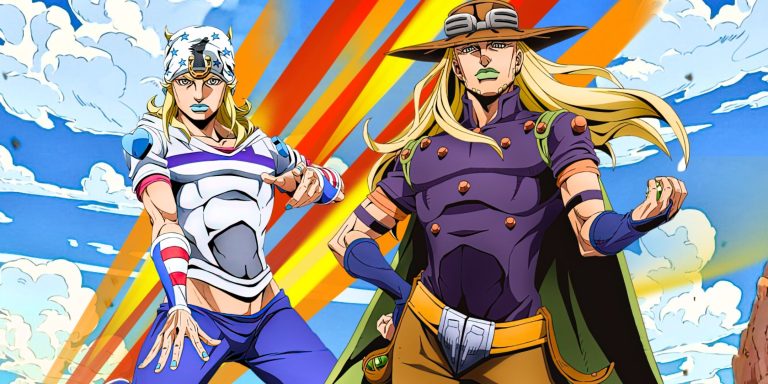
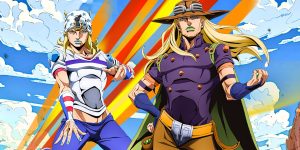
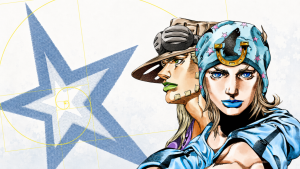
At the beating heart of the adaptation’s feverish anticipation is the dynamic between its two leads: Johnny Joestar and Gyro Zeppeli. In an industry often crowded with predictable hero-mentor dynamics, Johnny and Gyro share what is arguably Araki’s most nuanced, emotionally resonant relationship.
Johnny Joestar is deliberately designed as the antithesis of his noble alternate-universe predecessor, Jonathan Joestar. Paraplegic, socially ostracized, profoundly bitter, and burdened by a legacy of arrogance and patrician failure, Johnny enters the race not out of righteousness, but from a desperate, deeply selfish desire to walk again after witnessing Gyro’s Spin temporarily reactivate his inert legs. He is an anti-hero fueled by what Araki explicitly describes as “dark determination”—an unrelenting, feral willingness to kill or sacrifice anything to claw his way back from negative zero to absolute zero.
Contrasting Johnny’s brooding, morally gray resolve is Gyro Zeppeli, a flamboyant, gold-toothed exile carrying the agonizing weight of familial duty and an innocent child’s pending execution. Their journey across the American frontier is defined by quiet moments of campfire absurdity—trading bizarre running gags, composing nonsense songs about mozzarella and pizza, and dissecting the philosophies of luck and miracle—interspersed with high-lethality shootouts. Capturing this balance between melancholic vulnerability and kinetic bravado will require a voice cast and directorial hand operating at the peak of their craft.
The Technical Everest: Conquering the Equestrian Nightmare
If the thematic depth of Steel Ball Run is a dream for scriptwriters, the physical mechanics of the story are an animator’s waking nightmare. Ask any veteran key animator or studio director about the hardest subject to animate in traditional 2D hand-drawn media, and the answer is universally the same: four-legged quadrupeds, specifically galloping horses.
Unlike human anatomy, the complex skeletal articulation, muscle shifts, and rhythmic galloping cycles of horses require an immense number of individual drawings to convey convincing weight and momentum. In Steel Ball Run, horses are not incidental background set-pieces; they are constant, central narrative vehicles participating in high-speed tactical duels over shifting terrains of desert sand, snow-choked forests, and freezing rivers.
The 3DCG vs. Hand-Drawn Dilemma
This technical roadblock is widely speculated to be the primary reason for the extended wait between the conclusion of Stone Ocean and any concrete SBR production announcements. The industry faces an artistic crossroad:
- Hybrid 3DCG Integration: Utilizing custom, cel-shaded CGI horse models layered beneath painstakingly hand-drawn character torsos and faces. While practical, this method risks alienating purists if the compositing lacks cohesion.
- Full 2D Prestige Pipeline: An impossibly resource-intensive approach that would demand extensive pre-production schedules, staggering budget allocations, and the hiring of top-tier freelance mechanical/action animators to hand-draw the races frame by grueling frame.
Given David Production’s recent technical triumphs with kinetic camera movement in Fire Force and the dazzling visual reinventions seen in Urusei Yatsura, the studio certainly possesses the technical acumen. However, Steel Ball Run is a different beast entirely. It calls for an unprecedented synthesis of digital production and traditional artistic discipline to ensure the sense of breathless speed isn’t lost in sterile computer-generated assets.
The Saint, The President, and Moral Ambivalence
Beyond its leads and its horses, the buzz surrounding Part 7 is propelled by one of the most universally acclaimed antagonists in manga history: the 23rd President of the United States, Funny Valentine. Coupled with his reality-hopping Stand, Dirty Deeds Done Dirt Cheap (D4C), Valentine introduces a narrative that revolves around the trans-continental search for the mummified, miraculous parts of a holy Saint.
Valentine is not a mustache-twirling tyrant; his motivations are deeply rooted in zealous, uncompromising patriotism—an ideological conviction epitomized in his unforgettable “first napkin” monologue. His ideological collision with Johnny Joestar blurs the lines of conventional heroism to such a profound extent that audiences will inevitably question whose side they are truly on. The political subtext, philosophical debates on national prosperity versus personal salvation, and horrific dimensional collisions present David Production with the chance to craft the most intellectually demanding anime storyline since Attack on Titan or Monster.
The Horizon Beckons: A Milestone on Standby
While official trailers and release windows remain tightly guarded within the vaults of Shueisha and Warner Bros. Japan, the sheer momentum behind JoJo’s Bizarre Adventure: Steel Ball Run ensures that an anime adaptation is an inevitability, not a gamble. It is the defining zenith of Hirohiko Araki’s fifty-year career, an apocalyptic, gorgeous, and emotionally shattering ride through the heart of the American west.
When the starting gun finally fires, anime fans will bear witness to a production that could fundamentally redefine what is possible in long-form serialized television. The stakes are immense, the technical challenges are terrifying, but the finish line promises nothing short of history.
Are you prepared for the great trans-American race? Who is your dream voice cast for Johnny and Gyro, and how do you think David Production should tackle the horse animation dilemma? Let your voice be heard in the comments below, and stay locked to Wibux.com for breaking updates on the next frontier of JoJo’s Bizarre Adventure!