


When was the last time an animated movie about a K-pop girl group outperformed Demon Slayer, Chainsaw Man, and pretty much every anime film at the box office? If you said never, you are about to have your mind blown.
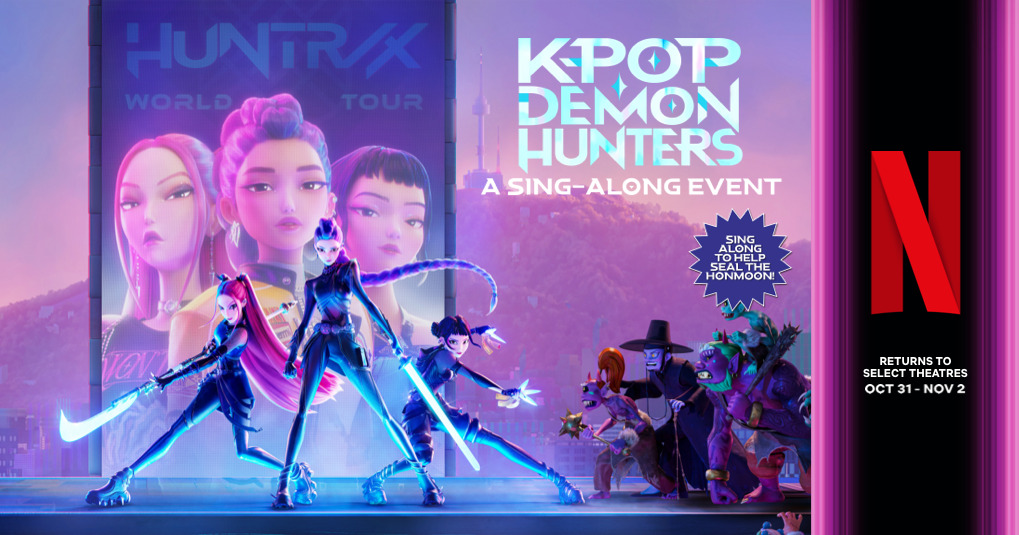
Netflix’s KPop Demon Hunters did something that sounded completely impossible on paper. A movie about three K-pop idols who secretly fight demons didn’t just become a cultural phenomenon, it actually dominated the entire 2026 awards season. Critics Choice Award for Best Animated Feature, an Oscar nomination for Best Animated Feature, and a Best Original Song nod for “Golden” by EJAE. Let that sink in.
The Premise That Should Not Have Worked
Here is the setup. Rumi, voiced by Arden Cho, is the perfectionist leader of a K-pop trio. Mira, played by May Hong, is the rebellious maknae who always pushes boundaries. Zoey, brought to life by Ji-young Yoo, is the sweet but secretly powerful vocalist. By day, these three sell out arenas and top the Billboard charts. By night, they hunt demons using weapons powered by their music.
On paper, it sounds like a fever dream. A mashup of K-pop idol culture, supernatural action, and animated musical sequences that could only exist on Netflix. But here is the thing, it worked. It worked incredibly well. The movie struck a chord with audiences in a way that even the most dedicated anime fans did not see coming.
How KPop Demon Hunters Dominated Awards Season
The Critics Choice Awards gave KPop Demon Hunters the Best Animated Feature trophy, beating out a field that included some serious heavy hitters. Then the Academy Awards followed with a nomination for Best Animated Feature. The song “Golden,” performed by EJAE, also earned a Best Original Song nomination, making this one of the rare animated films to score multiple Oscar nods in a single year.
What makes this even more striking is the competition. Chainsaw Man: The Movie Reze Arc was nominated for Film of the Year at the Crunchyroll Anime Awards. Demon Slayer: Infinity Castle had already shattered box office records with over $600 million globally. And yet, KPop Demon Hunters, a film that many anime fans initially dismissed, ended up collecting more mainstream hardware than most.
The reception from critics was equally strong. Reviewers praised the film’s vibrant animation style, its authentic representation of K-pop culture, and the surprisingly emotional depth woven into what could have been just another animated action comedy. The blend of Korean pop music aesthetics with traditional demon-hunting mythology created something genuinely fresh.
Why This Movie Resonated So Deeply
Part of KPop Demon Hunters’ success comes down to timing. Netflix dropped the film at a moment when K-pop’s global influence was at an absolute peak. Groups like BTS, BLACKPINK, and NewJeans had already proven that Korean music could conquer any market on earth. The film tapped into that existing energy and amplified it with stunning visuals and a story that balanced humor, heart, and genuinely intense action sequences.
Another factor is the music itself. The soundtrack, featuring “Golden” and several other original tracks, became a viral sensation on TikTok and YouTube within days of the film’s release. Fans were creating dance covers, reaction videos, and fan art at a pace that rivaled any major anime release in recent memory.
The characters also deserve credit. Rumi, Mira, and Zoey are not just caricatures. Each one has a distinct personality, personal struggles, and a character arc that resonates beyond the typical animated film formula. Arden Cho brings genuine warmth to Rumi’s leadership burden, May Hong injects chaotic energy into every scene Mira appears in, and Ji-young Yoo makes Zoey’s quiet strength feel like the emotional anchor of the entire story.
The Netflix Strategy That Changed Everything
Netflix’s approach to animated content has been evolving rapidly, and KPop Demon Hunters represents a turning point. Instead of competing directly with anime studios on their own turf, Netflix invested in a project that blends multiple cultural influences into something entirely new. The result is a film that appeals to K-pop fans, animation enthusiasts, and general audiences simultaneously.
This is also worth noting when you look at the broader streaming landscape. While Crunchyroll and other platforms were focused on traditional anime adaptations, Netflix was building something that crossed cultural boundaries. The gamble paid off spectacularly, and industry analysts are already predicting that more cross-cultural animated projects will follow in KPop Demon Hunters’ footsteps.
If you are curious about what else Netflix has been cooking up in the anime and animation space, their May 2026 anime lineup offers some interesting contrasts to the KPop Demon Hunters approach. And for those who want to see how anime tourism is booming in Japan partly thanks to crossover hits like this, check out our coverage of Japan’s 2026 anime tourism surge.
What Happens Next
Netflix has already confirmed that a sequel is in development. With the first film’s massive success, the pressure is on to deliver something even bigger. The question now is whether the sequel can match or exceed the cultural impact of the original, especially with rising competition from anime giants like Re:ZERO Season 4 and the upcoming Solo Leveling Season 3.
One thing is certain: KPop Demon Hunters proved that animation does not need to fit into a single cultural box to succeed. Sometimes the wildest ideas, like K-pop idols who fight demons with the power of music, are exactly the ones that capture the world’s imagination.
What Do You Think?
Did KPop Demon Hunters deserve its Critics Choice win and Oscar nomination over anime heavyweights like Chainsaw Man Reze Arc? Is this the beginning of a new era for cross-cultural animated films, or was it a one-time phenomenon? Which character Rumi, Mira, or Zoey was your favorite? Drop your thoughts and let us know if you think the sequel can top the original.