Ever since the bittersweet, melancholic strings of “Distant Dreamer” faded over the celestial reset of Stone Ocean, the international anime community has been caught in a singular, collective fixation. For over a decade, David Production has methodically translated Hirohiko Araki’s multi-generational bloodline epic from the printed page to the screen, cementing JoJo’s Bizarre Adventure as a foundational pillar of modern anime culture. Yet, every viral soundbite, every neon-drenched color-palette shift, and every iconic “To Be Continued” arrow was merely prelude. The true holy grail, sitting untouchable at the summit of critical acclaim, is Part 7: Steel Ball Run.
Widely celebrated alongside literary titans like Berserk and Vinland Saga, Steel Ball Run is not just another generational shift; it is an epochal reimagining of Araki’s creative philosophy. As whispers of production greenlights, trademark filings, and studio rumblings continue to circulate within the industry, the hype surrounding the trans-American equestrian death-match has reached a fever pitch. But bringing this magnum opus to television screens is perhaps the most dangerous and technically agonizing endeavor David Production has ever faced.
The Seinen Evolution: Why Steel Ball Run Stands as Araki’s Masterpiece
To understand why Steel Ball Run commands such reverence, one must revisit the seismic editorial shift that birthed it. Originally serialized in Weekly Shonen Jump in 2004 before migrating to the monthly, older-demographic pages of Ultra Jump, Part 7 unburdened Araki from the grueling weekly deadlines and thematic constraints of standard battle shonen. The result was a radical metamorphosis. Araki traded the colorful urban skirmishes of Morioh and the claustrophobic stone corridors of Green Dolphin Street Prison for the vast, unforgiving frontier of 1890s America.
Spanning six thousand miles from San Diego beach to the heart of New York City, the titular race serves as the narrative spine for an ambitious, supernatural deconstruction of Western manifest destiny. The plot weaves historical fiction, divine mysticism, and sovereign geopolitical intrigue around the collection of the dismembered Corpse Parts of a nameless Saint. By stripping away the familiar Joestar family lineage and rebooting his multiverse from scratch, Araki unlocked a narrative weight and moral ambiguity that elevated his storytelling from flamboyant pop spectacle to sublime historical tragedy.
Broken Legs and Spinning Spheres: The Tragic Duality of Johnny and Gyro
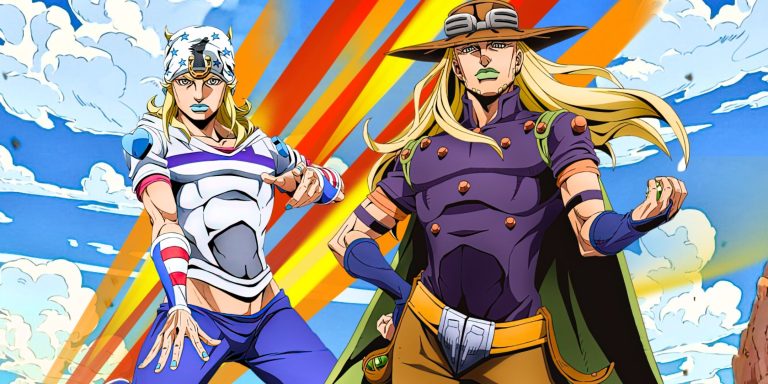
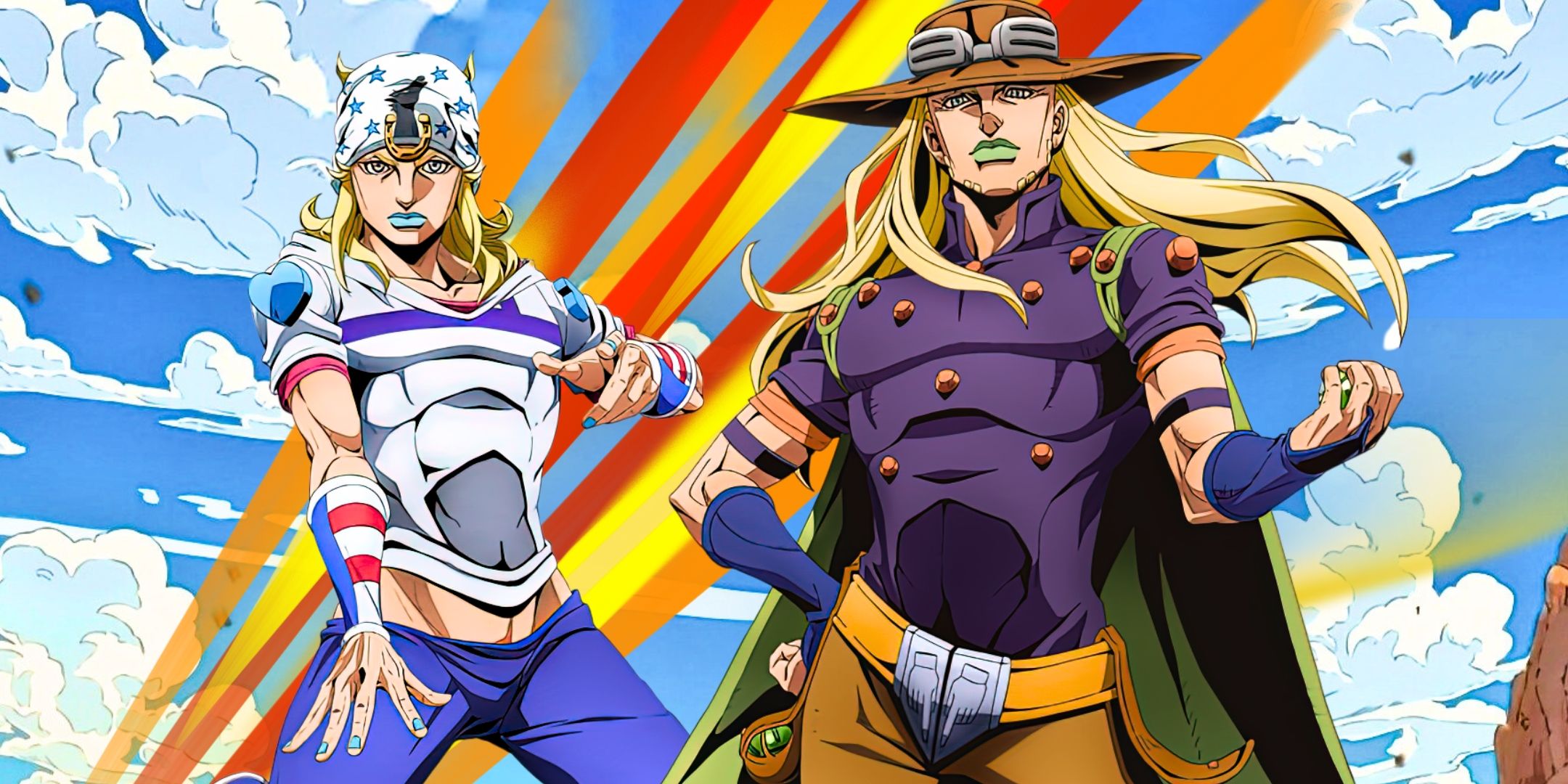
At the center of this dust-choked pilgrimage lies the single greatest character dynamic Araki has ever penned: the complex, emotionally harrowing brotherhood between Johnny Joestar and Gyro Zeppeli.
Johnny Joestar: The Dark Determination of a Paralyzed Prodigy
Unlike his noble ancestors Jonathan or Jotaro, Johnny Joestar is fundamentally unheroic when we first meet him. A former horse-racing prodigy who lost his career, his pride, and the use of his legs to a foolish act of youthful arrogance, Johnny is consumed by spite and spiritual rot. When he witnesses the miraculous kinetic energy generated by Gyro Zeppeli’s Steel Balls—a force that momentarily twitches his lifeless legs—Johnny does not join the race out of patriotism, justice, or chivalry. He joins out of raw, desperate obsession to regain his footing.
Araki frequently visualizes Johnny’s psychological transformation as a terrifying phenomenon known as shikkoku no ishi (dark determination)—an icy, remorseless glint in the eye signifying a man who will slaughter anyone standing between him and self-actualization. This moral grayness makes Johnny one of the most uniquely compelling protagonists in Japanese serialization, a crippled soul clawing his way back to the zero mark.
Gyro Zeppeli: Naples, Nobility, and the Mastery of the Spin
Acting as Johnny’s foil, mentor, and emotional anchor is Gyro Zeppeli, a disgraced executioner’s apprentice from the Kingdom of Naples. Behind Gyro’s grill-toothed smile, absurd operatic musical numbers, and eccentric bravado lies a profound, stoic sense of ethical duty. Gyro rides to win the cross-country race to secure an imperial amnesty for an innocent nine-year-old boy condemned to the scaffold.
Through Gyro, Araki introduced the Spin (Kaiten), an ancient mechanical martial art that harnesses the divine mathematics of the Golden Ratio. Where traditional Stands rely on supernatural manifestations of fighting spirit, the Spin is grounded in an almost theological study of physics, nature, and sacred geometry. The dynamic between Johnny and Gyro evolves from reluctant transactional training into one of the most heart-wrenching, authentic portrayals of mutual survival in contemporary fiction.
The Technical Gauntlet: David Production’s Equestrian Nightmare
If the narrative of Steel Ball Run is a transcendent success, its production reality is an animator’s waking nightmare. The elephant—or rather, the horse—in the room is the foundational reality of the story: it is an eighty-chapter horse race.
In the animation industry, horses are notorious for being the most notoriously difficult, time-consuming subjects to illustrate. Quadrupedal locomotion requires an exhaustive understanding of skeletal kinematics, muscle shifting, and dynamic perspective. The grueling task of hand-drawing dozens of galloping stallions through sandstorms, blizzards, riverbeds, and stampedes over multiple 24-episode seasons is an economic and physical impossibility for traditional 2D animation teams.
Industry insiders and animation analysts agree that David Production must radically revolutionize its pipeline to bring Steel Ball Run to life. The studio, which proved its mettle through hyper-stylized line-work and dynamic color alterations in Golden Wind, must strike an intricate balance between cutting-edge cel-shaded 3DCG models and expressive, hand-drawn close-ups. If the horses feel weightless, sterile, or robotic, the visceral, mud-soaked tension of the race collapses entirely. How the studio navigates this technological hurdle will likely redefine the standard for equestrian action across the medium.
The Evolution of Conflict: Stands, Multiverses, and Patriotic Tyranny
When Stand battles inevitably collide with the mechanics of the Spin, Steel Ball Run ascends to an unrivaled level of kinetic theater. Johnny’s Stand, Tusk, serves as an explicit visual metaphor for his internal maturation. Evolving from an infantile fingernail-spinning parasite (Act 1) into an interdimensional, infinite-rotation juggernaut (Act 4), Johnny’s arsenal transforms in tandem with his acceptance of suffering.
Opposing our duo is what many consider Araki’s greatest antagonist: Funny Valentine, the 23rd President of the United States. Armed with Dirty Deeds Done Dirt Cheap (D4C)—a terrifying Stand that allows him to hop infinitely between parallel dimensions—Valentine does not lust for petty wealth or world domination. He operates under an absolute, zealous belief in American prosperity, seeking the Holy Corpse to divert all global tragedy away from his nation and onto the rest of the world. Valentine’s philosophical clashes with Johnny and Gyro dismantle traditional binary notions of heroism and villainy, challenging the viewer with complex sociopolitical dilemmas regarding destiny, sacrifice, and the price of peace.
The Verdict: The Most Anticipated Crossing in Anime History
The cultural anticipation for the Steel Ball Run anime is no longer a quiet murmur within niche manga forums; it is an omnipresent tectonic plate waiting to shift the entire industry. David Production has demonstrated an almost religious fidelity to Araki’s canon over the past twelve years, but Part 7 demands every ounce of artistic pedigree, structural ingenuity, and technical evolution the studio possesses.
Adapting this magnum opus is not simply about checking off the next chronological box in a beloved franchise. It is about capturing lightning in a bottle twice: resurrecting the dust-caked grit of late-19th-century Americana, humanizing two broken outcasts bound by the geometry of the universe, and delivering an aesthetic spectacle that honors one of the highest peaks of sequential art. The starting gun has not officially fired yet, but make no mistake—the race across the continent has already begun.
What are your biggest hopes and fears for the Steel Ball Run anime adaptation? Do you think David Production should lean into CGI for the equestrian sequences, or stick to traditional 2D? Sound off in the comments below, and stay tuned to Wibux.com for breaking JoJo updates!