
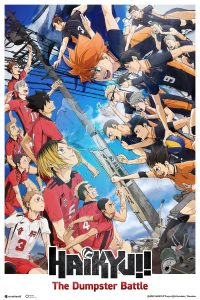
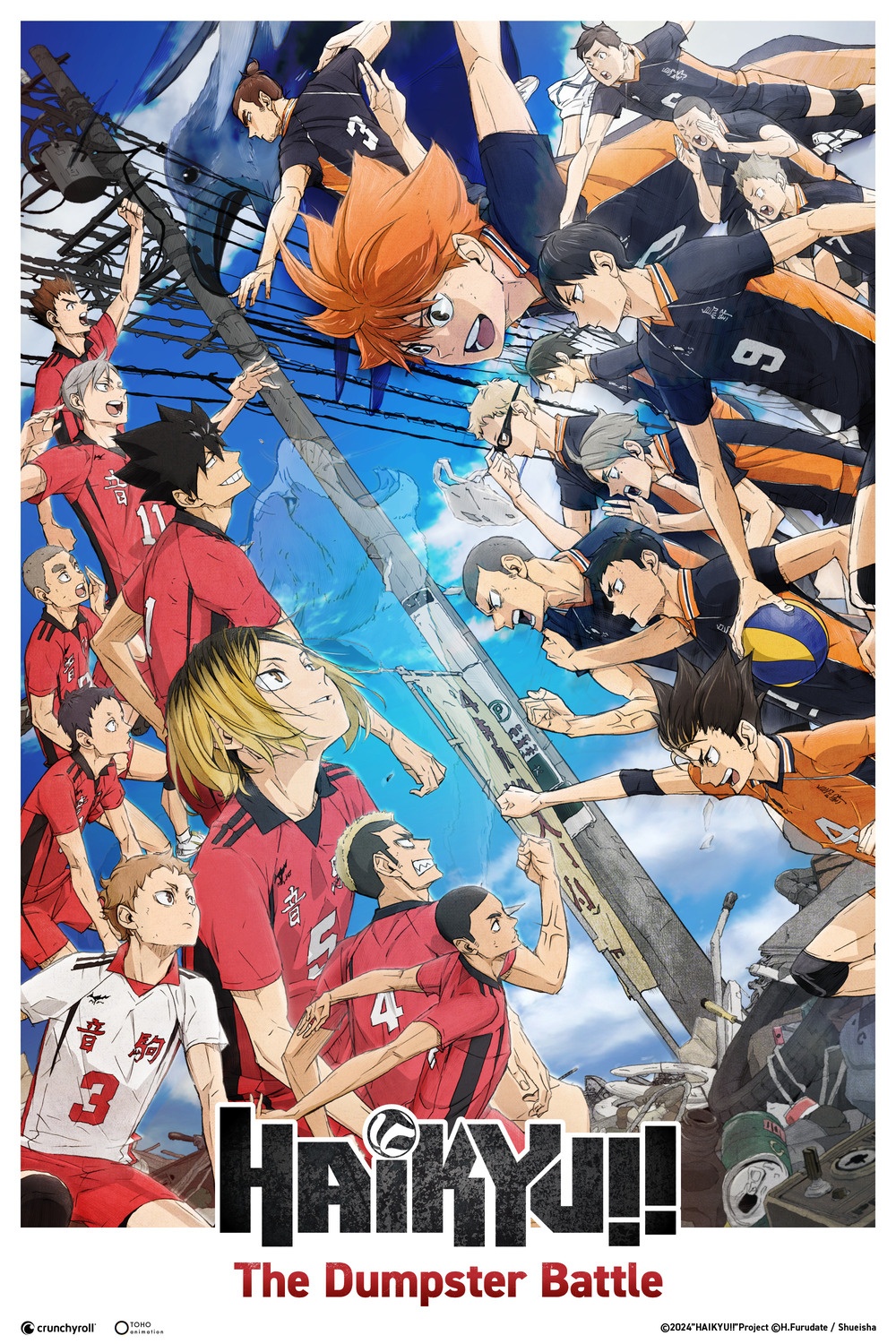
Few matchups in the pantheon of modern shonen carry the emotional, generational, and thematic weight of the clash between Karasuno High and Nekoma High. Dubbed the long-awaited “Dumpster Battle” (Gomisuteba no Kessen), this contest has been teased since Haruichi Furudate first introduced the feline tricksters of Tokyo back in 2012. Now that Haikyu!! The Dumpster Battle has officially made its transition from a box-office-shattering theatrical run to global streaming, fans across the world can finally dissect what is unequivocally the artistic and philosophical zenith of sports anime.
When the film was first announced as a truncated two-part cinematic finale to the franchise, the collective fandom braced for impact, fearing rushed plotlines and butchered character beats. Instead, director Susumu Mitsunaka delivered a tightly wound, hyper-focused marvel of pacing. By dedicating an entire 85-minute feature to a single official match, the production team didn’t just adapt a manga arc; they crafted an intimate, breathtaking dissertation on play, friendship, and the obsessive love of a sport.
The Decades-Long Promise: Beyond the Tournament Bracket
To understand why the Dumpster Battle hits with such tectonic emotional resonance, one must look past the immediate stakes of the Spring Tournament. This was never merely about advancing to the quarterfinals. In traditional sports storytelling, rivalries are often born out of spite, geographical spite, or ideological superiority. Karasuno and Nekoma, however, share a lineage bound by decades of quiet frustration and mutual reverence.
The rivalry belongs first to the grandfathers: former Karasuno coach Ikkei Ukai and Nekoma’s tactician Yasufumi Nekomata. Decades earlier, their respective schools engaged in endless practice games, dreaming of the day their crows and cats would square off not on an unpolished gymnasium floor in the countryside, but on the blindingly bright, orange court of the Tokyo Metropolitan Gymnasium. That dream outlived their coaching careers, trickling down like an ancestral myth to boys who had never met until a fateful practice camp.
What makes this streaming premiere so monumental is the finality of the premise. Unlike the training matches where teams swapped sets until the sun went down, this is single-elimination. There are no do-overs. There is no tomorrow. The existential stakes transform every dig, serve, and block into a desperate attempt to keep the ball—and the dream—suspended in the air for just one more second.
The Psychological Chess Match: Kenma Kozume’s Digital Architecting
At the beating heart of The Dumpster Battle sits Kenma Kozume. Where sports anime protagonists are routinely defined by roaring passion and hot-blooded determination, Nekoma’s setter has always operated like a detached gamer looking for the most efficient exploit. The film reframes the entire Karasuno offensive assault not through Shoyo Hinata’s exuberant eyes, but through Kenma’s analytical, claustrophobic lens.
Clipping the Crow’s Wings
Kenma doesn’t try to out-muscle or out-jump Karasuno; he conducts an architectural dismantling of their ecosystem. Recognizing that Hinata is a kinetic organism that requires momentum, Kenma uses roll shots, targeted serves, and spatial confinement to effectively cage the beast. The visual metaphors employed by Production I.G throughout this sequence are sublime: Hinata isn’t merely trapped on a volleyball court; he is boxed into an invisible birdcage, his run-up path stripped away piece by piece.
This dynamic makes Hinata’s eventual breakthrough so electrifying. It is not an awakening born of sudden superhuman strength, but of shared volleyball intellect. Hinata adapts by incorporating Kageyama’s ultra-high, floating sets, turning an oppressive geometric trap into an open sky. He jumps not for speed, but for height—defying the algorithm Kenma so meticulously coded.
The “Tanoshii” Heard Round the World
Yet the true emotional climax doesn’t arrive with a spike breaking the floorboards; it arrives on Kenma’s face. Throughout four seasons of anime, Kenma has treated volleyball as a chore—something he does solely because his childhood friend Tetsuro Kuroo asked him to. As the third set degenerates into a grueling battle of endurance, Kenma’s pristine, detached demeanor shatters into heavy, sweat-soaked gasps.
When he looks at Kuroo and utters the simple phrase, “Tanoshii” (“It’s fun”), it lands with the emotional impact of a grand shonen declaration. It is the victory Kuroo spent years cultivating: the awakening of a soul through the shared beauty of play.
Kinetic Mastery: How Production I.G Redefined Sports Cinematography
Aesthetically, The Dumpster Battle is a showcase of Production I.G firing on all creative cylinders. Director Susumu Mitsunaka, returning to the helm after stepping away for season four, restores the razor-sharp kinetic visual language that made the anime’s first three seasons legendary.
The cinematography consistently trades standard multi-camera angles for fluid, court-level tracking shots that mirror the spatial reality of professional volleyball. Animators prioritize the elasticity of the human form, capturing the violent coil of a shoulder blade before a spike and the agonizing micro-seconds of a floor-burn dig. The sound design is equally uncompromising; the squeak of rubber soles against hardwood, the thumping resonance of a Mikasa ball, and the ragged, shallow panting of exhausted teenage athletes create a sensory immersion rarely achieved in the medium.
Nothing demonstrates this technical bravery better than the climactic final rally: an extended, uninterrupted first-person POV shot from Kenma’s perspective. As sweat blurs his peripheral vision and his limbs turn to lead, the audience is thrust directly into the suffocating reality of athletic collapse. We feel the sheer panic of an errant ball slipping through exhausted fingers not as an external observer, but as the tired kid desperately trying to push his body forward. It is a staggering piece of experimental animation that will be studied for years to come.
The Radical Empathy of Haikyu!!
Ultimately, what elevates The Dumpster Battle from a stellar action spectacle to sports anime perfection is its complete rejection of animosity. In an era where rivalries are so often fueled by spite or zero-sum stakes, Haikyu!! champions radical empathy.
Nekoma and Karasuno are not enemies; they are co-authors of a singular athletic masterpiece. Kuroo spends his free time teaching Karasuno’s Kei Tsukishima how to block. Morisuke Yaku and Yu Nishinoya push each other toward defensive perfection out of sheer professional admiration. When the match finally concludes—not with an explosive, cinematic super-spike, but with an anti-climactic, sweat-slicked ball slipping out of Kenma’s exhausted hands—there are no villains. There are only two groups of boys who gave everything to keep a ball off the ground, looking across the net with profound gratitude.
The Verdict: An Unforgettable Masterpiece on the Small Screen
Bringing The Dumpster Battle to global streaming platforms is more than just a convenient release window; it cements the film’s legacy as one of the most cohesive, emotionally devastating, and technically immaculate sports anime films ever conceived. While some fans may still harbor reservations about compressing the manga’s expansive final arcs into cinematic installments, this film proves that when guided by visionary direction and narrative reverence, brevity can yield absolute poetry.
As the final whistle echoes and the credits roll, one truth remains crystal clear: the Garbage Dump was never about winning or losing. It was about playing a game so fiercely that you never wanted it to end.
Now that Haikyu!! The Dumpster Battle is streaming worldwide, where does this match rank in your personal anime hall of fame? Did Kenma’s first-person perspective floor you, or are you already bracing for the impending battle against the Little Giant at Kamomedai? Sound off in the comments below!