For more than a decade, David Production has pulled off one of the most celebrated creative tightropes in modern anime history. Adapting Hirohiko Araki’s multi-generational epic, JoJo’s Bizarre Adventure, was once considered an impossible errand. Yet, from the Victorian corridors of Phantom Blood to the tragic, reality-resetting crescendo of Stone Ocean, the studio not only conquered the source material—they elevated it into an unmatched pop-culture phenomenon. But ever since the credits rolled on Jolyne Cujoh’s saga, the global fandom has turned its eyes toward the western horizon with an obsessive, unified whisper: Steel Ball Run.
Widely regarded by critics and manga scholars as Araki’s undisputed magnum opus, Part 7 isn’t merely another installment in the franchise. It represents a total reinvention of the medium, an astonishing seismic shift in tone, scope, and thematic ambition. As whispers within the anime industry grow louder and speculative timelines place an official production reveal squarely in the mid-2020s, the hype surrounding Steel Ball Run has transitioned from hopeful wish fulfillment to an inevitable reckoning for David Production.
A Trans-American Odyssey: Araki’s Seinen Rebirth
To grasp why the anime community treats the prospective adaptation of Steel Ball Run with near-religious reverence, one must understand its place in Araki’s artistic evolution. Serialized initially in Weekly Shonen Jump in 2004 before shifting to the monthly Ultra Jump, Part 7 unshackled the author from the relentless pacing and demographic guardrails of traditional youth-oriented manga. The monthly schedule offered Araki breathing room, allowing him to weave sprawling historical panoramas, complex philosophical dilemmas, and layered character psychologies that simply could not exist in earlier parts.
Set against the dusty, sun-baked expanse of 1890 America, Steel Ball Run chronicles an unprecedented transcontinental equestrian race boasting a fifty-million-dollar purse. Yet the titular race quickly reveals itself as an elaborate smokescreen for an apocalyptic scavenger hunt: the recovery of the fragmented, mummified Corpse of an ancient holy figure, which bestows unfathomable supernatural blessings upon whoever possesses it. By fusing American manifest destiny, spaghetti western grit, and Araki’s signature high-fashion surrealism, Part 7 operates on an atmospheric tier all its own.
Johnny, Gyro, and the Geometry of Fate
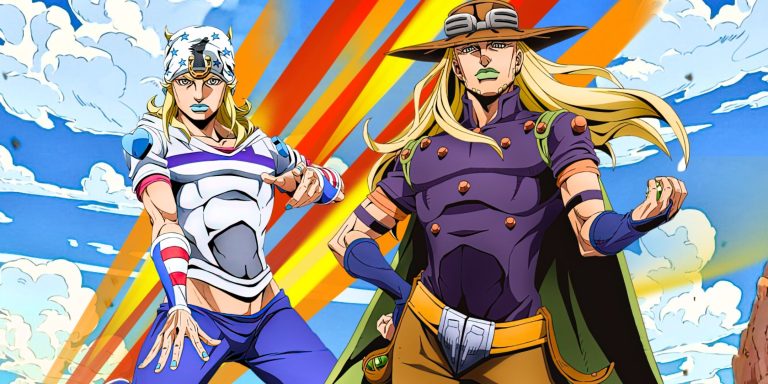
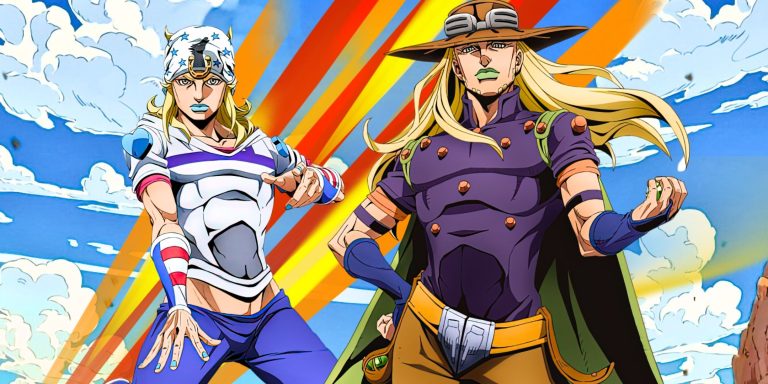
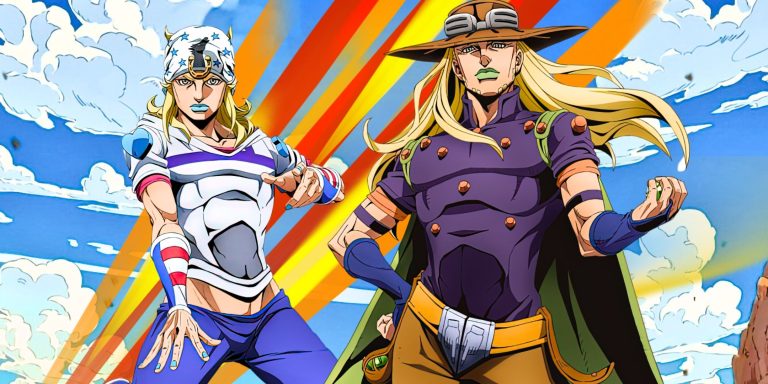
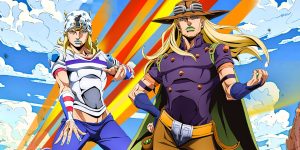
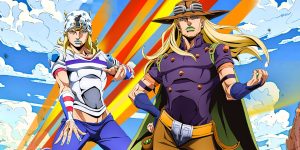
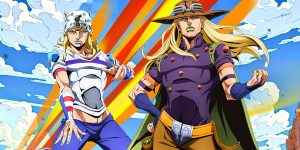
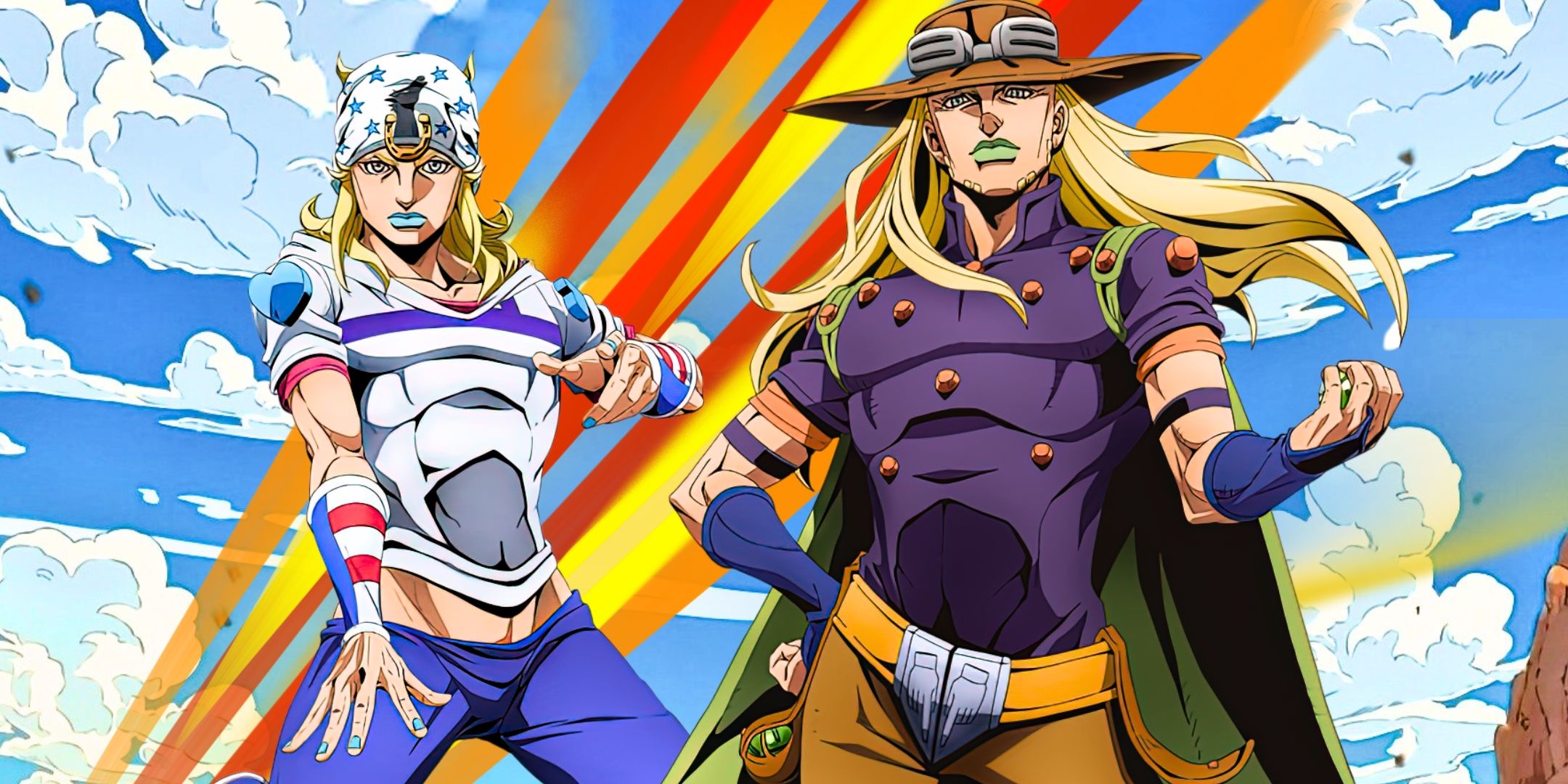
At the center of this bloodstained expedition is the most compelling dual-protagonist dynamic in contemporary manga: Johnny Joestar and Gyro Zeppeli. Their partnership moves far beyond the archetypal rivalries or sunny brotherhoods typical of adventure narratives, functioning instead as a poignant exploration of trauma, mentorship, and existential redemption.
The Dark Determination of Johnny Joestar
Unlike his heroic forebears—the chivalrous Jonathan or the noble Jotaro—Johnny is a fundamentally broken human being. A former horse-racing prodigy struck down in his prime by a senseless act of violence, Johnny begins the race paraplegic, bitter, and discarded by society. What drives him is not altruism, but an insatiable, selfish yearning to reclaim feeling in his legs. Throughout the narrative, Araki illustrates Johnny’s notorious “dark determination”—manifested through chilling, flame-lit eyes—signaling a protagonist entirely willing to kill and sacrifice moral purity to achieve his ends. His Stand, Tusk, mirrors this harrowing spiritual metamorphosis, evolving across four distinct evolutionary “Acts” as Johnny reclaims his autonomy.
The Spin: Expanding Martial Arts Beyond Hamon
Standing opposite Johnny is Gyro Zeppeli, a disgraced Neapolitan executioner armed with mystical steel orbs and a desperate bid to save an innocent boy from execution. Gyro introduces the narrative to The Spin: a physics-defying martial art grounded in the ancient Golden Ratio. Unlike the psychic manifestations of early Stand battles, the Spin introduces complex geometric logic and physiological manipulation to Araki’s combat philosophy. The transition from crude kinetic rotational energy to the reality-shredding, infinite power of the Golden Spin represents some of the most conceptually daring storytelling in modern fiction. Translating these intricate mathematical concepts into fluid, readable animation will require David Production to push their stylistic boundaries further than ever before.
The Technical Crucible: David Production’s Equestrian Nightmare
The prolonged silence surrounding Part 7’s production is no mystery to seasoned anime observers. Animating Steel Ball Run is a logistical and technical nightmare, predominantly due to one fundamental factor: horses.
In the animation industry, horses are notoriously feared. Their quadrapedal gait, complex skeletal anatomy, muscular shifting, and sheer physical presence demand an extraordinary budget and immense hand-drawn skill to execute convincingly. Now multiply that challenge across hundreds of competing jockeys traversing shifting terrains—from the scorched sands of the Arizona desert to icy Midwestern plains—over dozens of high-stakes, hyper-kinetic Stand duels.
David Production stands at a crossroads. Relying entirely on traditional 2D animation for dozens of galloping steeds across an anticipated 40-plus episodes would burn out any animation staff in Tokyo. Conversely, the heavy-handed use of sterile, jarring CGI could instantly alienate an intensely protective fanbase. If the studio hopes to succeed, they must deploy an intelligent, hybrid pipeline reminiscent of modern masterworks like Vinland Saga or Chainsaw Man: utilizing meticulously rendered 3D base models seamlessly integrated beneath hand-drawn linework, dynamic camera movement, and David Production’s trademark vibrant color-palette shifts.
The Antagonist Benchmark: Funny Valentine and the First Napkin
Any conversation about Steel Ball Run remains incomplete without acknowledging its central antagonist, the 23rd President of the United States, Funny Valentine. Valentine represents a radical evolution from earlier villains like Dio Brando or Yoshikage Kira. He is not motivated by petty malice or psychopathic compulsion; he is driven by an unyielding, fanatical patriotism.
Armed with his dimension-hopping Stand, Dirty Deeds Done Dirt Cheap (D4C), Valentine seeks the Holy Corpse to ensure the eternal prosperity of the United States, even if it redirects all global misfortune to the rest of the world. His infamous philosophical monologue regarding “who takes the first napkin” frames an ideological struggle that makes the climax of Part 7 intellectually mesmerizing. Balancing Valentine’s terrifying charisma with Johnny’s unrefined desperation creates an electric friction that David Production’s writers and voice directors must handle with exceptional finesse.
The Long Road to the Starting Line
The appetite for Steel Ball Run is not just a niche manga obsession—it is a cultural tipping point for anime at large. Following the polarizing, fragmented batch-release model that hindered Stone Ocean’s initial momentum on Netflix, Warner Bros. Japan and David Production are under massive pressure to return to a weekly, event-television broadcast format for Part 7. The sweeping scope of the cross-country race practically demands a communal, week-to-week viewing experience that allows theories, memes, and artistic appreciation to breathe.
Adapting Hirohiko Araki’s magnum opus is David Production’s definitive Everest. The technical hurdles are terrifying, the narrative expectations are astronomically high, and the emotional stakes are unparalleled. Yet, if the studio captures even a fraction of the raw, kinetic soul driving Johnny and Gyro across the American frontier, Steel Ball Run will not just be another celebrated anime season—it will establish itself as a watershed moment in the history of visual storytelling.
What are your biggest hopes—and deepest anxieties—for David Production’s inevitable adaptation of Steel Ball Run? Which iconic duel are you most desperate to see animated? Let us know in the comments below, and stay locked to Wibux.com for all breaking anime industry reports.