In the vast, hyper-saturated tapestry of contemporary anime, few unannounced projects command the tectonic cultural gravity of JoJo’s Bizarre Adventure: Steel Ball Run. Ever since the melancholic, universe-resetting chords of Stone Ocean faded out in late 2022, the global anime community has collectively held its breath. Hirohiko Araki’s seventh installment is not merely another chapter in an ongoing multigenerational saga; it is widely venerated as his undisputed magnum opus—a sweeping, hyper-ambitious reinvention of his entire artistic philosophy. For David Production, the studio that transformed Araki’s idiosyncratic visual grammar into a generation-defining pop-art anime phenomenon, adapting Steel Ball Run represents both the ultimate artistic prize and an intimidating technical gauntlet.
A Trans-American Crucible: Araki’s Seinen Metamorphosis
To understand the fervent buzz enveloping Steel Ball Run, one must first recognize the paradigm shift it signaled within the manga industry. Serialized between 2004 and 2011, the story marks the pivotal moment Araki transitioned from the frantic, weekly editorial cadence of Weekly Shonen Jump to the monthly, mature freedom of Ultra Jump. Freed from youth-oriented demographic boundaries, Araki stripped away classic shonen conventions to craft an uncompromising, dusty, blood-splattered cross-country race across a mythologized 1890s North America.
The premise is deceptively simple: eccentric philanthropist Steven Steel orchestrates a grueling 6,000-kilometer coast-to-coast equestrian race boasting a life-changing $50 million grand prize. Yet, beneath the thundering hooves, the expedition quickly morphs into an esoteric hunt for the mummified, miraculous relics of a holy figure—all backdropped by the geopolitical machinations of United States President Funny Valentine. What could have been a straightforward sports tournament evolves into an exploration of cosmic destiny, manifest destiny, and profound human suffering. By discarding the linear lineage of previous Joestar dynasties, Araki achieved creative liberation, delivering a sprawling epic that sits comfortably alongside legendary western literature and cosmic supernatural fiction.
The Dynamic Duumvirate: Johnny Joestar, Gyro Zeppeli, and Moral Ambiguity
The Paraplegic Jock: Johnny’s Dark Rebirth
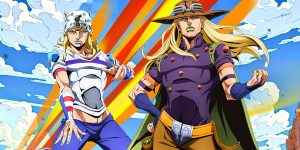
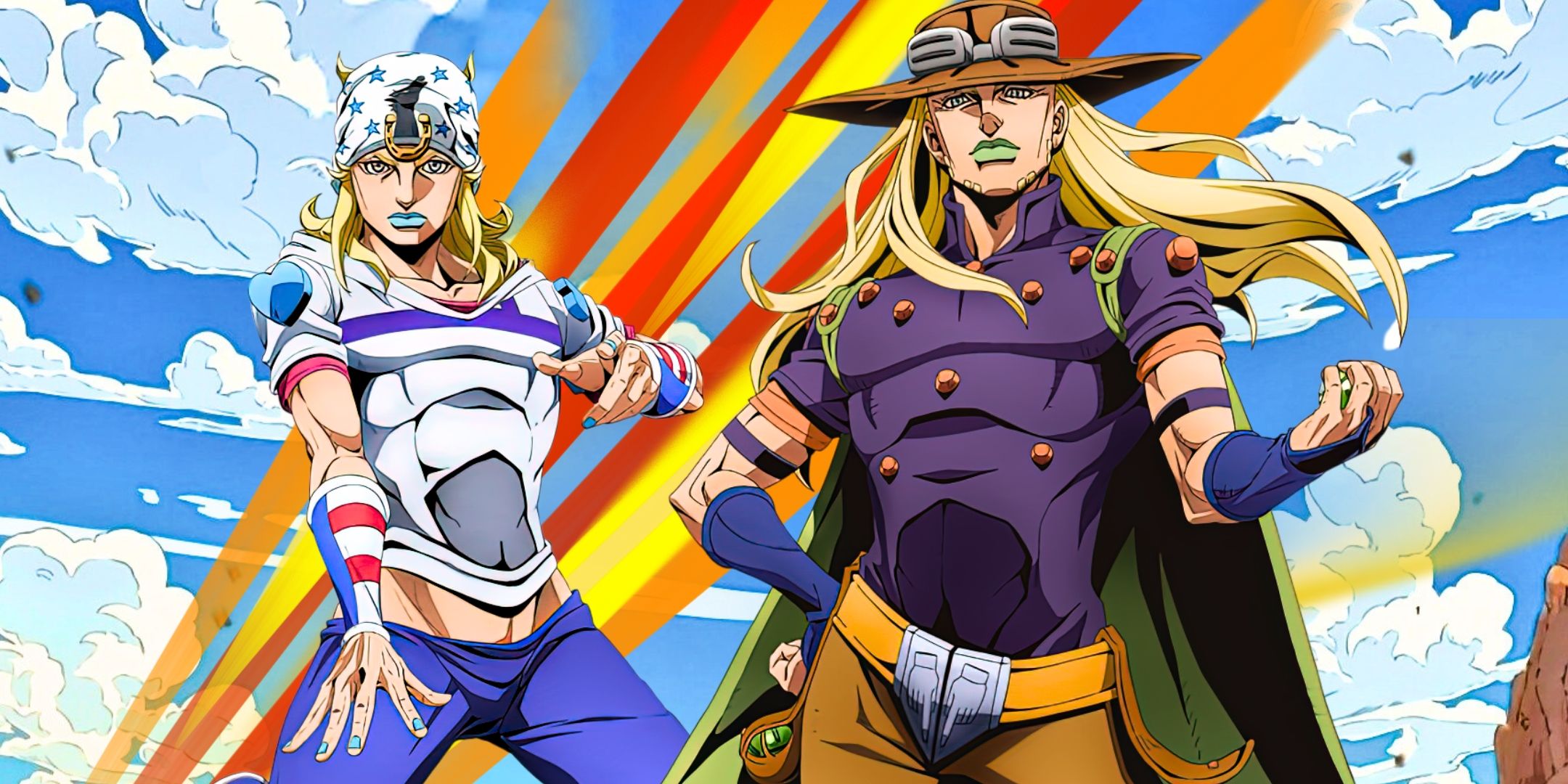
At the beating heart of Steel Ball Run is Johnny Joestar, arguably the most psychologically complex protagonist Araki has ever penned. Far from the gallant chivalry of Jonathan or the charismatic swagger of Joseph, Johnny begins his arc as a fallen golden boy—a former equestrian prodigy paralyzed from the waist down by his own reckless hubris. Bitter, isolated, and stripped of his identity, Johnny is not driven by an altruistic quest to save the world; he is driven by an obsessive, nearly unhinged hunger to reclaim his autonomy.
Johnny’s awakening—catalyzed by a chance encounter with the mysterious Spin technique that momentarily twitches his paralyzed limbs—propels him into the race. Throughout the narrative, Johnny displays what Araki famously terms a “dark ego”: an unhesitating willingness to kill, exploit, and sacrifice morality to achieve his ends. His Stand, Tusk, mirrors this agonizing psychological journey, evolving from an innocent, infant-like fingernail-shooting projectile into an earth-shattering interdimensional juggernaut. It is a portrait of catharsis, disability, and redemption rendered with raw, unapologetic vulnerability.
Gyro Zeppeli and the Way of the Spin
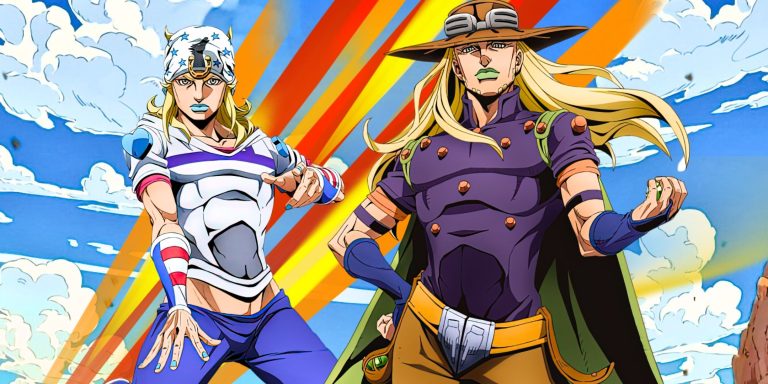
Counterbalancing Johnny’s brooding desperation is Gyro Zeppeli, a character whose swagger, gold teeth, and Neapolitan executioner lineage immediately cemented him as an iconic manga deuteragonist. Gyro enters the race not for imperial relics or fame, but to win amnesty for an innocent child condemned to death by the harsh laws of the Kingdom of Naples. He serves not merely as Johnny’s ally, but as his mentor, grounding the journey with an unforgettable blend of absurd gag humor and philosophical wisdom.
Through Gyro, Araki introduced the Spin: a mathematically divine martial system rooted in the Golden Ratio and the Fibonacci sequence. By manipulating kinetic energy through spinning steel spheres, Gyro wields an art form that bridges anatomical precision, celestial geometry, and metaphysical power. The dynamic between Johnny and Gyro—a wounded cynic finding fraternal salvation in a flamboyant, deeply honorable rogue—elevates Steel Ball Run from a spectacle of superpowered duels into a profound, tear-soaked meditation on human connection.
The Equestrian Nightmare: David Production’s Technical Horizon
The Impossible Physics of the Horse
For all the thematic grandeur of Steel Ball Run, the anime adaptation faces an infamous logistical leviathan: horses. In the animation industry, quadrupeds—and specifically horses in full gallop—are notorious animators’ graveyards. Their skeletal anatomy, shifting musculature, rhythmic gait, and weight distribution demand immense technical precision. A single horse moving realistically in traditional hand-drawn 2D animation requires top-tier animators and lavish budgets; a pack of dozens of horses charging through mud, blizzards, and canyon walls throughout a multi-cour production is an unprecedented resource sink.
David Production has historically pushed 2D stylized aesthetics to their absolute limits, combining color shifts, hand-lettered onomatopoeia, and dynamic framing. However, industry insiders widely recognize that Steel Ball Run will necessitate a sophisticated hybrid approach. The burning question among fans is whether DP can integrate high-fidelity 3DCG equine models that seamlessly merge with their signature saturated, hyper-expressive 2D character art, or if they will face the visual uncanny valley that has occasionally hindered previous ambitious adaptations.
Directorial Vision and Post-Stone Ocean Expectations
The stakes are further amplified by the lingering community discourse around Part 6, Stone Ocean. While praised for its vocal performances and emotional finale, its disjointed Netflix batch-release schedule fractured communal viewing hype, while production timelines visibly strained its climactic sakuga sequences. For Part 7, David Production cannot afford compromise. Fans expect the cinematic pacing, lush background work, and auditory excellence on par with the studio’s finest work on Golden Wind. Rumors of extended pre-production cycles suggest that DP is acutely aware of the weight of expectations, deliberately taking their time to develop specialized pipelines before firing the starter pistol.
The Cultural Ignition Point: Why the World Waits for Part 7
The unrelenting appetite for Steel Ball Run on forums, social media, and anime conventions points to a shifting appetite in global fandom. Audiences have grown up alongside modern shonen; they are now hungering for mature, morally intricate narratives that combine blockbuster action with profound thematic resonance. Steel Ball Run delivers precisely this balance. It features iconic showdowns against bizarre Stand users like Diego Brando and Ringo Roadagain, paired with philosophical clashes over the greater good versus individual autonomy against President Valentine’s multidimensional Stand, Dirty Deeds Done Dirt Cheap (D4C).
When David Production inevitably drops the first teaser trailer—whether it features the rhythmic clatter of steel balls against leather or the silhouetted gallop of horses across a crimson prairie—it will dominate anime discourse for years to come. Steel Ball Run is not just the next season of an episodic franchise; it is the crest of a decade-long creative evolution, promising to redefine what a prestige anime adaptation can achieve.
Verdict: The Long Ride Ahead
Adapting Hirohiko Araki’s masterwork requires David Production to scale the most treacherous mountain in modern animation. The combination of intense narrative maturity, groundbreaking equine choreography, and universally beloved character arcs means the room for error is razor-thin. Yet, if the studio captures even a fraction of the manga’s searing kinetic beauty, Steel Ball Run will unquestionably stand as one of the defining cultural monuments of the anime medium.
What are your biggest hopes for the Steel Ball Run adaptation? Do you want to see a fully 2D approach or a hyper-stylized CGI hybrid for the race sequences? Sound off in the comments below, and keep your browsers locked to Wibux for breaking anime updates!