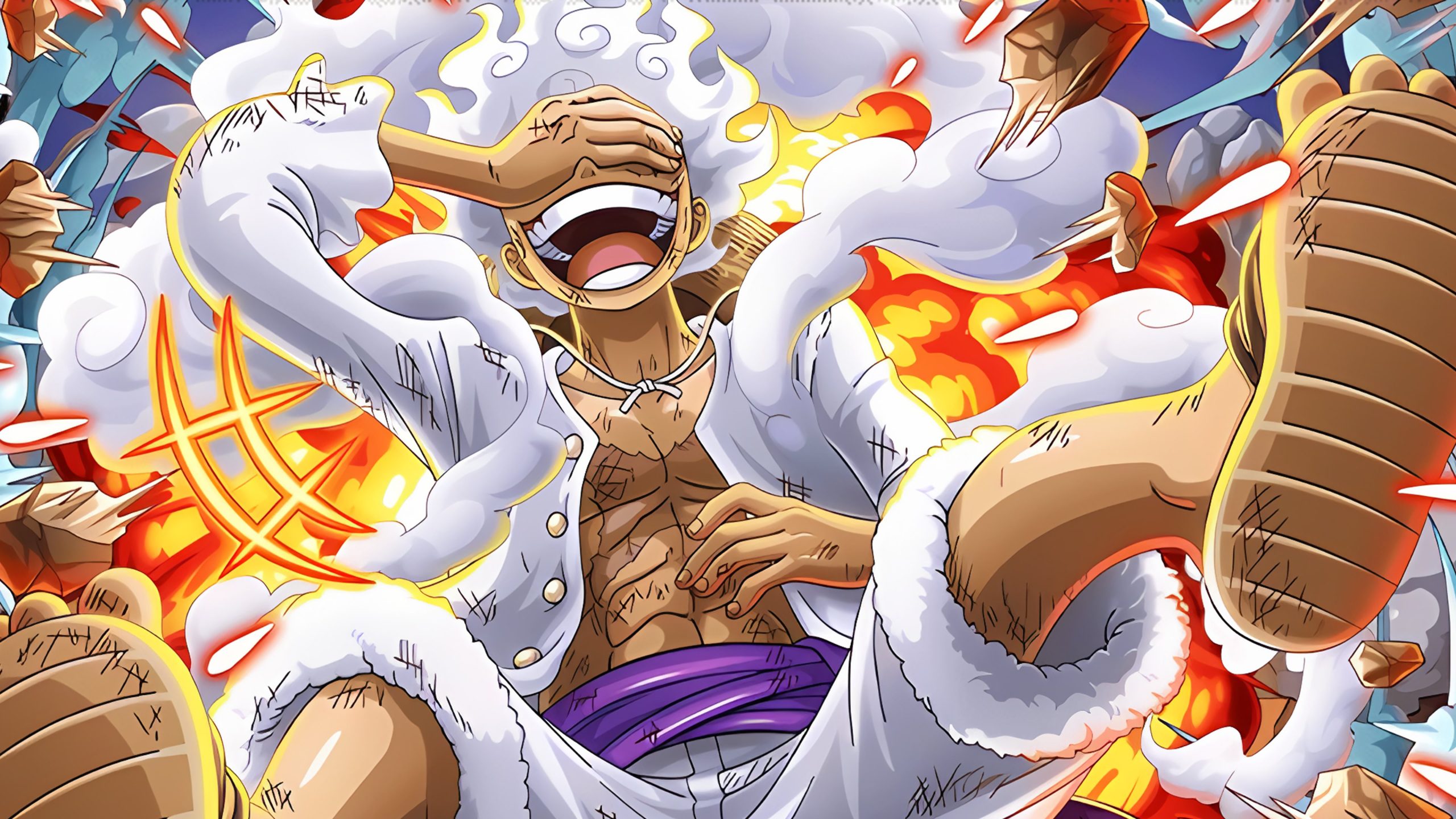
In the grand tapestry of shonen history, few authors treat numerical milestones with the sacred reverence that Eiichiro Oda affords One Piece. From Chapter 100’s mythic rain-soaked proclamation in Loguetown to the paradigm-shattering celebration of Straw Hat Luffy in Chapter 1000, these centurial signposts are never mere page-turners—they are structural fulcrums upon which the entire grand narrative pivots. As the serialized odyssey marches resolutely toward the monumental threshold of Chapter 1200, the fandom finds itself suspended over a narrative powder keg. The long-awaited Elbaf Arc has moved past its whimsical fairy-tale introduction into the murkier waters of ancient geopolitics, eschatological dread, and dynastic tragedy. At the bleeding edge of current discourse lies a theory that is as terrifying as it is narratively inevitable: Chapter 1200 will not just showcase a fight; it will unveil the subterranean Void Century war relics buried beneath the roots of the Treasure Tree Adam, catalyzed by the unchaining of Prince Loki’s apocalyptic, divine wrath.
The Subterranean Vaults: Adam, Eve, and the Buried Relics of the Void Century
For decades, scholars of Oda’s meticulous worldbuilding have parsed the enigmatic botanical dichotomy between the Sun Tree Eve—which channels oceanic sunlight down to Fish-Man Island—and the resilient, war-hardened Treasure Tree Adam. Elbaf’s towering continental centerpiece is not merely an homage to the Norse Yggdrasil; it is the biological anchor of the ancient world. While the surface of Elbaf represents a warrior’s pastoral paradise, Chapter 1200 is strategically primed to invert our perspective downward, into the subterranean abyss where the tree’s colossal roots plunge into the planet’s mantle.
The Iron Giants of the Underworld: Relics of the Great Cleansing
Vegapunk’s explosive global broadcast during the climax of the Egghead Incident verified what lore theorists long suspected: the world we know is built atop the sunken, drowned wreckage of an advanced, continent-spanning civilization. While the rest of the world succumbed to the rising tides caused by the Ancient Weapons, Elbaf’s sheer altitudinal scale spared its deepest roots from submergence. What lies trapped beneath the Underworld where Prince Loki sits bound?
The prevailing theory posits that beneath the roots of Adam lies an ancient armory: mass-manufactured prototypes of the Iron Giant Emet, catastrophic Void Century kinetic armaments, and perhaps the terrestrial blueprints for Pluton itself. If Elbaf served as Joy Boy’s final redoubt during the twilight of the Great War, the island is not merely home to giants—it is an unsanctified museum of weapons designed to crack the Red Line. Oda has deliberately teased that the giants salvage history; having rescued the scorched remnants of Ohara’s library, it stands to reason their ancestors entombed the material instruments of the Void Century far beneath the scrutiny of the World Government’s surveillance.
The Unshackled “Sun God” Imposter: Decoding Prince Loki’s Divine Wrath
At the beating thematic heart of this emerging milestone sits Prince Loki, the self-proclaimed “Sun God” who was introduced bound in colossal Sea Prism Stone chains, suspended like a captive titan awaiting Ragnarok. Oda’s characterization of Loki is a masterclass in moral ambiguity. Cast out as a pariah for slaying his father, King Harald, and consuming a legendary Devil Fruit passed down through the royal lineage, Loki’s outward villainy carries the distinct, theatrical scent of a tragic cover-up.
A Shattered Psyche and the Forbidden Zoan
Why did Loki murder his father? The psychological framework being constructed within the community suggests a profound generational clash. Harald may have sought appeasement or neutrality with the World Government—perhaps even entering clandestine accords with the World Nobles to protect Elbaf from an impending global purge. Loki, recognizing that compliance equals extinction, chose patricide and damnation over subjugation. His obsession with the “Sun God” title is not merely juvenile arrogance; it is a direct ideological counter to the dawn Luffy represents.
The unchaining of Loki in Chapter 1200 threatens to unleash a power that mirrors, yet corrupts, the liberation of Gear 5. Speculation surrounding his Devil Fruit leans heavily toward a Mythical Zoan tied to destruction—whether it be the world-gnawing dragon Níðhöggr, the celestial wolf Fenrir, or a primordial titan fruit that manipulates raw terrestrial gravity. When those chains shatter, Oda will not give us an unthinking brute; he will give us a vengeful demigod whose rage is aimed directly at the heavens, threatening to tear down the world order from the bottom up.
The Holy Knights Converge: Figarland Garling’s Dark Reckoning
The narrative momentum toward Chapter 1200 cannot be analyzed in a vacuum, detached from the terrifying political restructuring within Mariejois. With Saint Figarland Garling elevated to the Five Elders as the Godhead of Science and Defense, the World Government’s elite military enforcement wing—the Holy Knights (God’s Knights)—has officially shifted from a shadowy defensive vanguard to an offensive shock doctrine.
The World Government has historically avoided direct conflict with Elbaf due to the peerless martial prowess of its giant legions. However, with the truth of the Void Century leaking across the seas and the ancient war relics stirring beneath Adam’s roots, the status quo is irrevocably broken. A convergence is imminent. The theory that the Holy Knights are en route to Elbaf to assassinate Loki, secure the subterranean relics, and impose an absolute blockade mirrors the historical tragedy of God Valley. Chapter 1200 could very well serve as the intersection where Garling’s ideological purge crashes headlong into Luffy’s absolute chaos, forcing the Straw Hats to fight an asymmetrical war on two fronts: the unraveling wrath of an unbound Loki and the cold, surgical extermination protocols of the World Nobles.
Fandom Crucible: Pacing, Mythology, and Oda’s Endgame Trajectory
The reception to the Elbaf Arc’s initial pacing among the global community has been remarkably electric. On platforms from Reddit’s r/OnePiece to Japanese message boards, fans have noted a distinct tonal shift post-Egghead. The series is no longer meandering through localized island politics; every dialogue exchange carries the gravitas of the impending final war. Prince Loki’s parallels to classical Norse myths—specifically his fated role in initiating Ragnarok—have ignited intense debates over whether Luffy will be forced to conquer, redeem, or ally with the Cursed Prince.
Furthermore, Chapter 1200 holds profound metatextual weight. With Oda openly discussing his desire to steer the manga toward its concluding crescendo, this chapter cannot afford to be a transitional bridge. It must deliver an emotional and mythic gut-punch. Revealing that Elbaf’s subterranean roots harbor the mechanical bones of Joy Boy’s lost armada, combined with the catastrophic awakening of Loki’s unbound power, fulfills every expectation of a centurial milestone while setting the apocalyptic stakes for the final saga.
Verdict: The Bell of Ragnarok Tolls for the World Order
As the countdown to Chapter 1200 narrows, One Piece stands upon the precipice of its most devastating thematic convergence yet. Elbaf is not a safe haven; it is a dormant volcanic caldera of historical apocrypha waiting for a spark. Whether Prince Loki emerges as Luffy’s dark mirror, an ally forged in blood and betrayal, or the cataclysmic harbinger who forces the Gorosei to unveil their final hand, one reality remains undeniable: the chains binding the past are snapping, and the dawn that follows will be forged in divine, unadulterated fire.
What are your predictions for Chapter 1200? Will Prince Loki prove to be a tragic ally in Luffy’s war against the World Government, or is his unchained fury destined to destroy Elbaf from within? Let your voice be heard in the comments below, and stay tuned to Wibux.com for unmatched weekly manga breakdowns!