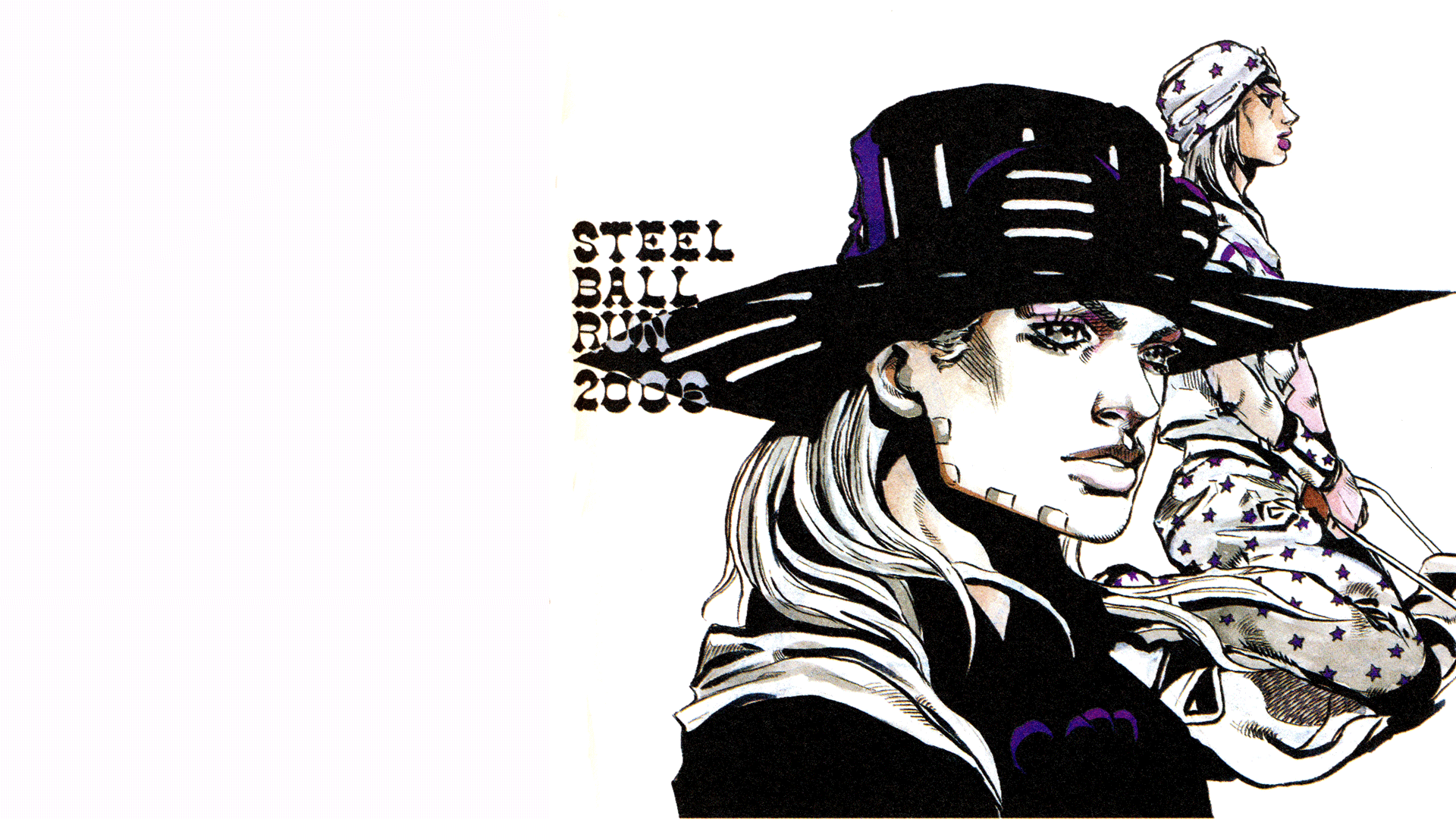
Ever since the melancholic, bittersweet notes of “Distant Dreamer” faded at the climax of Stone Ocean, a profound stillness has lingered over the anime landscape. For over a decade, David Production pulled off what was once deemed impossible: adapting Hirohiko Araki’s hyper-stylized, multi-generational saga into an audiovisual tour de force. Yet, the end of the original Ireneverse continuity was never meant to be an endpoint. Instead, it quietly set the stage for an adaptation that anime fandom discusses with hushed reverence and feverish speculation: JoJo’s Bizarre Adventure: Steel Ball Run.
Widely regarded not just as Araki’s crowning artistic achievement, but as one of the greatest serialized manga ever penned, Steel Ball Run (Part 7) represents a clean slate and an astronomical leap in storytelling maturity. But as the rumor mill churns and speculative production timelines leak across social media, the excitement is tempered by a looming reality. Adapting this trans-continental equestrian epic is an undertaking fraught with technical nightmares, aesthetic pivots, and monumental expectations. For David Production, Part 7 isn’t just another sequel—it is their creative Everest.
The Seinen Shift: Why Steel Ball Run Stands as Araki’s Magnum Opus
To understand the deafening buzz surrounding a potential Steel Ball Run anime, one must understand its unique publishing history. When Part 7 kicked off in 2004, it was initially presented without the iconic “JoJo” moniker, masquerading as a standalone Western racing epic in Weekly Shonen Jump. However, its true metamorphosis occurred in 2005 when the series migrated to the monthly seinen magazine Ultra Jump. Unshackled from weekly deadlines and the demographic constraints of teen-targeted shonen, Araki’s storytelling evolved exponentially.
Set in 1890, the narrative chronicles the titular Steel Ball Run—a grueling, 6,000-kilometer cross-country horse race spanning from San Diego Beach to New York City. The prize? A staggering $50 million payout. But underneath the dust, sweat, and gunpowder of this historical landscape lies an esoteric hunt for the mummified relics of a biblical Saint, an artifact capable of bending cosmic fortune itself. By combining hyper-realistic period detail, alternate-universe reinvention, and cosmic horror, Araki forged a masterwork that sits comfortably beside titans like Berserk and Vinland Saga in critical acclaim.
Johnny Joestar and Gyro Zeppeli: A Masterclass in Character Psychology
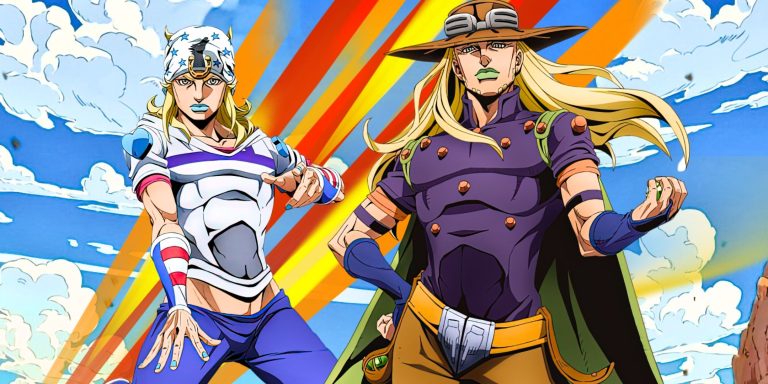
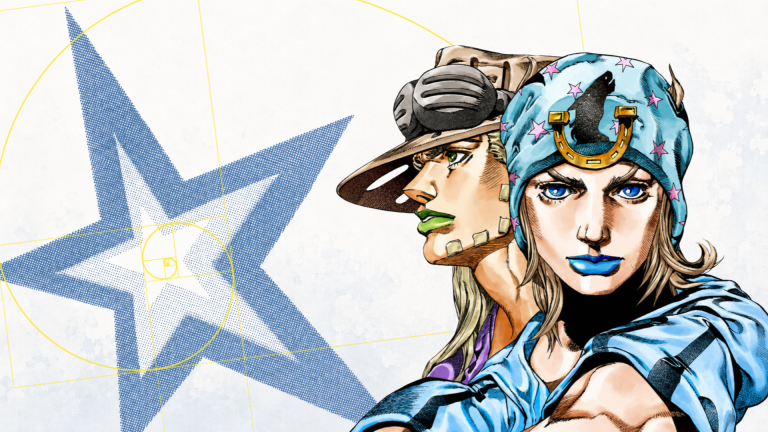
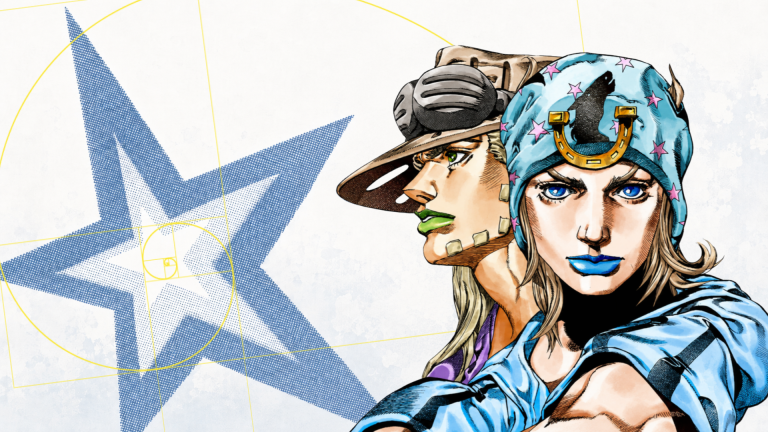
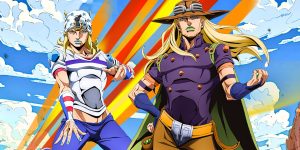
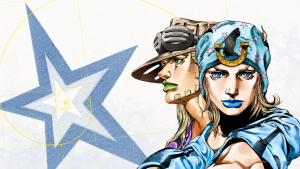
At the beating heart of Steel Ball Run is the electric, deeply human dynamic between its two leads. Abandoning the unequivocal righteousness of Jonathan Joestar or the slick bravado of Jotaro Kujo, Araki crafted two broken men wandering the frontier in search of redemption.
The Dark Ego of Johnny Joestar
Johnny Joestar is fundamentally unique among shonen and seinen protagonists: he begins the story not as an aspiring hero, but as a disgraced, paraplegic former horse-racing prodigy steeped in self-loathing. Struck down at the height of his arrogance, Johnny is consumed by cynicism until a chance encounter with a mystical spinning orb briefly restores movement to his legs. Johnny’s quest throughout the race is devoid of altruism; he is desperate to regain his footing, to move from “negative” back to “zero.” His cold, unflinching willingness to kill—often characterized in the manga by his chilling “dark determinations”—makes him one of the most psychologically complex and morally gray protagonists in manga history.
Gyro Zeppeli and the Way of the Spin
Serving as both mentor and co-lead, Gyro Zeppeli instantly steals every scene he occupies with his grill-toothed grin, puerile sense of humor, and operatic eccentricities. Beneath his flamboyant exterior, however, lies an exiled Neapolitan executioner weighed down by an agonizing crisis of conscience, riding in the race to secure royal amnesty for an innocent child. Through Gyro, Araki introduces The Spin—an ancient physical technique based on the mathematical perfection of the Golden Ratio. Replacing the conventional punch-ghost Stand battles of earlier parts with the trajectory of spinning steel spheres, Gyro’s teachings reframe supernatural combat into an intricate, meditative science that anime audiences are desperate to see translated into motion.
The Elephant in the Studio: David Production’s Equestrian Nightmare
Why hasn’t a formal announcement arrived yet? The answer can be summed up in one word: horses. In the animation industry, horses are notorious for being the single most labor-intensive, technically punishing subjects to draw in traditional 2D animation. Their intricate skeletal movement, muscle tension, and varying gaits have broken budgets and brought legendary animators to their knees.
Steel Ball Run features dozens of racers thundering across plains, canyons, and frozen rivers in sustained, multi-chapter skirmishes. Translating this kinetic cavalry combat onto the screen leaves David Production facing a steep creative dilemma:
Relying exclusively on full 2D sakuga for dozens of continuous equestrian battles would stretch any production timeline past the breaking point. Conversely, an over-reliance on jarring, poorly composited 3D CGI models could fatally compromise Araki’s gritty, cross-hatched aesthetic. Finding the golden mean—likely utilizing advanced cel-shaded 3D rigs for baseline movement alongside meticulous 2D hand-drawn touch-ups for heroic close-ups—demands unprecedented pre-production time. Fans are increasingly aware that if David Production is going to do justice to the spectacle, they cannot cut corners.
Furthermore, the fandom remains vocal about distribution. The fragmented, binge-drop release model that Netflix applied to Stone Ocean significantly dampened the communal, weekly meme culture and analytical hype that made Stardust Crusaders and Golden Wind global sensations. For Steel Ball Run, the community is virtually unanimous: a production of this magnitude demands a return to a serialized, weekly broadcast format to let the dramatic tension breathe.
The Holy Corpse, Cosmic Fortune, and American Ambition
Beyond the race mechanics, Steel Ball Run elevates Araki’s thematic philosophy to profound heights. The overarching antagonist, 23rd U.S. President Funny Valentine, stands as arguably the best-written villain in the entire franchise. Driven not by cartoonish villainy, but by a terrifyingly resolute brand of ultranationalism, Valentine’s doctrine of “taking the first napkin” explores political power, destiny, and moral compromise in ways anime rarely touches.
The progression of Stands throughout the part reflects this thematic depth. From the dimensional hops of Valentine’s Dirty Deeds Done Dirt Cheap (D4C) to the stage-by-stage evolution of Johnny’s Tusk, combat in Part 7 is directly tethered to psychological trauma, spatial physics, and spiritual enlightenment. The clash between Valentine’s divine patriotism and Johnny’s selfish drive for survival crafts a third act that will inevitably dominate online discourse upon release.
The Starting Line Awaits
The anticipation for the Steel Ball Run anime is more than standard franchise hype; it is the collective breath held by a global community waiting for an industry milestone. It presents David Production with a defining challenge: evolve their house style to match a mature, complex frontier epic, or risk falling short of the highest bar Hirohiko Araki ever set. Whenever the starter gun finally fires and the horses tear across the San Diego sands, modern anime will enter a bold new era.
Are you holding out hope for traditional 2D horse animation, or do you trust David Production to nail a hybrid CGI approach? Who is your dream Japanese voice actor for Gyro Zeppeli? Sound off in the comments below!