Ever since the bittersweet, universe-resetting chords of Stone Ocean faded into the ether in late 2022, the anime sphere has existed in a collective state of breath-holding anticipation. For over a decade, David Production pulled off what critics once considered impossible: a faithful, stylistically audacious adaptation of Hirohiko Araki’s multi-generational epic, JoJo’s Bizarre Adventure. Yet, despite the triumphs of Stardust Crusaders and the kinetic brilliance of Golden Wind, the true holy grail has always loomed just over the horizon. We are, of course, talking about Steel Ball Run.
Widely championed by literary critics and manga purists alike as Araki’s magnum opus, Part 7 represents a monumental structural and philosophical shift. It is a sprawling, sun-drenched, cross-country equestrian odyssey that discards the juvenile trappings of conventional battle shonen in favor of visceral, morally grey seinen storytelling. With online rumors churning and production whispers growing deafening across industry corridors, the conversation has shifted from if David Production will tackle the American frontier to how they can possibly survive the ordeal of animating it.
The Trans-American Odyssey: Araki’s Seinen Rebirth
To understand the sheer magnitude of the Steel Ball Run discourse, one must understand its genesis. Launched in 2004 in Weekly Shonen Jump before migrating to the monthly, mature pastures of Ultra Jump, Part 7 freed Hirohiko Araki from grueling weekly deadlines and editorial censorship. The result was an explosion of creative auteurism. Set in an alternate 1890, the narrative chronicles the titular Steel Ball Run race—a grueling, 6,000-kilometer coast-to-coast equestrian marathon from San Diego to New York City, carrying a staggering $50 million grand prize.
Yet beneath the dust, gunpowder, and roaring river crossings lies a profound thematic conspiracy. The race, orchestrated by promoter Steven Steel and financed by the enigmatic 23rd President of the United States, Funny Valentine, serves as an elaborate smokescreen to assemble the mummified relics of an ancient, miraculous Holy Corpse. It is a premise that intertwines Manifest Destiny, religious mysticism, and cutthroat geopolitical ambition, transforming the sprawling desert plains into an arena of psychological attrition.
Johnny Joestar and Gyro Zeppeli: A Masterclass in Character Deconstruction
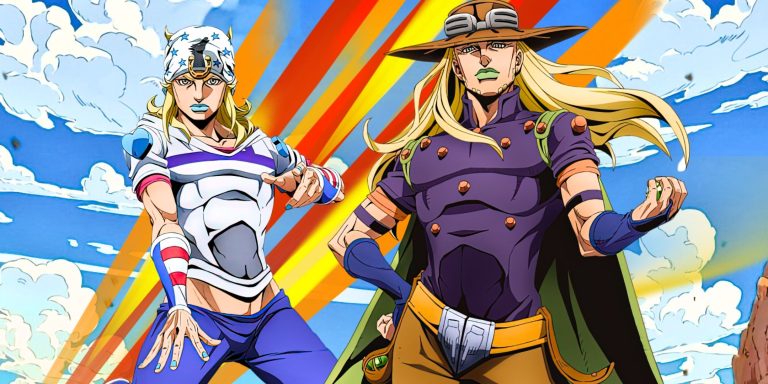
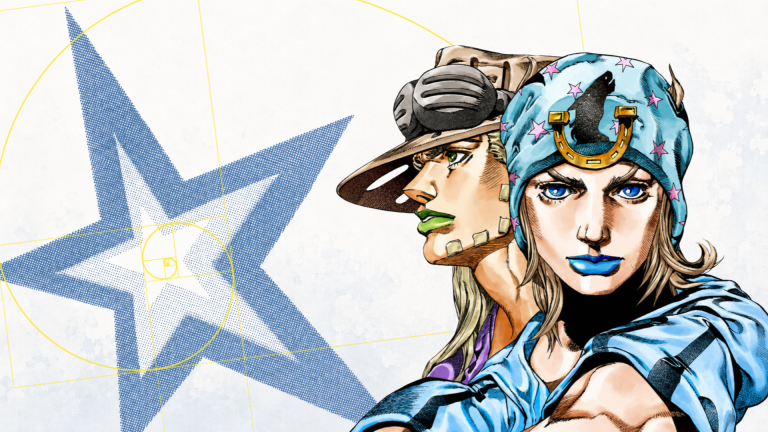
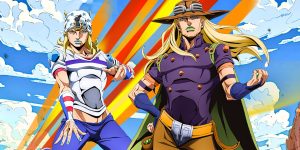
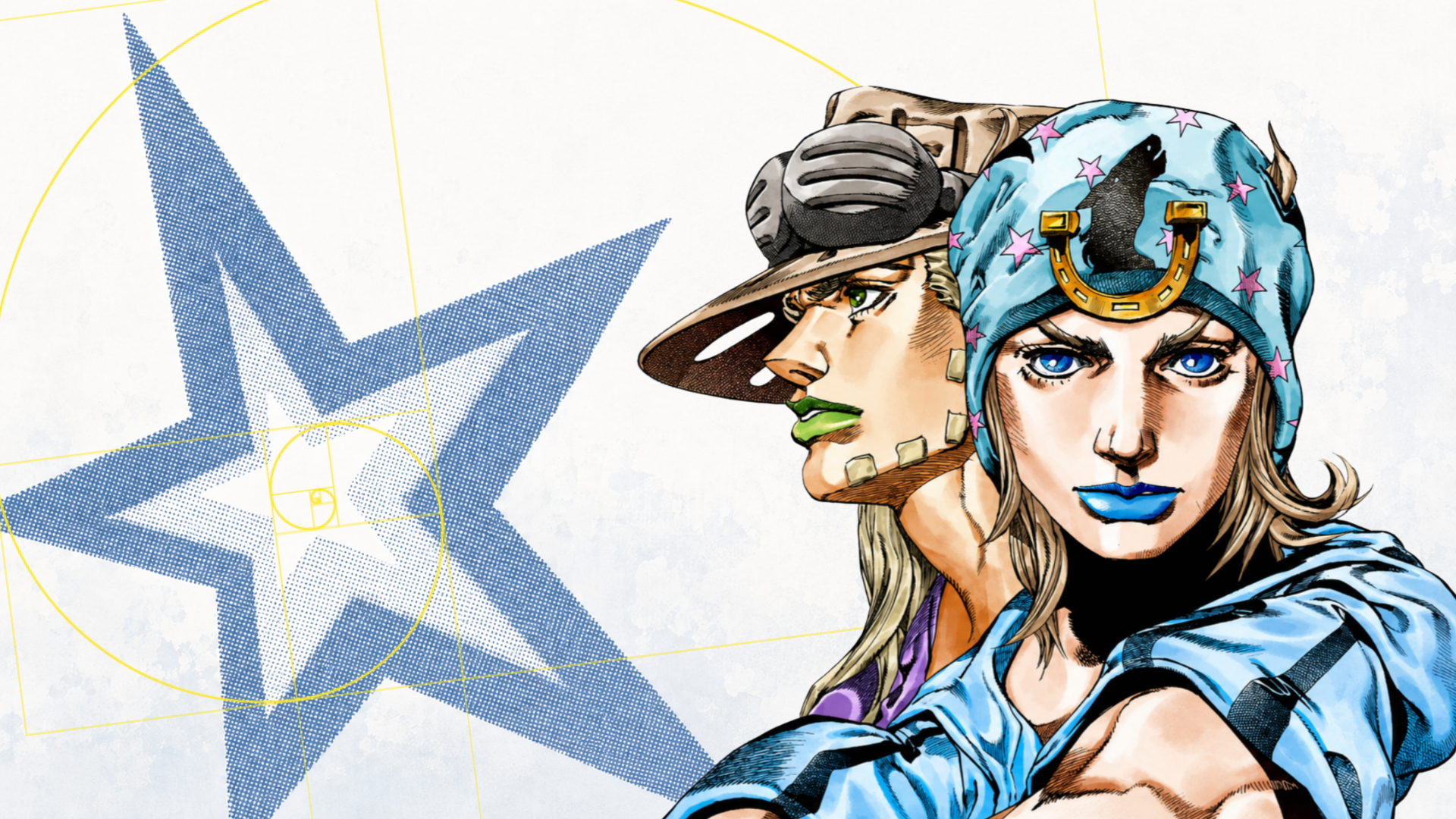
At the beating heart of this high-stakes race is what many consider the most nuanced, emotionally resonant duo in modern manga history: Johnny Joestar and Gyro Zeppeli. Their dynamic elevates Steel Ball Run from a lavish action spectacle into a haunting study of vulnerability, ego, and redemption.
The Paraplegic Prodigy and the Weight of ‘Dark Determination’
Johnny Joestar is not your archetypal, virtuous JoJo protagonist. A former horse-racing prodigy whose hubris, narcissism, and entitlement led directly to a violent confrontation that left him paralyzed from the waist down, Johnny begins his journey at absolute rock bottom. He is bitter, self-pitying, and stripped of his identity. His motivation to join the race is not to save the world, but born of a desperate, selfish spark of hope after accidentally touching one of Gyro Zeppeli’s mystical weapons, which caused his dormant legs to twitch for a solitary fraction of a second.
Araki paints Johnny with an extraordinary, uncomfortable psychological honesty. Throughout the journey, Johnny exhibits what Gyro identifies as “Dark Determination”—a chilling, pitch-black flame in his eyes signaling a ruthless willingness to kill or sacrifice anything to claw his way out of the “negative” and return to “zero.” He is a deeply flawed antihero whose progression is measured not merely in Stand evolutions, but in agonizing steps toward genuine spiritual resurrection.
Gyro Zeppeli and the Sacred Geometry of The Spin
Contrasting Johnny’s brooding solemnity is Gyro Zeppeli, a disgraced Neapolitan executioner’s son armed with steel spheres, gold-capped teeth, and an irrepressible penchant for absurd humor. Driven by a secret moral crusade to win the race and secure royal amnesty for an innocent child condemned to death, Gyro acts as both Johnny’s mentor and emotional anchor.
Through Gyro, Araki introduced The Spin—an esoteric martial art rooted in the mathematics of the Golden Ratio and Fibonacci sequence. Unlike traditional Stand power-ups, the Spin is treated as a profound metaphysical discipline. Harnessing rotational kinetic energy through custom-forged steel balls allows Gyro to distort muscle tissue, manipulate air currents, and bypass spatial defenses. As Johnny learns this discipline to evolve his own Stand, Tusk, across four distinct acts, their relationship morphs into a deeply moving partnership forged through shared trauma, campfire jokes, and mutual survival.
The Horsepower Hurdle: David Production’s Greatest Technical Trial
If the narrative of Steel Ball Run is a triumph, its technical realization presents an unmitigated nightmare for any animation studio. In the lexicon of traditional Japanese 2D animation, there is one universal, undisputed truth: animating quadrupedal animals—specifically horses—is logistical suicide.
A horse’s skeletal musculature, intricate galloping gait, and complex shifting weights require an immense amount of frames and precision draftsmen. When multiplied across dozens of horses galloping simultaneously across shifting terrains, dynamic camera angles, and high-speed Stand skirmishes, a purely hand-drawn production becomes financially and physically impossible under conventional anime production pipelines.
This puts David Production in an extraordinary technological crucible. The studio, celebrated for its bold chromatic palette, distinct sound design, and faithful reverence for Araki’s ink work, will inevitably have to lean into hybrid solutions. Industry analysts anticipate an advanced integration of cell-shaded, high-frame-rate 3D CGI models for the horses—akin to the technical pipelines utilized by Orange in Trigun Stampede or MAPPA in complex sequences of Attack on Titan—seamlessly composited with fluid, traditionally animated 2D riders. Achieving that aesthetic equilibrium without breaking visual immersion or incurring the wrath of hyper-critical fans will determine whether an anime adaptation of Steel Ball Run ascends to legendary status or collapses under its own ambitions.
Funny Valentine, D4C, and the Cultural Apex of Part 7
No discussion of Part 7 is complete without acknowledging its primary antagonist, President Funny Valentine, and his dimension-hopping Stand, Dirty Deeds Done Dirt Cheap (D4C). Far from a one-dimensional tyrant, Valentine is a fiercely patriotic ideologue whose core philosophy—encapsulated in his iconic “First Napkin” monologue—argues that society is governed strictly by the individual who establishes power dynamics and controls consensus.
Valentine believes with unyielding, terrifying conviction that seizing the Holy Corpse will guarantee eternal prosperity for the United States, irrespective of the catastrophic suffering deflected upon the rest of the world. The ideological clash between Valentine’s collectivist, ruthless patriotism and Johnny’s deeply personal, individualized quest for self-worth elevates the third act of Steel Ball Run into an intellectual masterclass rarely witnessed in serialized action media.
The Verdict: An Inevitable Horizon
While David Production has kept their official cards close to their chest—diverting recent creative resources to projects like Undead Unluck and Urusei Yatsura—the gravitational pull of Part 7 is simply too colossal to ignore. The studio has spent over a decade proving their fidelity to Araki’s vision. Steel Ball Run is the summit of that mountain.
When that starting gun finally fires, bringing the arid plains of the American west to life alongside Johnny, Gyro, and the infinite mysteries of the Golden Spin, it won’t merely be another anime premiere; it will be an era-defining cultural event for the medium at large.
What are your biggest hopes and fears for the eventual Steel Ball Run adaptation? Do you think David Production can pull off the horses with hybrid CGI, or should they take a multi-year hiatus to animate it in pure 2D? Sound off in the comments below, and keep your browsers locked to Wibux.com for all breaking anime updates.