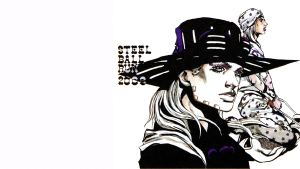
When the apocalyptic, universe-collapsing crescendo of JoJo’s Bizarre Adventure: Stone Ocean aired its final frames in late 2022, an entire generational cycle quietly closed. For over a decade, David Production meticulously stewarded Hirohiko Araki’s generational bloodline from Victorian mansions to the swamps of Florida. Yet, the moment Jolyne Cujoh’s journey ended, the global anime discourse immediately shifted toward a singular, almost mythical horizon: Steel Ball Run.
Universally lauded by critics and perpetually locked in a duel with Kentaro Miura’s Berserk for the top spot on manga aggregators like MyAnimeList, Part 7 is not merely the next chapter in the franchise—it is Hirohiko Araki’s undisputed magnum opus. As speculative chatter reaches fever pitch within animation circles, David Production faces their greatest creative crucible yet: translating an idiosyncratic, historical horse-racing epic into television history.
A Transcontinental Rebirth: Araki’s Leap into Seinen Perfection
To understand the sheer weight of the Steel Ball Run discourse, one must examine its origins. Serialized in 2004, the story initially carried no JoJo branding in Weekly Shonen Jump before transitioning to the monthly seinen imprint Ultra Jump. That editorial shift fundamentally transformed Araki’s storytelling landscape. No longer restrained by the rigid demographic boundaries of weekly shonen publication, Araki seized the latitude to explore moral ambiguity, deliberate pacing, body horror, and philosophical weight far beyond the confines of punch-ghost slugfests.
Set against the sweeping backdrop of an alternate-universe 1890s America, the narrative follows a grueling, cross-country horse race spanning from San Diego to New York City. With a grand prize of fifty million dollars on the line, the setting acts as a crucible for outcasts, assassins, sovereign operatives, and opportunists. It is a bold, revisionist Western drenched in supernatural grit, swapping the generational Joestar curse for an intoxicating, sand-blasted odyssey about rebirth and destiny.
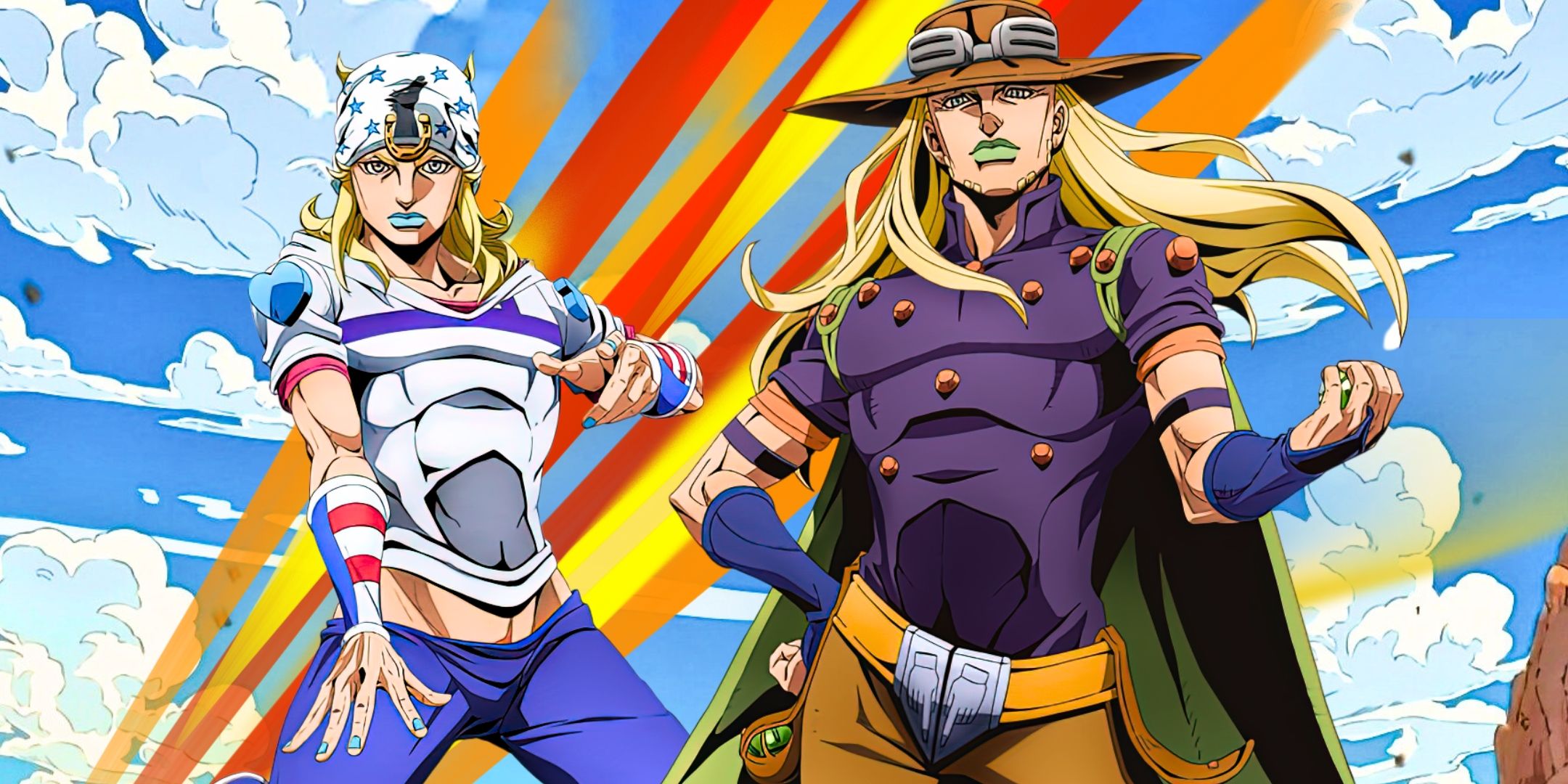
Johnny and Gyro: A Masterclass in Flawed Protagonists and the Spin
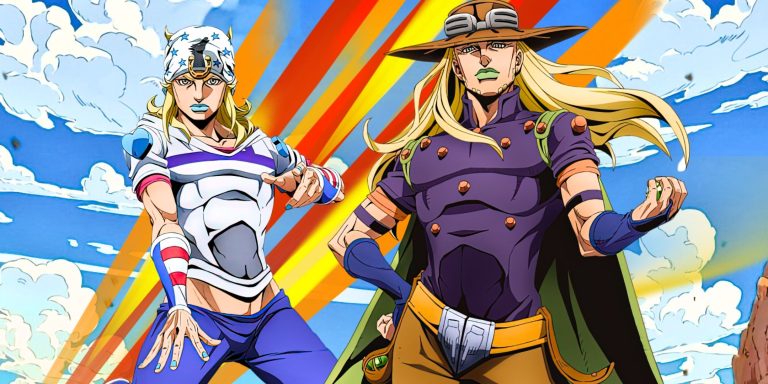
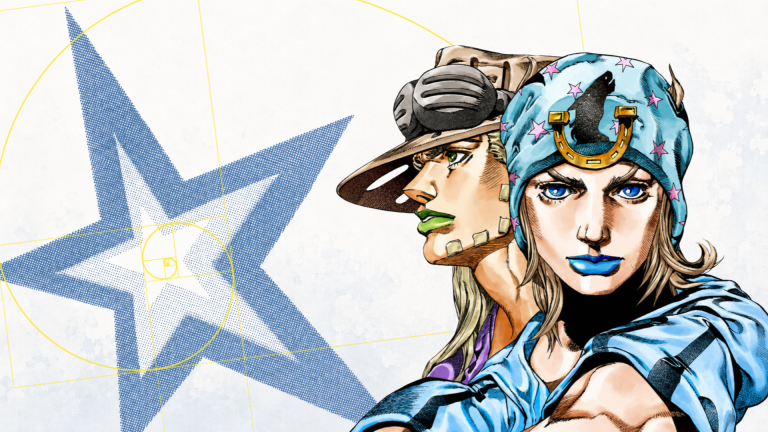
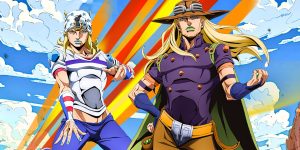
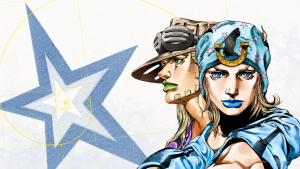
At the beating heart of Part 7’s critical reverence is the unprecedented dynamic between its central duo: Johnny Joestar and Gyro Zeppeli. Where previous iterations of the Joestar lineage operated on varying spectrums of chivalry, justice, and delinquent heroism, Johnny subverts every heroic trope established since Jonathan Joestar’s 1888 debut.
The Dark Determination of Johnny Joestar
Paraplegic, emotionally cynical, and hollowed out by past arrogance, Johnny does not enter the Steel Ball Run out of patriotic duty or noble virtue. He enters because he witnessed a mysterious spherical artifact momentarily restore sensation to his paralyzed legs. Johnny is driven by a primal, desperate desire to regain his baseline humanity—a quality that manifest as his infamous “dark determination.” He is a protagonist fully willing to commit morally reprehensible acts if it moves him an inch closer to his goal, granting his character arc an emotional gravity rarely seen in mainstream battle narratives.
Gyro Zeppeli and the Philosophy of the Golden Ratio
Acting as Johnny’s foil, mentor, and emotional anchor is Gyro Zeppeli, a disgraced executioner from the Kingdom of Naples. Gyro brings with him not only a buoyant, eccentric charisma—replete with grill-emblazoned teeth and absurd running gags—but also the mystical martial discipline known as the Spin. Moving beyond the sun-based breathing of Hamon and refining the metaphysical mechanics of Stands, the Spin harnesses the natural geometry of the Golden Rectangle. The conceptual elegance of the Spin, alongside Johnny’s evolutionary Stand, Tusk, provides the narrative with a tactical, visual complexity that demands elite creative vision to bring alive in motion.
The Technical Everest: Animating the Equestrian Nightmare
If the narrative prestige of Steel Ball Run is guaranteed, its production viability remains an agonizing logistical conundrum. Animators and production historians have long cited equestrian animation as the absolute pinnacle of difficulty in commercial anime. Horses require intricate anatomical precision, rhythmic quadruped movement, and fluctuating musculature that drain immense resources when executed in traditional hand-drawn 2D animation.
The 2D Sakuga vs. 3D Hybrid Dilemma
David Production, celebrated for their stylized, high-contrast palette shifts and raw kineticism in Parts 1 through 6, faces a daunting crossroad. An adaptation featuring dozens of simultaneous riders racing across open dust plains cannot realistically rely on pure hand-drawn sakuga without bankrupting the schedule or breaking animator morale. Industry insiders speculate that the studio must pioneer a sophisticated hybrid pipeline, combining cell-shaded, high-fidelity 3D CGI models for galloping sequences with hand-drawn close-ups for emotional peaks and stand battles.
However, the anime fandom remains scarred by poorly composited 3D integration in historical epics. For David Production to honor the staggering crosshatching and sweeping landscape illustrations of Araki’s peak illustration era, they will need the artistic nuance seen in contemporary hybrid triumphs like Studio Orange’s productions or MAPPA’s most demanding mechanical set-pieces.
Ideological Warfare: The Corpse Parts and Funny Valentine
Beyond the personal journeys of Johnny and Gyro lies an overarching narrative engine that elevates Steel Ball Run into profound political allegory: the search for the scattered, sacred mummified remains of Jesus Christ. As competitors unwittingly uncover these relic fragments across the North American continent, they unlock terrifying supernatural Stands, reframing the sporting event into a shadow war of cosmic proportions.
Standing atop this conflict is the 23rd President of the United States, Funny Valentine. Armed with his dimension-hopping Stand, D4C (Dirty Deeds Done Dirt Cheap), Valentine represents one of the most chilling, multifaceted antagonists in modern sequential art. His imperialist philosophy—summarized by his iconic “napkin” monologue regarding global hegemony and collective sacrifice—forces the audience to reckon with uncomfortable questions about nationalism, utilitarian ethics, and statecraft. Translating Valentine’s twisted charisma and multidimensional abilities into cinematic pacing will demand extraordinary screenwriting discipline.
The Road to Announcement: Release Models and Fan Expectations
While David Production has not formally greenlit Part 7 through an official teaser trailer, production breadcrumbs and studio scheduling suggest that creative development is inevitable. However, community reception will largely hinge on how the eventual anime is distributed. The controversial “batch drop” release schedule utilized by Netflix for Stone Ocean severely dampened community momentum and organic week-to-week fan theorizing. For a sprawling, continent-crossing road trip like Steel Ball Run, a return to traditional weekly programming is essential to recreate the communal tension of a high-stakes, stage-by-stage race.
Ultimately, JoJo’s Bizarre Adventure: Steel Ball Run represents anime’s next transcendent horizon—an intersection of uncompromised authorial brilliance, grueling technological demands, and monumental anticipation. If David Production can conquer the physical hurdle of the equestrian frontier, they will not merely produce another successful season; they will deliver one of the defining masterpieces of contemporary television.
What are your expectations for the Steel Ball Run adaptation? Do you prefer a hybrid 3D approach for the horses, or are you hoping for pure 2D craftsmanship? Let us know your thoughts in the comments below!