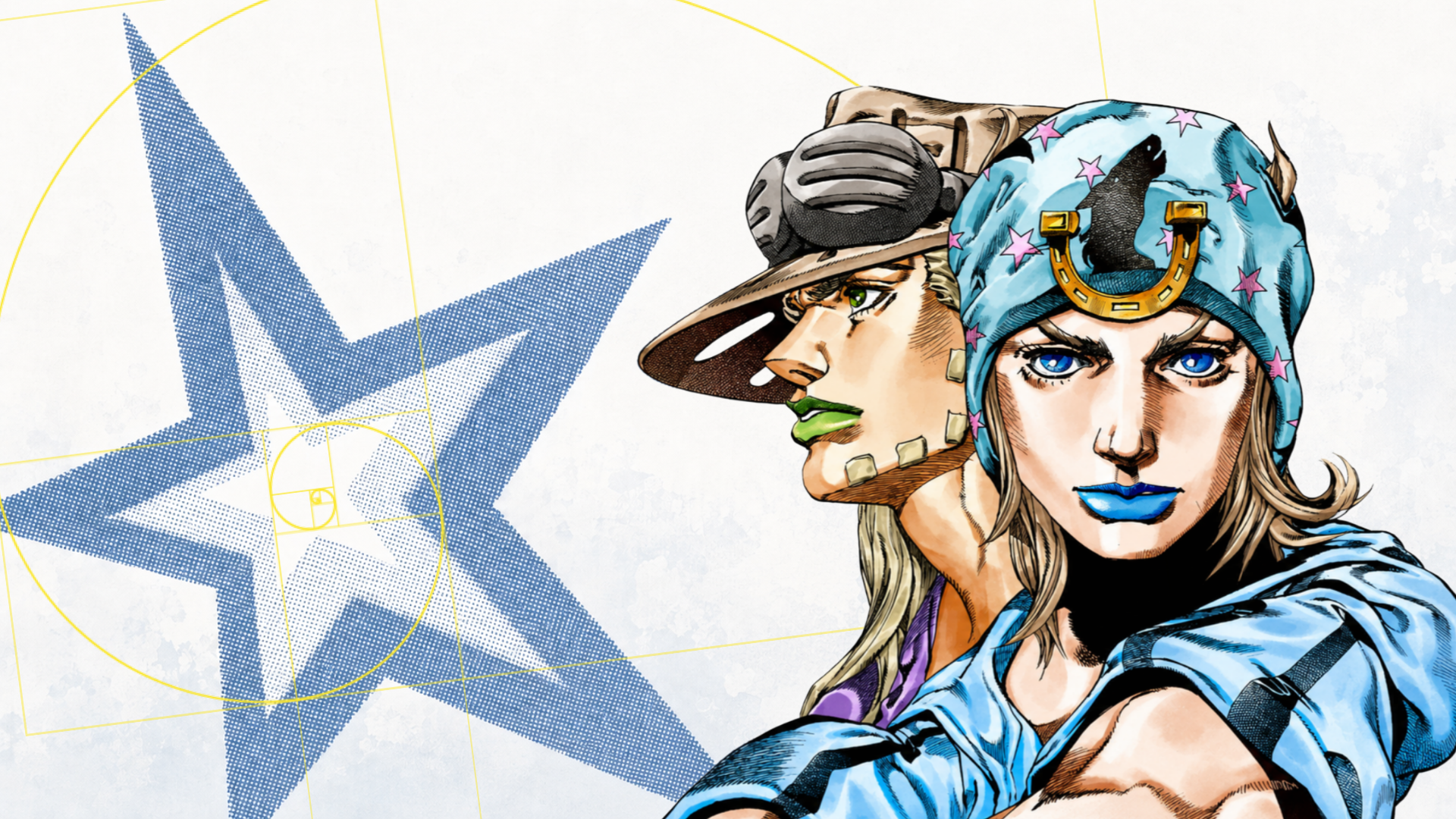
Ever since the universe folded in on itself during the cosmic finale of Stone Ocean, the global anime community has lived in a state of suspended animation. For over a decade, David Production pulled off one of the most audacious, visually idiosyncratic, and culturally impactful multi-generational adaptations in modern television history. Yet, as the dust settles over the reimagined continuity of Cape Canaveral, all eyes turn resolutely westward—not toward a conventional sequel, but toward a windswept 1890s American frontier where steel balls, steam engines, and sacred relics collide. JoJo’s Bizarre Adventure: Steel Ball Run is not merely the seventh installment of Hirohiko Araki’s multi-decade saga; it is universally venerated by critics and readers alike as his undisputed magnum opus. The swirling rumors, cryptic studio teasers, and breathless fan campaigns surrounding its prospective anime adaptation have transformed Steel Ball Run into the most fiercely anticipated project in contemporary anime discourse.
The Trans-American Odyssey: Why Steel Ball Run is Araki’s Magnum Opus
To understand the immense gravity behind the Steel Ball Run discourse, one must understand the tectonic shift it represented in Hirohiko Araki’s career. Serialized initially in Weekly Shonen Jump in 2004 before migrating to the monthly seinen pages of Ultra Jump in 2005, Part 7 freed Araki from the grueling weekly deadlines and thematic constraints of traditional shonen manga. The result was a dramatic creative renaissance. Untethered from demographic guardrails, Araki leaned into hyper-detailed cross-hatching, nuanced historical textures, and moral ambiguity that elevated his storytelling from flamboyant pop-art battles into sweeping, prestige literature.
Set against the backdrop of a grueling, coast-to-coast horseback race across North America—from San Diego Beach to New York City—Steel Ball Run reinvents the classic American mythos through Araki’s hyper-stylized lens. The titular race, organized by the enigmatic promoter Stephen Steel, boasts a staggering fifty-million-dollar purse that attracts outlaws, aristocrats, assassins, and prodigies from across the globe. However, what begins as a breathtaking test of equestrian endurance swiftly descends into a clandestine supernatural proxy war over the scattered relics of a divine Holy Corpse. It is a work of breathtaking scope, seamlessly weaving frontier grit with eldritch cosmic horror.
A Dynamic of Desperation: Johnny Joestar, Gyro Zeppeli, and the Philosophy of the Spin
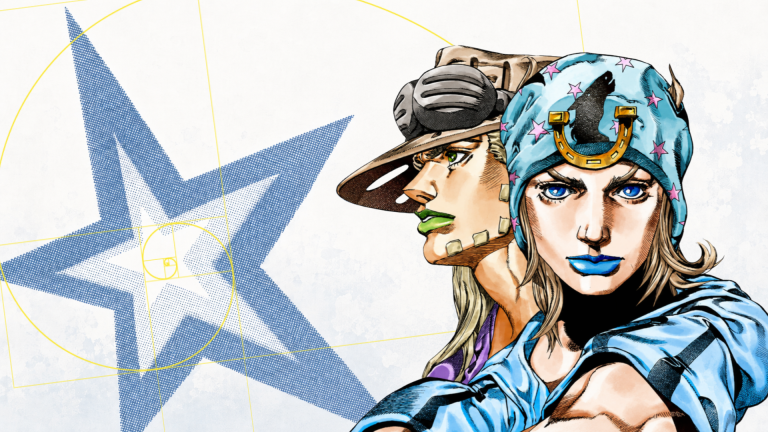
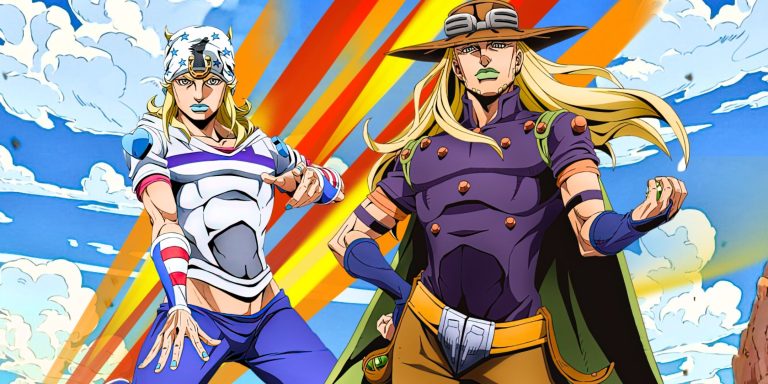
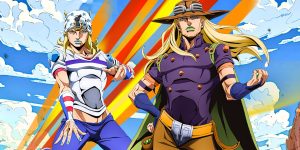
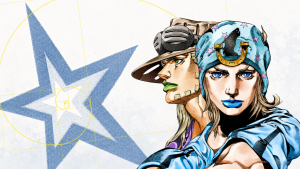
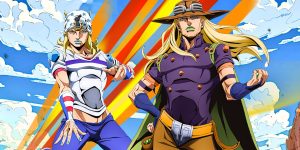
At the beating heart of this sprawling epic lies arguably the most profoundly realized duo in modern narrative manga: Johnny Joestar and Gyro Zeppeli. Their partnership shatters the archetypal hero-mentor dynamic, replacing it with a co-dependent, deeply psychological journey across the badlands.
From Ego to Empathy: Johnny’s “Dark Determination”
Unlike his chivalrous Victorian namesake Jonathan or the untouchable, stoic cool of Jotaro Kujo, Johnny Joestar begins his journey as an unlikable, fallen prodigy. A former horse-racing phenom struck down by paralysis from the waist down due to his own hubris, Johnny is introduced not as a champion seeking justice, but as an embittered, broken soul consumed by trauma and desperate for personal rehabilitation. Araki famously bestows upon Johnny what the narrative terms “Dark Determination” (漆黒の意志)—an unblinking, borderline-ferocious willingness to sacrifice anything or anyone to crawl back from despair. Johnny does not race to save the world; he races to bring his own existence from “negative back to zero.” His Stand, Tusk, physically manifests this grueling, iterative journey of self-actualization, evolving through four distinct “Acts” as Johnny masterfully unpicks the layers of his psychological wreckage.
The Golden Ratio: Evolution of the Spin
Acting as both Johnny’s foil and catalyst is Gyro Zeppeli, an eccentric Neapolitan executioner armed with mystical, revolving steel spheres and a grill embedded with the words “GO! GO! ZEPPELI.” Gyro introduces the narrative to the Spin—a profound martial and metaphysical discipline deeply rooted in the Fibonacci sequence and the visual harmony of the Golden Rectangle. The Spin functions as Araki’s spiritual and thematic refinement of Hamon (Ripple), stripping away the raw kinetic energy of earlier parts in favor of mathematical perfection, rotational physics, and kinetic wonder. The dynamic between Johnny’s desperate pragmatism and Gyro’s flamboyant code of honor creates an emotional anchor that sustains the story through its most harrowing, blood-soaked stretches.
The Equestrian Nightmare: David Production’s Ultimate Technical Gauntlet
If the thematic depth of Steel Ball Run represents the pinnacle of Araki’s writing, its kinetic reality represents an animator’s absolute worst nightmare: horses. Within the animation industry, quadrupeds—and specifically the anatomy, gait, and musculature of running horses—are notoriously regarded as the most labor-intensive and technically merciless subjects to illustrate by hand. Steel Ball Run does not merely feature horses in passing; it demands dozens of steeds galloping in tight clusters, dynamic tracking shots across open prairies, and frame-by-frame anatomical warping under the influence of esoteric Stand abilities.
This technical barrier is precisely why David Production has taken a methodical approach post-Stone Ocean. Industry insiders and analytical fans recognize that a standard 2D hand-drawn pipeline for a 60-to-75-episode continuous horse race would completely fracture a studio’s scheduling and health, even for a seasoned powerhouse. The core discourse now revolves around how David Production will engineer its visual hybrid:
Will they follow the precedent set by Wit Studio and MAPPA in their handling of cavalry in Attack on Titan, blending stylized 3D CGI models with painstakingly shaded 2D keyframes for close-ups? Or will they follow Studio Orange’s pioneering work in full-CG integration, banking on modern non-photorealistic rendering (NPR) engines to capture Araki’s trademark hatching lines? To preserve the artistic legacy of Part 7, the studio must innovate, demanding a generational leap in their proprietary pipeline that matches the thematic scale of the source material.
The Geopolitical Supernatural: Funny Valentine and the First Napkin
No analysis of Steel Ball Run is complete without confronting its monumental antagonist, the 23rd President of the United States, Funny Valentine. Boasting the dimensional-hopping Stand Dirty Deeds Done Dirt Cheap (D4C), Valentine completely subverts standard villain tropes. He is an articulate, fiercely patriotic zealot driven by a chillingly rational sociopolitical philosophy: the doctrine of the “First Napkin.” Valentine posits that history, power, and prestige are dictated by the individual who boldly seizes the first napkin at a dinner table, compelling all others to conform to their choice.
Valentine’s quest to assemble the Holy Corpse to ensure the eternal prosperity of the United States—at the deliberate expense of the rest of the world—injects the final third of the narrative with searing, philosophical complexity. The clash between Johnny’s desperate, naked individualism and Valentine’s high-minded, utilitarian fascism elevates Steel Ball Run into an extraordinary, tense deconstruction of patriotism, faith, and the cost of human ambition.
Verdict: The Horizon Beckons for David Production
The road to JoJo’s Bizarre Adventure: Steel Ball Run is long, treacherous, and fraught with logistical challenges, but its arrival remains one of the absolute inevitabilities of pop culture. Hirohiko Araki’s western masterpiece demands nothing short of perfection, and David Production has earned the patience of the global fandom to get it right. As production whispers amplify and anticipation reaches critical velocity, one reality is undeniable: when the starting gun finally sounds on the shores of San Diego, anime history will be written on the gallop.
What are your personal expectations for the Steel Ball Run anime adaptation? Do you want to see David Production embrace pure 2D or innovate with high-tier cel-shaded CGI for the horses? Let your voice be heard in the comments below!