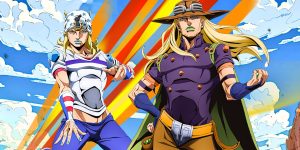
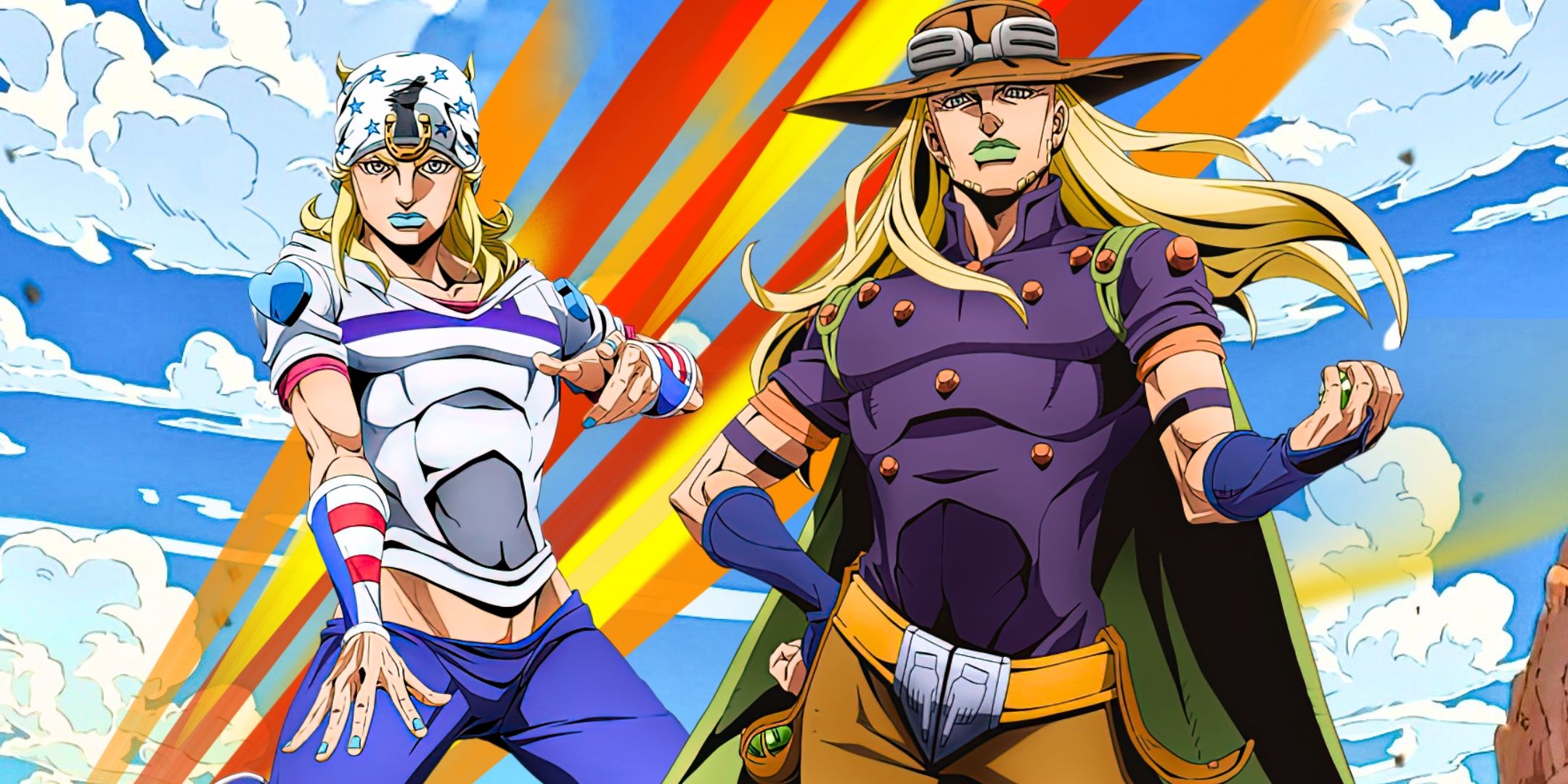
Ever since the bittersweet, universal reset of Stone Ocean faded to black on Netflix, a persistent, thundering cadence has echoed across the anime community. It is the rhythmic sound of iron horseshoes pounding against the sun-baked soil of 19th-century North America. For over two decades, manga readers have whispered, debated, and evangelized about it with religious fervor. Now, the collective gaze of the anime industry is locked firmly onto one inevitable horizon: the animated adaptation of Hirohiko Araki’s undisputed masterpiece, JoJo’s Bizarre Adventure: Steel Ball Run.
To call Part 7 merely “the next season” is to grossly misunderstand its place in pop-culture history. Steel Ball Run is not just another generational baton pass in the Joestar lineage; it is a seismic reinvention of Araki’s creative identity, a stylistic renaissance, and what many critics consider one of the greatest serialized graphic narratives ever printed. But as anticipation reaches a boiling point, the looming adaptation presents both an unprecedented creative triumph and a terrifying technical gauntlet for David Production. Here is why the buzz surrounding Steel Ball Run is unlike anything the medium has ever seen.
The Trans-American Odyssey: Araki’s Seinen Rebirth
When Steel Ball Run began serialization in Weekly Shonen Jump in 2004, it masqueraded as an ambiguous standalone Western before migrating to the monthly seinen pages of Ultra Jump. That logistical move was arguably the best thing that ever happened to Hirohiko Araki. Free from the grueling weekly deadlines and thematic sanitization of traditional shonen magazines, Araki unleashed a sprawling, 6,000-kilometer cross-country equestrian race steeped in moral ambiguity, visceral violence, and existential grit.
Set in an alternate continuity in 1890, the narrative frames a cutthroat contest from San Diego to New York City. The race offers a staggering $50 million grand prize, but the cash quickly becomes window dressing. Woven into the dust, grit, and sweat of the trail is a shadow war involving the physical relics of a holy corpse—an explicit allegory for the body of Jesus Christ—possessing supernatural power capable of altering global hegemony. It is manifest destiny weaponized as a supernatural battlefield, shedding the juvenile melodrama of early battle manga to deliver a breathtakingly adult historical fantasy.
The Broken and the Executioner: Johnny Joestar and Gyro Zeppeli
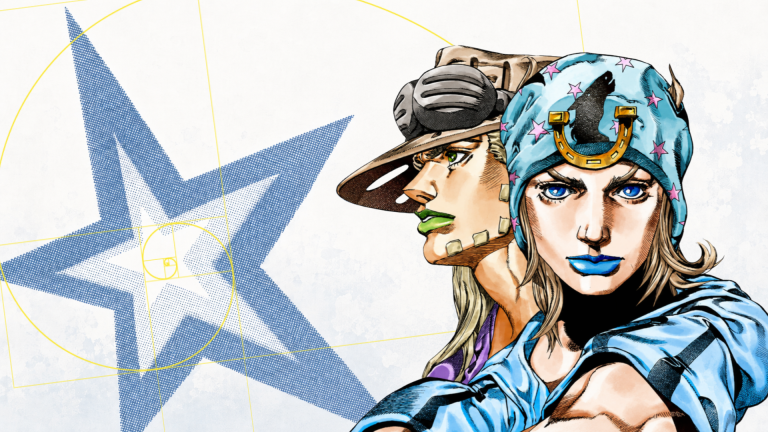
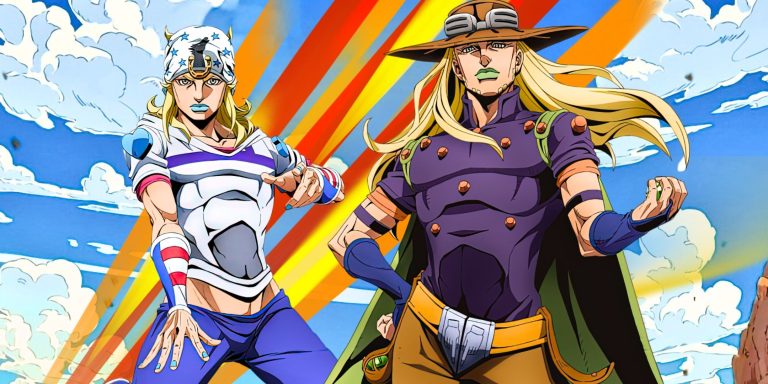
At the beating heart of this cross-continental sprint is the most complex, poignant dynamic Araki has ever penned. Rather than the indomitable righteousness of Jonathan or the effortless charisma of Joseph, Johnny Joestar enters the story as a fallen idol. A former horse-racing prodigy whose arrogance and entitlement led to a catastrophic spine injury, Johnny is paraplegic, deeply cynical, and hollowed out by self-loathing. He is an anti-hero whose initial motivation isn’t to save the world, but to reclaim what he lost—a raw, selfish desperation that makes him profoundly human.
The Golden Ratio and the Way of the Spin
Johnny’s catalyst for redemption arrives in the form of Gyro Zeppeli, a disgraced Neapolitan executioner armed with steel spheres and an eccentric personal philosophy. Gyro isn’t racing for glory or wealth; he is competing to earn an imperial pardon for a condemned nine-year-old shoemaker’s boy caught in his nation’s tyrannical legal system. Gyro introduces Johnny—and the audience—to the Spin (Kaiten), an ancient martial art centered around the Golden Ratio of nature.
Unlike the supernatural punching ghosts of earlier parts, the Spin is a tactile, physics-adjacent phenomenon that slowly evolves into Stand power. The master-and-student dynamic that blooms between Johnny and Gyro forms an emotional bedrock unprecedented in JoJo history. Their campfire conversations, surreal running gags, and shared vulnerability transform a brutal battle royale into an intimately moving meditation on brotherhood, trauma, and moving backward to go “plus one.”
The Technical Crucible: Conquering the Equestrian Animation Nightmare
If the narrative pedigree is practically flawless, the logistics of actually producing the Steel Ball Run anime remain David Production’s greatest white whale. In the animation industry, there is an unspoken, universally accepted truth: animating horses is hell. Their complex skeletal mechanics, the rhythm of four-legged locomotion, muscle shifting under hide, and the constant, frenetic camera movement required for a race scene represent a budget-destroying logistical trap.
Hybrid CGI vs. Bespoke 2D Craft
Modern anime productions often solve this problem via computer-generated imagery, but poorly integrated 3D models can shatter immersion—a lesson learned painfully by adaptations like Berserk (2016) or certain sequences in Attack on Titan. However, David Production is not an ordinary studio. Across ten years of JoJo adaptations, alongside their stellar work on Fire Force and Urusei Yatsura, the studio has pioneered expressive, pop-art hybrid visuals that blend 3D camera staging with hyper-stylized 2D keyframes.
Industry insiders speculate that Steel Ball Run has spent prolonged years in pre-production specifically to engineer a dedicated animation pipeline. For the adaptation to soar, the horses must feel heavy, volatile, and terrifyingly alive as they gallop shoulder-to-shoulder through blizzards, canyons, and ambushes. If David Production cracks this code, they won’t just deliver a hit anime—they will set a new benchmark for technical achievement across the entire Japanese animation landscape.
Patriotism, Morality, and the Threat of Funny Valentine
No discussion of Steel Ball Run is complete without addressing its towering antagonist: the 23rd President of the United States, Funny Valentine. Backed by his reality-hopping Stand, D4C (Dirty Deeds Done Dirt Cheap), Valentine is a chillingly articulate nationalist whose motives are born not out of simple villainy, but an absolute, unyielding devotion to American exceptionalism.
Valentine’s philosophy—that the world is governed by the person who “takes the first napkin”—elevates the narrative from a survival game to an ideological clash. His collision course with Johnny Joestar blurs the line between protagonist and antagonist until only raw resolve remains. In an era where modern media frequently wrestles with socio-political nuance, Valentine’s presence on screen will inevitably spark ferocious debates across social media, guaranteeing that Part 7 dominates the cultural discourse far beyond typical anime fandom borders.
The Next Frontier Awaits
The anticipation for Steel Ball Run is not born of passive nostalgia; it is driven by the realization that we are standing on the precipice of an anime event that could define the current decade. Hirohiko Araki reached the pinnacle of his visual storytelling in this dusty, supernatural epic, delivering a transcendent tale of human fragility and indomitable will. Whenever David Production finally pulls back the curtain and releases that first electric teaser, the anime world will gladly saddle up.
Are you counting down the days until Johnny and Gyro’s journey hits the screen? What’s your biggest hope for David Production’s adaptation of the Spin? Let us know in the comments below, and stay tuned to Wibux.com for all the latest updates on the Steel Ball Run frontier!