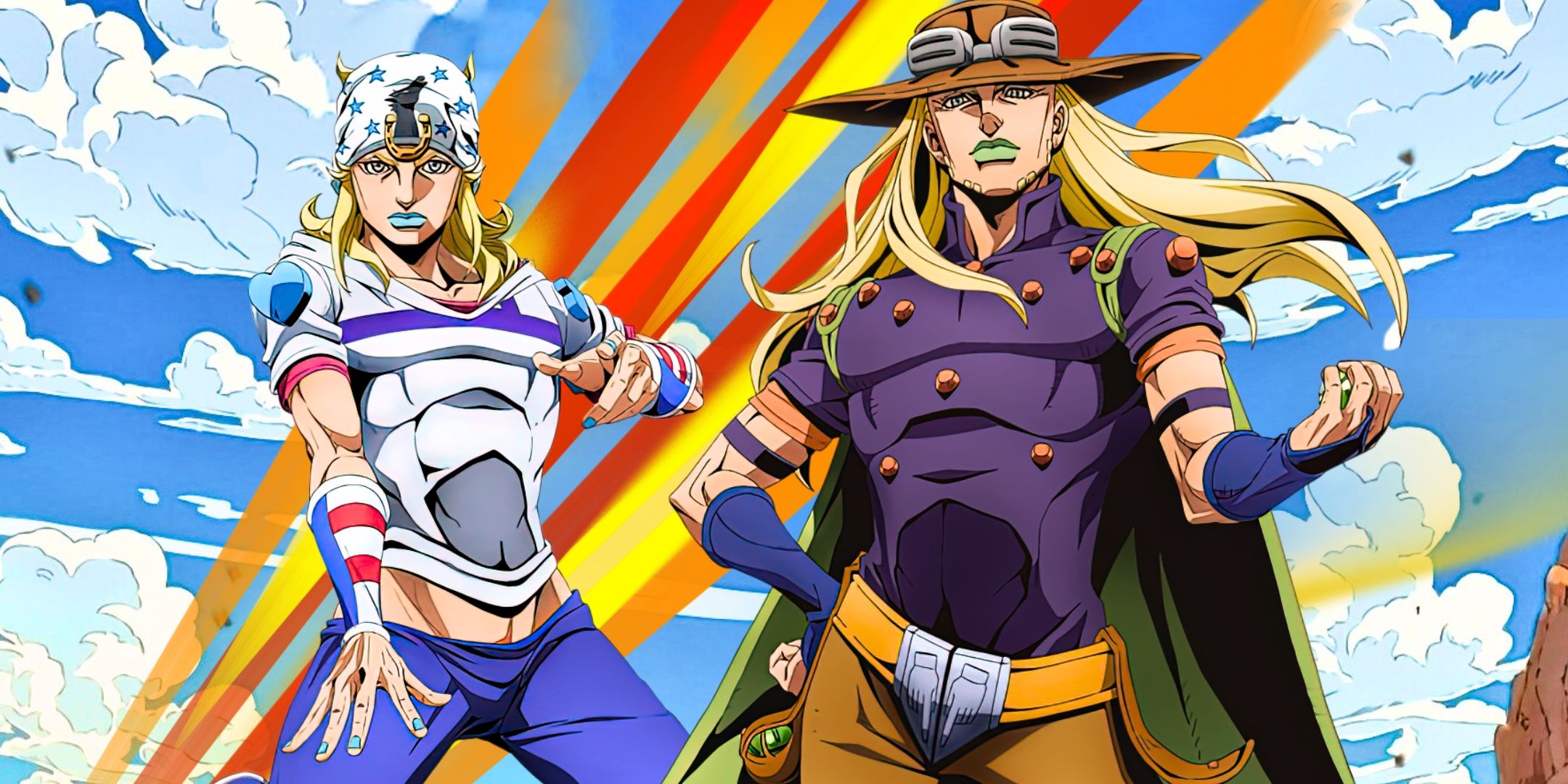
When Jolyne Cujoh brought the generational curse of the Joestar bloodline to an apocalyptic close under the rain-drenched skies of Cape Canaveral in Stone Ocean, an unprecedented hush fell over the global anime landscape. For over a decade, David Production has meticulously adapted Hirohiko Araki’s eccentric vision, turning an idiosyncratic 1980s manga into a foundational pillar of modern pop-culture cool. Yet, despite the six parts adapted so far, every seasoned fan understands an unspoken reality: everything up to this point has merely been a prologue. The holy grail of the franchise, and arguably modern serialized manga as a whole, sits on the sun-baked horizons of 1890s America. The era of JoJo’s Bizarre Adventure: Steel Ball Run is knocking at the door, and the anime community is bracing for what could be the defining adaptation of the decade.
Consistently locked near the very top of MyAnimeList’s highest-rated manga of all time, Steel Ball Run is not just a beloved continuation; it is Araki’s magnum opus. Transitioning the series from a hyper-stylized shonen to an expansive, existential seinen western, the narrative reset of Part 7 offers a clean slate, breathtaking thematic stakes, and a technical challenge so monumental that it has kept David Production’s animators awake at night for years. As whispers regarding production timelines and showcase teasers reach a fever pitch, it is time to dissect why this cross-country race represents anime’s most anticipated creative frontier.
A New Frontier: Araki’s Unshackled Seinen Metamorphosis
To understand the fervor behind the Steel Ball Run anime buzz, one must appreciate its historical significance within Araki’s career. Originally launched in 2004 in Weekly Shonen Jump before migrating to the monthly seinen imprint Ultra Jump, Part 7 freed Araki from the grueling weekly grind and restrictive editorial confines of traditional youth manga. The change gave him breathing room to craft complex, novelistic character arcs, visceral violence, morally ambiguous philosophies, and panoramic splash pages that rival classical landscape paintings.
Set against the backdrop of a continent on the cusp of industrialization, the story revolves around the titular Steel Ball Run: a grueling 6,000-kilometer horseback race across the United States, from San Diego Beach to New York City, boasting a staggering $50 million grand prize. Yet behind the spectacle of steam-engine support trains and desert dust storms lies a sinister theological and geopolitical conspiracy. The race is merely a front orchestrated by the highest echelons of the American government to excavate the mummified pieces of the Saint’s Corpse—relics granting godlike Stand abilities to whoever possesses them.
The Dynamics of Tragedy and Spin: Johnny Joestar and Gyro Zeppeli
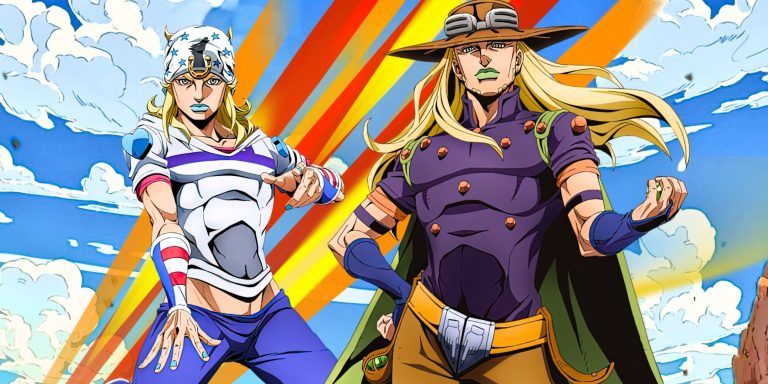
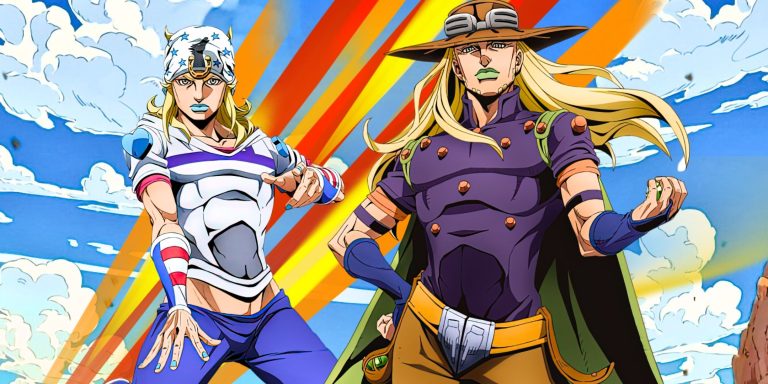
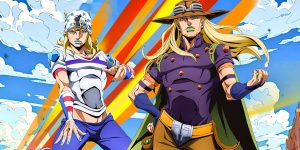
At the beating heart of this cross-continental odyssey is the most meticulously realized duo Araki has ever penned: Johnny Joestar and Gyro Zeppeli. Subverting the iconic bravado of ancestors like Jotaro or Joseph, Johnny Joestar is introduced as a broken man. A former prodigy jockey whose hubris cost him the use of his legs, Johnny begins the story paralyzed physically, emotionally, and spiritually. He is not driven by noble chivalry or the righteous fury typical of anime protagonists; his journey is marked by what Araki explicitly terms “Dark Determination”—a desperate, selfish hunger to climb out of a pit of personal failure.
As Johnny famously muses, he doesn’t want to go from zero to positive; he simply wants to claw his way from negative to zero. His Stand, Tusk, embodies this harrowing psychological evolution, developing through four distinct “ACTs” that trace his path from a wounded child crawling through the mud to a master of localized interdimensional gravity.
Balancing Johnny’s brooding nihilism is Gyro Zeppeli, a disgraced Neapolitan executioner possessing golden grillz that read “GO! GO! ZEPPELI” and a comedic penchant for serenading his companion about Italian pasta dishes. Beneath the eccentric humor lies an intensely noble pursuit: Gyro has entered the race to win royal amnesty for an innocent child condemned to death back home. The kinetic chemistry between Johnny and Gyro—oscillating seamlessly between late-night campfire philosophy and high-stakes survival—forms the emotional spine of the entire narrative.
The Science and Mysticism of the Spin
Ditching the traditional Hamon (Ripple) system while elevating Stand mechanics to their apex, Part 7 introduces The Spin. Rooted in the mathematics of the Golden Ratio and Fibonacci sequence, the Spin is a legacy art form practiced by the Zeppeli family. By rotating steel balls using the natural proportions of the world, Gyro can manipulate muscle fibers, shatter stone, and distort dimensional space. The visual execution of this kinetic physics—interlaced with natural motifs of spiral seashells and mathematical rectangles—promises to deliver some of the most psychedelic and scientifically dizzying combat sequences in modern animation.
The Equestrian Gauntlet: David Production’s Greatest Technical Mountain
While excitement for the anime is astronomical, the long delay between Stone Ocean and any official Steel Ball Run confirmation stems from an inescapable reality: horses are an animator’s graveyard. The complex musculature, rhythmic leg motion, galloping cadences, and dynamic perspective shifts required to animate four-legged creatures make horses notoriously difficult in 2D hand-drawn animation. Now, imagine dozens of them racing abreast across changing terrains, camera angles circling dynamic stand-offs at 40 miles per hour.
David Production faces a production gauntlet unlike anything they have tackled previously. To deliver the fluid kineticism fans expect, the studio will inevitably have to pioneer an unprecedented hybrid pipeline. Industry speculation points to high-end, cel-shaded 3D CG models for complex tracking shots and wide race formations—akin to the cinematic approach utilized by Orange on Trigun Stampede—seamlessly integrated with painstakingly detailed 2D close-ups for combat and dialogue.
Moreover, preserving David Production’s signature stylistic hallmarks—the sudden, dramatic color palette shifts, hand-inked cross-hatching, and integrated screen-shaking sound-effect kanji—will require immense directorial discipline. If done incorrectly, the uncanny valley of rigid CGI mounts could shatter the immersion; if mastered, it could redefine the integration of 2D and 3D animation in television anime.
Presidential Ideologies and the Saint’s Corpse
No discussion of Steel Ball Run is complete without highlighting its central antagonist: President Funny Valentine. Armed with the reality-shifting Stand Dirty Deeds Done Dirt Cheap (D4C), Valentine represents a radical departure from the cartoonish villainy of Dio Brando or the psychopathic escapism of Yoshikage Kira. Valentine is a hyper-patriotic zealot guided by an unyielding utilitarian philosophy: the concept of “taking the first napkin.”
Valentine argues that the world’s power structures are dictated by whoever acts first, establishing the standard that all others must conform to. His goal of claiming the Saint’s Corpse is not to acquire personal wealth, but to shield the United States from every misfortune while routing tragedy to the rest of the globe. This clash of absolute nationalistic righteousness against Johnny Joestar’s deeply personal, morally ambiguous survival instincts turns the final act of Steel Ball Run into an ideological masterclass that blurs the lines between hero and villain.
The Release Paradigm: Lessons Learned from Stone Ocean
Beyond the animation pipeline, community discourse is heavily focused on release strategy. The handling of Stone Ocean by Netflix—dumping episodes in sporadic twelve-episode batches over the course of a year and a half—crippled the organic weekly discussion, meme culture, and mounting tension that historically propelled *JoJo* into trending topics worldwide.
Steel Ball Run cannot afford a silent batch release. The narrative unfolds like an episodic travelogue, segmented cleanly by geographical race stages. The anime sphere thrives on anticipation; experiencing the tension of Johnny and Gyro facing an enemy stand user in the snowfields of Michigan demands week-to-week analysis and communal speculation. If David Production and Warner Bros. Japan wish to solidify Part 7 as the cultural juggernaut it deserves to be, a traditional, weekly broadcast run is non-negotiable.
The Starting Line Awaits
As production rumors continue to circulate through industry insiders, one reality remains clear: Steel Ball Run is not just another seasonal anime in the queue. It is the creative Everest for David Production, a transcendent reinvention of Araki’s artistic legacy, and a visual journey that possesses all the ingredients to become an all-time classic. The starting gun has not yet fired, but the horses are already champing at the bit.
How do you think David Production should tackle the equestrian animation challenge? Are you holding out for a weekly television broadcast over a streaming binge? Let us know your casting predictions and theories in the comments below!