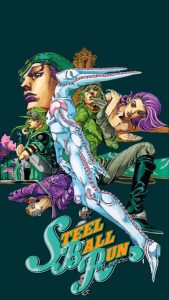
Ever since the bittersweet, universe-resetting notes of Duffy’s “Distant Dreamer” faded over the credits of Stone Ocean, the anime community has inhabited a state of collective, breathless anticipation. For over a decade, David Production accomplished what industry skeptics once deemed impossible: faithfully adapting Hirohiko Araki’s labyrinthine, flamboyant, and stylistically mutable generational saga without losing an ounce of its counter-cultural soul. Yet, throughout every neon-soaked clash in Morioh and every operatic mafia showdown in Naples, one monumental shadow loomed on the horizon. That shadow belongs to JoJo’s Bizarre Adventure: Steel Ball Run—Araki’s critically hailed magnum opus, an epic 1890s equestrian race across the continental United States, and the ultimate crucible awaiting David Production.
Whispers of pre-production, cryptic animator social media posts, and trademark discussions have turned the speculative mill into an absolute tempest. For casual viewers, Steel Ball Run (often abbreviated as SBR) is simply “Part 7.” But for the initiated, it represents a generational zenith: a masterclass in visual storytelling where high-concept supernatural physics collide with raw existential redemption.
The Holy Grail of Manga: Araki’s Seinen Metamorphosis
To understand the unprecedented buzz surrounding a potential Steel Ball Run anime, one must first appreciate the manga’s storied pedigree. When serialization began in Weekly Shonen Jump in 2004, it masqueraded as an ambiguous standalone sports-adventure piece. However, Araki’s subsequent leap to the monthly seinen imprint Ultra Jump in 2005 shattered the creative shackles of traditional teenage demographic boundaries. Unburdened by weekly deadlines and censorship constraints, Araki’s artwork exploded into hyper-detailed, neoclassical decadence.
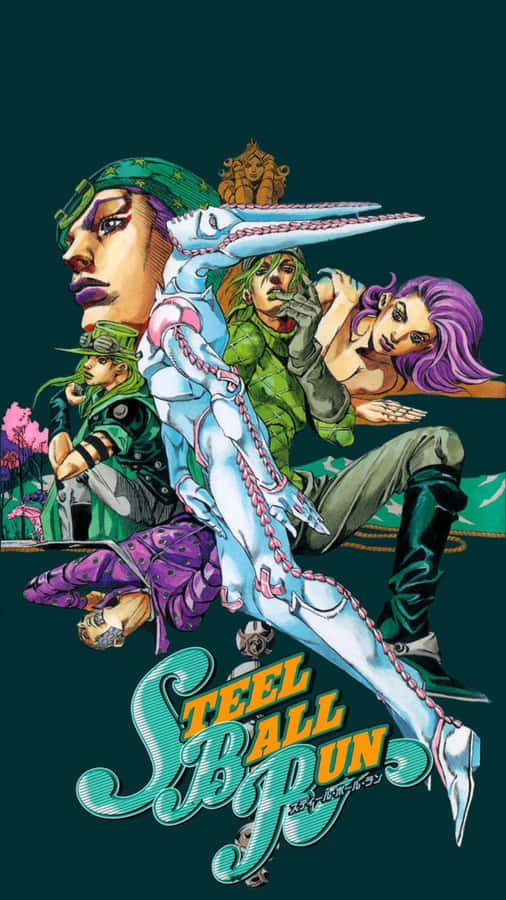
Steel Ball Run serves as a thematic reimagining of the entire JoJo multiverse. Set against the backdrop of a 3,700-mile cross-country race with a $50 million grand prize, it strips away the franchise’s familiar urban skirmishes in favor of an unforgiving, sprawling American frontier. It is simultaneously a gritty Western, a high-octane sporting drama, a body-horror thriller, and a profound philosophical treatise on ambition. By the time the true purpose of the race surfaces—a covert hunt for the mummified, miraculous fragments of the Saint’s Corpse—the narrative elevates from a kinetic chase into an all-time classic of modern Japanese literature.
Broken Heroes and the Golden Ratio: Johnny, Gyro, and the Mechanics of the Spin
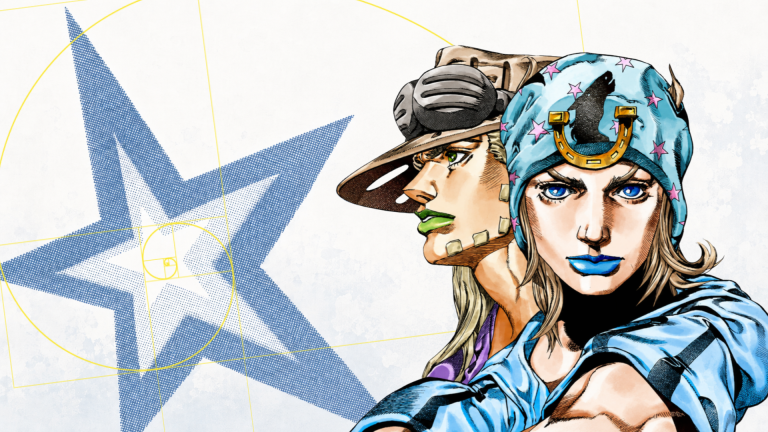
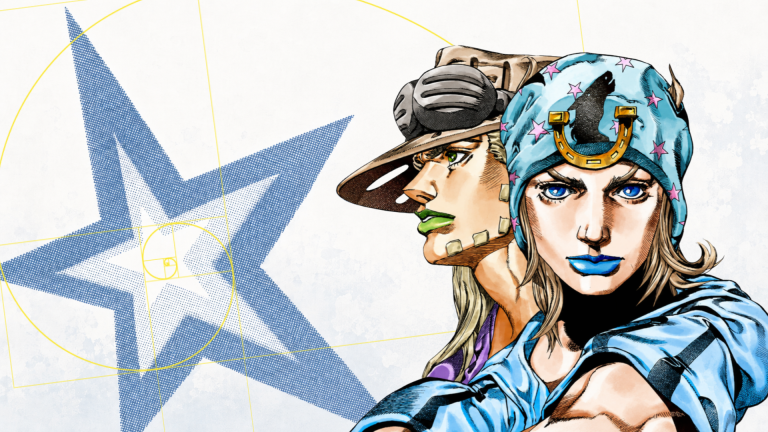
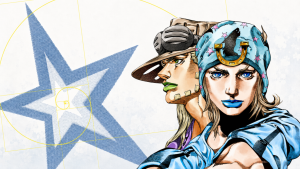
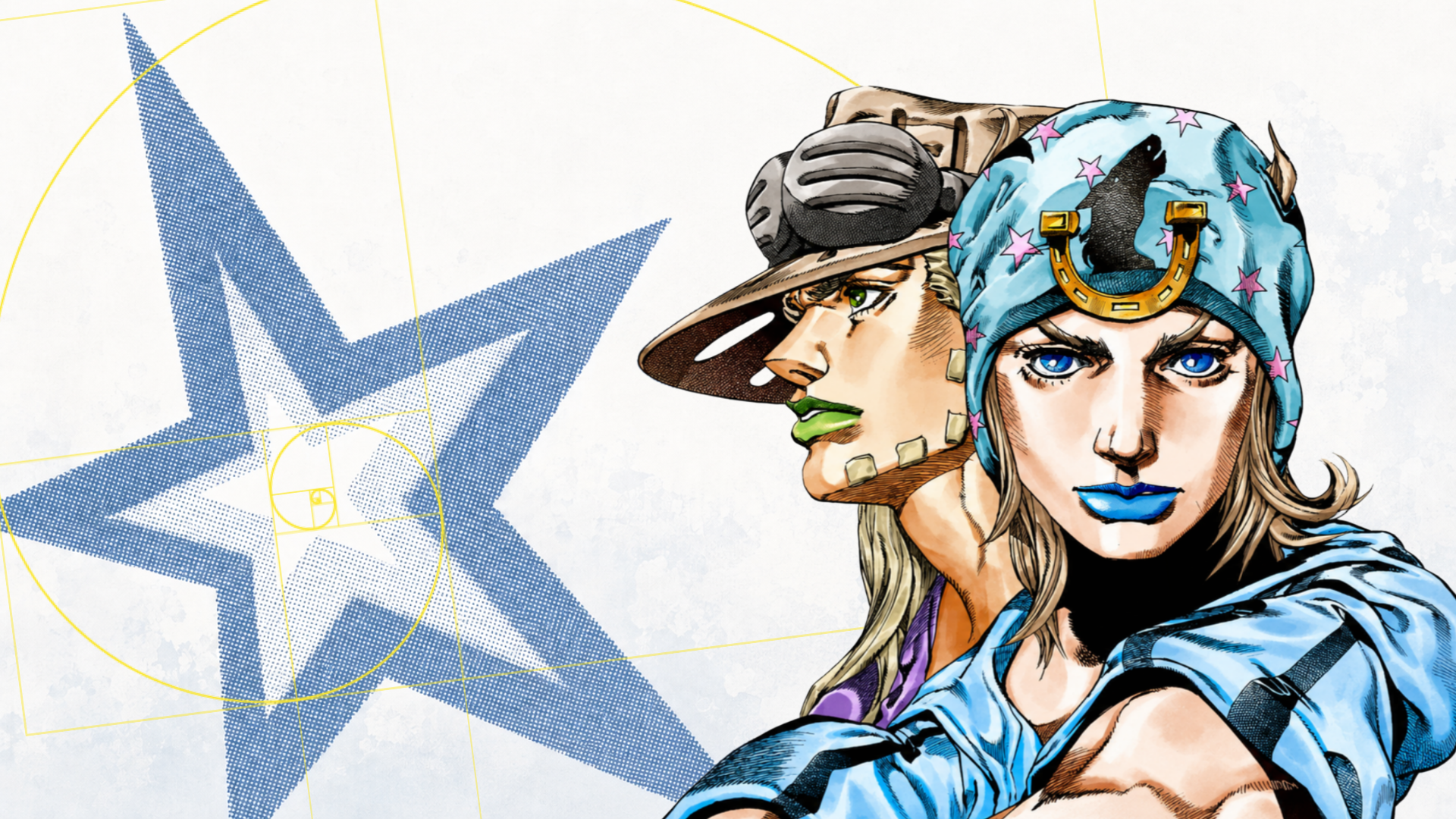
At the beating heart of this cross-country odyssey is the greatest dual-protagonist dynamic Araki has ever penned: Johnny Joestar and Gyro Zeppeli.
Johnny Joestar: The Fragile Core of “Dark Determination”
Unlike his chivalrous ancestors or the stoic badasses of previous eras, Johnny Joestar begins his journey at absolute rock bottom. A former prodigy jockey whose arrogance led to a senseless shooting, Johnny is a paraplegic stripped of his prestige, family, and self-worth. He is explicitly not a hero. Driven by what Araki terms “dark determination”—an unblinking, borderline-amoral hunger to claw his way out of spiritual and physical ruin—Johnny’s journey with his evolving Stand, Tusk, is an arduous, tear-stained reconstruction of the human soul. Translating Johnny’s profound vulnerability and terrifying resolve to the screen will require a vocal performance of staggering emotional nuance.
Gyro Zeppeli: Charisma, Duty, and the Fibonacci Spiral
Standing in stark, eccentric contrast is Gyro Zeppeli, a disgraced Neapolitan executioner wielding steel spheres engineered with The Spin. Long before Stands emerge as the dominant power system of the race, Araki introduces the Spin: a metaphysical martial art rooted in the mathematics of the Golden Ratio and the Fibonacci sequence. Gyro is flamboyant, perpetually joke-cracking, and armed with gold-plated grillz bearing the phrase “GO! GO! ZEPPELI”—yet he carries a secret mission of mercy that threatens to crush him. The friction, brotherhood, and philosophical camaraderie between Johnny and Gyro form the emotional anchor that grounds the series’ most bizarre escalations.
The 3,700-Mile Technical Nightmare: The Equestrian Hurdle
If Steel Ball Run is universally regarded as a narrative masterpiece, why has the road to an anime adaptation felt so fraught with tension? The answer can be summed up in a single, dreaded word among modern animation staff: horses.
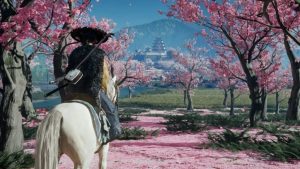
In traditional 2D animation, quadrupedal motion—specifically the complex anatomical cadence of a horse trotting, galloping, and muscle-flexing in three-dimensional space—is notoriously labor-intensive, time-consuming, and expensive. Steel Ball Run does not merely feature horses as window dressing; dozens of them race neck-and-neck through dust storms, raging rivers, and brutal Stand ambushes across hundreds of miles of terrain.
David Production stands at a crossroads that will define their modern studio legacy:
- The CGI Dilemma: Relying too heavily on rigid 3D CGI models could easily shatter the delicate, hand-drawn ink-wash aesthetic Araki perfected in the manga. While hybrid models worked decently in titles like Attack on Titan and Vinland Saga, JoJo demands an exaggerated, kinetic anatomy and hyper-stylized line art that rarely plays nice with off-the-shelf CG rigs.
- The Hybrid Pipeline: Insiders speculate that David Production will likely adopt a hybrid approach akin to their mesmerizing work on Fire Force or the intricate mechanics of Urusei Yatsura: utilizing customized cel-shaded 3D rigs for wide-angle pack-racing shots, paired with painstakingly hand-drawn 2D close-ups to capture raw facial intensity and dynamic muscular strain.
- The Shifting Color Frontier: JoJo‘s signature color-swapping palette must evolve to capture the bleached canyons of Arizona, the humid Midwestern swamps, and the rain-slicked cobbles of late-19th-century New York. Achieving this while maintaining cinematic fluidity will demand the highest budget in the franchise’s history.
The Shadow of Valentine: Geopolitics and Unmatched Stakes
An adaptation of Steel Ball Run cannot be discussed without addressing its centerpiece antagonist: Funny Valentine, the 23rd President of the United States. Valentine represents Araki’s most fully realized villain to date—a ruthless nationalist motivated not by sadism or petty power, but by an unwavering, fanatical belief in American exceptionalism.
Armed with Dirty Deeds Done Dirt Cheap (D4C)—a dimension-hopping Stand whose mind-bending mechanics will inevitably break the brains of casual anime viewers—Valentine offers a chilling philosophical mirror to Johnny Joestar. When an anti-hero fueled by personal selfishness clashes with a tyrant driven by righteous, selfless patriotism, the classic lines between right and wrong blur into compelling narrative chaos. The visual spectacle of D4C’s parallel-world collisions promises to be some of the most surreal mind-bending television produced this decade.
The Fandom’s Crucible: Netflix Trauma and the Dream of Weekly Prestige
Beyond the animation logistics, community chatter remains laser-focused on distribution strategy. The discourse surrounding Part 6: Stone Ocean was undeniably scarred by Netflix’s batch-drop release model, which fractured the fandom’s organic weekly theorizing, muted social media momentum, and deprived several explosive narrative beats of their rightful cultural resonance.
For Steel Ball Run, fans and critics alike are fiercely advocating for a return to the golden age of weekly episodic broadcasts. An expansive journey of this magnitude demands communal consumption: weekly breakdowns of Spin geometry, viral appreciations of Gyro’s absurd musical interludes, and collective shock at the race’s shocking casualty list. Stripping SBR of its week-to-week cultural footprint would be a disservice to an adaptation over fifteen years in the making.
Final Verdict: The Frontier Awaits
Steel Ball Run is not just the next logical chapter in David Production’s portfolio; it is the ultimate test of their artistic evolution. If the studio can conquer the logistical terrors of equestrian animation while preserving the gritty, spiritual maturity of Johnny and Gyro’s journey across the frontier, they won’t just deliver another great season of JoJo—they will cement one of the crowning achievements of modern animated television. The starting gun has not fired just yet, but make no mistake: the race is already underway.
Are you confident that David Production can handle the technical hurdles of Steel Ball Run’s horse races, or would you prefer a fully hybrid 3D approach? Who is your dream voice casting for Johnny and Gyro? Sound off in the comments below!