Ever since the bittersweet, existential reset of Stone Ocean drew the curtain on the original Joestar timeline, the global anime landscape has existed in a perpetual state of breathless anticipation. Across convention floors, industry discord servers, and viral social threads, a singular title echoes with quasi-religious fervor: Steel Ball Run. Hirohiko Araki’s seventh serialized arc is not merely another chapter in the bizarre, generational saga; it is overwhelmingly regarded as the mangaka’s undisputed magnum opus. Combining the gritty historical grit of late-19th-century Americana with metaphysical Stand warfare, it stands as a tour de force of narrative maturity. Yet, as David Production keeps their cards characteristically close to the chest, the discourse around Part 7 has evolved from simple fan hype into an urgent technical and thematic query: How does an animation studio translate Araki’s most ambitious, horse-bound epic to the screen without breaking under the colossal weight of its artistic demands?
The Reinvention of Araki’s Mythos: A Trans-American Seinen Odyssey
To fully grasp the cultural gravity surrounding Steel Ball Run, one must understand its origin as a radical rupture in the franchise’s DNA. Serialized in 2004, the series began under the stripped-down banner of SBR before formally re-embracing the JoJo moniker and migrating from the frantic weekly deadlines of Weekly Shonen Jump to the monthly, prestige pages of Ultra Jump. This structural liberation completely redefined Hirohiko Araki as an artist and storyteller.
Unshackled from juvenile demographic limits, Araki abandoned the urban alleyways of Morioh and the sunlit cobblestones of Italy in favor of the savage, sprawling wilderness of 1890s North America. The narrative engine is intoxicatingly simple on its surface: a grueling, 6,000-kilometer cross-country horse race running from San Diego to New York City, lured by a grand prize of fifty million dollars. Yet, behind the spectacle organized by eccentric promoter Steven Steel lies a subterranean geopolitical conspiracy orchestrated by United States President Funny Valentine to secure the sacred, mummified Corpse Parts scattered along the trail.
Here, the supernatural combat evolved. Alongside traditional Stands, Araki introduced the Spin—a profound, physics-defying martial art rooted in the mathematics of the Golden Ratio. By grounding fantastical showdowns in the unforgiving geometry of nature and human endurance, Steel Ball Run established a grittier, morally ambiguous landscape where survival and spiritual evolution trump the clean moral lines of traditional shonen.
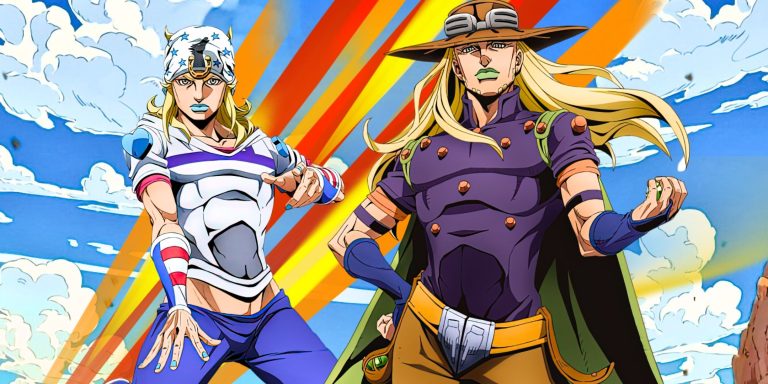
Johnny Joestar and Gyro Zeppeli: A Masterclass in Subversive Character Psychology
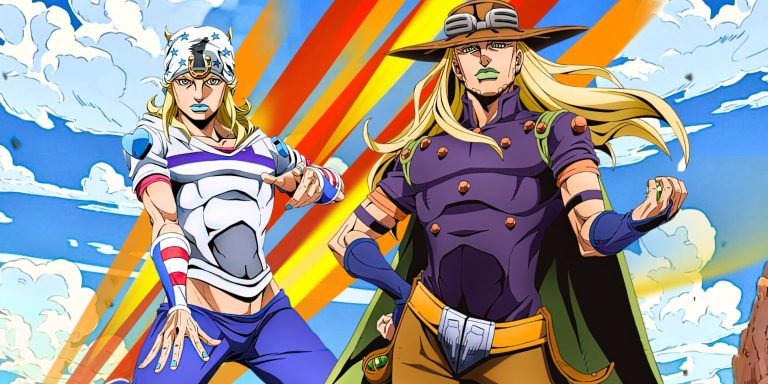
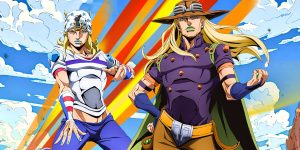
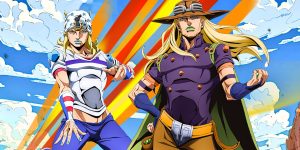
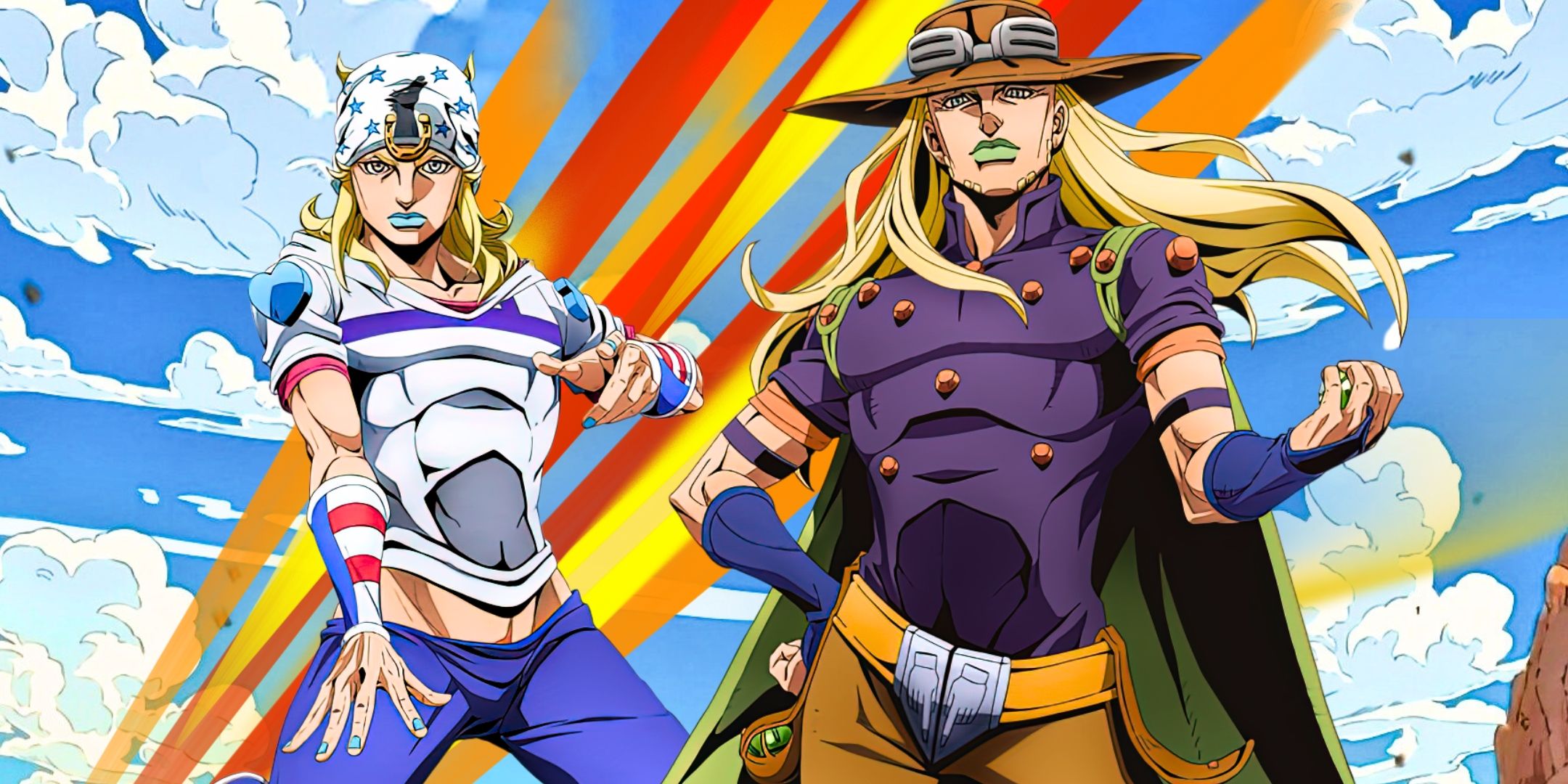
At the beating heart of this trans-continental odyssey is what fans and literary critics widely recognize as Araki’s finest character dynamic: the symbiotic journey of Johnny Joestar and Gyro Zeppeli.
In Johnny Joestar, Araki subverts the traditional JoJo hero archetype. Unlike the immaculate chivalry of Jonathan or the stoic composure of Jotaro, Johnny is an anti-hero born of tragedy and hubris. Paralyzed from the waist down after a catastrophic brush with his own arrogance as a prodigy jockey, Johnny is cynical, resentful, and hollowed out by depression. He does not ride across America to save his country or protect the weak; his initial motivation is raw, desperate selfishness. Possessed by what the narrative describes as a terrifying “dark determination”, Johnny will sacrifice nearly anything for the faintest promise of redemption and the ability to stand on his own two feet again.
Contrasting Johnny’s brooding gravity is Gyro Zeppeli, one of the most charismatic deuteragonists in modern manga history. An executioner from the Kingdom of Naples carrying a heavy conscience, Gyro hides his existential burdens behind eccentric bravado, steel teeth engraved with “GO! GO! ZEPPELI”, and absurd running gags. Yet Gyro is also a brilliant tactician, an unyielding mentor, and the sole master of the ancient Spin technique.
Their dynamic eschews the typical master-and-apprentice hierarchy. Through solitary campfire conversations, mutual failures, and shared psychological scars, Johnny and Gyro forge a profound brotherhood. They challenge, anchor, and elevate one another, grounding the high-concept Stand battles in palpable emotional stakes that make every victory feel costly and every loss devastating.
The Technical Everest: David Production’s Equestrian Crucible
If the thematic maturity of Steel Ball Run makes it an enticing prospect for a modern anime adaptation, its physical logistics present an absolute nightmare for any animation studio—even one as seasoned as David Production.
The Quadruped Dilemma: Why Horses Break Production Pipelines
There is an open secret within the anime industry: horses are the ultimate trial by fire. Traditional 2D hand-drawn animation struggles immensely with quadrupeds due to the sheer complexity of skeletal deformation, muscular shifts, and dynamic gallop cycles. *Steel Ball Run* is not a story that merely features horses in the background; it is a story where dozens of horses collide, sprint, leap, and bleed in almost every single scene.
David Production established their reputation on striking color palettes, kinetic kineticism, and faithful recreations of Araki’s dynamic paneling throughout Phantom Blood to Stone Ocean. However, Part 7 requires a fundamentally different creative infrastructure. Relying strictly on hand-drawn animation for dozens of uniquely designed thoroughbreds across a multi-cour production would break budgets, schedules, and talent pools alike.
The CGI Hybrid Solution
Consequently, the industry consensus points toward a complex hybrid visual strategy. Much like how studios like MAPPA and WIT integrated 3D modeling for chaotic combat sequences, David Production will likely rely on high-fidelity, cel-shaded CGI for long shots and large pack-racing sequences, while saving artisan 2D close-ups for high-impact emotional beats and Stand manifestations. The ultimate hurdle will be blending Araki’s signature high-contrast cross-hatching and Michelangelo-inspired musculature seamlessly into 3D assets without descending into the uncanny valley.
The Community Fervor: Memes, Leaks, and Unprecedented Anticipation
Despite the official silence from Warner Bros. Japan and David Production, the online ecosystem around Steel Ball Run operates with ferocious vitality. The adaptation’s eventual confirmation has long surpassed simple fandom desire; it has become an internet milestone. Independent animators regularly rack up millions of views on conceptual opening sequences and pivotal battle animatics on YouTube, setting a visual benchmark that rivals professional studios.
Every major industry trade show, from AnimeJapan to Jump Festa, triggers a tidal wave of speculative leaks and viral trends. Yet, surprisingly, the community’s mood is characterized less by impatience and more by protective reverence. JoJo enthusiasts recognize that an undercooked, rushed seasonal pipeline could permanently wound Araki’s crowning achievement. There is a collective willingness to wait for years if it guarantees David Production the developmental breathing room needed to do justice to the Golden Ratio, the horror of Civil War, and the dimension-hopping spectacle of Dirty Deeds Done Dirt Cheap.
The Inevitable Crossing of the Finish Line
JoJo’s Bizarre Adventure: Steel Ball Run is far more than just the next chronological sequel on an anime studio’s production slate; it is the ultimate summit of modern manga adaptation. It demands the very best from David Production: innovative technical solutions, courageous narrative pacing, and an unwavering loyalty to Araki’s visual grandeur. When the starter pistol finally fires and the anime adaptation is formally unveiled, it won’t just dominate seasonal anime discourse—it will redefine what a prestige anime epic can achieve.
How do you think David Production should tackle the legendary horse-racing sequences? What are your dream voice cast picks for Johnny and Gyro? Sound off in the comments below, and stay tuned to Wibux.com for breaking updates on the next era of JoJo’s Bizarre Adventure!