Ever since the apocalyptic, bittersweet strings of Jolyne Cujoh’s journey faded into the reset cosmos at the close of Stone Ocean, the anime community has occupied a state of suspended animation. For over a decade, David Production pulled off what was once deemed impossible: translating Hirohiko Araki’s jagged, color-shifting, high-fashion manga into a genre-defining cultural touchstone. Yet, through every bloodline clash from Cairo to Morioh, every manga purist harbored a single, shared thought lingering in the back of their minds: Steel Ball Run is coming.
Widely celebrated as Araki’s magnum opus—and regularly entrenched near the very top of MyAnimeList’s all-time greatest manga rankings—Part 7 is not merely another chapter in the generational saga; it is a creative rebirth. Setting foot in a reinvention of the timeline across the dust-choked American frontier of 1890, Steel Ball Run fundamentally redefined the franchise. Now, as speculative chatter, cryptic animator social posts, and production timelines swirl, the buzz surrounding David Production’s potential adaptation has hit a fever pitch. Adapting this sprawling epic, however, is a high-stakes gamble fraught with monumental artistic and technical trials.
The Seinen Paradigm Shift: Araki’s Creative Zenith
To understand the sheer magnitude of the anticipation, one must understand what Steel Ball Run represents in Araki’s forty-year career. Initially launched without the explicit “JoJo” moniker before migrating from Weekly Shonen Jump to the monthly pages of Ultra Jump, the series unshackled itself from the pacing and censorship constraints of mainstream youth manga. Araki stepped directly into the domain of the gritty, morally ambiguous, and visually intricate seinen demographic.
The stage is deceptively simple: a 6,000-kilometer cross-country horse race from San Diego Beach to New York City, boasting a staggering $50 million grand prize. Yet underneath the dust and adrenaline lies a sprawling, hyper-violent odyssey saturated with geopolitical intrigue, cosmic horror, and spiritual reckoning. By detaching the narrative from the baggage of the original Joestar-Brando bloodline, Araki granted himself the freedom to interrogate his own mythology. The result is a richer, more textured drama that elevates the story far above standard tournament-style shonen romps.
Johnny Joestar and Gyro Zeppeli: Psychology on the Frontier
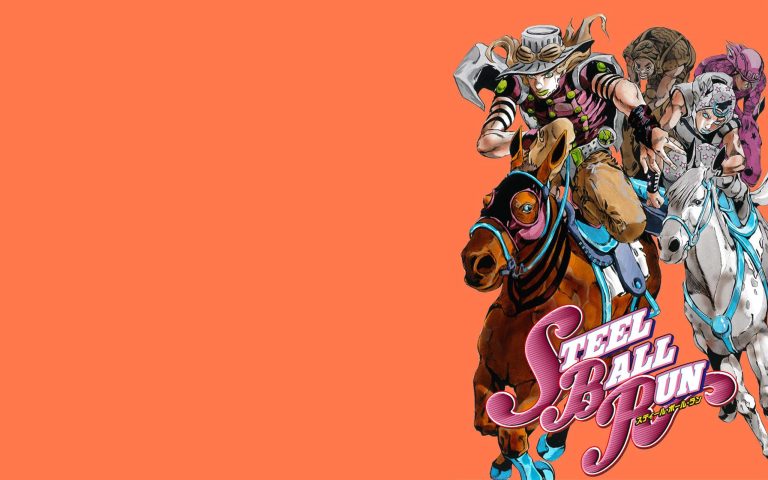
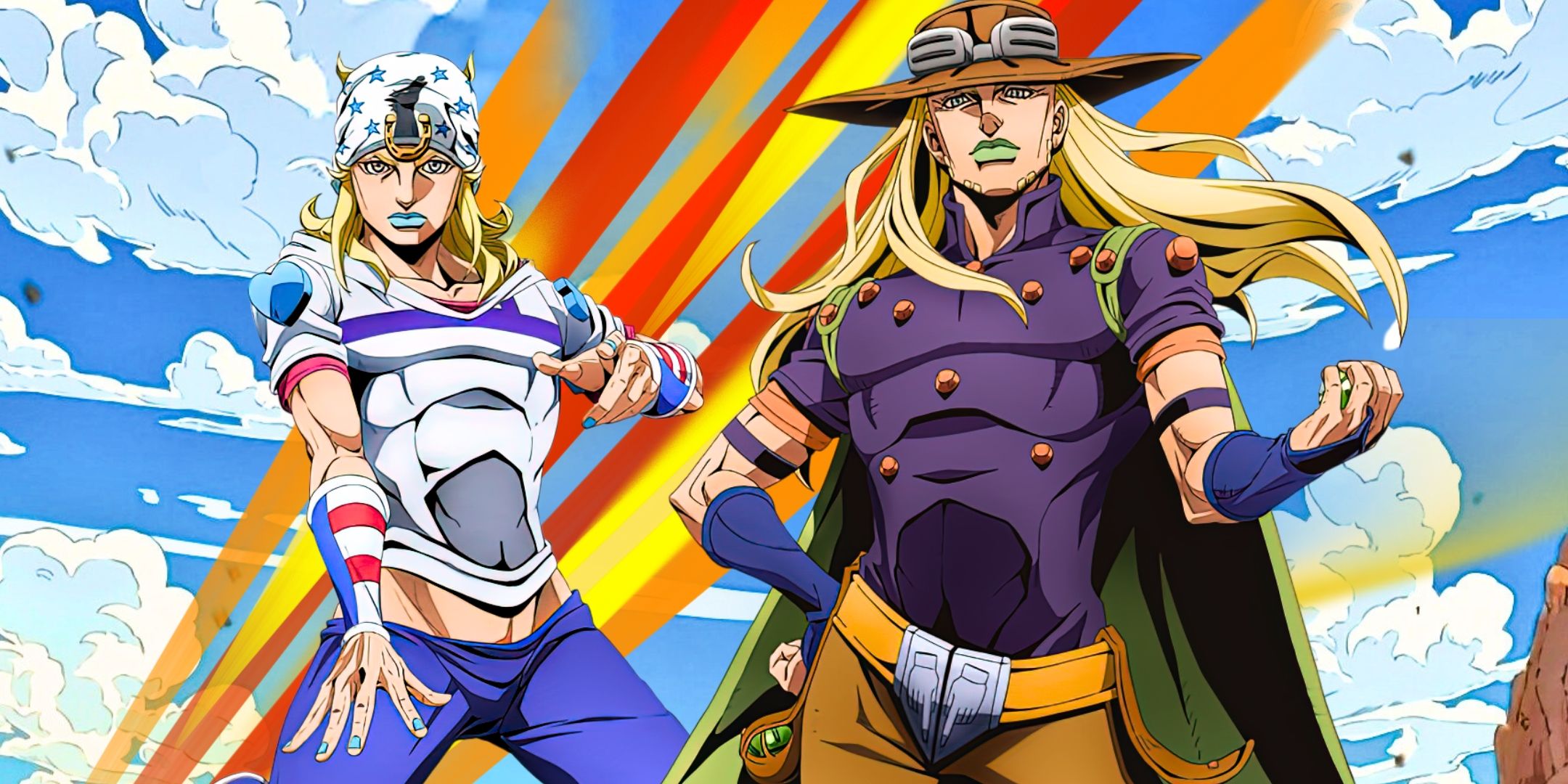
At the center of this sun-scorched epic is what many fans argue is the finest dynamic duo in comic history: Johnny Joestar and Gyro Zeppeli. Their bond forms the emotional bedrock of the series, subverting decades of genre archetypes.
From Hubris to Humility: The Fall and Rise of Johnny Joestar
Unlike his chivalrous Victorian ancestor Jonathan, Johnny Joestar begins his narrative not as an aspirational hero, but as a broken, cynical former prodigy. Paralyzed from the waist down due to his own blinding arrogance, Johnny is propelled into the race not by altruism, but by a borderline obsessive desperation to walk again. Araki gives Johnny a cold, unflinching glint in his eye—a concept repeatedly identified as “Dark Determination.” He is selfish, vengeful, and profoundly human. His character arc is a harrowing meditation on trauma, self-worth, and the grueling process of clawing one’s way back from spiritual zero to positive ground.
The Spin and the Executioner’s Burden: Enter Gyro Zeppeli
Counterbalancing Johnny’s brooding desperation is Gyro Zeppeli, a disgraced Neapolitan executioner wielding mystical, rotating steel spheres. Gyro is flamboyant, absurdly humorous (famous for his deadpan opera tributes and golden grills), yet carrying a crushing ethical burden: to save an innocent boy condemned to death in his homeland. Through Gyro, Araki reinvents the franchise’s foundational power system, replacing Hamon with The Spin—a terrifyingly complex martial art derived from the Golden Ratio and Fibonacci sequences. The dynamic between Gyro’s reluctant mentorship and Johnny’s fierce drive fuels some of the most emotionally resonant, banter-heavy dialogue David Production will ever have the privilege to animate.
The Great Equestrian Gauntlet: David Production’s Technical Hurdle
While narrative hype is boundless, the industrial reality is far more terrifying. Ask any veteran animator about the hardest subjects to render in motion, and the answer is almost unanimous: water, crowds, and horses. Steel Ball Run features hundreds of them, engaged in blistering, high-speed tactical battles across shifting terrain.
David Production made their name on idiosyncratic flair: popping sound-effect kanji, striking palette swaps, and punchy, stylized cuts. But the kinetic physics of an equestrian race demand an entirely different level of anatomical discipline and volume preservation. Animating four-legged movement in fluid 2D across twenty-plus episodes is financially and logistically prohibitive in modern TV anime workflows. This has led the community to debate the inevitable: how much 3D CGI will Part 7 require?
If David Production leverages hybrid 3D models—akin to the technical breakthroughs achieved by Studio Orange (Trigun Stampede) or Kamikaze Douga’s historic work on earlier JoJo openings—the balance between cell-shaded horses and hand-drawn character close-ups will make or break the show’s immersion. A poorly composited CGI horse can shatter emotional tension instantly; a masterfully blended one could set a brand-new standard for televised action anime.
Holy Relics and Patriotic Madness: The Rise of Funny Valentine
No discussion of Steel Ball Run is complete without its terrifying ideological core: the 23rd President of the United States, Funny Valentine. Far removed from the vampiric theatricality of Dio Brando or the psychopathic isolationism of Yoshikage Kira, Valentine is a monster wrapped in the American flag. Driven by an unshakeable belief that securing the mummified Corpse Parts of an unnamed Saint will guarantee his nation’s eternal dominance, Valentine operates on an absolute utilitarian ethos.
His Stand, Dirty Deeds Done Dirt Cheap (D4C), introduces mind-bending multidimensional mechanics that will challenge David Production’s visual directors to orchestrate complex spatial realities without disorienting the viewer. The ideological clash between Valentine’s chilling philosophy of “taking the first napkin” and Johnny’s personal pursuit of salvation elevates the climax into a timeless masterclass of supernatural drama.
The Verdict: When Will the Race Begin?
David Production has recently kept busy clearing its creative slate with projects like Undead Unluck and the reboot of Urusei Yatsura, leaving fans hunting down every production leak and domain registration for signs of the green light. Adapting Steel Ball Run is not a matter of if, but when—and more importantly, how. The studio knows that Part 7 is their Everest.
When the starting pistol finally fires and Gyro Zeppeli’s steel balls spin across the screen, it won’t just be another anime premiere; it will be an era-defining pop-culture event. The frontier is calling, and David Production has the chance to immortalize Hirohiko Araki’s greatest achievement once and for all.
Are you hoping for full hand-drawn 2D animation, or do you trust David Production to nail a hybrid CGI approach for the horses? Who is your dream voice cast for Gyro and Johnny? Let your voice be heard in the comments below, and stay tuned to Wibux.com for all breaking anime updates.