
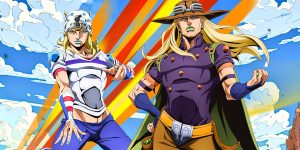
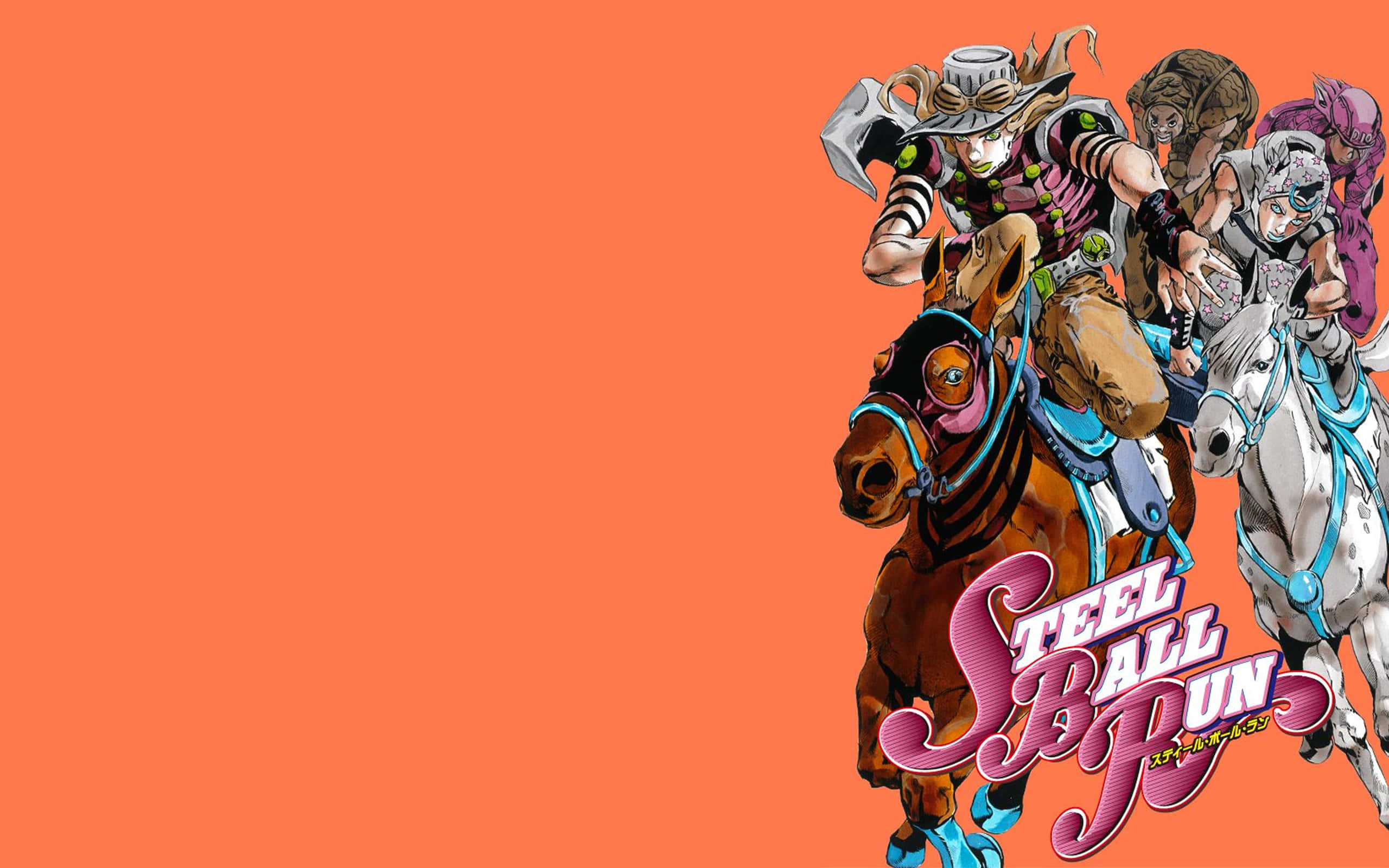
Ever since the reality-resetting melancholy of Stone Ocean faded to black, the global anime sphere has maintained a singular, breathless vigil. For over a decade, David Production accomplished the seemingly impossible: translating Hirohiko Araki’s notoriously idiosyncratic, anatomically flamboyant, and fashion-forward manga into a defining anime franchise of the modern era. Yet, through every colorful palette shift in Morioh and every operatic mafia clash across Italy, veteran fans always knew that the true final boss of adaptation still lay dormant over the horizon. That horizon is 1890s America, and the beast in question is JoJo’s Bizarre Adventure: Part 7 – Steel Ball Run.
Widely regarded by critics and readers alike as Araki’s undisputed magnum opus—consistently dueling near the very top of MyAnimeList’s all-time manga rankings alongside Berserk—Steel Ball Run is far more than a routine sequel. It is a creative rebirth, a masterclass in psychological realism, and arguably the most technically intimidating project an animation studio could dare to greenlight. As industry whispers, trademark filings, and cryptic animator teases continue to fuel the rumor mill, we break down why the impending arrival of Part 7 is sending seismic shockwaves across pop-culture discourse.
The Ultra Jump Paradigm: Araki’s Evolution into High Literature
To understand the monumental weight of a Steel Ball Run anime, one must first recognize the dramatic editorial metamorphosis that forged it. When the manga initially launched in Weekly Shonen Jump in 2004, it was initially detached from the JoJo moniker to give Araki creative autonomy. However, the true turning point arrived with its relocation to the monthly seinen magazine Ultra Jump in 2005.
Unshackled from the grueling weekly deadline grind and the censorship constraints of a younger demographic, Araki’s pen transformed. The trans-American cross-country horse race—spanning six thousand miles from San Diego Beach to New York City—morphed from a quirky adventure into an existential epic of grit, theology, and moral ambiguity. The panel layouts became expansive tapestries heavily indebted to classic Western cinema like Sergio Leone’s Dollars Trilogy and Clint Eastwood’s Unforgiven. For David Production, adapting this material requires a seismic shift in visual language: the punchy, hyper-stylized pop art of previous parts must give way to cinematic widescreen vistas, textured dust storms, and a tactile, sun-scorched atmospheric gravity.
Johnny Joestar and Gyro Zeppeli: Flawed Humanity Meets Sacred Geometry
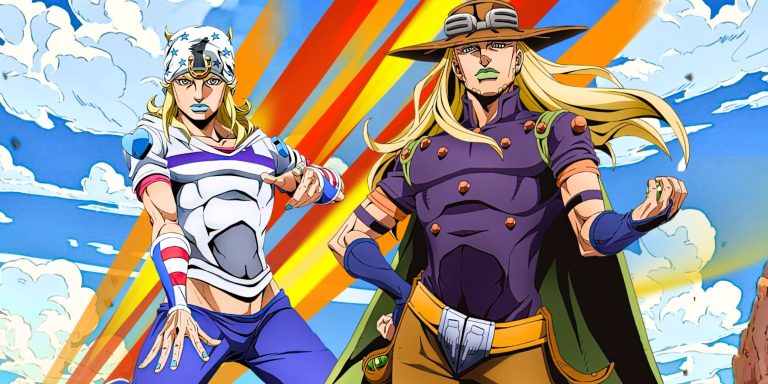
At the center of this grueling 19th-century rally lies the most compelling protagonist dynamic in modern sequential art. Unlike the stoic chivalry of Jonathan Joestar or the indomitable swagger of Jotaro Kujo, Johnny Joestar enters the story as an antihero defined by profound failure. Once a prodigy jockey, Johnny’s meteoric rise was halted by his own narcissistic arrogance, leaving him paraplegic, abandoned by society, and hollowed out by depression. His journey is not about saving the universe; it is a desperate, selfish scramble to reclaim “negative zero” and return to “zero.”
The Master and The Disciple: The Anatomy of the Spin
Johnny’s foil and catalytic salvation arrives in the form of Gyro Zeppeli, an eccentric, gold-toothed royal executioner from the Kingdom of Naples competing in the race to secure an amnesty for an innocent child. Gyro brings with him not a traditional Stand, but the Spin: a supernatural marital art grounded in medical science and the divine mathematics of the Fibonacci sequence and the Golden Ratio.
The philosophical and tactile integration of the Spin breathes fresh life into Araki’s trademark combat mechanics. The evolution from rotational physics into weaponized supernatural phenomenon—culminating in Johnny’s multi-act Stand, Tusk—offers David Production a breathtaking visual canvas. The sheer kinetic poetry of steel spheres carving trajectories through space, warping reality through sacred geometry, promises to deliver some of the most dynamic sound design and visual choreography in anime history if handled with the reverence it demands.
The Steed Dilemma: Conquering the Ultimate Sakuga Nightmare
Why hasn’t Steel Ball Run hit our screens yet? The short answer boils down to four legs, hooves, and musculoskeletal physics: horses.
In the animation industry, horses are notoriously known as the “animator’s graveyard.” The complex anatomical mechanics of a galloping steed—shifting musculature, realistic weight distribution, mane physics, and rhythmic gait cycles—are nightmarishly difficult to draw consistently by hand in 2D. Steel Ball Run does not merely feature occasional equestrian cameos; it is an uninterrupted, sixty-volume cavalry stampede featuring dozens of simultaneous riders traversing treacherous rivers, jagged canyons, and blistering salt flats.
David Production stands at a critical technological crossroads. Relying entirely on traditional 2D hand-drawn frames for thousands of racing sequences would drain the studio’s production pipeline and break production schedules. Conversely, resorting to jarring, untextured 3D CGI models could completely shatter the gritty, hand-hatched aesthetic that makes Araki’s Part 7 art so legendary. The studio must pioneer a sophisticated hybrid pipeline—perhaps utilizing cel-shaded 3D rigs for wide-angle pack movements combined with handcrafted 2D sakuga for intense character close-ups and dramatic Stand clashes. The stakes are immense: mismanaging the horses could alienate one of the most passionate fanbases in anime history.
Relics, Manifest Destiny, and Theological Ambition
Beyond the technical obstacles and the central duo’s chemistry, what truly elevates Steel Ball Run into the cultural pantheon is its daring narrative premise. As the race unfolds, the athletic competition reveals itself as an elaborate geopolitical conspiracy orchestrated by the 23rd President of the United States, Funny Valentine. The objective? The clandestine excavation of the petrified, sacred mummified remains of the Saint’s Corpse—heavily implied to be Jesus Christ Himself.
Valentine stands as one of Araki’s most chillingly complex antagonists. Armed with the dimensional-hopping Stand Dirty Deeds Done Dirt Cheap (D4C), Valentine is not motivated by megalomania or sadistic delight, but by pure, unadulterated patriotism. His philosophy of the “first napkin” and America’s rightful claim to global hegemony crafts a rich, deeply unsettling subtext regarding American exceptionalism and Manifest Destiny. The moral lines between Johnny’s desperate survival instincts and Valentine’s utilitarian imperialism blur into shades of philosophical gray that elevate the source material far beyond conventional battle-shonen tropes.
The Long Road to San Diego Beach
As David Production navigates other major productions, the production house has proven time and again that its creative leads are deeply attuned to Araki’s creative spirit. The patience exhibited by the JoJo fandom is not born out of indifference, but out of an unspoken collective agreement: an adaptation of Steel Ball Run must not merely be good—it must be historic.
When that iconic brass score blares, the dust kicks up over the California coastline, and Gyro Zeppeli spins his steel sphere for the first animated frame, it will mark the beginning of an era that could redefine western-style action storytelling in Japanese animation. Until then, keep your eyes on the horizon and your hands on the reins—the greatest race in manga history is gearing up for its ultimate victory lap.
Where does Steel Ball Run rank among your favorite JoJo parts, and how do you think David Production should handle the equestrian challenge? Sound off in the comments below, and stay locked to Wibux.com for all your breaking anime and pop-culture news!