
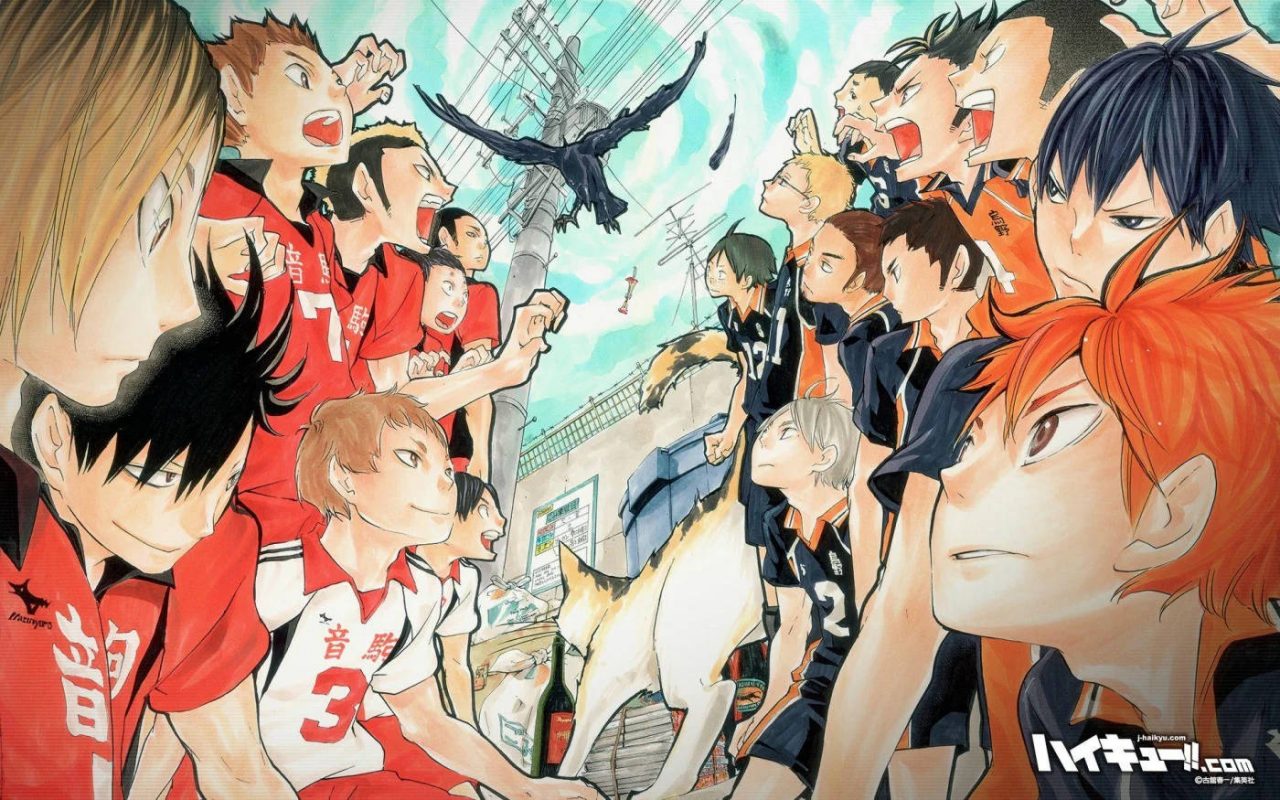
After conquering the Japanese box office with a historic ¥10 billion-plus theatrical run and sending ripples across international cinemas, Haikyu!! The Dumpster Battle (Gekijōban Haikyu!! Gomi-suteba no Kessen) has finally landed on global streaming platforms. For millions of fans who couldn’t catch the theatrical roadshow, the arrival of this cinematic milestone on screens at home isn’t just another seasonal update—it is the digital christening of modern sports anime’s crowning achievement. Directed by franchise veteran Susumu Mitsunaka and animated by the titan studio Production I.G, the film delivers on a narrative promise that has been simmering for over a decade: the long-awaited, official national tournament showdown between Karasuno High and Nekoma High.
Sports anime has spent decades refining the anatomy of high-stakes competition. From the melodramatic basketball courts of Slam Dunk to the hyper-kinetic velocity of Blue Lock, the genre often thrives on overt antagonism, catastrophic stakes, or supernatural visual metaphors. Yet, The Dumpster Battle achieves absolute transcendence by doing the exact opposite. It strips away malice, ignores the temptation of villainy, and presents an immaculate, breathless study of mutual growth, kinetic geometry, and athletic camaraderie. It is not merely a clash of strategies; it is sports anime operating at the absolute peak of its thematic and technical powers.
The Bloodline of a Rivalry: Decades of Lore Condensed into 85 Minutes
To understand why the “Battle at the Garbage Dump” holds such monumental weight within the cultural lexicon of shonen storytelling, one has to look past the immediate bracket of the Miyagi and Tokyo qualifiers. This match was inherited. The generational rivalry between former Karasuno coach Ikkei Ukai and Nekoma’s Yasufumi Nekomata began on dirt courts decades ago, surviving missed connections, retirements, and regional declines. For years, the two schools could only manage practice matches—informal training camps where the mantra “Connect” met Karasuno’s predatory aerial evolution.
The film wastes no time indulging in excessive recap, trusting its audience to understand the sheer historical pressure vibrating through the Tokyo Metropolitan Gymnasium. Karasuno enters the court as the “Crows”—ferocious, chaotic, improvisational, and perpetually hungry. Nekoma stands opposite as the “Cats”—patient, flexible, defensively unyielding, and bound together by an uncanny hive-mind coordination. By translating this clash into an ultra-lean 85-minute feature film, Production I.G turned what could have been a dragging six-episode television arc into an unbroken, pulse-pounding rhythm where every single second mirrors the real-time exhaustion of a high-school national tournament.
The Architect vs. The Monster: Kenma Kozume’s Psychological Chess Match
At the beating heart of The Dumpster Battle lies the psychological duel between Karasuno’s middle blocker Shoyo Hinata and Nekoma’s cerebral setter Kenma Kozume. Where typical shonen sports protagonists fight against hostile adversaries, Hinata’s greatest obstacle here is his closest friend from outside his team. Kenma, brilliantly voiced by Yuki Kaji with trademark quiet detachment, represents the ultimate analytical foil to Hinata’s pure, sunlit instinct.
Kenma doesn’t defeat opponents with raw physical power; he designs cages. Much of the film’s first half operates as an intellectual horror movie for Karasuno fans, as Kenma methodically charts Hinata’s run-up paths, manipulating the ball’s trajectory to trap the hyperactive decoy in cramped corners. By systematically neutralizing Karasuno’s trademark “Freak Quick,” Kenma literally clips Hinata’s wings, forcing the high-flyer into suffocating stagnation.
The Breakthrough and the Awakening
What elevates the film into emotional brilliance, however, is how this claustrophobic tactical warfare resolves. Hinata does not dismantle Kenma’s trap through an unbelievable shonen power-up, but through technical evolution: the high-trajectory open set, an adjustment born from hundreds of hours of grinding practice. When Hinata leaps above the three-man block, not forward but straight toward the stratosphere, the visual framing stretches into sheer mythology.
Yet the true victory of the match does not belong to the scoreline. It belongs to Kenma’s internal transformation. Throughout the entire series, Kenma has treated volleyball as a tedious software program—a chore he endures simply because his childhood friend, Tetsuro Kuroo, asked him to play. In the dying embers of the third set, dripping with sweat, lungs screaming for oxygen, and chasing an impossible rally, Kenma’s eyes widen. He lets slip the words the entire franchise has been waiting years to hear: “Tanoshii” (It’s fun). That single exclamation vindicates Kuroo’s mentorship, honors Hinata’s relentless spirit, and cements the rivalry as one forged entirely in love for the game.
Kinetic Masterclass: Production I.G’s Direction and the First-Person Climactic Sequence
From an animation standpoint, The Dumpster Battle represents the absolute bleeding edge of Production I.G’s athletic craft. Director Susumu Mitsunaka, who helmed the franchise’s critically acclaimed first three seasons, returns to correct the occasional visual inconsistencies of Season 4’s To the Top with breathtaking vengeance. The camera behaves like an invisible, hyper-agile libero, dipping under blocks, rotating around mid-air spikes, and zooming along floorboards to capture the deafening squeak of rubber soles against polished wood.
The technical crown jewel of the film—and perhaps the most audacious sequence in modern sports anime—arrives during the climactic final rally. The camera suddenly snaps into an intense, uninterrupted, first-person perspective from behind Kenma’s eyes. We hear the muffled roar of the stadium, the rhythmic, ragged gasps of Kenma’s breath, and watch his sweat-blurred peripheral vision struggle to track the neon ball descending from the rafters. The camera shakes with bodily fatigue, swings wildly as Kenma stumbles to set up another touch, and culminates in a devastatingly grounded, tragic realization: the ball slips from his sweat-soaked palms, ending the match not on a thunderous block or a dramatic spike, but on the raw, uncontrollable physics of exhaustion.
It is a directorial triumph of staggering proportions. By refusing to end the game on an exaggerated, cinematic super-play, Mitsunaka and the animation team remind us that high school sports are fragile, imperfect, and painfully fleeting.
Why The Dumpster Battle Outclasses Traditional Shonen Tropes
Most sports narratives rely on external existential threats: the loss of a club’s funding, personal vendettas, or arrogant rivals who need to be humbled. The Dumpster Battle rejects all of it. Nekoma and Karasuno have broken bread together, trained together, and shared barbecue in summer camps. When Kuroo, Yaku, and Kai realize that their high school volleyball careers are officially over with the referee’s final whistle, there are tears, but there is no bitterness.
The post-match handshake between Ikkei Ukai and Yasufumi Nekomata—visualized across televisions and nursing home screens miles apart—closes a generational wound with a quiet, mutual bow. There is an unspoken tragedy native to single-elimination tournaments: for one team’s dream to continue, another’s must die permanently on the court. The Dumpster Battle honors that heartbreak with unmatched tenderness, presenting sports not as a zero-sum war, but as an ephemeral canvas where teenagers briefly touch perfection before stepping out into adulthood.
The Verdict: An Unrepeatable Masterpiece Ready for Global Replay
Now that Haikyu!! The Dumpster Battle is available globally on streaming, the discourse shifts from theatrical box office triumph to long-term legacy. Free from the confines of theater showtimes, fans can now dissect every background cut of sakuga, analyze Kenma’s subtle positioning shifts frame by frame, and experience the emotional gut-punch of the final whistle on repeat.
The film sets a towering bar for whatever theatrical project tackles the upcoming Kamomedai match and the eventual culmination of the Spring High arc. By focusing entirely on intimate character chemistry and technical cinematic realism, Production I.G did not just adapt a fan-favorite manga match; they created an untouchable standard for what the medium can achieve. The match at the garbage dump can never be played again—neither in-universe nor in our hearts—and that singular, lightning-in-a-bottle transience is precisely why it is sports anime perfection.
Have you streamed Haikyu!! The Dumpster Battle yet? Did the Kenma first-person POV sequence leave you as breathless as it left us? Drop your thoughts, favorite rallies, and predictions for the final movie in the comments below!