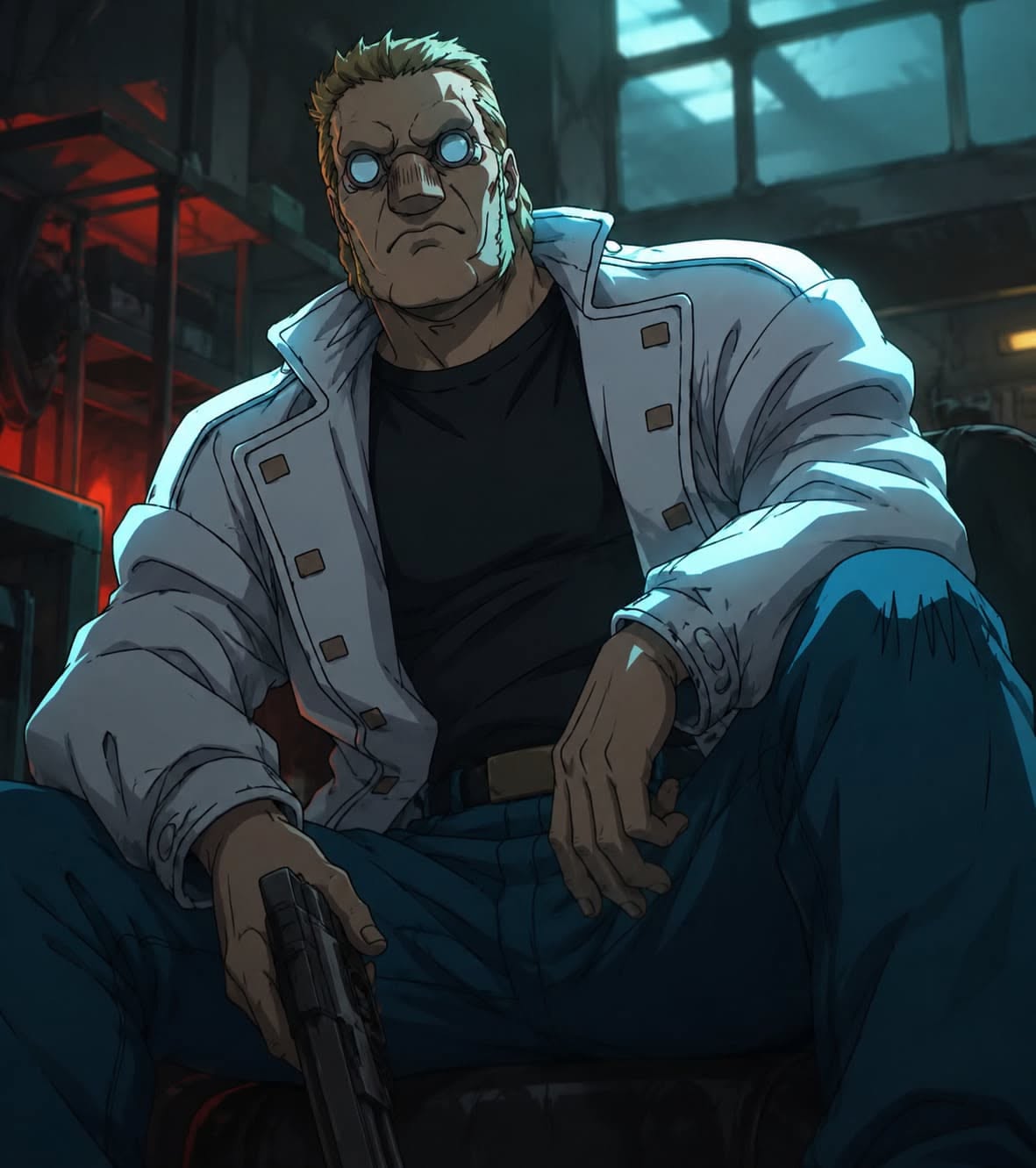
When the announcement first echoed across the global anime community that an all-new television series adaptation of Ghost in the Shell was greenlit for 2026, jaws dropped worldwide. For over three decades, the legendary cyberpunk franchise created by Shirow Masamune has served as the gold standard of speculative fiction, influencing everything from The Matrix to modern artificial intelligence discourse. But this time, the cybernetic mantle passes into the audacious, fluid hands of Science SARU—the visionary studio celebrated for pushing visual storytelling to its absolute limits. Can this creative collision between cold cybernetic philosophy and hyper-expressive animation truly redefine modern anime?
The Evolution of a Cyberpunk Legend: From Oshii to Stand Alone Complex
To grasp why this upcoming series is sending shockwaves through the industry, one must understand the monumental shoes Science SARU is stepping into. In 1995, visionary director Mamoru Oshii introduced the world to an existential, melancholic masterpiece where Major Motoko Kusanagi grappled with the boundaries of human consciousness within a titanium cyborg shell. Years later, Kenji Kamiyama expanded the political and tactical warfare of Public Security Section 9 with the critically acclaimed Ghost in the Shell: Stand Alone Complex, establishing iconic relationships between Motoko, her hulking second-in-command Batou, and the wise bureau director Daisuke Aramaki.
Subsequent iterations, including Arise and the CG-animated SAC_2045, demonstrated that while the universe possesses endless narrative versatility, fans have yearned for a fresh artistic voice capable of recapturing the kinetic danger and philosophical urgency of the original manga. Just as contemporary masterworks like the Chainsaw Man The Movie Reze Arc elevate dark urban fiction through untamed visual flair, the upcoming 2026 project seeks to ignite Shirow Masamune’s dense, high-tech world with unmatched visual energy.
Why Science SARU Is the Perfect Vanguard for the Cybernetic Frontier
Founded by revolutionary animator Masaaki Yuasa and creative producer Eunyoung Choi, Science SARU has built an unimpeachable reputation for breaking conventional anime geometry. Having demonstrated their peerless ability to balance chaotic supernatural momentum with genuine heart in modern hits—as examined in our deep-dive on Science SARU’s explosive work on Dandadan—the studio is singularly equipped to revitalize Section 9.
Rather than relying on sterile, hyper-polished 3D models that frequently plague futuristic sci-fi, Science SARU’s hallmark loose line work, kinetic camera angles, and organic character movement will infuse Major Motoko Kusanagi’s cybernetic body with raw kinetic weight. When Motoko activates her thermo-optical camouflage or engages in bone-crunching hand-to-hand combat against rogue cyborg operatives, audiences can expect fluid, expressive fight choreography that feels dangerously alive.
Major Motoko Kusanagi in the Age of Real-World Artificial Intelligence
When Shirow Masamune originally penned The Ghost in the Shell in 1989, concepts like neural net ghost-hacking, ubiquitous global data webs, and synthetic humanoid labor were pure science fiction. Today, as generative artificial intelligence, neural interfaces, and autonomous defense systems dominate real-world headlines, the themes of Section 9 hit closer to home than ever before.
- The Nature of the Ghost: If machine neural networks can replicate human speech, creative synthesis, and intuitive deduction, what defines the human soul? Motoko Kusanagi’s eternal quest for identity resonates with frightening relevance in 2026.
- Section 9’s Tactical Dynamic: The tactical camaraderie between Motoko, Batou, Togusa, and Chief Aramaki offers the ultimate balance between forensic investigation and high-velocity spec-ops espionage.
- Aesthetic Modernity: Much like how visionary franchises reinvent their visual palette to captivate a new generation—seen recently in the striking thematic shift of Persona 6 stylistic evolution—Science SARU promises a radical color grading that departs from clichéd neon-blue tropes to embrace an electric, tactile dystopian aesthetic.
High Stakes for Cyberpunk and the 2026 Anime Landscape
Expectations for The Ghost in the Shell (2026) are sky-high, not only from legacy anime purists who revere Mamoru Oshii’s cinematic poetry, but also from younger fans drawn to boundary-pushing auteur anime. Under the watchful production oversight of Kodansha and Science SARU’s seasoned directorial talent, this reboot stands as a definitive statement: cyberpunk anime is ready to reclaim its throne from generic fantasy tropes.
With an uncompromising creative ethos, profound philosophical underpinnings, and an animation powerhouse firing on all cylinders, Motoko Kusanagi’s dive into the digital net promises to be one of the most culturally significant anime events of the decade.
What Do You Think?
Are you excited to see Science SARU take the steering wheel of Ghost in the Shell, or do you prefer the hyper-detailed, grounded aesthetic of Stand Alone Complex? Which iconic Section 9 operative are you most eager to see animated in Science SARU’s expressive signature style? Drop your thoughts, theories, and expectations in the comments below!