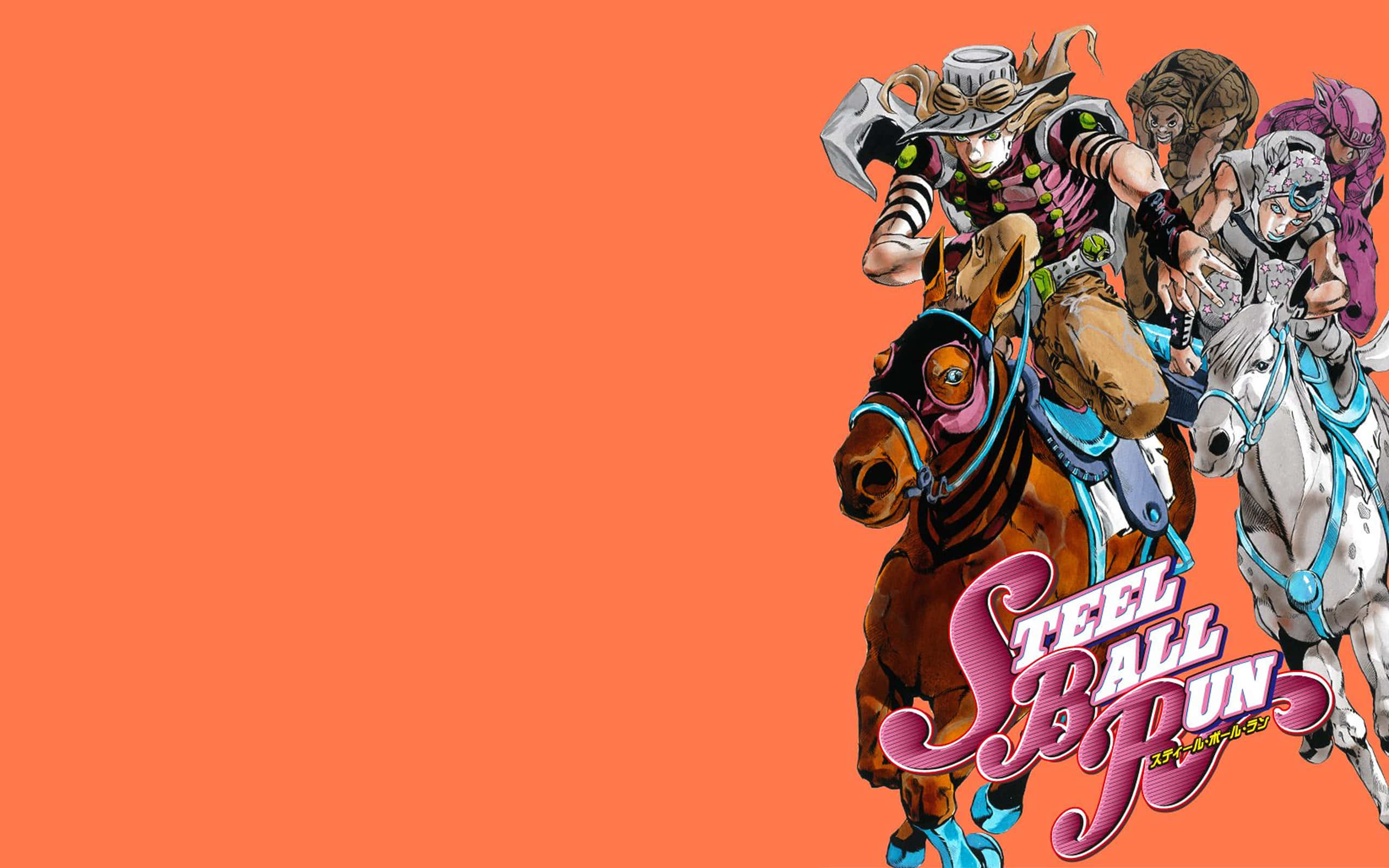
Ever since the bittersweet notes of “Distant Dreamer” faded over the rebooted horizon of Stone Ocean, the international anime fandom has lived in a perpetual state of breath-holding anticipation. For over a decade, David Production has pulled off one of modern animation’s most miraculous runs: adapting Hirohiko Araki’s famously idiosyncratic, hyper-stylized epic from the Victorian cobblestones of Phantom Blood to the humid prison cells of Green Dolphin Street. Yet, among manga purists and casual viewers alike, an unspoken truth has long anchored every conversation about the franchise: everything before was merely a prelude to Steel Ball Run.
Widely celebrated as Araki’s undisputed magnum opus, Part 7 isn’t merely another episodic chapter in the multigenerational bloodline brawl. It is a sweeping, revisionist Western, a theological contemplation on divine grace and consequence, and an evolutionary leap that completely unshackled JoJo from the constraints of traditional battle manga. As speculation regarding David Production’s official announcement reaches fever pitch across forums, social hubs, and industry insider circles, the questions loom large: How does an animation studio translate Araki’s most dense, kinetic, and graphically punishing masterpiece to the screen? And more crucially, is modern anime production even prepared for the sheer scale of the trans-American race?
The Seinen Evolution: Why Steel Ball Run Stands Alone
To grasp the suffocating hype surrounding a potential Steel Ball Run adaptation, one must contextualize where the manga sits in Araki’s creative trajectory. Originally serialized in Weekly Shonen Jump in 2004 before shifting to the monthly seinen magazine Ultra Jump in 2005, the transition marked a profound narrative and thematic renaissance. No longer bound by the editorial mandates, frantic weekly deadlines, or youth-oriented censorship of Shonen Jump, Araki indulged in unrestrained world-building, moral ambiguity, and complex paneling reminiscent of classic American cinematic Westerns like Sergio Leone’s Dollars Trilogy and Clint Eastwood’s Unforgiven.
Set across a grueling 1890 cross-country horse race spanning from San Diego Beach to New York City, Steel Ball Run acts as a spiritual reboot of the franchise’s mythology. It resets the timeline and subverts familiar archetypes, replacing classic good-versus-evil dichotomies with a bitter battle for self-actualization, nationalistic conquest, and divine providence. With a massive purse of fifty million dollars on the line—and the scattered relics of a supernatural, holy cadaver waiting to be uncovered along the race route—the stakes transcend simple survival.
The Soul of the Frontier: Johnny Joestar and Gyro Zeppeli
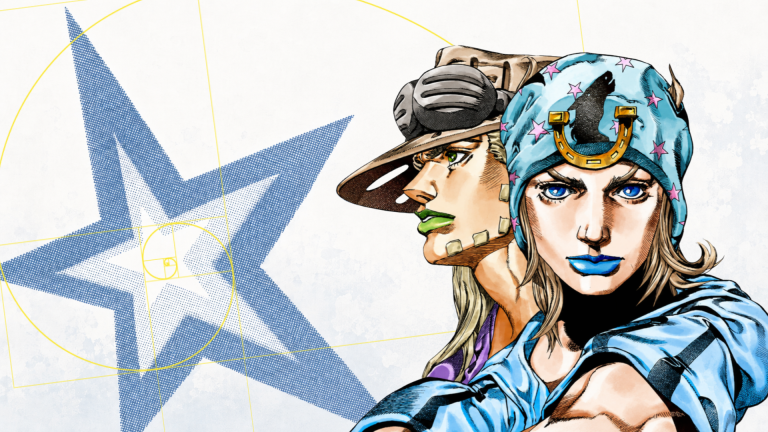
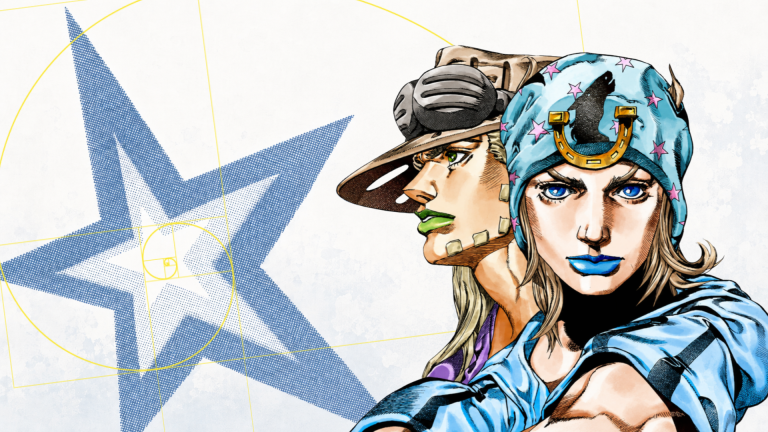
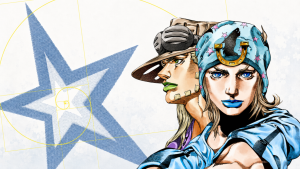
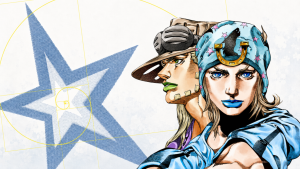
At the beating heart of Steel Ball Run lies arguably the greatest dual-protagonist dynamic in modern sequential art: Johnny Joestar and Gyro Zeppeli. Their rapport is neither the starry-eyed brotherhood of Jonathan and Zeppeli nor the adversarial camaraderie of Jotaro and Polnareff; it is an emotionally raw, mutually redemptive journey carved through grit, vulnerability, and sheer desperation.
Johnny Joestar: The Defiance of Negative Zero
Unlike the stoic, fundamentally moral Joestars who preceded him, Johnny begins his journey as an unlikable, fallen prodigy. Crippled from the waist down in a reckless dispute born of his own hubris, Johnny lives in the paralyzing shadows of his overbearing father and the tragic death of his brother. Araki frequently describes Johnny’s motivation as “dark determination”—an unrelenting, sometimes terrifying willingness to sacrifice morality if it means clawing his way out of spiritual and physical ruin.
Johnny’s journey is not about becoming a savior; it is about bringing his life from “negative” back to “zero.” His Stand evolution, Tusk, mirrors this psychological crawl, transforming across four distinct acts that demand immense emotional endurance, psychological maturation, and absolute command over spatial geometry.
Gyro Zeppeli: Steel Balls and the Mystery of the Spin
Balancing Johnny’s brooding desperation is Gyro Zeppeli, a disgraced executioner from the Kingdom of Naples carrying a heart of gold concealed behind absurd gags, steel teeth, and audacious swagger. Gyro enters the race not for glory, but to win amnesty for an innocent child condemned to die on royal decree. In place of conventional Hamon or innate Stand powers, Gyro wields The Spin—an ancient, mathematical art of kinetic energy harnessed through the mystical Golden Ratio.
The Spin is Araki’s thematic evolution of the ripples introduced in 1987, but codified with surgical, scientific precision. Through the rotation of iron spheres, Gyro manipulates anatomy, refracts light, and bends spatial reality. The kinetic dynamism of the Spin, paired with Johnny’s nail-firing Stand abilities, presents an exhilarating visual language that animators will need to translate with surgical clarity.
The Equestrian Everest: David Production’s Technical Challenge
If Steel Ball Run has not yet hit production schedules, the anime industry knows precisely why: horses. In the realm of hand-drawn animation, equines are an infamous, budget-devouring nightmare. A horse’s anatomy consists of complex skeletal-muscular articulations that distort continuously in motion; animating dozens of them galloping at variable velocities, in perspective, through shifting desert canyons and blizzards across 40-plus episodes is an unprecedented undertaking.
Historically, anime studios combat this with 3D CGI assets. However, JoJo fans remain intensely protective of David Production’s signature tactile style—defined by heavy, hand-drawn inks, cross-hatching, sudden palette swaps, and expressive hyper-stylization. A reliance on unrefined, floaty 3D models during the high-speed chases could fatally dilute the tactile intensity of the source material. Wit Studio famously struggled with mounted combat sequences in Attack on Titan, often relying on master animators like Arifumi Imai to hand-draw pivotal transitions.
Insiders postulate that David Production has spent the interim years refining a bespoke pipeline that fuses cel-shaded 3D horse tracking with layered, hand-drawn dynamic flourishes. The studio’s work on the stylized combat choreography of Fire Force and the multi-dimensional chaos of Stone Ocean suggests the technical chops exist, but Steel Ball Run will demand the full mobilization of their primary creative unit—likely requiring substantial pre-production lead times that explain the current broadcast silence.
Funny Valentine, D4C, and the Weight of Ideology
Beyond the logistical sprint of the race and the character study of its leads, a faithful adaptation must reckon with the narrative’s ideological titan: Funny Valentine, the 23rd President of the United States. Valentine is universally ranked among the most mesmerizing antagonists in manga history. His Stand, Dirty Deeds Done Dirt Cheap (D4C), allows him to traverse parallel dimensions, weaving a labyrinth of reality-bending mind games that will test the creative staging of any series director.
What elevates Valentine is not merely his ability to swap his injured body across infinite realities, but his chillingly charismatic, utilitarian philosophy. His pursuit of the Holy Corpse is driven by an unyielding desire to secure America’s prosperity at the direct expense of the rest of the globe—a concept distilled into his iconic “First Napkin” monologue. When the final showdown converges between Johnny’s personal salvation and Valentine’s grand imperialist vision, Steel Ball Run stops being just an action series and transforms into a monument of literary suspense.
The Verdict: Anime’s Next Defining Phenomenon
The road to adapting JoJo’s Bizarre Adventure: Steel Ball Run is paved with immense logistical hazards, sky-high artistic expectations, and an impatient global audience. Yet, this is the very precipice David Production has been galloping toward for twelve years. If the studio can conquer the logistical crucible of its equestrian kineticism while honoring Araki’s most sophisticated character writing to date, Part 7 will not merely trend on release day—it will cement itself as an era-defining milestone in anime history.
Until the first key visual drops and the unmistakable rhythm of galloping hooves echoes through a teaser trailer, fans can only wait, study the Golden Rectangle, and keep their sights fixed on the horizon.
What are your personal hopes for the Steel Ball Run adaptation? Do you think David Production can pull off the horses with 2D animation, or is hybrid CGI the only realistic path forward? Sound off in the comments below, and stay tuned to Wibux.com for breaking JoJo updates and industry analyses.