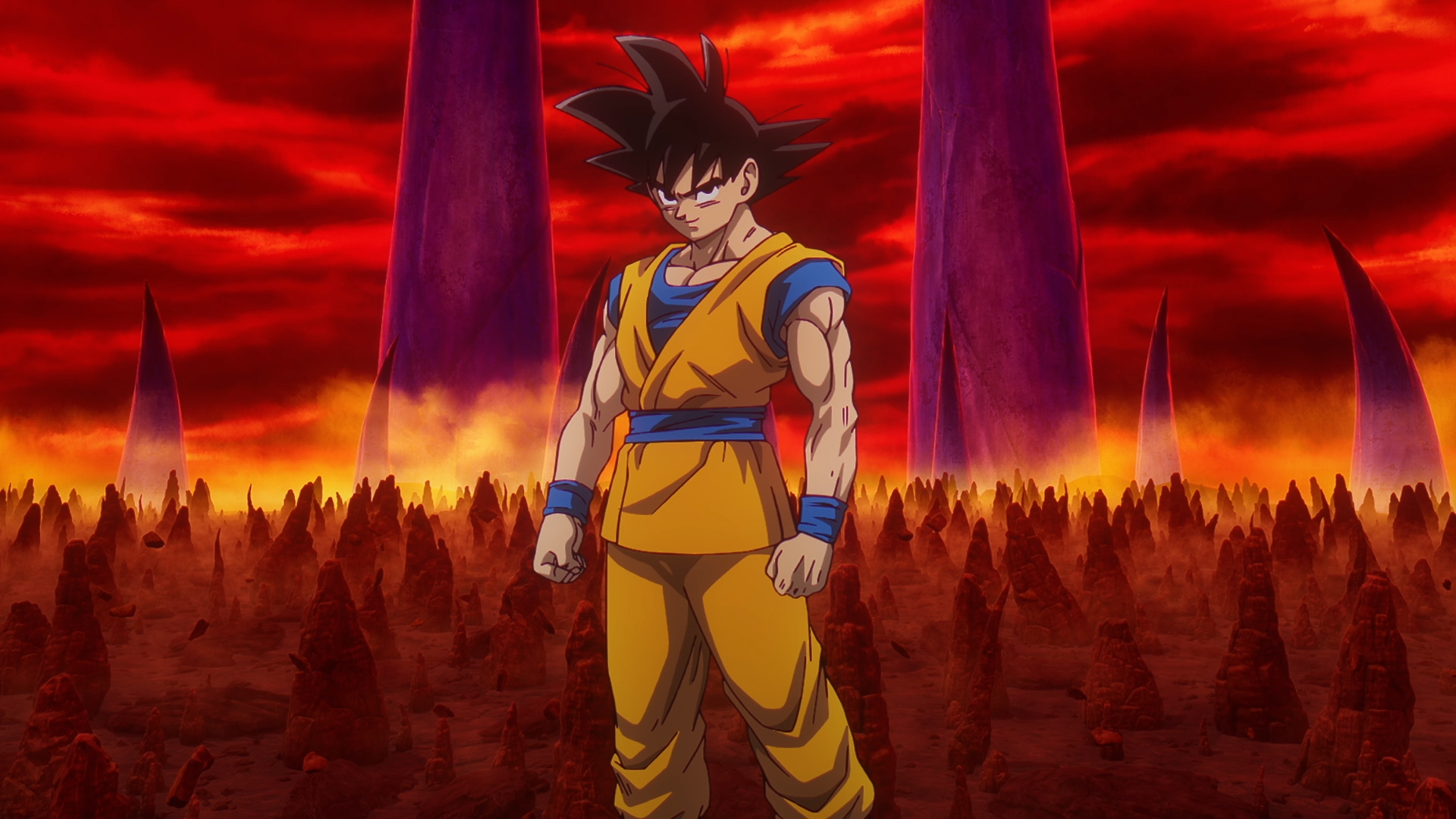
When the opening chords of Dragon Ball Daima struck during its historic global premiere, it carried an emotional gravity unlike any anime broadcast in modern history. Following the tragic passing of master creator Akira Toriyama in March 2024, the premiere ceased to be merely another tentpole Shonen rollout; it transformed into a sacred pilgrimage. Arriving concurrently with the 40th anniversary of the legendary manga’s debut in Weekly Shonen Jump, Daima serves as Toriyama’s definitive swansong—a production where the maestro was more intimately involved with worldbuilding, character design, and scenario scripting than he had been in decades. Instead of succumbing to the escalating hyper-deification of Gods of Destruction and multiverse-erasing deities that defined Dragon Ball Super, the premiere episode delivers a brilliant, subversive swerve. It drags Goku and the Z-Fighters backward through the looking glass into pure, unadulterated whimsy, tactical martial arts, and the long-obscured terrors of the Demon Realm.
The Demon Realm Unveiled: Rewriting the Cosmogony of Toriyama’s Universe
For decades, the Demon Realm (Makai) existed largely as an evocative, tantalizing footnote within canonical Dragon Ball lore. Aside from the brief introduction of Dabura during the Majin Buu Saga and sprawling, non-canon sandbox explorations in video games like Dragon Ball Xenoverse and Super Dragon Ball Heroes, Toriyama had kept the dark underbelly of the universe under lock and key. The premiere of Dragon Ball Daima radically recontextualizes the cosmic map, dedicating significant runtime to establishing the political hierarchy, geography, and cultural eccentricities of this shadowed realm.
Through the eyes of King Gomah—the diminutive, neurotic new monarch who ascends the throne following Dabura’s demise—viewers are treated to a masterclass in Toriyama-style exposition. Accompanied by Degesu, the arrogant younger brother of the Supreme Kai (Shin), and the sinister Dr. Arinsu, Gomah observes archival footage of the climactic battle against Kid Buu. The dynamic immediately shifts the franchise’s cosmological perspective. In a brilliant lore retcon, the premiere establishes that the Core People (the Glind race) are intrinsically tied to the Demon Realm, complicating the mythos of the Kais. Moreover, Gomah’s obsession with the “Tamagami”—the intimidating guardians of the Demon Realm’s own ancient set of Dragon Balls—signals that Daima is deeply invested in expanding mystical rules rather than simply introducing another universe-busting power scale.
From Majin Buu to Royal Paranoia
The instigating incident of Daima is not born of a thirst for conquest, but of sheer, unadulterated cowardice. Gomah, paralyzed by the realization that mortals on Earth managed to obliterate Majin Buu, uses the Demon Realm Dragon Balls with a singular, preventive objective: neutralize the Earth’s greatest defenders by stripping them of their formidable physical advantages. It is a delightfully classic narrative mechanism that mirrors Emperor Pilaf’s original comedic schemes while carrying existential weight for our heroes.
“Mini” Does Not Mean GT: A Masterclass in Character Psychology and Subversion
The immediate surface comparison fans made upon Daima’s initial reveal was, understandably, Dragon Ball GT. The premise of Goku being rendered small again sparked fears of retreading well-worn ground. However, the premiere utterly dismantles these anxieties within minutes of the transformation curse taking effect. Unlike GT’s solitary regression, Gomah’s wish systematically shrinks the entire ensemble—turning Goku, Vegeta, Piccolo, Bulma, and even the towering secondary cast into pint-sized versions of themselves.
This tonal recalibration yields immediate psychological gold. The premiere thrives on character interplay: Vegeta’s explosive fury at his newly diminished stature offers peak comedic timing, juxtaposed against Piccolo’s stoic, analytical processing of their reduced reach and center of gravity. Most importantly, Goku’s reaction is quintessentially Toriyama. Rather than despairing over his lost adult form, Son Goku approaches his miniaturized body with infectious, childlike curiosity. Relearning the spatial dynamics of his limbs forces Goku to unearth a relic from the franchise’s foundational era: the Nyoibo (Power Pole). By returning the legendary weapon to Goku’s back, Daima symbolically closes the 40-year loop, transforming a debilitating curse into a joyous invitation to return to foundational martial arts.
Visual Symphony: Toei Animation’s Premier Roster Reclaims Hand-Drawn Glory
From an aesthetic and technical perspective, the premiere of Dragon Ball Daima is nothing short of breathtaking. Under the dual directorial vision of Yoshitaka Yashima and Aya Komaki, with legendary animator Katsuyoshi Nakatsuru handling character designs, Toei Animation has poured cinematic-level resources into every frame. The visual language eschews the harsh, digital sheen that plagued the early arcs of Dragon Ball Super, adopting instead a fluid, tactile style reminiscent of the beloved Dragon Ball Super: Broly and classic 90s OVAs.
The choreography in the premiere is deliberate, punchy, and imbued with kinetic panache. Combat sequences emphasize momentum, weight, and environmental impact over the seizure-inducing beam struggles that had become the franchise’s default currency. When Goku tests his movements in his miniature frame, the animation relishes the subtle nuances: the shift of weight on the heel, the swish of the gi, and the joyful elasticity of hand-to-hand combat. Toriyama’s signature mechanical designs—from Gomah’s retro-futuristic monitors to the intricate insectoid ships traversing the Demon Realm—are realized with stunning craft, bridging the gap between vintage 1980s aesthetic sensibilities and cutting-edge compositing.
Nostalgia as Innovation: Honoring 40 Years of Saiyan Legacy
The critical triumph of the Daima premiere lies in how it wields nostalgia not as an emotional crutch, but as an engine for storytelling innovation. The episode dedicates a breathtaking prologue to recapping the history of Dragon Ball—from Goku’s fateful meeting with Bulma in Mount Paozu through the bloody crescendo of the Buu Saga. Yet, this is not mere filler. It directly informs the villainous motivations of the Demon Realm denizens, turning the franchise’s past achievements into the catalyst for its current crisis.
Community reception across Japan, North America, and global fandom spaces has been overwhelmingly rapturous. The skepticism that once lingered over the “mini” aesthetic evaporated the moment viewers witnessed the density of the script. This is pure, unfiltered Akira Toriyama: irreverent humor, intricate alien ecosystems, and a deep-seated romance with the unknown. By transporting the narrative away from familiar Earth landscapes and into the bizarre, stratified zones of the Demon Realm, Daima rekindles the adventurous spirit of Journey to the West that sparked the phenomenon four decades ago.
Final Verdict: Toriyama’s Heartfelt Farewell Gift
The premiere of Dragon Ball Daima accomplishes the impossible: it honors an iconic legacy while offering a daring, uncharted path forward. It stands as a testament to Akira Toriyama’s eternal creative spirit, reminding the global anime community that Dragon Ball‘s true heartbeat was never merely about power levels, divine transformations, or apocalyptic stakes. Its brilliance has always resided in the thrill of exploration, the purity of a martial artist seeking self-betterment, and the unyielding warmth of found family.
As Goku and his companions set sail across the atmospheric thresholds of the Demon Realm, one cannot help but feel a profound sense of gratitude. Toriyama may have left our mortal plane, but in Daima, his adventurous soul burns brighter than a Spirit Bomb.
What did you think of the Dragon Ball Daima premiere? Did Gomah’s wish deliver on the hype, or are you missing the god-level scale of Super? Sound off in the comments below, and stay locked to Wibux.com for weekly episodic breakdowns and deep-dive lore theories!