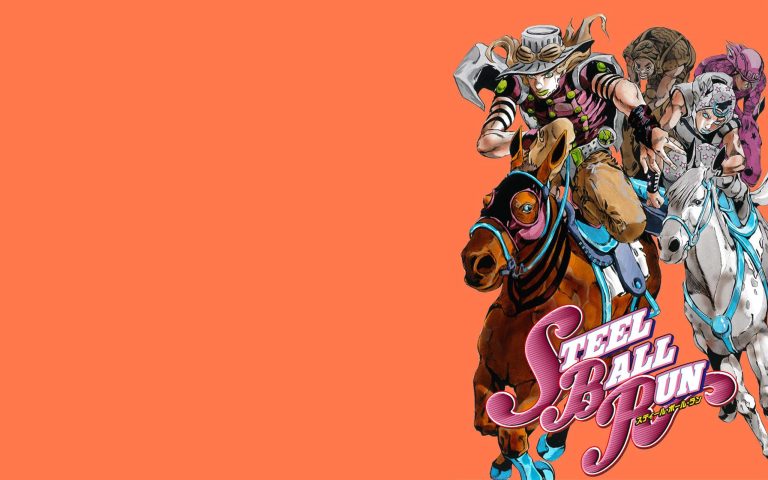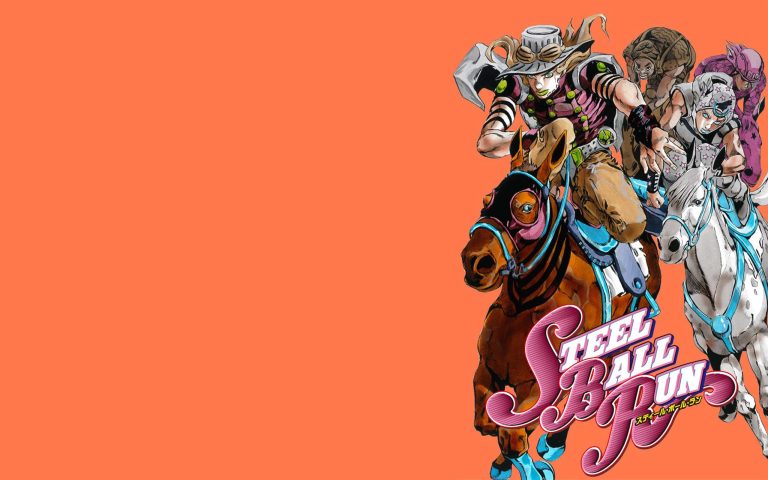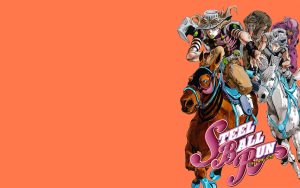
When the melancholic, celestial strings of Jolyne Cujoh’s curtain call faded at the close of Stone Ocean, the collective breath of the global anime community hitched. For over a decade, David Production pulled off what was once deemed impossible: translating Hirohiko Araki’s idiosyncratic, fashion-forward, hyper-stylized manga saga into a modern anime juggernaut. Yet, as the original Joestar timeline dissolved into the Ireneverse, every fan’s eyes instantly turned to the west. Not just any west—the dust-choked, sun-bleached expanse of 1890s North America, where a cross-continental equestrian race marks the beginning of Araki’s undisputed magnum opus: JoJo’s Bizarre Adventure: Steel Ball Run.
For years, Part 7 occupied an almost mythical status among seinen and shonen connoisseurs alike. Regularly jockeying with Berserk for the top spots on global manga rankings, Steel Ball Run is more than just another chapter in a sprawling generational feud; it is a profound artistic rebirth. As production rumors swirl and industry insiders trade whispers regarding David Production’s next move, the prospect of an adaptation raises seismic creative, narrative, and technical questions.
The Seinen Rebirth: Araki’s Masterpiece in Motion
To understand the sheer magnitude of the Steel Ball Run buzz, one must appreciate the transformative period in which it was conceived. Originally serialized in 2004 in Weekly Shonen Jump simply as Steel Ball Run—deliberately distancing itself from the JoJo moniker—the series made a historic migration in 2005 to the monthly pages of Ultra Jump. That editorial shift changed everything.
Untethered from the relentless grind of weekly deadlines and demographic constraints aimed primarily at teenage boys, Araki’s craft exploded. His panels broadened into cinematic vistas, his pacing adopted the sprawling, contemplative cadence of a Cormac McCarthy novel, and his character design evolved from the bulky musculature of the 1980s into willowy, haute-couture iconography. Steel Ball Run is not merely a Stand battle gauntlet; it is a 6,000-kilometer odyssey that interrogates American myth-making, manifest destiny, and existential despair.
David Production isn’t just staring down another seasonal cour; they are standing before the gates of a monumental historical epic. Adapting Part 7 means committing to a multi-year creative investment that requires an elevated visual grammar unlike anything seen in Phantom Blood or Golden Wind.
A Symbiosis of Broken Men: Johnny Joestar and Gyro Zeppeli
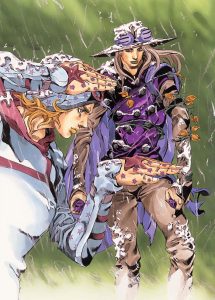
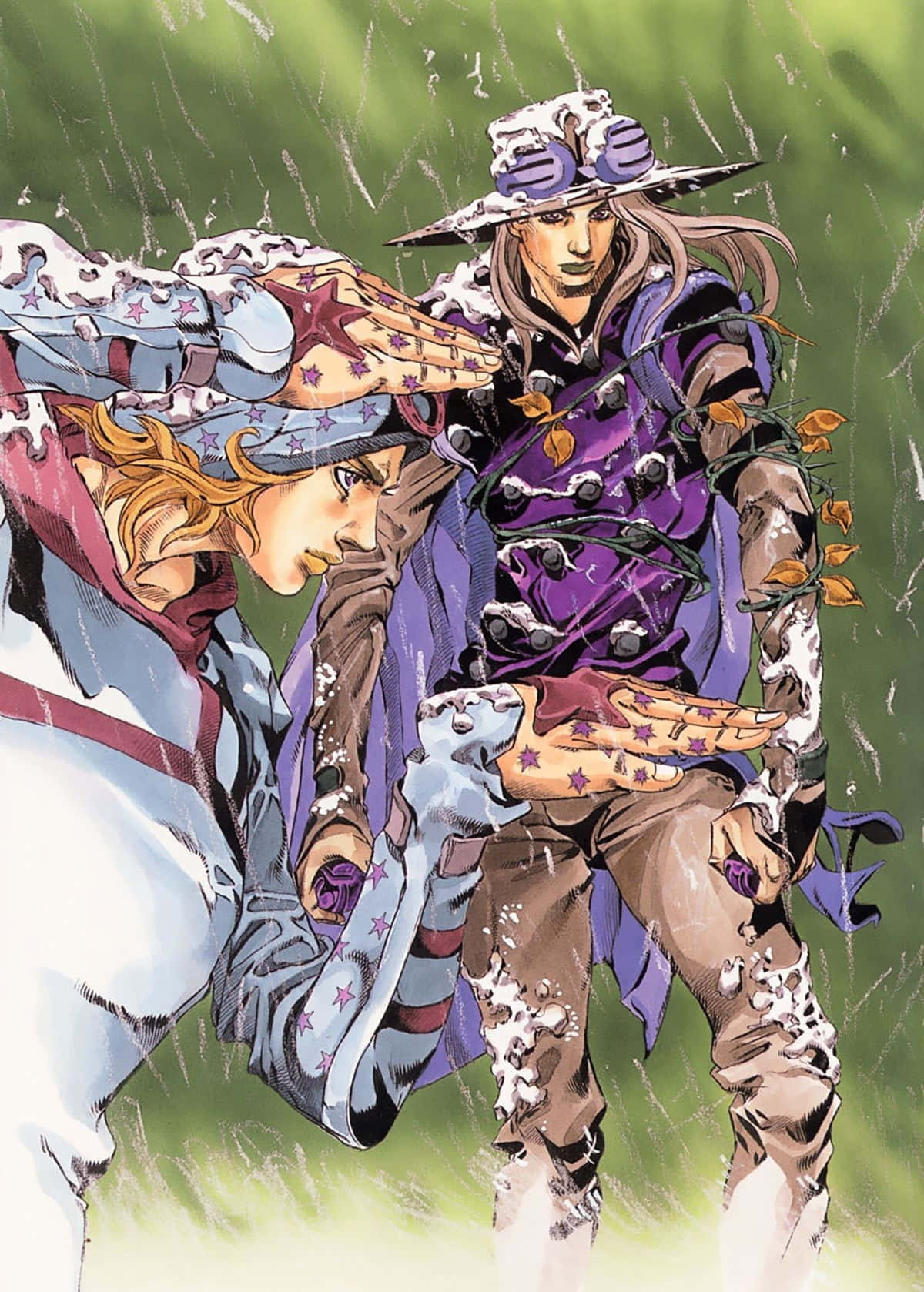
At the beating heart of this cross-country race lies the finest character dynamic Araki has ever penned. In an audacious inversion of the franchise’s archetypal heroics, Johnny Joestar is introduced not as a champion of justice, but as a deeply flawed, paraplegic ex-jockey paralyzed by his own hubris and wallowing in self-pity. He is a stark, cynical departure from Jonathan Joestar’s Victorian gentility.
Johnny’s “Dark Determination” vs. Traditional Heroism
Unlike previous Joestars who fought to protect family legacies or liberate the world from generational vampires, Johnny is propelled by a raw, selfish yearning: he simply wants to stand on his own two feet again. Throughout the journey, Araki frequently draws attention to Johnny’s “dark determination”—a cold, ruthless fire in his eyes that terrifies even his allies. Johnny is willing to cross moral thresholds that would make previous protagonists flinch, cementing his status as one of manga’s most captivating anti-heroes.
Gyro Zeppeli and the Philosophy of the Spin
Balancing Johnny’s brooding desperation is Gyro Zeppeli, a disgraced executioner from the Kingdom of Naples riding to secure clemency for an innocent boy. Armed with eccentric humor, grillz etched with “GO! GO! ZEPPELI,” and steel spheres that channel the rotational energy of the Golden Ratio, Gyro serves as both mentor and emotional anchor. His relationship with Johnny bypasses the shallow tropes of modern shonen rivalries. It is a slow, deeply human exchange of trauma, philosophical musings, and shared absurdities—like Gyro’s unforgettable “Pizza Mozzarella” ballad—that gives the narrative its devastating emotional resonance.
The Spin: Elevating Araki’s Combat System
While Stands remain a fundamental piece of the combat lexicon, Steel Ball Run introduces the franchise’s most mathematically and thematically intricate power system: The Spin. Rooted in Renaissance geometry, the Fibonacci sequence, and kinetic anatomy, the Spin acts as a forgotten supernatural science.
Through the evolution of Johnny’s Stand, Tusk (spanning ACT 1 through the reality-shattering conceptual terror of ACT 4), the power progression feels terrifyingly earned. It is not handed down through bloodlines or acquired via a cosmic arrow strike; it is decoded through grit, pain, and astronomical observation. Translating this visual concept—where rotational torque distorts space, bends dimensions, and manipulates gravity—demands a level of avant-garde visual effects and fluid sound design that will push any studio’s composite department to its absolute limits.
The Equestrian Dilemma: David Production’s Mount Everest
If the thematic depth of Steel Ball Run thrills the writing room, its logistical realities terrify the animation desk. There is an industry adage whispered by veteran animators across Tokyo: never animate horses. An equestrian race running across 24 episodes is not a sprint; it is an industrial meat grinder.
A galloping horse possesses an intricate skeletal and muscular system that leaves no room for anatomical cheating. Off-model frames are instantly recognizable to the human eye. When you factor in dozens of competitors navigating jagged canyons, torrential rainstorms, and dense forest terrain while engaging in Stand skirmishes atop those horses, the computational and hand-drawn demands skyrocket. Consider the primary hurdles:
- The 2D vs. 3D Hybrid Balance: To survive production, David Production will inevitably lean on 3D CGI models for the horses. The critical risk lies in visual dissonance. If the riders (in lush, textured 2D) feel detached from sterile, weightless 3D steeds, the visceral kineticism of the race vanishes. The studio must iterate on the hybrid pipelines utilized by studios like Orange or MAPPA to ensure the dust, muscle strain, and tactile grit remain unbroken.
- The Release Strategy Debacle: The fandom has not forgotten the distribution handling of Stone Ocean. Netflix’s disjointed “batch drop” model severely diluted the cultural footprint of Jolyne Cujoh’s arc, smothering the week-to-week watercooler discourse that once propelled Golden Wind into global trending territory. For Steel Ball Run to claim its rightful throne, David Production and Warner Bros. Japan must insist on a traditional weekly episodic broadcast.
High Stakes, Relics, and the Ideology of Funny Valentine
No dissection of Part 7 is complete without acknowledging its geopolitical antagonist: the 23rd President of the United States, Funny Valentine. The search for the scattered, sacred mummified Corpse Parts—subtly understood to belong to Jesus Christ—elevates a localized race into a supernatural struggle over global sovereignty.
Valentine’s multidimensional Stand, Dirty Deeds Done Dirt Cheap (D4C), alongside his philosophical manifesto of “taking the first napkin,” elevates him above the cartoonish villainy of classic anime antagonists. He acts out of genuine, hyper-nationalistic patriotism, believing whole-heartedly that prosperity belongs to the bold and the dominant. His battle against Johnny and Gyro represents a conflict of worldviews: the unbridled collective ambition of an empire versus the fragile, hard-won humanity of two broken wanderers.
The Horizon Ahead
The road to a Steel Ball Run anime adaptation is fraught with monumental risks, technical terrors, and sky-high expectations. Yet, this is precisely the canvas on which David Production excels. By marrying Hirohiko Araki’s boundary-pushing narrative with their signature visual flair, color-shifting palettes, and bold musical selections, the studio has the rare opportunity to redefine what a prestige anime adaptation looks like in the modern era.
The starting gun hasn’t officially fired, but the thunder of hooves across the American desert is growing louder by the day. Steel your resolve, study the Golden Rectangle, and hold tight to the reins—because when the race begins, anime history will be written in the dust.
What do you think is the biggest challenge David Production faces with Steel Ball Run? Will they nail the equestrian animation, or should they take a hiatus to ensure the production values match Araki’s vision? Drop your theories and favorite Part 7 moments in the comments below!