Ever since the original universe collapsed in on itself during the bittersweet, operatic climax of Stone Ocean, the collective consciousness of the global anime community has fixated on a singular, dust-choked horizon: San Diego, 1890. For well over a decade, Hirohiko Araki’s JoJo’s Bizarre Adventure: Steel Ball Run (Part 7) has occupied an almost mythical pedestal in manga circles. Regularly contesting the crown alongside Berserk and Vinland Saga at the summit of critical retrospectives, this rebooted historical odyssey transcends mere shonen lineage. The buzz reverberating through forums, social media, and convention halls is no longer an idle whisper. It is an impatient roar demanding to know how David Production will conquer the most narratively ambitious, technically terrifying manga adaptation of the 21st century.
A Reset of Mythic Proportions: The Spirit of the 1890 Trans-Continental Race
When Steel Ball Run first debuted in 2004, it initially masked its heritage under the guise of an enigmatic historical sports thriller. However, Araki’s creative renaissance truly crystallized when the series migrated from the grueling weekly deadlines of Weekly Shonen Jump to the monthly pages of Ultra Jump in 2005. That shift granted Araki breathing room, completely transforming the visual fidelity and thematic maturity of his work. The frenzied, high-stakes sprint across the untamed American frontier transformed into a brutal, Sergio Leone-inspired epic seasoned with supernatural horror, political intrigue, and existential philosophy.
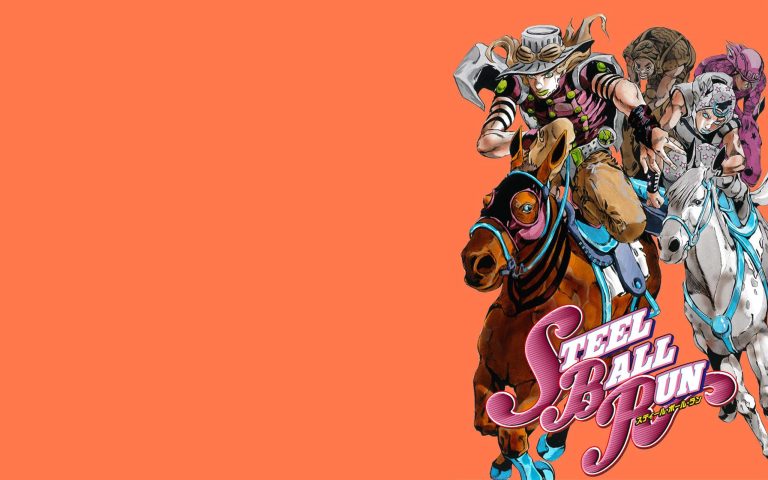
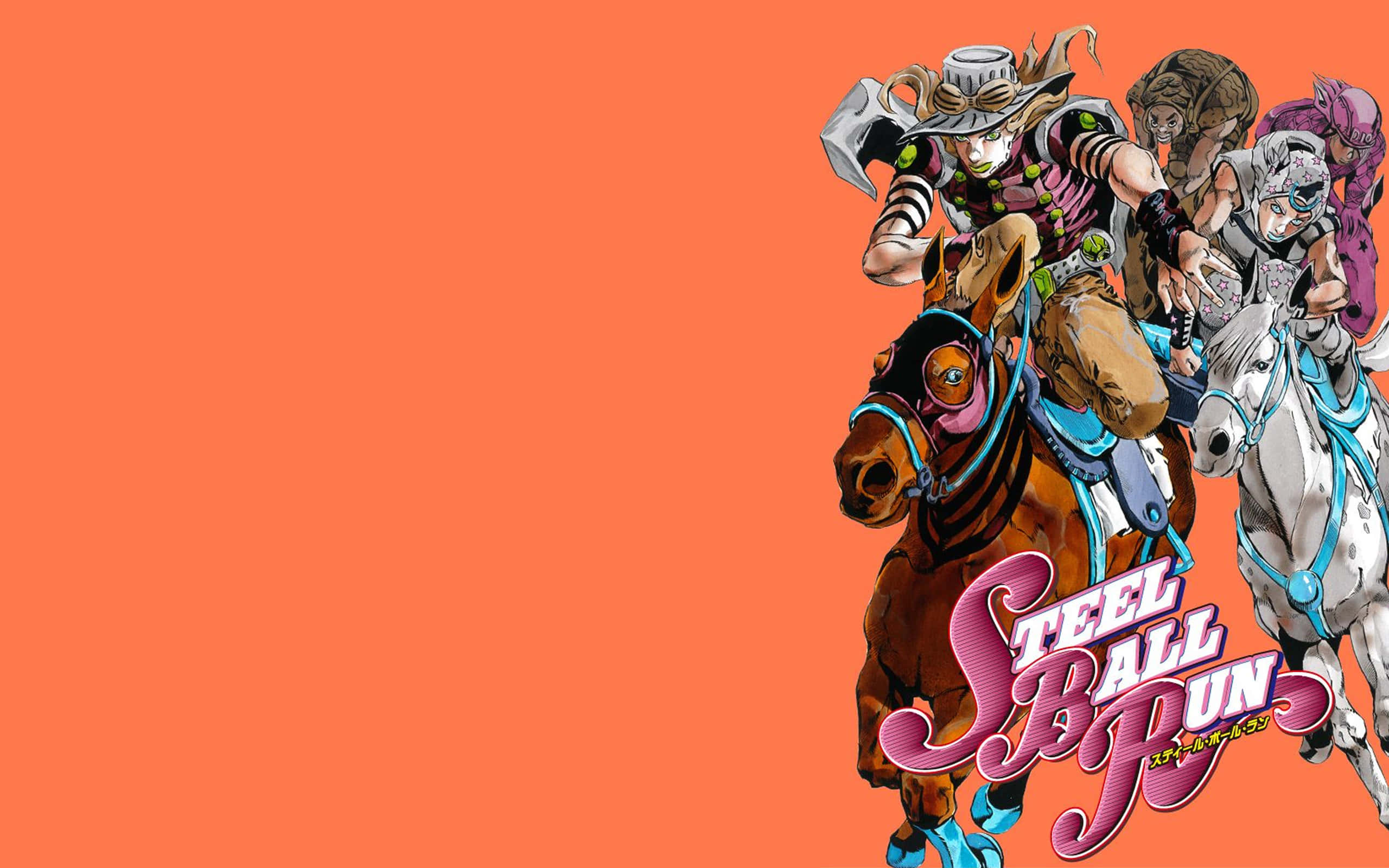
The premise is simple on paper yet gargantuan in execution: eccentric promoter Stephen Steel orchestrates a grueling 6,000-kilometer cross-country horse race from the Pacific to the Atlantic, dangling a jaw-dropping $50 million prize. Beneath this surface-level spectacle of grit, terrain, and equine stamina lies a clandestine geopolitics tournament. The competitors are not merely racing for gold; they are unwittingly gathering the scattered, sacred mummified remnants of an ancient holy figure—the Saint’s Corpse. Araki uses the panoramic sweep of the American landscape—from blazing salt flats and suffocating forests to frozen rivers—as an unforgiving crucible that strips away vanity, testing the limits of human resilience.
The Ballad of Johnny and Gyro: Flawed Souls in Pursuit of Salvation
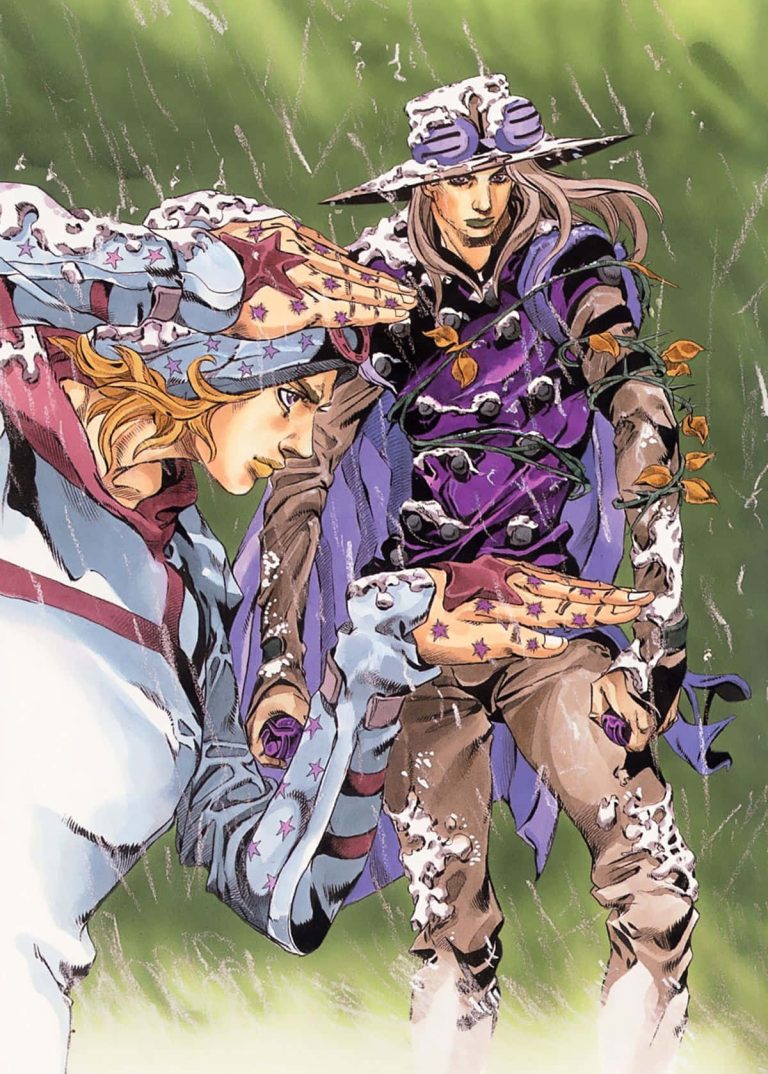
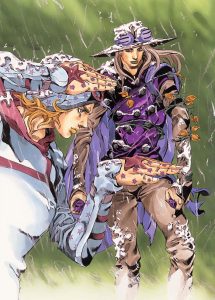
At the beating heart of Steel Ball Run sits what is undeniably Araki’s greatest duo: Johnny Joestar and Gyro Zeppeli. Unlike the immaculate moral compass of Jonathan Joestar or the juvenile, razor-sharp rebelliousness of Jotaro Kujo, Johnny represents a staggering deconstruction of the quintessential protagonist. A former child prodigy jockey paralyzed from the waist down due to his own narcissism, Johnny is introduced not as a hero, but as a broken, cynical shell of a man navigating the depths of depression. His catalyst is not a noble crusade to save the universe; it is a primal, desperate fixation on walking again after witnessing the supernatural effects of Gyro’s mysterious arsenal.
Gyro Zeppeli, meanwhile, serves as the charismatic, golden-toothed foil to Johnny’s brooding internal spiral. A disgraced executioner from the Kingdom of Naples embarking on the race to secure amnesty for an innocent child condemned to death, Gyro wields an intoxicating blend of absurd humor, operatic pride, and profound moral weariness. Their dynamic defies standard shonen tropes. Johnny’s morality is perpetually stained; he possesses what Araki often illustrates as the cold, vacant eyes of a killer fueled by “dark determination.” Gyro operates as mentor, brother, and philosophical compass, guiding Johnny away from the spiritual abyss even as the brutality of the frontier threatens to swallow them both.
The Spin vs. Stands: The Metaphysics of Rotation
The evolution of supernatural combat in Part 7 represents one of the most intellectually rewarding systems in manga history. While Stands remain a centerpiece, they are augmented—and frequently humbled—by the mechanics of The Spin. An ancient, Neapolitan martial art steeped in kinetic physics, the Spin harnesses the natural geometry of the Golden Ratio to generate infinite rotational energy. By turning ordinary steel balls into instruments of cellular manipulation, spatial distortion, and concussive devastation, Araki revitalized the thematic roots of Hamon (Ripple) while preserving the mind-bending puzzles of modern Stand abilities.
Watching Johnny’s Stand, Tusk, evolve across four distinct ACTs alongside his mastery of the Golden Spin mirrors his psychological healing. From timid nail-firing projectiles to the terrifying, interdimensional tear of Tusk ACT 4, Johnny’s combat progression is intertwined with his journey through grief, self-forgiveness, and enlightenment.
The Equestrian Dilemma: Can David Production Conquer the CGI Horizon?
While narrative praise for Steel Ball Run is unanimous, the true barrier to its anime incarnation has always been industrial practicality. In the realm of television anime, drawing horses is universally regarded as a specialized torture. Rendering an anatomically accurate, muscle-bound stallion running at full gallop in traditional 2D animation requires staggering resources, expertise, and time. Multiply that single horse by dozens of competitors jostling in close proximity across constantly shifting terrains, and the prospect becomes an animator’s nightmare.
This technical hurdle is the primary reason why an official greenlight has remained in development purgatory. David Production has repeatedly demonstrated their peerless fidelity to Araki’s vision—pioneering kinetic sound-effect typography, avant-garde palette swaps, and punchy, comic-book pacing throughout parts one through six. However, a traditional hand-drawn adaptation of Part 7 is practically impossible without relying extensively on 3D computer graphics (CGI).
The anxiety within the community stems from anime’s historically fraught relationship with CGI mounts, where low-frame-rate 3D assets frequently clash against detailed 2D foreground characters. For Steel Ball Run to succeed, David Production will likely have to forge a bespoke hybrid pipeline—blending deeply stylized cel-shaded 3D rigs for the continuous equestrian locomotion with explosive, hand-drawn 2D frames for close-up impacts, climatic duels, and signature Araki poses. If any studio possess the artistic chutzpah and technical reverence to crack this visual code, it is David Production, but doing so will require unprecedented time and unprecedented financial backing.
Funny Valentine and the Moral Labyrinth of the Saint’s Corpse
An adaptation’s triumph relies heavily on its antagonist, and in President Funny Valentine, Steel Ball Run delivers one of the most electrifying political villains ever conceived. Armed with an unwavering, terrifying conviction that the United States must secure global hegemony at all costs, Valentine’s pursuit of the Saint’s Corpse is framed not by petty greed, but by an unyielding patriotic utilitarianism. His iconic Stand, Dirty Deeds Done Dirt Cheap (D4C), introduces mind-melting multiversal mechanics that will demand breathtaking visual orchestration to execute cohesively on screen.
Valentine challenges the viewer’s conventional morality. He is dignified, silver-tongued, and acts out of an ideological duty that forces audiences to question whether our desperate, ruthless protagonists are truly the “righteous” party in this race. The confrontation between Johnny’s deeply selfish need for personal restoration and Valentine’s fanatical, macroscopic vision of imperial destiny elevates Steel Ball Run far above typical genre conventions, promising dramatic tension that could rival prestige television dramas.
The Inevitable Horizon: What Steel Ball Run Means for the JoJo Legacy
The arrival of a Steel Ball Run anime is not a matter of if, but when. It represents the ultimate creative frontier for David Production—a titanic undertaking that has the potential to reshape modern expectations of western-supernatural fiction in anime. If faithfully realized, this journey through the American heartland could easily redefine the aesthetic summit of serialized animation for the next decade.
Until the first fateful teaser trailer drops, the hype will continue to mount like thunder over the desert plains. What are your biggest hopes and fears for the long-awaited adaptation? Can David Production overcome the dread of CGI horses, or will the sheer power of Araki’s story carry it over the finish line? Let us know your dream voice cast and creative predictions down in the comments below!