

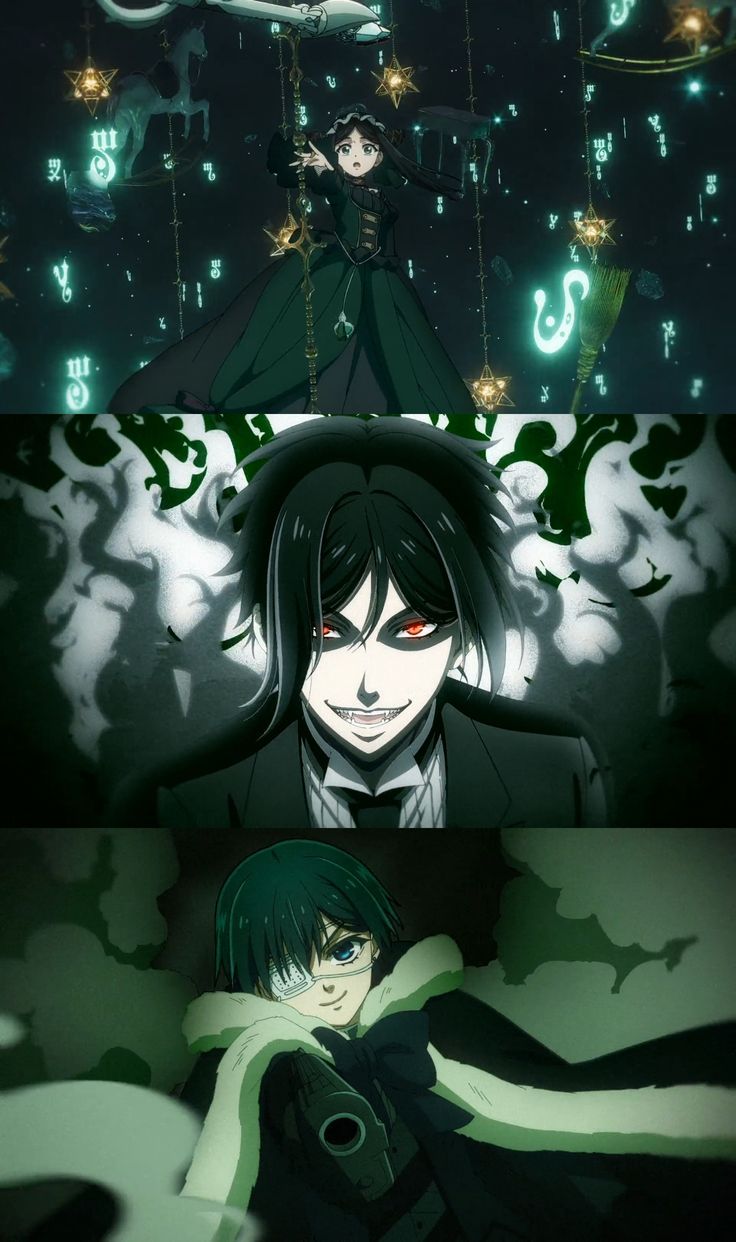
Few manga properties possess the enduring, chameleonic resilience of Yana Toboso’s Black Butler (Kuroshitsuji). For over a decade and a half, the series has oscillated between flamboyant Victorian high-society farce and suffocating, pitch-black supernatural horror. Following the triumphant critical return of the franchise with the Public School Arc, the announcement that CloverWorks is officially tackling the long-coveted Emerald Witch Arc (Midori no Majo-hen) has sent shockwaves through the anime landscape. This is not merely another episodic assignment for Queen Victoria’s loyal Watchdog; it is arguably the narrative crucible of the entire manga—a sprawling, chemically soaked descent into European folklore, severe psychological devastation, and the proto-industrial horrors of twentieth-century warfare.
For longtime readers, the greenlit adaptation marks the end of a multi-year drought for Toboso’s most technically audacious storyline. As the Earl of Phantomhive trades the pristine cricket greens of Weston College for the primeval, suffocating canopies of southern Germany, the stakes have fundamentally transformed. The masquerade is wearing thin, the supernatural lore is turning sharply predatory, and the franchise is preparing to test the limits of its Faustian contract like never before.
Into the Wolfsschlucht: Folklore, Lycanthropy, and the Cursed Forest
The premise of the Emerald Witch Arc immediately distinguishes itself from previous investigations by stranding Ciel Phantomhive and his demon butler, Sebastian Michaelis, far beyond the comfortable jurisdiction of Scotland Yard and the British crown. When inexplicable, instantaneous deaths begin claiming British citizens and German locals who trespass into the mythical Wolfsschlucht (the Werewolves’ Valley), Queen Victoria tasks her Earl with uncovering the truth behind the so-called “Witches’ Curse.”
What awaits them deep within the secluded German woodland is a masterclass in atmospheric folk horror. The village they encounter is entirely insulated from the march of nineteenth-century progress, appearing suspended in the sixteenth-century hysteria of the European witch trials. Cloaked in thick, poisonous miasma and guarded by towering, shape-shifting lycanthropes, the forest operates under an archaic rule of terror. By throwing an urbanized, impeccably tailored London dandy into the wet earth and primal dread of the Black Forest, Toboso subverts the Victorian imperialist confidence that usually insulates Ciel. In this claustrophobic woodland enclave, the arrogance of the British Empire means nothing against superstition, fangs, and the lingering specter of hexes.
The Enigma of Sieglinde Sullivan: Innocence Weaponized
At the beating heart of this upcoming arc lies one of Yana Toboso’s most tragic and complex creations: Sieglinde Sullivan, the titular Emerald Witch. Reigned over as both savior and holy figurehead by her isolationist village, Sieglinde is a brilliant polymath child confined to an ornate wheelchair due to the archaic, tortuous practice of foot-binding—a deliberate cruelty masquerading as traditional piety, intended to keep her physically helpless.
A Mind Trapped in Superstition
Unlike previous antagonists whose motivations aligned with base greed, hedonism, or aristocratic malice, Sieglinde’s tragedy is derived entirely from innocence manipulated by adult cruelty. Accompanied by her fiercely protective, monolithic butler Wolfram Gelbert, she believes her sole purpose is to cast sacred magical incantations to ward off the forest’s monstrous wolves. Her dynamic with Ciel serves as a thematic mirror to his own stolen childhood: both are razor-sharp child prodigies robbed of autonomy, burdened with ancient family titles, and flanked by monstrous servants.
Watching Ciel navigate Sieglinde’s world is uniquely compelling because, for perhaps the first time in the series, the Young Master encounters a contemporary whose intellectual faculties match his own, yet whose worldview has been systematically poisoned by manufactured isolation. The unraveling of her reality does not play out like a triumphant rescue; it unfolds like a surgical, agonizing realization that innocence is the first casualty of geopolitical ambition.
Psychological Fractures: Sebastian’s Hunger and Ciel’s Deepest Regression
While the cultural and thematic textures of the arc are intoxicating, the narrative milestone that makes the Emerald Witch Arc truly infamous among the manga fandom is the unprecedented breakdown of Ciel Phantomhive. Exposed to the cursed forest’s lethal miasma, Ciel suffers profound chemical toxicity that fractures his razor-sharp mental fortitude. The resulting hallucinations do not manifest as whimsical phantasmagoria; they plunge him directly backward into the visceral, unhealed trauma of the sacrificial cult that murdered his family and caged him as a child.
This sequence strips away every ounce of the Earl’s cultivated, cold-blooded persona. Ciel regresses into a sobbing, terrified child terrified of the dark, rejecting everyone—including Sebastian. This vulnerability triggers a razor-sharp tonal shift in their dynamic. As Ciel’s aristocratic will dissolves into raw panic, Sebastian’s polite facade drops, exposing the insatiable, frustrated demon beneath the butler’s livery.
Sebastian is bound to Ciel by a specific vow: he serves only as long as the boy maintains his indomitable thirst for vengeance. If the Young Master breaks, the contract collapses, and Sebastian is free to devour his soul prematurely. The psychological duel that unfolds in the sickroom of the witch’s manor—a battle of wills between a traumatized child struggling to reassemble his ego and a demon weighing the appetizing scent of absolute despair against his contractual patience—represents the darkest, most masterfully written tension in the franchise to date.
Gothic Horror Meets Industrial Atrocity: The Technological Lore Shift
What elevates the Emerald Witch Arc from a high-tier folk horror pastiche into a brilliant piece of historical speculative fiction is its jaw-dropping genre pivot. Without veering into unearned spoiler territory, the supernatural elements of the cursed forest serve as an elaborate smoke screen for the burgeoning reality of modern chemical warfare. The “curse” that melts human flesh and suffocates trespassers is not arcane necromancy; it is the embryonic development of deadly chemical agents—a terrifying precursor to the mustard and sarin gases that would define the battlefields of the First World War.
Toboso uses this arc to bridge the supernatural gothic universe of Black Butler with the grim, industrializing reality of late nineteenth-century Europe. The true monsters inhabiting the German woods carry neither claws nor broomsticks; they wear lab coats, military medals, and the ruthless utilitarian mindset of imperial arms races. In shifting the horror from demonic curses to human-engineered atrocities, the narrative forces Ciel to confront the very mechanisms of modern statecraft he has sworn to defend as the Queen’s Watchdog.
CloverWorks’ Visual Alchemy and Community Resonance
The announcement that CloverWorks will continue their custodial reign over Black Butler for this arc has been met with near-unanimous celebration across the anime community. The studio’s work on the Public School Arc proved they could honor Yana Toboso’s hyper-detailed, sumptuous character designs while modernizing the compositing, lighting, and cinematic kineticism far beyond the mid-2000s sensibilities of the original A-1 Pictures runs.
The Emerald Witch Arc demands an entirely new visual vocabulary. The sterile, sun-drenched quads of Weston College must now give way to bioluminescent mosses, dense layers of volumetric fog, claustrophobic subterranean laboratories, and grotesque, disorienting hallucination sequences. If the promotional teasers are any indication, CloverWorks is leaning heavily into an expressive, German Expressionist visual language that will contrast vivid emerald hues against deep, ink-wash shadows. This production pedigree ensures that the arc’s visceral body horror and psychological rot will land with the cinematic gravity they demand.
The anime fandom’s appetite for faithful, unhurried adaptations of beloved manga storylines is at an all-time high. By treating Black Butler with the episodic prestige afforded to modern juggernauts, CloverWorks is spearheading a magnificent renaissance for a series that many prematurely wrote off years ago.
Final Verdict: The Stage is Set for a Masterpiece
The Emerald Witch Arc represents the zenith of Yana Toboso’s artistic vision—a terrifying, emotionally fraught intersection where fairy-tale aesthetics decompose beneath the cruel wheels of historical reality. As Ciel and Sebastian prepare to traverse the toxic mists of the Wolfsschlucht, viewers should brace themselves for an adaptation that promises to be visually breathtaking, narratively merciless, and psychologically unforgiving.
Are you ready to see Ciel’s darkest psychological trials brought to life, or do you think the franchise’s shift into chemical warfare is its most daring twist yet? Join the conversation in the comments below and stay locked to Wibux.com for exclusive breakdowns, production updates, and deep dives into your favorite anime!