


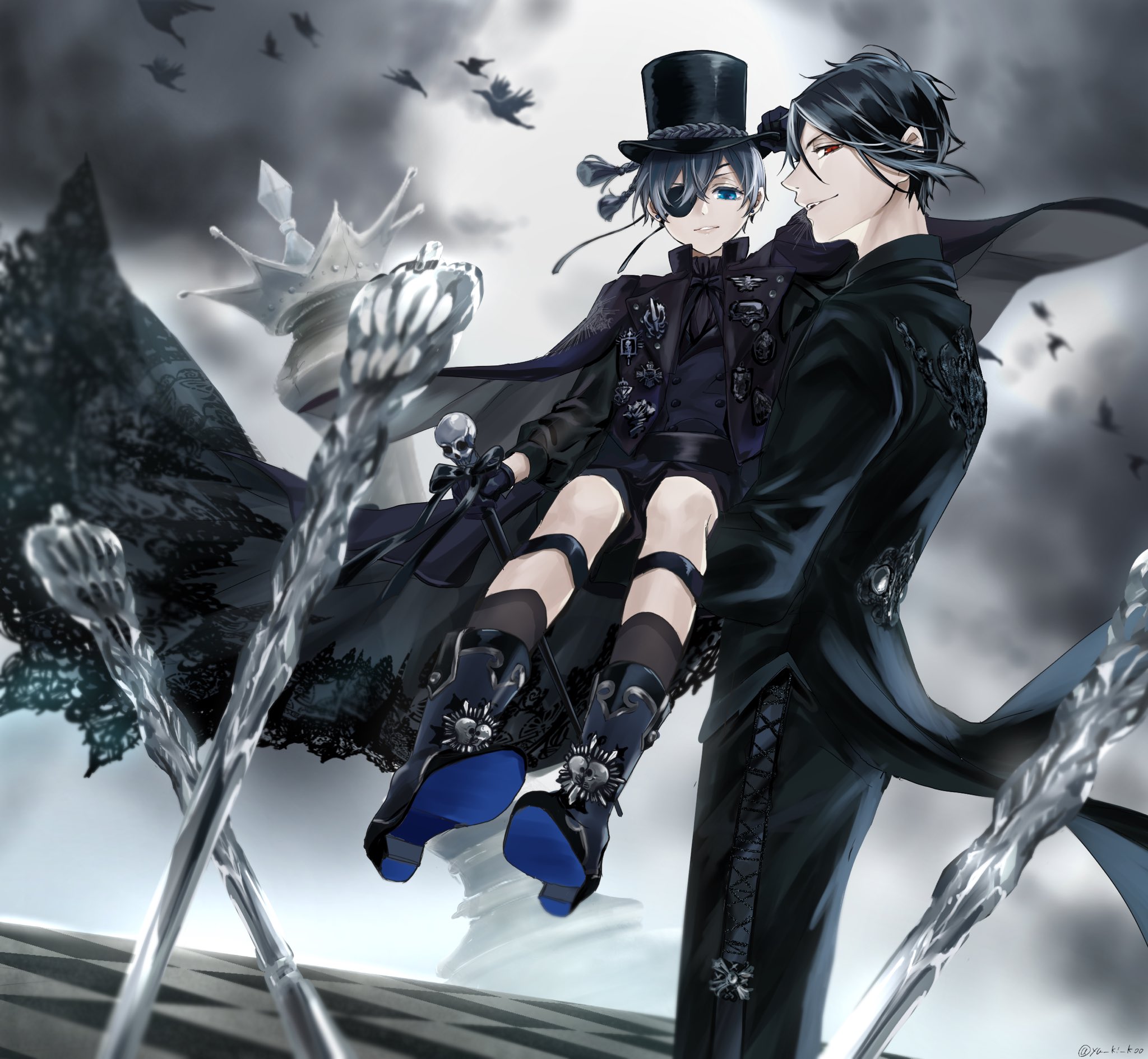
For more than a decade, the anime adaptation of Yana Toboso’s dark fantasy juggernaut, Black Butler (Kuroshitsuji), existed in a peculiar state of suspended animation. While the manga continued to unravel one of modern fiction’s most meticulously engineered gothic tragedies, the screen adaptations were long punctuated by multi-year hiatuses, non-canonical diversions, and sporadic cinematic releases. That purgatory definitively dissolved when the Public School Arc revitalized the brand in early 2024. Yet, before the dust could even settle on the manicured cricket pitches of Weston College, Aniplex and studio CloverWorks delivered the revelation manga purists have prayed for: the Emerald Witch Arc (Midori no Majo-hen) is officially slated for television broadcast in 2025.
This is not merely another episodic assignment for Queen Victoria’s Aristocrat of Evil; it marks a watershed moment in the entire narrative architecture of Black Butler. Venturing beyond the smog-choked alleys of London and into the suffocating folklore of rural Germany, this arc strips Ciel Phantomhive and his demon butler Sebastian Michaelis of their comfortable aristocratic dominion. By confronting ancient curses, towering werewolves, and the devastating advent of modern warfare, the upcoming season promises to push the series into its most philosophically harrowing, psychologically fractured territory yet.
Into the Black Forest: The Premise and Geopolitical Horror of the Hexenwald
The premise of the Emerald Witch Arc begins with Queen Victoria requesting Ciel’s intervention regarding a bizarre phenomenon occurring within southern Germany. High-ranking British and German nobility traveling near an isolated woodland known as the Hexenwald (the Witches’ Forest) have been suffering inexplicable deaths: bodies found without a single physical wound, their lungs withered and flesh reportedly rotting from within, allegedly stricken by an archaic curse. Rumors speak of territorial werewolves (Wolfsmenschen) guarding the borders and a coven that has kept modern civilization at bay since the Middle Ages.
Upon breaching the threshold of this cursed ecosystem, Ciel and Sebastian discover a community completely frozen in time. The village exists in an anachronistic sixteenth-century twilight, oblivious to the Industrial Revolution reshaping the world outside. The forest operates not as a whimsical fairytale landscape, but as an oppressive chamber of botanical and atmospheric dread. Here, Toboso brilliant subverts the romanticized Victorian aesthetic, pulling the narrative into the unsettling framework of Central European folk horror—think Robert Eggers’ The Witch filtered through the lens of nineteenth-century imperial espionage.
Sieglinde Sullivan and the Deconstruction of the “Witch”
At the center of this insular nightmare sits Sieglinde Sullivan, the titular Emerald Witch. At first glance, Sieglinde embodies a tragic archetypal contradiction: an intellectually peerless young girl revered as the village’s supreme magical protector, yet physically constrained. Subjected to the brutal practice of foot binding under the guise of an ancient sacrificial ritual, she relies entirely on her massive, stone-faced butler, Wolfram Gelbr, for mobility and physical survival.
Fairy Tales Crushed Under Industrial Iron
What elevates the Emerald Witch Arc from a routine supernatural mystery to a masterpiece of thematic subversion is how Toboso interrogates the line between magic and science. Without venturing into full spoiler territory, the horrors lurking within the Hexenwald speak directly to the darkest chapters of nineteenth-century technological acceleration. The “curses” that wither human lungs are grounded in the horrifying embryonic developments of chemical and biological weaponry. Sieglinde’s entire existence is a study in weaponized innocence—a prodigy whose genius has been systematically harvested by the adults around her under the guise of holy, folkloric duty.
The dynamic between Ciel and Sieglinde serves as an acute narrative mirror. Both are severely traumatized children forced into premature maturity, bearing the weight of adult culpability and trapped in systemic exploitation. Where Ciel chose his damnation willingly by signing a Faustian pact, Sieglinde remains blissfully ignorant of how deeply her gifts have been corrupted. Watching Ciel navigate her innocence—alternating between calculating pragmatism and a rare, unspoken empathy—provides some of the most emotionally resonant character writing in modern shonen/seinen storytelling.
Chemical Nightmares and Psychological Collapse: Ciel’s Darkest Hour
For longtime fans, the true crucible of the Emerald Witch Arc lies in the psychological devastation suffered by Ciel Phantomhive. While investigating the miasma within the forest, Ciel’s tactical hubris results in severe direct exposure to the toxic curse. What follows is not merely physical ailment, but an agonizing descent into acute post-traumatic stress disorder, hallucination, and mental regression.
For the first time since the events of the cult altar that birthed their contract, Ciel completely shatters. He regresses to a frightened, weeping child unable to bear the touch or presence of anyone—including Sebastian. This vulnerability exposes the chilling, predatory foundation of the central Faustian pact. Sebastian is not a guardian angel; he is a starving monster waiting for a feast. When his young master collapses into catatonia, Sebastian faces a critical existential conundrum: if Ciel loses his vengeful pride and can no longer command him with an iron will, the soul loses its refined seasoning. The sheer psychological tension between the helpless earl and his increasingly impatient, terrifyingly inhuman butler re-establishes the fundamental horror of the series that more lighthearted arcs often obscure.
CloverWorks’ Gothic Mastery: A New Aesthetic Pedigree
When CloverWorks took over production from A-1 Pictures for the Public School Arc, skeptics questioned whether the studio could replicate the distinct gothic melodrama originally established in the early 2010s. Director Kenjiro Okada silenced those doubts, delivering razor-sharp pacing, stunning lighting direction, and a heightened atmospheric nuance that earned widespread critical acclaim. The Emerald Witch Arc, however, poses a drastically more complex visual challenge.
Where Weston College demanded pristine classical symmetry, pastel cricket matches, and polished mahogany libraries, the Emerald Witch Arc requires claustrophobic, rot-infused gothic realism. The animation team must seamlessly render:
- The towering, monstrous kineticism of the werewolves during midnight skirmishes.
- The nightmarish visual transitions of Ciel’s internal sensory hallucinations and chemical poisoning.
- The suffocating environmental design of the village, contrasting rustic German timber framing with the clinical, horrific mechanisms hidden deep below ground.
CloverWorks’ demonstrated excellence in rendering intricate character models and fluid physical impact positions them uniquely well to capture Toboso’s complex action choreography, specifically Wolfram’s berserker combat style and Sebastian’s monstrous, physics-defying ferocity unleashed without British aristocratic restraint.
The Verdict: The Vital Pivot Point for the Entire Saga
The greenlit production of the Emerald Witch Arc represents far more than just another seasonal renewal; it represents the essential keystone for the eventual grand finale of the entire Black Butler mythos. The narrative consequences forged in this German forest directly enable the geopolitical scale and tactical warfare seen in the subsequent Blue Cult and Blue Memory arcs. It is the catalyst that forever changes the Phantomhive household, recruiting invaluable allies and establishing the terrifying technological reality of the modern era that magic and demonic contracts can no longer completely outrun.
By marrying traditional Germanic folklore with harrowing psychological collapse and early military industrial horror, the Emerald Witch Arc is poised to be CloverWorks’ definitive masterwork for the franchise. The Aristocrat of Evil is about to enter the witching woods, and the anime landscape will be all the darker, richer, and more thrilling for it.
What part of the Emerald Witch Arc are you most excited to see brought to life? Are you ready for Ciel’s most harrowing psychological trial yet, or are you holding out for Wolfram and Sebastian’s epic clashes? Drop your theories and manga reactions in the comments below!