



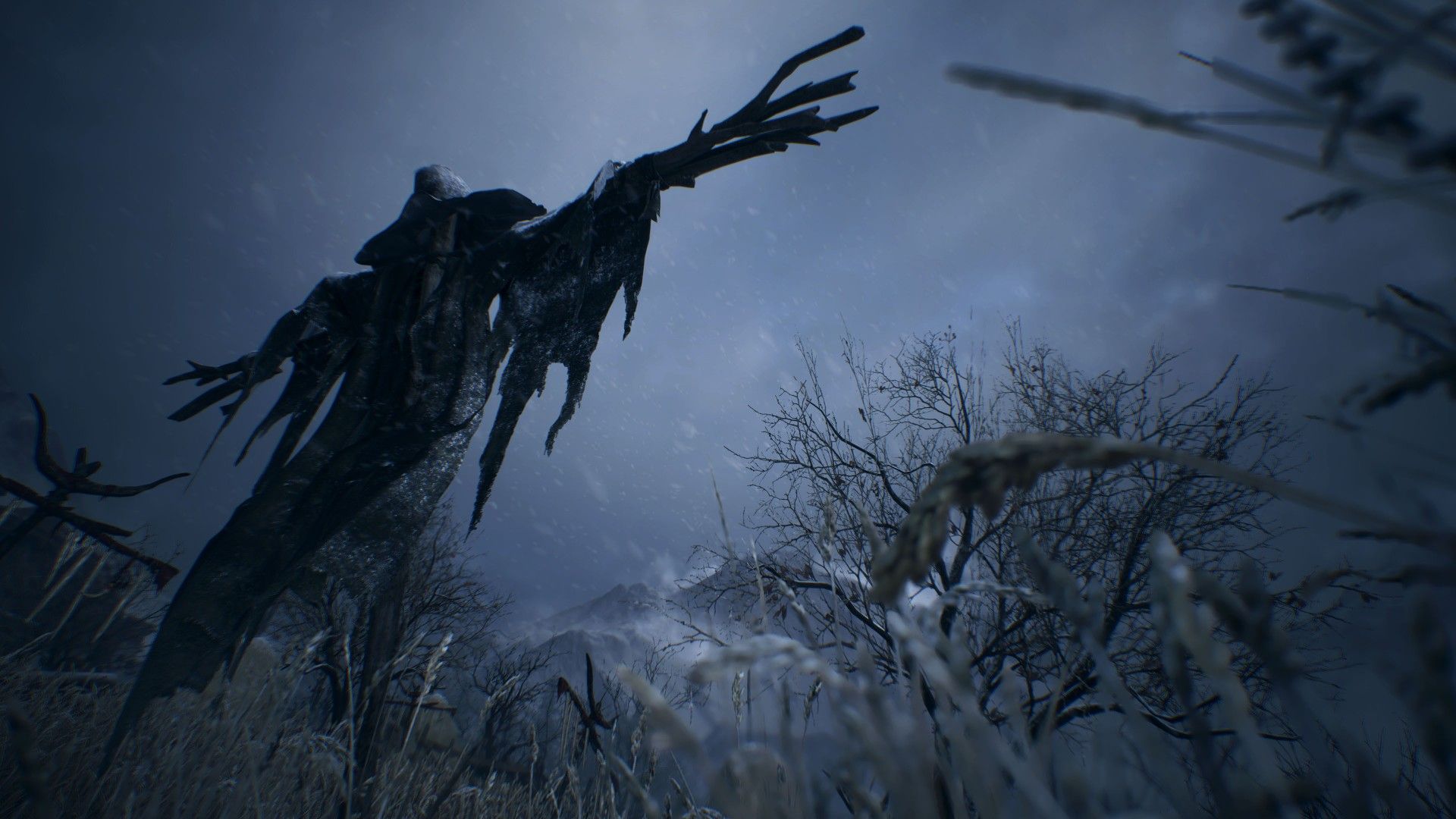
Survival horror has spent nearly three decades peering nervously down narrow, blood-slicked corridors, but Capcom has spent the last seven years sprinting toward an unprecedented creative zenith. Ever since Ethan Winters crawled through the rotting floorboards of the Baker estate in 2017’s Resident Evil 7: Biohazard, the Osaka titan has engineered one of the most astonishing renaissance runs in modern interactive entertainment. Between peerless ground-up remakes and the fairy-tale gothic excess of Resident Evil Village, the franchise has reclaimed its crown as the undisputed king of dread. Yet, whispers surrounding the inevitable Resident Evil 9—frequently referred to in whispers and industry circles under the evocative working moniker Apocalypse—suggest that Capcom is preparing to detonate its own established formula once again.
The stakes could not be higher. We are standing at the precipice of a generational crossroads: the conclusion of the Ethan Winters saga has cleared the board, the technology powering Capcom’s proprietary RE Engine has matured into a powerhouse of terrifying fidelity, and decades of geopolitical bio-terror lore are converging toward a catastrophic flashpoint. As the industry braces for what could be the most mechanically sprawling installment in franchise history, we must dissect the thematic, technical, and narrative architecture that will define Capcom’s next nightmare.
The BSAA Reckoning: Veteran Trauma and the Broken Shield
For long-time franchise disciples, the closing cinematic of Resident Evil Village was not merely a cliffhanger; it was a fundamental subversion of the series’ moral compass. The revelation that the Bioterrorism Security Assessment Alliance (BSAA)—an organization founded in the ashes of Umbrella specifically to prevent global bio-catastrophes—has been actively deploying organic bio-weapons on the frontline completely upends the geopolitical status quo. Chris Redfield ordering his rogue Hound Wolf Squad toward the BSAA’s European headquarters in a state of icy fury signals a long-overdue tonal reckoning.
The Psychology of Chris Redfield and Returning Titans
Chris Redfield is no longer the wide-eyed S.T.A.R.S. marksman of 1996, nor is he the hyper-macho boulder-puncher of Resident Evil 5. The contemporary Chris is a haunted, weathered operator carrying the crushing psychological weight of thirty years of localized apocalypses. From losing his squad in Edonia to witnessing the tragedy of the Winters family firsthand, his arc reflects profound survivor’s guilt. Setting Resident Evil 9 against the backdrop of an institutionalized BSAA corruption allows Capcom to explore a protagonist who has traded idealistic heroism for cold, embittered pragmatism.
Moreover, the prospect of legacy figures like Jill Valentine, Leon S. Kennedy, or Claire Redfield re-entering the fray carries immense narrative gravitas. Following Jill’s criminally under-explored post-hypnotic trauma from the Kijuju incident, fans have clamored for her return to mainline canon. If RE9 truly positions itself as a generational climactic event, uniting these battered veterans not as invulnerable super-soldiers, but as scarred survivors confronting their life’s work collapsing from within, would deliver unprecedented emotional resonance for a series often criticized for B-movie detachment.
Beyond the Corridors: The Perils and Promises of Semi-Open Horror
Perhaps the most radical undercurrent circulating through technical leaks and insider discourse is Capcom’s purported ambition to liberate the franchise from rigid structural constraints. Rumors suggest Resident Evil 9 could embrace an expansive, semi-open world design—an evolutionary leap building on the architectural framework established in Dragon’s Dogma 2 and Monster Hunter Wilds. For a genre fundamentally tethered to spatial claustrophobia and micromanaged panic, expanding the horizon is an extraordinarily perilous gamble.
Yet, Capcom has already been laying the groundwork for this transition. Village subtly abandoned the hyper-linear blueprint of its immediate predecessor, structuring its nightmare around a central gothic hub branching into distinct thematic domains. If Apocalypse scales this design outward into a desolate regional quarantine zone—such as an abandoned, fog-choked coastal European city or an isolated island complex—the mechanical dynamics of survival horror will fundamentally shift:
Systemic Vulnerability: Rather than relying solely on scripted corridor scares, terror emerges dynamically from resource attrition across vast distances. If safe houses are scarce and daylight cycles dynamically into oppressive night, every expedition into the unknown demands rigorous inventory calculations.
Prowling Biological Horrors: The terrifying stalker archetype perfected by Mr. X, Nemesis, and Lady Dimitrescu could evolve from localized patrol routines into roaming apex predators that hunt the player across open topography, weaponizing environmental acoustics and sightlines.
Pushing the RE Engine to the Brink: Next-Gen Visceral Realism
When the RE Engine debuted, its staggering photogrammetry and skin-rendering capabilities transformed standard video game horror into tactile, stomach-churning body horror. Seven years later, Capcom’s software engineers have mastered this proprietary beast, but Resident Evil 9 marks the engine’s true, uncompromised current-gen benchmark—leaving the legacy hardware of the PlayStation 4 and Xbox One entirely behind.
Micro-Details, Dismemberment, and Auditory Hellscapes
True terror in contemporary gaming relies heavily on sensory immersion, and Resident Evil 9 stands to redefine visceral fidelity. Next-generation rendering allows Capcom to simulate terrifyingly authentic physics: dynamic light scattering through dense particulate fog, wet surfaces that reflect muzzle flashes in real-time, and flesh deformation models that make bio-organic mutations look horrifically plausible. When an infected monstrosity lunges through a doorway, the structural splintering of wood and the dynamic tearing of sinew should carry bone-chilling weight.
Equally critical is Capcom’s spatial audio architecture. In survival horror, sound is often more lethal than sight. Leveraging advanced binaural processing, the RE Engine can transform an abandoned cathedral or a flooded sewer tunnel into an auditory minefield where every drip of condensed water, distant guttering scream, or rustling wind signals an impending resource-draining encounter.
Thematic Dread: Institutional Decay and Biological Hubris
Thematic maturity has quietly crept into the DNA of the modern franchise. What started as an exploitation-style chronicle of rogue corporate greed has metastasized into an indictment of systemic, globalized institutional failure. In early installments, Umbrella was an unambiguous corporate boogeyman lurking behind pristine laboratories. In the era of Resident Evil 9, bio-terror is no longer a localized corporate secret—it is an asymmetrical geopolitical reality.
The concept of “Apocalypse” doesn’t necessarily necessitate a post-apocalyptic, scorched-earth wasteland akin to Mad Max or the later Paul W.S. Anderson films—a direction that historically alienated core survival horror purists. Instead, the real terror lies in societal breakdown: the realization that global defense organizations, privatized military companies, and governmental health authorities are irrevocably compromised. Confronting players with environments where safety is a manufactured illusion taps into contemporary cultural anxieties far more effectively than another subterranean laboratory explosion ever could.
A Legacy Forged in Blood: Will RE9 Deliver the Ultimate Climax?
Capcom currently finds itself in an enviable yet volatile position. The studio has restored unconditional faith in its flagship horror property, raising the critical and commercial bar to historic heights. Resident Evil 9 cannot simply settle for being a competent, atmospheric shooter; it must serve as both a grand technological showcase for the modern console cycle and the dramatic capstone to nearly thirty years of interconnected lore.
If Capcom successfully bridges the suffocating dread of classic survival horror with systemic, open-ended environmental agency—all while honoring the scarred trajectories of characters like Chris Redfield and Jill Valentine—they will not merely deliver another hit sequel. They will cement Resident Evil‘s status as an immortal titan of gaming culture, capable of continually terrifying us no matter how much the medium shifts beneath our feet.
Now we turn the floor to you, survivors: Do you want to see Chris Redfield meet his heroic end in a final tactical stand, or is it time for Jill Valentine to permanently reclaim the horror spotlight? Jump down into the comments below and share your theories on the future of the RE Engine!