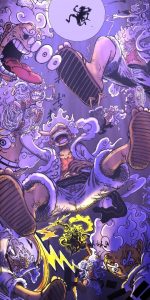
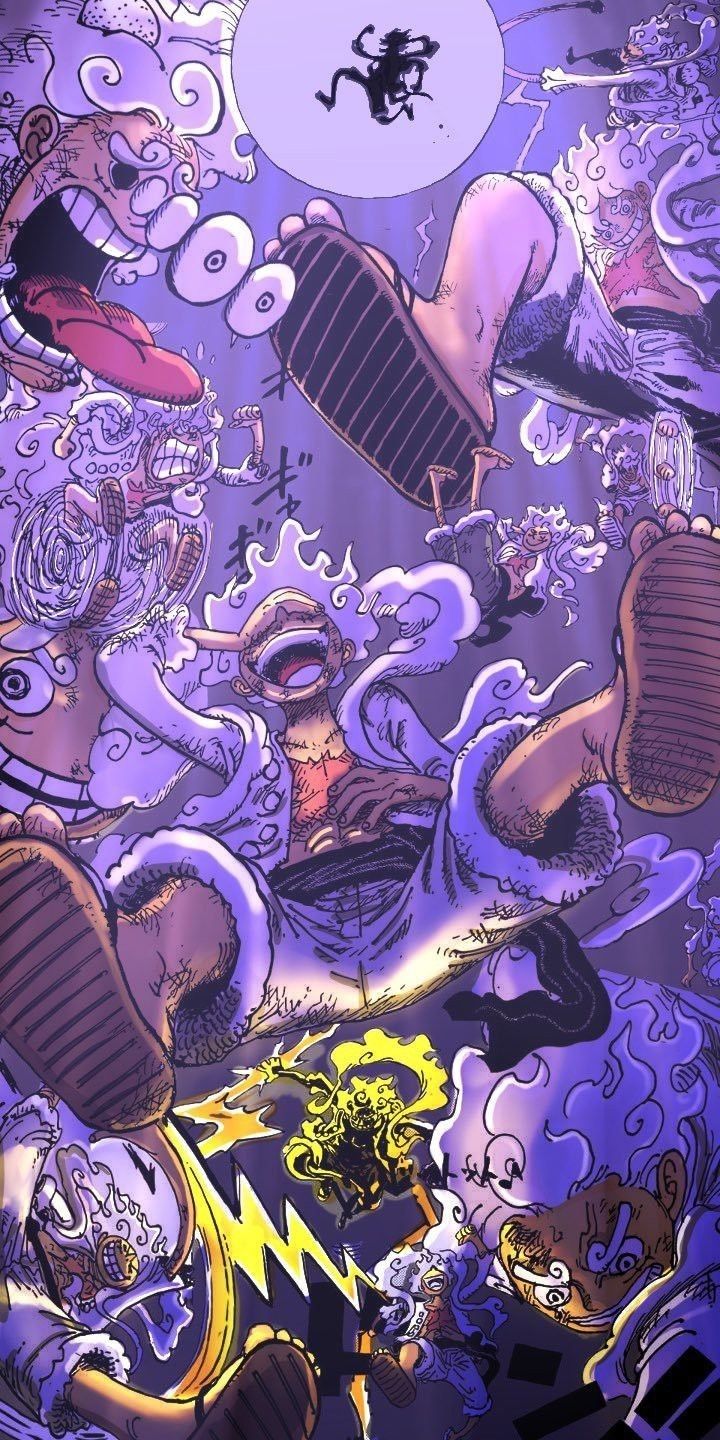
Every milestone chapter in Eiichiro Oda’s magnum opus carries the kinetic weight of a tectonic shift. Chapter 100 marked the crew’s fated departure into the Grand Line; Chapter 1000 canonized “Roof Piece” and Luffy’s ascension into Emperor-tier combatant status; Chapter 1100 shredded the collective hearts of the fandom through Bartholomew Kuma’s agonizing tragedy. Now, as the narrative horizon races toward Chapter 1200, the manga world finds itself captivated by the mist-shrouded peaks and subterranean horrors of Warland Elbaf. Long romanticized as an idealistic Viking Valhalla of honor and towering mead halls, Elbaf has abruptly unmasked its true face: an ancient, fractured fortress balancing on the precipice of world-ending cataclysm.
The centerpiece of this impending crucible is none other than the “Cursed Prince,” Loki—a figure whose design, monstrous bounty, and sea-prism shackles evoke both the trickster god of Norse myth and the mythic Fenrir bound until Ragnarok. But beyond Loki’s menacing silhouette lies a theory gaining massive traction across the global community: that Chapter 1200 will expose the deep subterranean cradle of Elbaf, revealing not just mythological treasures, but functional, colossal Void Century war relics left behind by Joy Boy. When Loki’s chains finally shatter, Oda is set to redefine the stakes of the Final Saga.
The Anatomical Roots of Warland: Treasure Tree Adam and the Submerged Arsenal
To understand the secrets sleeping beneath Elbaf, one must first look at the island’s botanical biology. For decades, Eiichiro Oda has teased the fundamental dichotomy between the Sun Tree Eve, which channels ambient sunlight down to Fish-Man Island, and the Treasure Tree Adam, the invincible wood that birthed both the Thousand Sunny and the Oro Jackson. Elbaf is anchored by this primordial titan of flora. Yet, as Dr. Vegapunk’s apocalyptic broadcast confirmed that the world was submerged two hundred meters beneath rising sea levels during the Void Century, a terrifying realization dawned on lore analysts: we have only ever seen the canopy of Elbaf.
The Eve-Adam Duality and Void Century Relic Sites
If Wano hid the Ancient Weapon Pluton beneath the sunken perimeter of its original terrestrial plate, Elbaf is structurally primed to house something even more monumental. The roots of Treasure Tree Adam delve deep into the pre-flood world, wrapping around the rusted, titan-scaled skeletons of war machines engineered specifically for giants. Unlike the automated Pacifista or Vegapunk’s miniaturized Seraphim, these subterranean relics are brute-force, Haki-conductive weapons forged to combat the First Twenty Kingdoms during the global war eight hundred years ago.
The structural parallels are too precise to ignore. Wano was a natural fortress kept closed by geography; Elbaf is a biological fortress kept quarantined by the raw might of its populace. Below the sprawling branches of Yggdrasil-like timber lies an ancient staging ground. If Chapter 1200 pulls back the curtain on this abyss, readers will not merely witness ruins; they will confront the physical armory with which Joy Boy intended to break the Red Line before his tragic defeat.
Prince Loki’s Shackles: The Mythological Berserker and the “Divine Wrath”
Few character introductions in recent shonen history have carried the sheer gravitas of Prince Loki. Blindfolded, bound by colossal sea-prism stone chains, and relegated to the frozen tundra of the island’s underbelly, Loki is treated not merely as a criminal, but as an existential hazard to the very soil of Elbaf. His patricide of King Harald and consumption of the royal family’s legendary Devil Fruit was not just an act of treason—it was an ideological break from Elbaf’s pacifist warrior tradition.
The Psychology of a Pariah: Usurper or Doomsday Safeguard?
Oda rarely writes villains whose villainy exists in an ethical vacuum. Loki’s moniker as the “Accursed Prince” carries profound echoes of both Trafalgar Law’s hidden heritage and Donquixote Doflamingo’s nihilism, yet Loki exhibits a distinct psychological archetype: the willingly demonized protector. Much like Norse mythology’s Loki, who is bound until the twilight of the gods, Elbaf’s prince appears to be waiting for the specific catalyst that justifies unleashing his “Divine Wrath.”
The prevailing theory posits that Loki’s consumption of the royal Devil Fruit—frequently speculated to be a Mythical Zoan tied to the Midgard Serpent Jörmungandr, the wolf Fenrir, or an archaic deity of elemental ruin—was a desperate measure to preserve the kingdom’s ultimate deterrent against the World Government. Chaining him was not merely a punishment meted out by the giant elders; it was a pact. Loki is the living fail-safe. When Chapter 1200 arrives, the inevitable shattering of those sea-prism links will not just signal a standard shonen prison break, but the emergence of a chaotic neutral force capable of tilting the entire global power balance.
Joy Boy’s Unfinished Campaign and the Holy Knights Convergence
The temporal timing of the Elbaf arc is precarious. The World Government, led by the freshly appointed Warrior God of Science and Defense, Figarland Garling, cannot afford another ideological failure after the catastrophic broadcast from Egghead Island. The Holy Knights are mobilized, and the Marine fleet is desperate to contain the truth. Elbaf is the final stronghold unaligned with the World Government that possesses the martial power to outright defy an Admiral-led Buster Call.
The Strategic Chessboard: Shanks, the Giants, and the Sun God
The presence of Red-Haired Shanks in Elbaf’s territorial waters prior to Kid’s decimation was no coincidence. Shanks has consistently operated as the narrative custodian of the Void Century’s clock. His intimate familiarity with the giant race, paired with his knowledge of the “Sun God” Nika’s historical return, implies that Shanks understands what rests beneath Elbaf’s floorboards. The relics beneath the tree are keyed to Joy Boy’s frequency. Just as the Iron Giant Emeth activated solely upon registering the rhythmic cadence of the Drums of Liberation, the war relics submerged in Elbaf’s underworld require the awakening of Gear 5 to breathe anew.
When Luffy makes direct contact with Loki in Chapter 1200, the narrative will likely mirror the fated meetings of the past—a volatile cocktail of comedic irreverence and ancient synchronicity. Luffy does not care about ancient prophecies, but Loki’s acute awareness of the world’s original sin will collide violently with Luffy’s instinctive pursuit of ultimate freedom. If the Holy Knights execute an incursion while the Straw Hats descend into Elbaf’s subterranean heart, Chapter 1200 will deliver a tripartite conflict featuring the World Government’s elite, Elbaf’s unshackled god of wrath, and the vanguard of the New Age.
Fandom Forensics: Milestone Numerology and Oda’s Narrative Pacing
Within the analytical spheres of Reddit’s r/OnePiece, Japanese theory boards on 5ch, and high-production YouTube retrospectives, the anticipation for Chapter 1200 is reaching a boiling point. Historically, Oda utilizes hundreds-digit milestone chapters to re-anchor the thematic spine of his arcs. Chapter 100 gave us “The Legend Begins”; Chapter 1100 gave us “Thank You, Bonney.” Chapter 1200 is mathematically situated to serve as the structural inflection point where the Elbaf arc pivots from an exploratory mythological journey into full-blown ideological warfare.
The community consensus is dividing into two distinct camps: those who believe Chapter 1200 will showcase Loki as an unequivocal antagonist who forces Luffy to test the upper limits of Gear 5’s stamina, and those who foresee Loki becoming the Straw Hats’ most volatile ally—the brooding, cataclysmic counterpart to Luffy’s radiant solar deity. Regardless of alignment, the visual language Oda has deployed in Warland signals that we are done with small-scale skirmishes. Every panel drawn moving forward is a direct march toward the Final War.
The Twilight of the Old World
As One Piece inches closer to its monumental twelve-hundredth chapter, the narrative stakes have never been more immaculate. The Void Century is no longer a collection of fragmented Poneglyphs to be passively deciphered by Nico Robin; it is an active, physical legacy buried right beneath the soil of the world’s most terrifying warrior nation. Loki’s pending emancipation and the ancient relics intertwined with the roots of Adam represent the point of no return for Eiichiro Oda’s magnum opus.
When the sea-prism chains crack and the earth beneath Elbaf splits open, it won’t just shake the giants—it will announce to Mary Geoise that the dawn has finally broken through the subterranean dark.
What do you think lies in the deepest roots of Treasure Tree Adam? Is Prince Loki a corrupted warmonger, or is his wrath the missing key to Joy Boy’s grand design? Drop your theories and tactical breakdowns in the comments below!