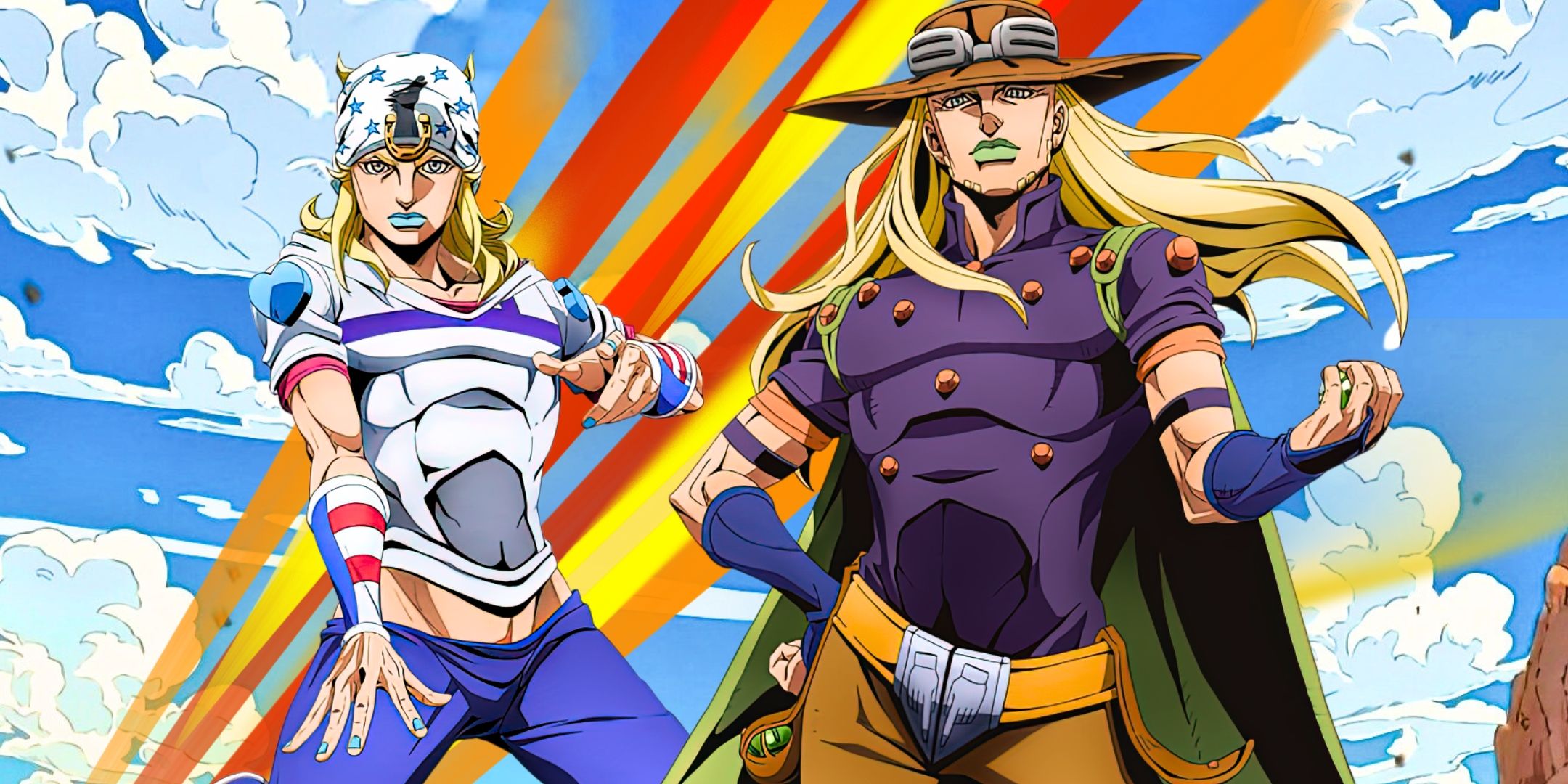
In the vast, unpredictable landscape of serialized manga adaptations, few prospective projects carry the mythic gravity of Hirohiko Araki’s JoJo’s Bizarre Adventure Part 7: Steel Ball Run. Ever since the melancholic strings of the Stone Ocean anime adaptation faded in late 2022, the global anime community has lived in a perpetual state of breathless anticipation. For seasoned fans and industry insiders alike, Steel Ball Run is not merely the next canonical entry in a multi-generational saga; it is universally revered as Araki’s absolute magnum opus—a high-stakes, dust-choked, supernatural western that radically redefined what the JoJo franchise could be. As murmurs surrounding David Production’s development pipeline reach a fever pitch, the industry faces an unavoidable question: how do you bring one of the most mechanically demanding and thematically profound manga ever inked to the screen?
The Great American Odyssey: Araki’s Seinen Metamorphosis
To understand the ravenous appetite for a Steel Ball Run anime, one must first appreciate the seismic creative shift that birthed it. Originally debuting in 2004 in Weekly Shonen Jump before migrating to the monthly seinen imprint Ultra Jump, Part 7 granted Araki artistic liberation from the rigid constraints of traditional shonen demographics. The monthly schedule allowed his illustrative precision to bloom into breathtaking, hyper-detailed splash pages while liberating his writing to explore darker, morally ambiguous territory.
Set in a reimagined 1890s America, the narrative abandons the primary timeline’s Joestar dynasty for an audacious, trans-continental horse race spanning from San Diego Beach to New York City. The prize? Fifty million dollars. The reality? A clandestine, geo-political crusade orchestrated by President Funny Valentine to assemble the mummified relics of a divine, miraculous Corpse. By weaving together alternate-history Americana, body horror, existential grit, and deep theological intrigue, Araki crafted an epic that felt less like a serialized comic and more like a prestige literary novel disguised as a supernatural race.
Johnny and Gyro: A Masterclass in Flawed, Unbreakable Camaraderie
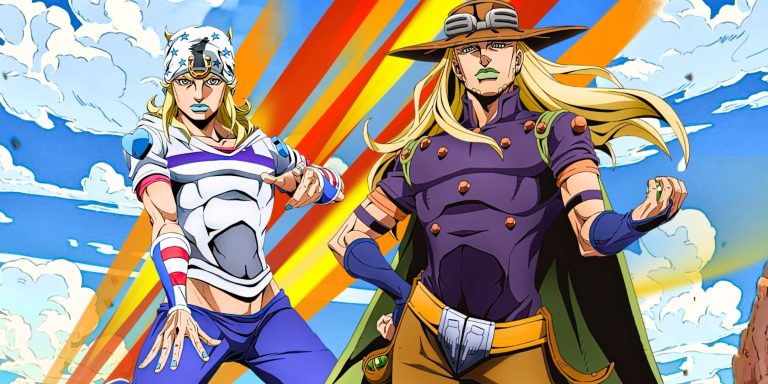
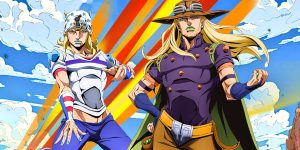
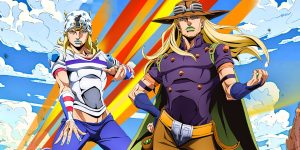
At the beating heart of this sprawling trans-American crucible lies what is arguably the most nuanced, emotionally resonant duo in modern manga history: Johnny Joestar and Gyro Zeppeli. Their partnership moves far beyond the standard battle-shonen rival-friendship dynamic, anchoring the narrative through raw human vulnerability and psychological reckoning.
Johnny Joestar: The “Dark Determination” of a Broken Prodigy
Unlike his chivalrous namesake Jonathan Joestar, Johnny begins his journey as an unlikable, fallen horse-racing prodigy whose hubris cost him his family, his career, and the use of his legs. Johnny is not fueled by altruism or an innate desire to save the world; he is desperate to reach what he calls “negative to zero”—a state where he can simply regain his dignity as a functional human being. His eventual mastery of the nail-shooting Stand ability, Tusk, reflects this internal evolution. Johnny possesses a cold, unyielding “dark determination,” a willingness to kill or sacrifice anything to cross his personal finish line. He represents one of the most complex disabled protagonists in modern fiction, portraying disability not as an inspirational cliché, but as a grueling physical and psychological reality.
Gyro Zeppeli and the Sacred Geometry of the Spin
Complementing Johnny’s cynical edge is Gyro Zeppeli, a disgraced executioner from the Kingdom of Naples whose absurd eccentricity—punctuated by gold teeth engraved with “GO! GO! ZEPPELI” and bizarre running gags about days of the week—masks a noble soul burdened by duty. Gyro introduces the narrative’s defining combat system: The Spin. An ancestral technique rooted in the golden ratio and Fibonacci sequences, the Spin utilizes rotating steel balls to manipulate kinetic energy, biological anatomy, and spatial dimensions.
Where Hamon was mystical respiration and Stands are manifestations of the psyche, the Spin is a cosmic science of momentum. The dynamic between Johnny’s desperate resolve and Gyro’s philosophical stoicism forms the emotional core of the series, turning campfire banters about bad jokes into the quiet poetry that elevates Steel Ball Run above its predecessors.
The Horsepower Dilemma: Can David Production Tame the Equestrian Nightmare?
While the cultural desire for a Steel Ball Run anime is absolute, the technical barrier to entry is legendary within the Japanese animation industry. Simply put: horses are the ultimate bane of 2D animators. The biomechanics of an equine skeleton in motion—constantly shifting muscle groups, complex leg gaits, dynamic galloping perspectives, and fluctuating weight distribution—require monumental resources. In Part 7, horses are not incidental background props; they are primary vehicles constantly engaged in high-speed, dynamic combat across desert storms, snow-covered mountain passes, and urban alleys.
Industry veterans point to David Production’s artistic pedigree as both a reason for hope and caution. Across six parts, the studio has solidified its reputation through masterclass color-palette shifts, stylized sound-effect typography, and fierce fidelity to Araki’s eccentric aesthetic. However, sustaining hand-drawn equestrian sakuga across a 30-to-40-episode order is practically unfeasible in today’s strained production climate.
The solution almost certainly lies in sophisticated, highly stylized 3D CGI integration. Modern digital workflows—evidenced by Studio Orange’s peerless character physics or MAPPA’s hyper-detailed mechanical and creature pipelines—prove that 3D models can blend harmoniously with 2D aesthetics when given sufficient budget and direction. For David Production, the challenge will be developing cel-shaded horse rigs that possess the textured cross-hatching and raw, tactile weight of Araki’s penwork without slipping into the dreaded “uncanny valley” that often alienates traditional anime fans.
The Ghost of Netflix’s Batch Release: Why SBR Demands an Event-Level Broadcast
Beyond the drawing board, community discourse remains intensely fixated on the distribution model. The reception of Stone Ocean suffered immensely from Netflix’s batch-release strategy, which notoriously disrupted the traditional weekly discourse that fuels online fandom culture. The collective agony, viral meme creation, and weekly theoretical breakdowns that made Stardust Crusaders and Golden Wind global cultural events were noticeably diluted when twelve-episode blocks dropped with minimal fanfare.
Steel Ball Run is inherently episodic in the grandest tradition of road-trip narratives. The race is split into distinct stages—from the opening sprint across the plains to the claustrophobic dread of the “Sugar Mountain” arc and the multiversal madness of Funny Valentine’s D4C (Dirty Deeds Done Dirt Cheap). Each stage demands collective digestion. Fans, critics, and community figureheads agree: an anime of this pedigree deserves a celebrated, multi-cour weekly broadcast that allows the global audience to ride alongside Johnny and Gyro week after week, stage by stage.
The Dawning of Araki’s Zenith
The road to a Steel Ball Run anime adaptation is undeniably fraught with logistical hurdles, unprecedented animation challenges, and astronomical fan expectations. Yet, that very adversity mirrors the trans-continental odyssey at the heart of the story itself. Hirohiko Araki’s masterwork stands as a monument to narrative ambition—a transcendent meditation on fate, redemption, and the relentless drive to push beyond one’s physical and spiritual limitations.
When the starting pistol finally fires and the green light flashes from David Production, anime as a medium will experience a seismic event unlike anything seen this decade. The only real question left is whether modern production schedules can endure the grueling pace of the race.
Now over to you, Wibux readers: How do you think David Production should tackle the equestrian animation—full 2D sakuga or stylized 3D integration? Who is your dream voice-cast pick for Gyro Zeppeli? Drop your theories and hot takes in the comments below!