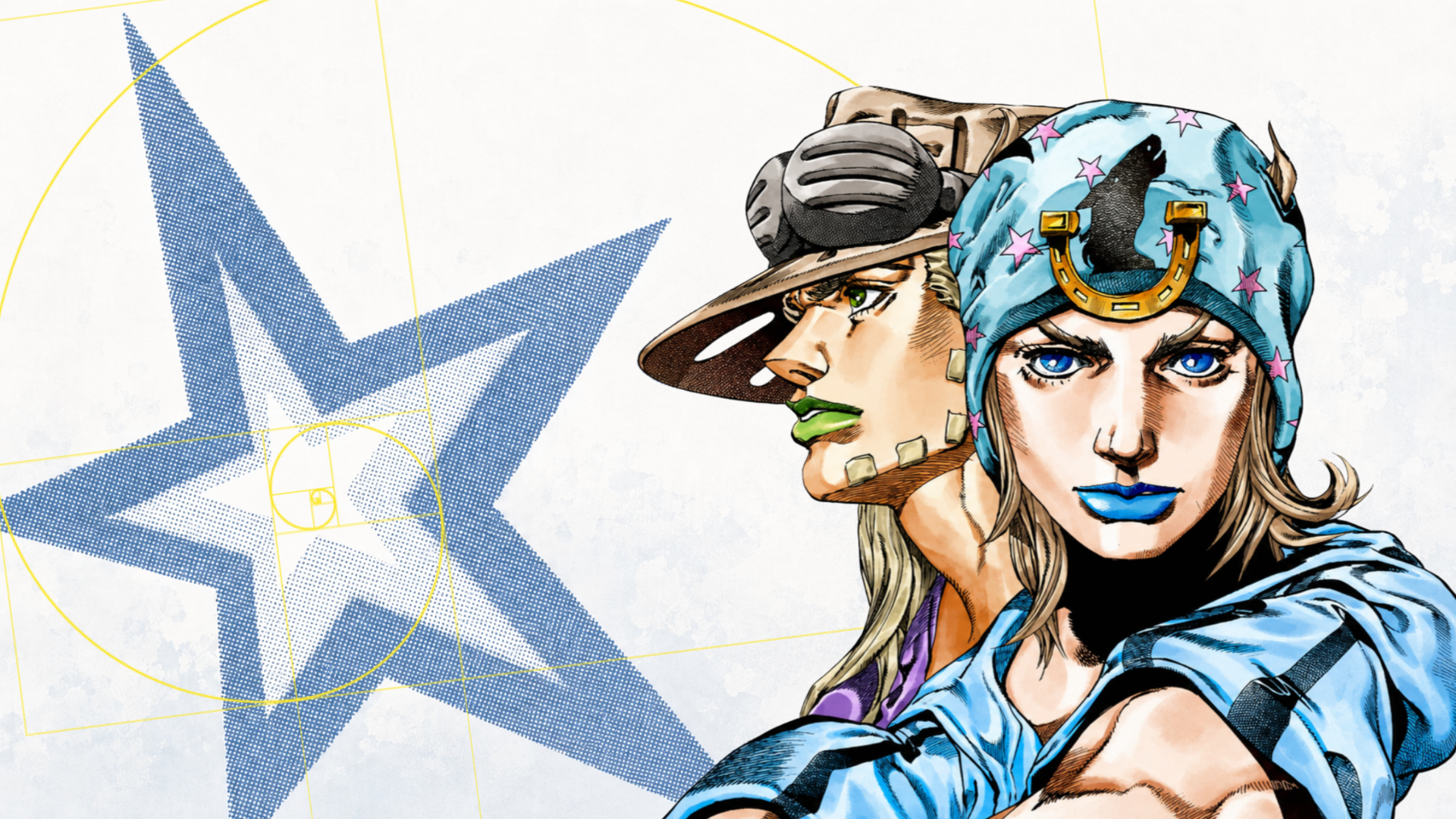
For more than three decades, Hirohiko Araki’s JoJo’s Bizarre Adventure has operated as a chameleon of genre fiction, seamlessly leaping from Victorian gothic horror and globetrotting pulp adventures to localized murder mysteries and high-security prison escapes. Yet, ever since the climactic, universe-resetting finale of Stone Ocean aired on Netflix, a singular, deafening murmur has echoed across social media platforms, anime conventions, and industry watercoolers alike: When is Steel Ball Run coming?
To call Part 7: Steel Ball Run merely anticipated is a fundamental understatement. Holding an almost mythical status among manga readers—consistently sitting near the apex of MyAnimeList’s all-time highest-rated manga rankings alongside Berserk—it represents the definitive zenith of Araki’s craft. It is a work of breathtaking ambition: a grueling, 6,000-kilometer cross-country horse race across late-19th-century America, layered with cosmic mysticism, historical deconstruction, and some of the most morally complex psychological writing in serialized sequential art. But as whispers of David Production’s internal pre-production swirl through production circles, the adaptation faces both boundless reverence and unprecedented creative hurdles.
Rebirth in the Dust: The Shift from Shonen to Seinen
Understanding the weight of Steel Ball Run requires acknowledging the radical paradigm shift that occurred during its serialization. When the story debuted in 2004 in Weekly Shonen Jump, it was briefly masked under just the title Steel Ball Run, detached from the JoJo moniker to draw in fresh eyes while quietly resetting the continuity. However, the true creative metamorphosis arrived in 2005 when Araki migrated the series to the monthly publication Ultra Jump.
Liberated from the grueling weekly deadline grinder, Araki’s pencil work exploded with hyper-detailed crosshatching, tactile textures, and intricate anatomical framing heavily influenced by classical Italian Renaissance sculpture and high-fashion editorial layouts. More importantly, the monthly seinen demographic afforded the narrative room to breathe, bleed, and brood. Gone were the binary moral codes of heroic lineages; in their place emerged an arid, unsparing frontier populated by scarred, self-serving opportunists. For David Production—the studio that has steered every animated frame of the franchise since 2012—translating this shift demands an aesthetic maturation unlike anything seen in the punchy, neon-drenched palettes of Stardust Crusaders or Diamond is Unbreakable.
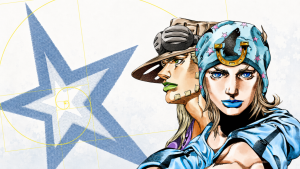
Johnny Joestar and Gyro Zeppeli: Flawed Ambition Meets the Golden Spin
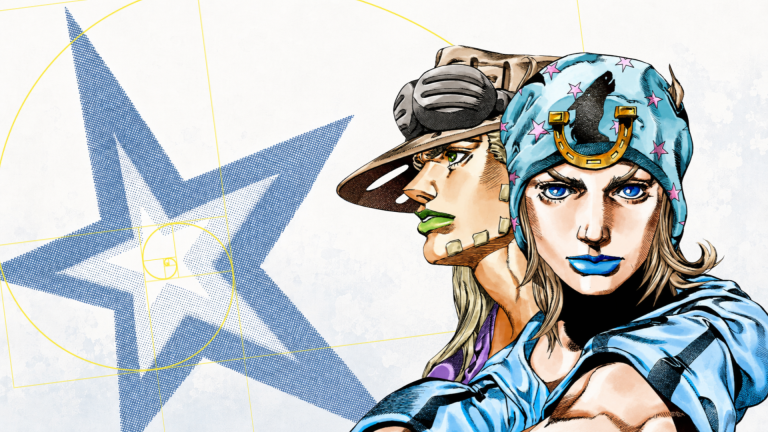
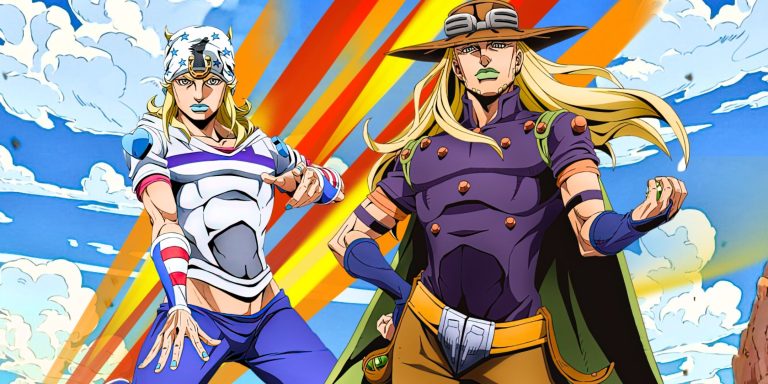
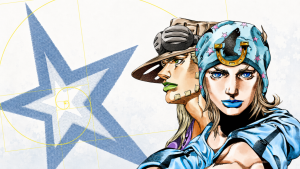
At the beating heart of Steel Ball Run lies the most meticulously constructed dual-protagonist dynamic in modern Japanese fiction: Johnny Joestar and Gyro Zeppeli.
The Deconstruction of the Joestar Hero
Johnny Joestar is not Jonathan, Joseph, or Jotaro. He is neither an incorruptible gentleman nor a charismatic rebel. Paralyzed from the waist down following an act of youthful arrogance, Johnny enters the narrative as a washed-up, embittered former jockey prodigy whose life has bottomed out in cynicism. When an accidental encounter with the enigmatic Gyro Zeppeli momentarily sends a twitch of vitality through his numb legs, Johnny does not join the trans-American race out of patriotism, justice, or heroism. He joins out of a desperate, borderline-feral obsession to reclaim his mobility—to climb from “negative” back to “zero.”
Araki frequently illustrates Johnny with the “dark determination” in his eyes—a chilling, pitch-black resolve that highlights his willingness to kill, exploit, and sacrifice for his goals. His evolving Stand, Tusk, mirrors this tortuous journey: transforming across four distinct Acts from a weak, nail-spinning physical anomaly into an unstoppable cosmic force of absolute rotational gravity.
The Golden Ratio and the Way of the Spin
Counterbalancing Johnny’s brooding desperation is Gyro Zeppeli, a disgraced Neapolitan executioner armed with steel balls, quirky puns, and a secret mission of mercy. Rather than leaning strictly on psychic Stand projections, Gyro introduces the Spin—a profound, pseudo-scientific martial discipline rooted in the Fibonacci Sequence and the Golden Rectangle. The Spin reframes Araki’s long-dormant concepts of “Hamon” through a hyper-stylized mathematical lens.
The brotherly camaraderie that develops between Johnny and Gyro—anchored by campy campfire banter about cheese, existential confessions under the desert stars, and ruthless tactical combat—provides an emotional ballast that elevates Part 7 beyond standard battle-manga conventions into an authentic, heart-wrenching psychological odyssey.
David Production’s Greatest Crucible: The Equestrian Nightmare
If the thematic depth of Steel Ball Run represents a golden opportunity, its technical execution represents an animator’s absolute nightmare. It is an industry axiom that quadrupedal movement—particularly horses running in dynamic perspective—is the single most labor-intensive, time-consuming challenge in hand-drawn 2D animation.
Unlike previous parts that staged tactical brawls in static alleys, cruise ships, or enclosed rooms, Steel Ball Run is in constant kinetic motion across the open plains of North America. Hundreds of horses gallop simultaneously across shifting topographies, sandstorms, frozen lakes, and mud-slicked forests. Studio animators across Tokyo have famously cited horses as the prime reason an immediate follow-up to Stone Ocean was impossible without a protracted pre-production window.
David Production stands at a crucial crossroads:
- The 3D CGI Hybrid Route: Employing hyper-advanced cel-shaded 3D horse models integrated with 2D character riders, akin to modern production techniques used in MAPPA’s Attack on Titan or Studio Wit’s Vinland Saga. The hazard here is jarring visual dissonance that risks alienating fans accustomed to David Pro’s tactile ink-line aesthetic.
- Selective 2D Hand-Crafting: Limiting fluid, frame-by-frame 2D animation strictly to close-up interactions and dramatic beats, while reserving blended digital rendering for sweeping wide shots and background competitors.
Rumors within the animator community hint that David Production has been quietly experimenting with specialized proprietary rigging pipelines to tackle these equestrian physics without sacrificing the distinctive, muscular line art synonymous with the JoJo brand.
The Saint’s Corpse and Patriotic Cosmic Horror
Beyond the galloping hooves, the true catalyst of the race transforms the story from an epic sports journey into a masterclass in cosmic political intrigue. The competitors are not merely racing for a $50 million cash prize; they are pawns in a covert supernatural treasure hunt orchestrated by the 23rd President of the United States, Funny Valentine. The prize? The scattered, mummified relics of the Saint’s Corpse, an artifact heavily implied to be the physical remains of Jesus Christ.
Funny Valentine remains arguably Araki’s most philosophically terrifying antagonist. Driven not by greed or sadism, but by an unwavering, fanatical strain of utilitarian patriotism, Valentine wields his dimension-hopping Stand, Dirty Deeds Done Dirt Cheap (D4C), to secure America’s geopolitical and cosmic supremacy at the expense of the rest of the world. The clash between Johnny’s raw, individualistic yearning for personal redemption and Valentine’s grand, self-righteous imperialist philosophy raises the narrative stakes to a transcendent crescendo.
The Long Ride Awaits
While an official greenlight announcement has yet to drop from Warner Bros. Japan or David Production, the creative inevitability of Steel Ball Run is absolute. Following the divisive distribution strategy of Stone Ocean’s batch drops, anticipation has only curdled into passionate resolve: the community wants this adaptation treated with the prestige, pacing, and visual magnificence it deserves.
Adapting Part 7 is David Production’s greatest creative frontier—a trial that will demand revolutionary production workflows, unprecedented technical endurance, and uncompromising artistic vision. But if they can harness the power of the Golden Spin, they won’t just deliver another great season of JoJo; they will unleash one of the undisputed masterpieces of modern anime history.
What part of Steel Ball Run are you most eager to see animated? Can David Production successfully bridge the gap between 2D artistry and 3D equestrian animation? Let us know your thoughts in the comments below!