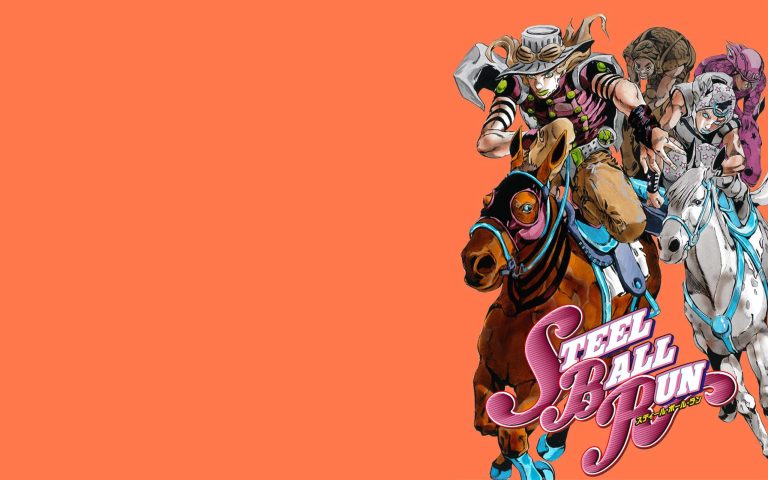
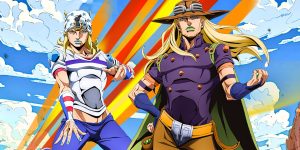
Ever since the bittersweet, universe-resetting finale of Stone Ocean aired its final frames, the global anime community has been holding a collective, nervous breath. The conversation surrounding Hirohiko Araki’s generational saga did not end with Jolyne Cujoh; instead, it pivoted immediately toward a horizon draped in red desert dust, churning gears, and galloping hooves. We have officially reached the event horizon of the anime adaptation timeline: the impending, long-demanded, and technically terrifying adaptation of JoJo’s Bizarre Adventure: Steel Ball Run.
Widely regarded by critics and purists alike as Araki’s magnum opus—frequently locked in fierce competition with the likes of Berserk and Chihayafuru at the absolute peak of manga ranking charts—Steel Ball Run is not just the seventh installment of an eccentric franchise. It is an artistic transcendence. Yet, as David Production inevitably eyes the daunting prospect of bringing this trans-continental epic to the screen, the industry buzz is as much about profound trepidation as it is unbridled excitement.
The Ultra Jump Paradigm Shift: From Shonen Excess to Seinen Grandeur
To understand the sheer magnitude of the hype, one must understand what Steel Ball Run actually represents in Araki’s creative evolution. Serialized initially in 2004 within the pages of Weekly Shonen Jump before transitioning to the monthly seinen haven of Ultra Jump in 2005, Part 7 broke free from the structural confines that had shaped the series since Phantom Blood launched in 1987.
The monthly release schedule untethered Araki from the frenetic, battle-of-the-week pacing demanded by teenage demographics. The consequence was nothing short of miraculous: panoramic paneling, complex historical revisionism set against the backdrop of late-19th-century America, and a narrative grounded in existential consequence. This wasn’t merely a contest of eccentric superpowers; it was a grueling, 6,000-kilometer cross-country equestrian race steeped in the grit, grime, and moral ambiguity of Western revisionist cinema, drawing equal inspiration from Sergio Leone’s spaghetti westerns and Cormac McCarthy’s stark literary landscapes.
A Partnership Forged in Dust: Johnny Joestar and Gyro Zeppeli
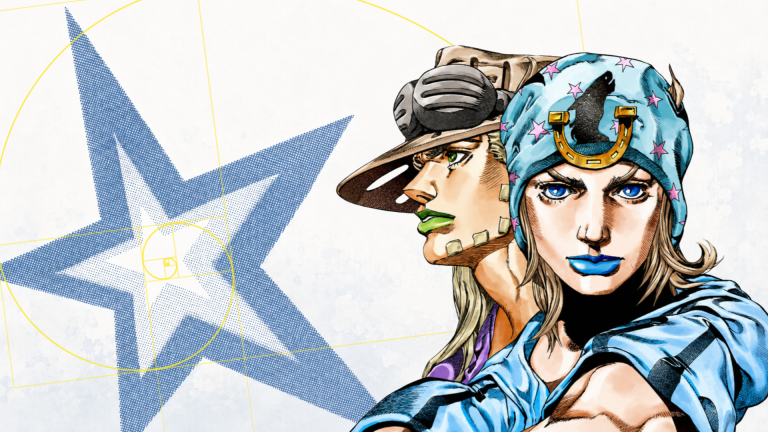
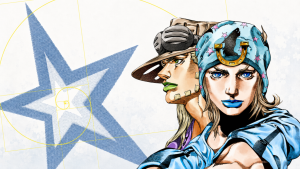
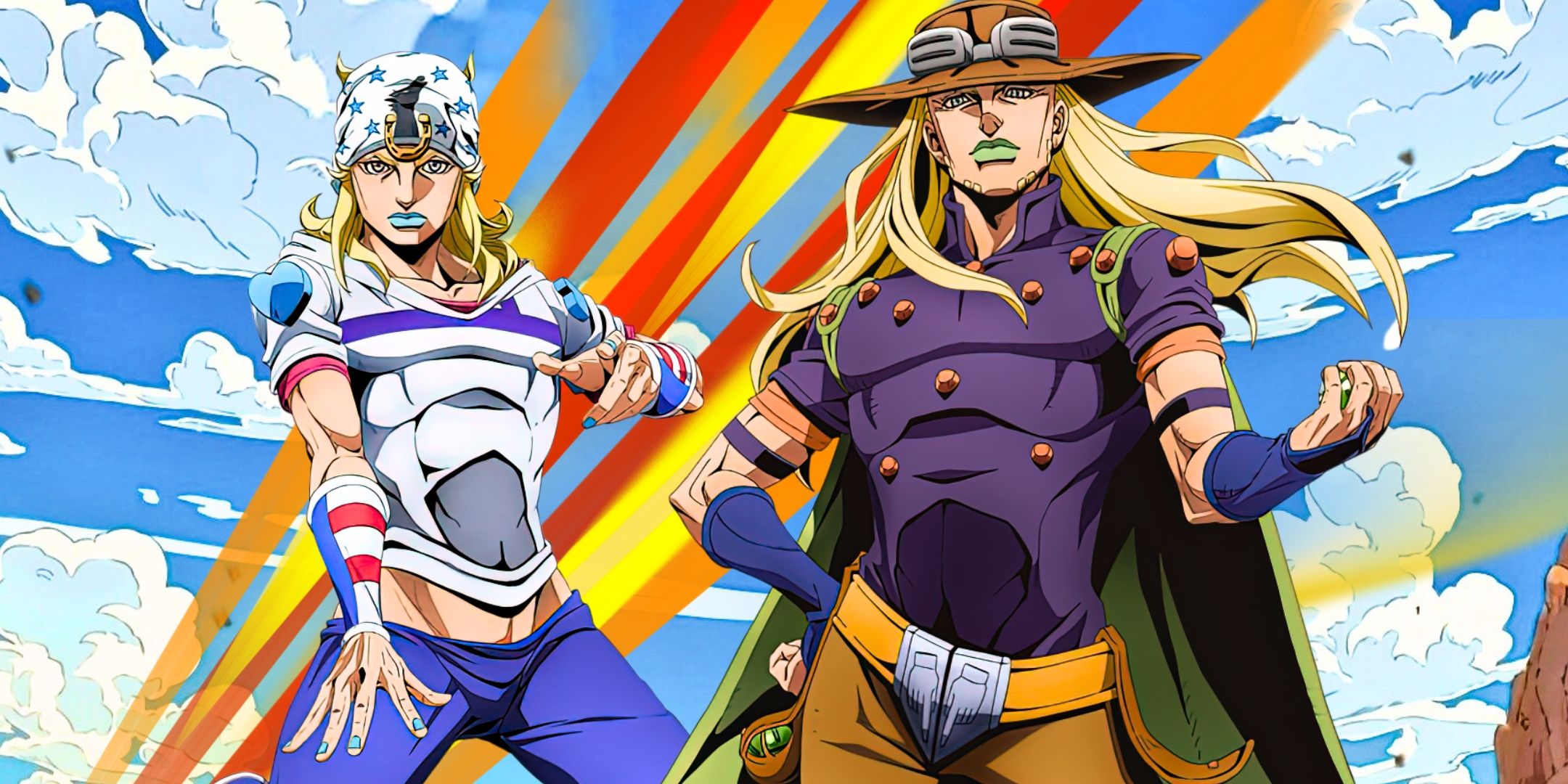
At the center of this storm lies the most compelling dual protagonist dynamic Araki has ever penned. In an audacious narrative pivot, Steel Ball Run introduces us to Johnny Joestar: not a righteous paragon of justice like Jonathan or a stoic tactical savant like Jotaro, but a fallen, bitter, paraplegic former horse-racing prodigy. Johnny begins his odyssey stripped of both physical mobility and psychological grace, driven by a deeply self-serving desperation to reclaim the feeling in his legs.
Enter Gyro Zeppeli, a disgraced Neapolitan executioner wielding mystic, vibrating steel spheres, whose flashy exterior—complete with golden grills engraved with “GO! GO! ZEPPELI”—belies a soul weighed down by familial obligation and philosophical rebellion. Johnny’s partnership with Gyro avoids the conventional mentor-student tropes. Instead, it forms an emotionally raw symbiotic bond where two damaged men navigate the barren American frontier, pushing each other through spiritual purgatory.
The Spin: The Golden Ratio of Supernatural Mechanics
Narratively, Steel Ball Run also redefines the series’ internal power system. While traditional Stands eventually manifest, they are heavily subordinated to—and evolved through—the mechanics of The Spin (Kaiten). Grounded in the mathematical divinity of the Fibonacci sequence and the Golden Rectangle, the Spin represents Araki at his most intellectually playful. Animating the physical geometry of throwing spheres, atmospheric distortions, and Johnny’s evolving Stand, Tusk, across its four distinct evolutionary “Acts,” promises some of the most conceptually visually demanding set pieces ever attempted by David Production.
The Horse Problem: David Production’s Monumental Technical Hurdle
Why has the greenlight announcement for Steel Ball Run felt conspicuously delayed compared to previous seasons? The answer is whispered with dread among animators worldwide: horses.
Equestrian animation is famously the third rail of the 2D anime industry. Capturing the anatomical precision, muscular shift, and kinetic rhythm of a single galloping horse frame-by-frame is an extraordinarily labor-intensive undertaking. Steel Ball Run does not merely feature a horse; it features dozens of them, continuously, running at breakneck speeds across diverse, challenging terrains—from parched salt flats and murky marshes to blizzard-swept mountain passes.
David Production, the studio that masterminded the vibrant pop-art aesthetics, dramatic typography, and signature color shifts of Parts 1 through 6, faces a crucial fork in the road:
Will they rely heavily on 3DCG hybrid pipelines to render the equestrian sequences, risking the kind of visual jarring that plagued other ambitious historical epics? Or can they innovate a bespoke pipeline, akin to Studio Orange’s dynamic CGI work or Wit Studio’s historical set pieces, that respects Araki’s dense, hyper-detailed crosshatching? Insiders note that the studio’s production pause following Stone Ocean may be less about hesitation and more about extensive pre-production research and development, ensuring that the visual pedigree matches the source material’s monumental prestige.
Manifest Destiny Meets Divine Relics: The Thematic Stakes
Beyond its kinetic set-pieces, an anime adaptation of Steel Ball Run carries profound thematic weight that modern audiences are uniquely primed to digest. The overarching race is revealed to be an elaborate geopolitical front orchestrated by the 23rd President of the United States, Funny Valentine, to assemble the mummified Corpse Parts of an unnamed holy figure (heavily implied to be Jesus Christ).
Valentine stands as perhaps Araki’s most terrifying antagonist precisely because he isn’t a cartoonish villain motivated by pure malice like Dio Brando or Yoshikage Kira. He is driven by unyielding, terrifyingly coherent patriotism—encapsulated in his iconic “First Napkin” philosophical monologue on global dominance and ideological momentum. The collision between Valentine’s absolute nationalistic utilitarianism and Johnny Joestar’s deeply personal, flawed pursuit of self-redemption elevates the narrative into high-stakes political and theological drama.
The Verdict: Can David Production Clear Anime’s Highest Hurdle?
The hype surrounding the JoJo Part 7 adaptation is not manufactured social media noise; it is the culmination of nearly two decades of reverence for a story that fundamentally changed the perception of what Hirohiko Araki could achieve as an auteur. Adapting Steel Ball Run is not just another production cycle for David Production—it is their Rubicon.
If executed with the technical fidelity, directorial patience, and uncompromised vision it deserves, the anime could comfortably establish itself as one of the definitive triumphs of the medium, elevating anime’s grandest generational epic to unprecedented heights. Until that fateful first teaser trailer drops, fans will continue scanning the horizon, waiting for the first spin of the steel ball to echo across the plains.
What do you think is the biggest challenge David Production faces with Steel Ball Run: the horse animation, pacing the lengthy narrative, or nailing the look of the Spin? Let us know your theories in the comments below!