When the final chords of “Roundabout” echoed over the solemn, universe-resetting conclusion of Stone Ocean, a collective tremor shook the global anime community. For over a decade, David Production has pulled off one of modern animation’s most miraculous feats: translating Hirohiko Araki’s notoriously eccentric, anatomically defiant, and genre-bending manga into a landmark television epic. Yet, ever since Jolyne Cujoh’s curtain call, the collective gaze of the fandom has pivoted toward a singular, almost mythical horizon. We are standing at the precipice of JoJo’s Bizarre Adventure: Steel Ball Run—Araki’s undisputed western-supernatural magnum opus, and David Production’s most formidable trial yet.
Serialized between 2004 and 2011, Steel Ball Run (Part 7) did not merely continue the franchise; it reimagined it from the subatomic level up. Consistently jostling for the top spots on global manga rankings alongside Berserk and Fullmetal Alchemist, Part 7 takes the multi-generational vampire feud and casts it into the dust, grit, and blood-soaked plains of 1890s America. The buzz surrounding its inevitable anime adaptation is no ordinary pre-release chatter—it is a fever pitch bordering on reverent anxiety.
The Mirage Across the Prairie: Why Steel Ball Run Is Araki’s Magnum Opus
To understand the unprecedented hunger for a Steel Ball Run anime, one must understand its seismic significance in Hirohiko Araki’s creative journey. Part 7 served as a soft reboot of the franchise, unburdened by decades of convoluted Joestar continuity. Midway through its run, the series migrated from the frantic constraints of Weekly Shonen Jump to the monthly pages of Ultra Jump. The results were electrifying.
A Shift in Canvas and Narrative Maturation
The monthly release schedule freed Araki’s pen. His line work transitioned from hyper-stylized pop art to a dense, renaissance-influenced chiaroscuro. Panels transformed into sprawling western panoramas, hyper-detailed anatomical blueprints, and visceral psychological tableaus. More importantly, the narrative grew up. Steel Ball Run was uninhibited by the demographic guardrails of traditional shonen, allowing for grim moral quandaries, psychological trauma, body horror, and political machinations that felt startlingly mature.
The Trans-American Odyssey
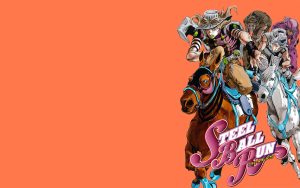
At the center of this thematic renaissance is the Steel Ball Run race itself: a grueling, 6,000-kilometer cross-country equestrian rally from San Diego to New York City, bankrolled by the enigmatic promoter Steven Steel. What begins as a sporting novelty swiftly curdles into a clandestine holy war. Competitors aren’t merely racing for the fifty-million-dollar purse—they are unwitting pawns scouring the frontier for the scattered, mummified relics of the Saint’s Corpse, an artifact capable of bending universal fortune toward whichever nation claims it.
From Negative to Zero: The Anatomy of Johnny and Gyro
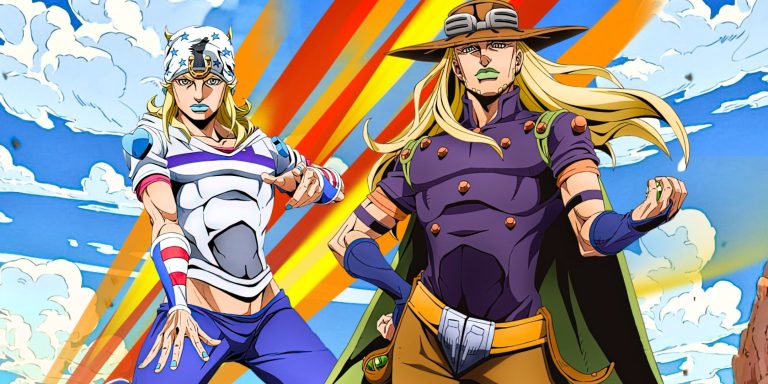
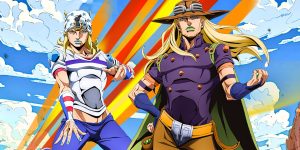
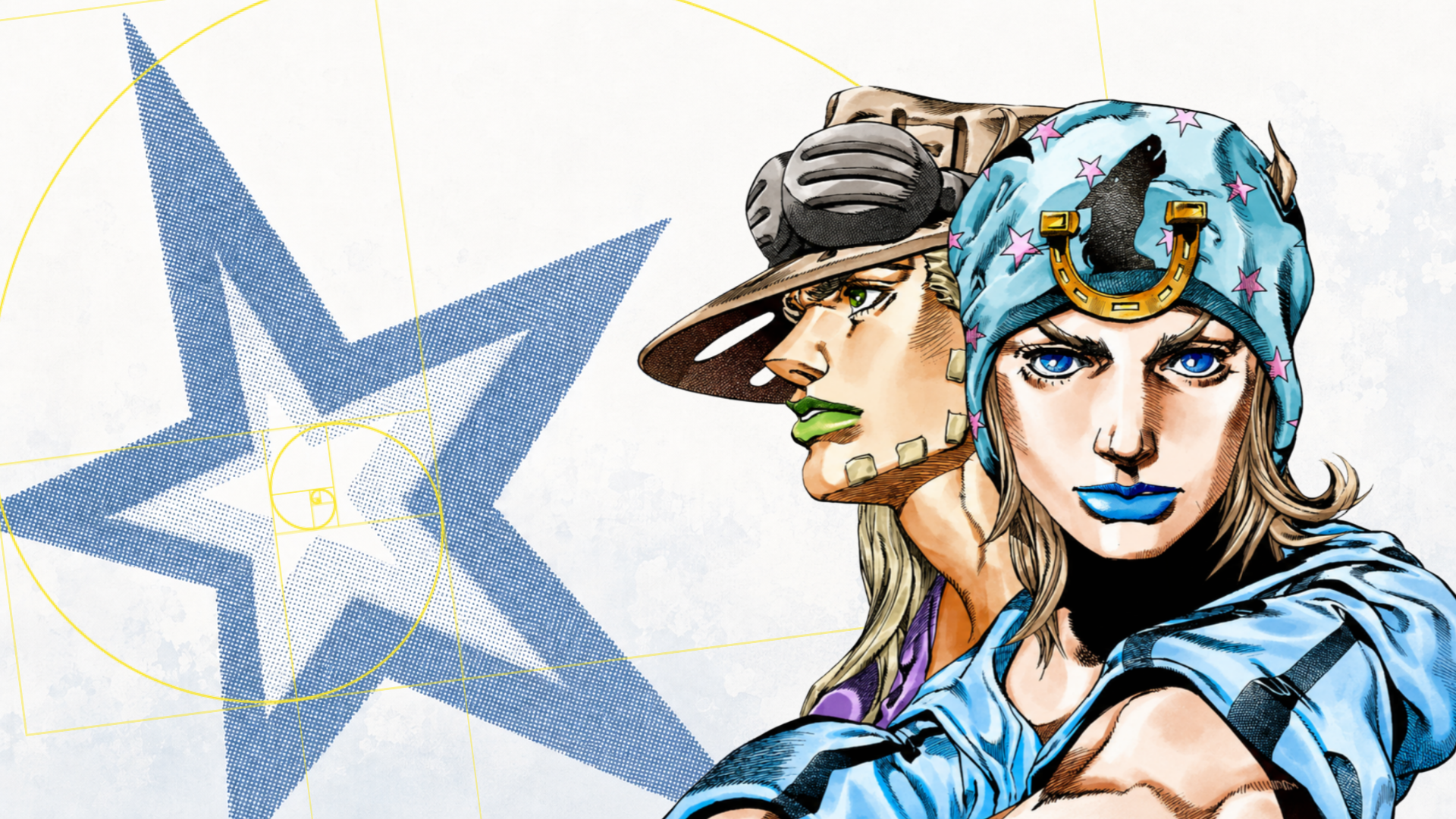
Every legendary JoJo iteration hinges on its core brotherhood, but none possess the intricate psychological friction of Johnny Joestar and Gyro Zeppeli. Their dynamic elevates Part 7 from an adrenaline-fueled race into a poignant character study about grief, pride, and the grueling journey toward self-actualization.
Johnny Joestar is fundamentally unheroic when we first meet him. A former horse-racing prodigy whose reckless arrogance resulted in a gunshot wound that paralyzed him from the waist down, Johnny is a cynical, bitter shell of a man. He lacks the virtuous lineage of Jonathan or the charismatic bravado of Joseph. His driving ambition isn’t to save the world; it is desperately personal. He simply wants to get back to “zero” from his current state of absolute deficit. His morality is murky, characterized by a chilling “dark determination” in his eyes that shocks allies and enemies alike.
Enter Gyro Zeppeli: a disgraced executioner from the Kingdom of Naples whose absurd outward persona—punctuated by gold teeth engraved with “GO! GO! ZEPPELI” and bizarre running gags about cheese—masks a crushing burden of ethical guilt. Gyro enters the race to win imperial clemency for an innocent boy sentenced to death back home. Gyro becomes Johnny’s reluctant mentor, introducing him to the Spin: an ancient, mathematically divine martial art governed by the Fibonacci Golden Ratio.
As Gyro weaponizes his kinetic steel orbs and Johnny gradually unlocks his evolving Stand, Tusk, the power scaling in Steel Ball Run feels uniquely earned. Their journey through Araki’s five esoteric “Lessons” of the Spin forms the emotional bedrock of the entire narrative. To see this quiet, campfire-lit camaraderie brought to life with vocal performances and musical scoring is the emotional payoff fans have spent a decade waiting for.
The Equestrian Nightmare: David Production’s Ultimate Gauntlet
If fans are salivating over the story, industry insiders are holding their breath for the animators. The elephant in the room—or rather, the thoroughbred—is the staggering technical challenge of animating a cross-country horse race. Animating horses is universally recognized as one of the most punishing, time-consuming tasks in traditional 2D animation due to complex quad-pedal muscular anatomy and dynamic shifting centers of gravity.
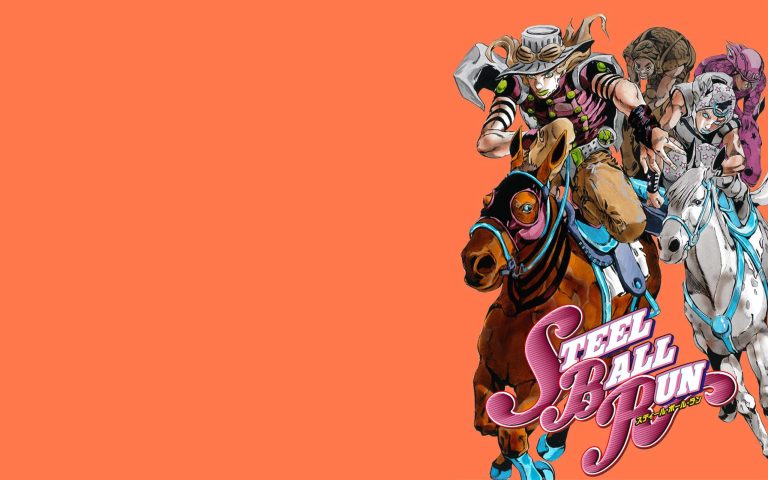
In Steel Ball Run, horses do not just trot in the background; they are primary combat platforms. They gallop across turbulent rivers, scale treacherous cliffs, and engage in high-speed shootouts. Historically, studios that attempt prolonged equestrian sequences lean heavily on 3D CGI—often with polarizing results that alienate fans of lush 2D aesthetics. If David Production is to pull this off, they face a critical dilemma: do they risk melting their animator pipeline with grueling hand-drawn frames, or do they deploy cutting-edge 3D model integration ala Studio Orange or modern MAPPA?
Furthermore, after the lukewarm reception to the fragmented “batch-drop” release model Netflix implemented for Stone Ocean, David Production and Warner Bros. Japan find themselves under intense scrutiny. Part 7 cannot survive an anti-climactic, disjointed release schedule. It demands the cultural momentum of a weekly, event-television broadcast, paired with an elevated production budget that honors its prestige status.
Ideological Warfare: The First Napkin and Manifest Destiny
A masterclass narrative requires an equally formidable antagonist, and Part 7 delivers what many consider the greatest rogue in manga history: Funny Valentine, the 23rd President of the United States. Valentine is neither a chaotic sadist like Dio Brando nor an antisocial sociopath like Yoshikage Kira. He is a hyper-patriotic zealot possessed by an unshakeable utilitarian ideology.
Valentine’s iconic “First Napkin” monologue outlines a worldview predicated on power dynamics, initiative, and manifest destiny. Utilizing his dimension-hopping Stand, Dirty Deeds Done Dirt Cheap (D4C), Valentine weaponizes alternate realities with terrifying efficiency. Combined with the predatory, dinosaur-shifting ferocity of Diego Brando (the alternate universe’s chilling reimagining of Dio), Steel Ball Run‘s third act evolves into an unrelenting storm of high-concept tactical violence and existential dread that will push the anime’s creative directors to their limits.
The Final Stretch: What Lies Beyond the Horizon
While David Production has kept official production schedules tightly under wraps, cryptic teaser illustrations, staff interviews, and recent anniversary exhibitions have subtly stoked the embers of anticipation. The sheer scale of Part 7 suggests an adaptation that could easily command upwards of 48 to 60 meticulously paced episodes, perhaps split across multiple high-production cours.
Steel Ball Run represents more than just the next season of an illustrious anime franchise; it represents the ultimate test of David Production’s legacy. If the studio can conquer the logistical terrors of equestrian motion, retain Araki’s sublime monthly-penned line art, and capture the fragile, transcendent soul of Johnny and Gyro’s trans-continental trek, they will not merely deliver a successful sequel. They will deliver an anime masterpiece for the ages.
How do you think David Production should tackle the animation of Part 7’s horses—full 2D, hybrid CGI, or something entirely new? Who is your dream voice cast for Johnny and Gyro? Sound off in the comments below, and stay tuned to Wibux.com for the latest updates on JoJo’s next frontier!