

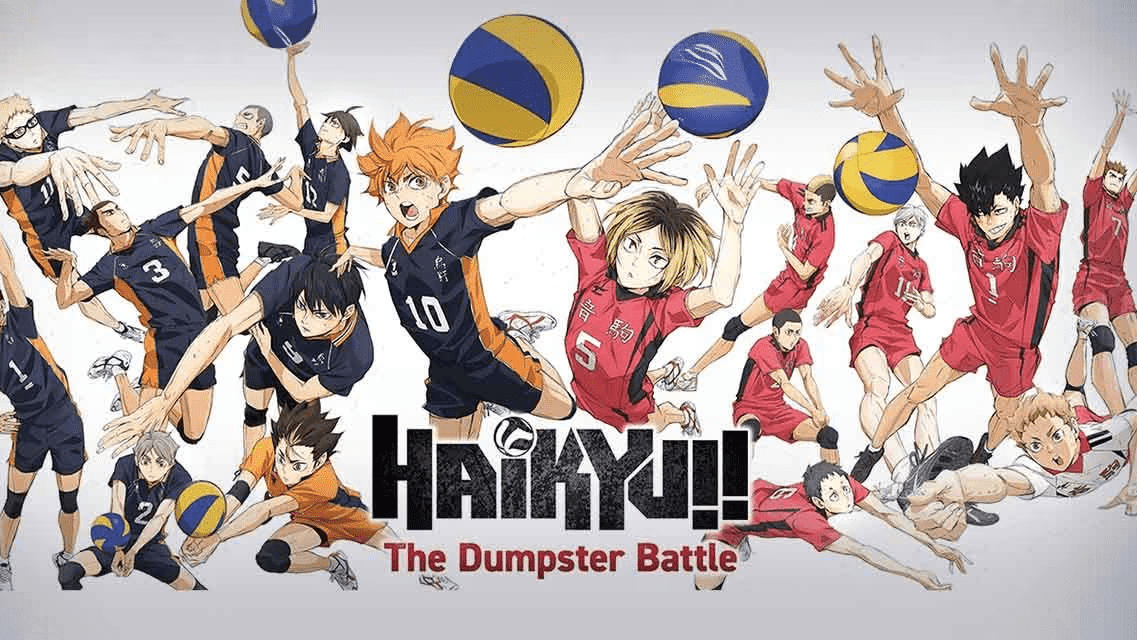
Few matchups in modern anime history have carried the quiet, slow-burning weight of the long-promised showdown at the garbage dump. When Haikyu!! The Dumpster Battle (Gekijōban Haikyu!! Gomi Suteba no Kessen) demolished the Japanese box office to the tune of over 11 billion yen, it proved what manga readers had known for years: this was never merely a high-stakes tournament match. It was a generational reckoning. Now that the cinematic spectacle has finally hit global streaming platforms, international fans are bearing witness to what might just be the definitive masterclass in sports anime storytelling—an exhilarating, emotionally devastating, and formally inventive masterwork that strips away conventional shonen hostility to celebrate the pure, kinetic ecstasy of play.
The Garbage Dump Showdown: Fulfilling a Multi-Generational Vow
To understand the immense emotional resonance of The Dumpster Battle, one must look back to the roots planted in Haikyu!!‘s debut season. The rivalry between Karasuno High and Nekoma High is unique because it isn’t born of animosity; it is built on mutual resurrection. Decades prior, former coaches Ikkei Ukai and Yasufumi Nekomata established a fierce collegiate-level camaraderie between their respective squads, the Crows and the Cats. Yet, despite dozens of gritty practice matches on dust-caked municipal courts, the two programs never crossed paths on the official national stage. The match was an urban legend—a dream perpetually deferred.
When the whistle blows at the Tokyo Metropolitan Gymnasium during the third round of the Spring National Tournament, director Susumu Mitsunaka ensures the viewer feels the invisible specter of that history. This is not a battle to prove who is superior; it is the realization of an inherited promise. For Karasuno, it is validation that the “fallen crows” have truly reclaimed the sky. For Nekoma, it is the ultimate test of their defensive philosophy: a living, breathing machine constructed to grind soaring birds down to earth.
The Brain vs. The Instinct: Dissecting Kenma’s Suffocating Chess Match
At the beating heart of this film lies an intimate, psychological duel between two philosophical opposites: Karasuno’s boundless offensive spark plug, Shoyo Hinata, and Nekoma’s detached, calculating setter, Kenma Kozume. Where Hinata represents raw instinct, unadulterated passion, and physical euphoria, Kenma views volleyball as an optimization puzzle—a game he only plays because quitting would cause too much logistical inconvenience for his childhood friend, Tetsuro Kuroo.
Clipping the Crow’s Wings: The Birdcage Strategy
Kenma does not merely react to Karasuno’s overwhelming offensive tempo; he engineers the court to suffocate it. In a display of tactical brilliance rarely captured with such forensic clarity in animation, Nekoma systematically forces Karasuno into narrow passing lanes, subtly constricting Hinata’s approach space. Mitsunaka visually reinforces this tactical strangulation with claustrophobic framing, trapping Hinata in a literal and metaphorical birdcage. Watching Hinata’s kinetic joy slowly curdle into frustration as he is denied his four-step approach run is genuinely distressing—a testament to Haruichi Furudate’s grounded understanding of volleyball biomechanics.
The Breakthrough of Pure Euphoria
Yet, true to Haikyu!!‘s core ethos, Hinata’s response is not a miraculous shonen power-up, but a mechanical evolution built on previous failure. Backed by Tobio Kageyama’s audacious set, Hinata executes a high, floating “open attack”—a leap powered by pure vertical patience rather than blinding horizontal speed. It is a moment of transcendent elevation that shatters Kenma’s algorithm. Hinata doesn’t just bypass the block; he reminds Kenma that on the court, human will is an unquantifiable variable that refuses to be solved.
Kinetic Mastery: Production I.G’s Visceral Direction and First-Person Immersion
Condensing an entire multi-chapter manga match into an 85-minute feature film was an enormous structural gamble, but Production I.G turned runtime limitations into their greatest artistic weapon. The pacing is relentless, eschewing prolonged internal monologues to let the sheer velocity of the sport speak for itself. The ball physics, court floor squeaks, and heavy percussive impacts of hands meeting leather carry a visceral sonic design that elevates every serve and receive into a miniature heart attack.
The film’s technical magnum opus arrives in its final rally—a breathless, nearly four-minute uninterrupted sequence animated predominantly from Kenma’s first-person perspective. The camera sways with unvarnished exhaustion. Sweat droplets bead and blur the virtual lens; the squeak of sneakers becomes muffled against the sound of ragged, oxygen-deprived panting; the court stretches and distorts as Kenma’s vision narrows to the yellow-and-blue sphere dropping toward the floor.
This is not merely flashy animation flex; it is storytelling through subjective cinematography. By locking the audience inside Kenma’s failing stamina, Production I.G forces us to experience the crushing physical reality of the sport. When the ball finally slips from Kenma’s slick, exhausted palms to end the match, the silence in the arena feels deafening.
The Anti-Antagonist Dynamic: Pure Sport Without Malice
In an anime landscape often dominated by intense ideological friction or cutthroat survivalism—exemplified by series like Blue Lock—Haikyu!! stands as a monumental counter-argument for the power of radical empathy in athletics. Nekoma High is not a team of villains meant to be toppled. They are mentors, brothers, and mirrors.
Throughout the film, flashbacks interweave seamlessly into the action, reminding us that Karasuno would not exist in their current form without Nekoma. Kuroo spent his summer training camps teaching Kei Tsukishima how to read-block, actively forging the very weapon that would challenge his own team. Morisuke Yaku sharpened Yu Nishinoya’s libero instincts. There is no schadenfreude in victory, nor is there bitter resentment in defeat.
The emotional apex of the film does not belong to a game-winning spike or an ecstatic roar of triumph. It arrives in the quiet aftermath, when an utterly exhausted Kenma looks up at Kuroo from the floor and softly mutters: “Kuro… thanks for teaching me volleyball. It’s fun.” For a character defined by apathy, that single admission carries more emotional weight than any championship trophy.
The Final Whistle: Why The Dumpster Battle Sets a New Benchmark
Haikyu!! The Dumpster Battle proves that the pinnacle of sports anime does not require world-ending stakes, convoluted superpowers, or bitter hatred between competitors. It only requires truth. By trusting the integrity of the game and the deeply human relationships forged across the net, the film delivers a near-flawless blend of tactical realism, thematic catharsis, and staggering visual craft.
As the film streams globally, it marks both a triumphant arrival and the bittersweet beginning of the end. Karasuno’s journey is barreling toward its ultimate conclusion, with the formidable Kamomedai High and the enigmatic “Little Giant” waiting in the quarterfinals. But regardless of what lies ahead, the crows and the cats have had their festival. The garbage dump has never looked so glorious.
Now we want to hear from you: Did Kenma’s final first-person sequence take your breath away, or were you too busy wiping away tears at the final handshake? Drop your thoughts, favorite rallies, and predictions for the final film in the comments below!