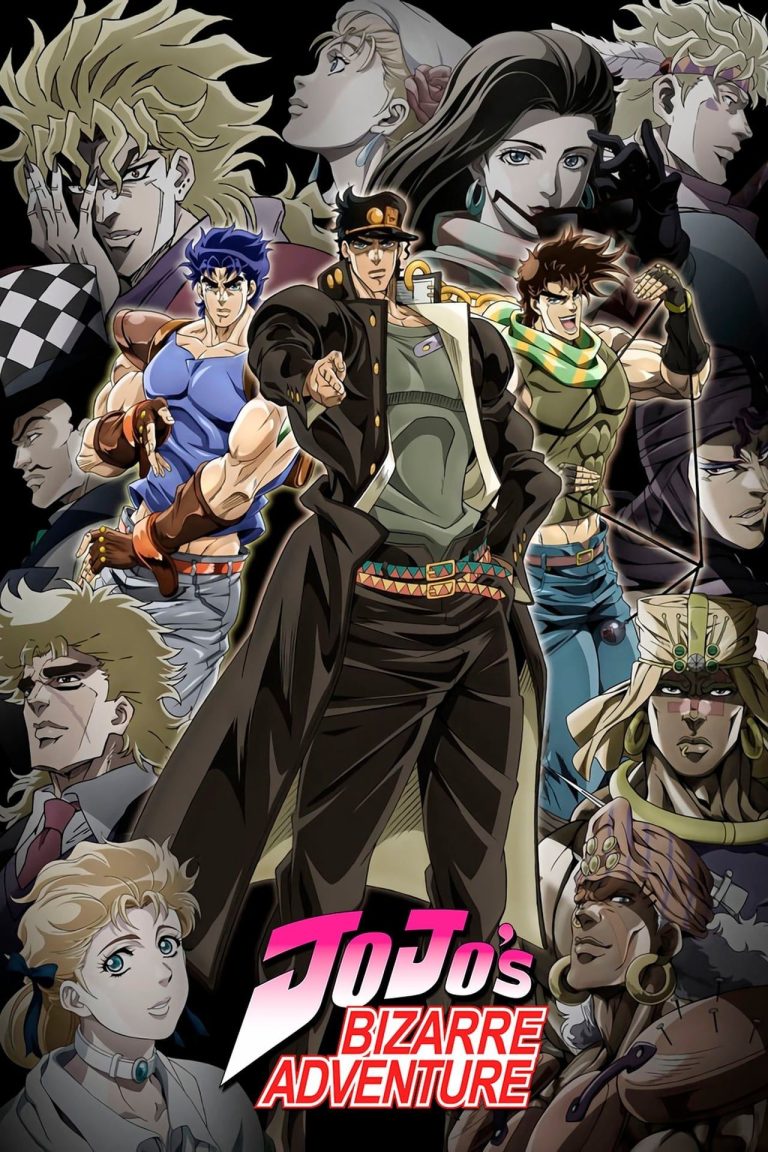
Ever since the cosmic threads of Enrico Pucci’s Made in Heaven unwound the classic Joestar lineage in the climax of Stone Ocean, the anime community has stood in suspended animation. For over a decade, David Production has pulled off one of the most audacious, visually distinct multi-generational sagas in modern television history. Yet, for an overwhelming majority of Hirohiko Araki’s global disciples, every preceding eccentric punch-up, vampire duel, and Italian mafia skirmish was merely the prelude. The real prize—the towering, sun-bleached colossus of modern manga—awaits on the wind-swept plains of 1890 North America: JoJo’s Bizarre Adventure: Steel Ball Run.
Ranking consistently alongside the likes of Berserk and Vinland Saga atop universal critical hierarchies, Steel Ball Run (Part 7) represents Araki’s creative renaissance. It is not merely another chapter in an ongoing franchise; it is an epochal reinvention. As rumors simmer and David Production readies its slate following a well-deserved breather, the sheer cultural buzz surrounding a Steel Ball Run anime has reached a deafening pitch. Adapting this 4,000-mile equestrian odyssey is a task of titanic proportions, promising to test the studio’s technical prowess, thematic maturity, and stylistic boundaries like never before.
The Equine Enigma: David Production’s Technical Mount Everest
To understand why a Steel Ball Run adaptation elicits equal parts breathless anticipation and industry-wide anxiety, one must look directly at the paddock. In the world of Japanese animation, nothing terrifies production committees and key animators quite like horses. The complex biomechanics of four-legged locomotion, coupled with the anatomical shifting of muscle, saddle, and dust-cloud physics across dynamic panoramic horizons, constitutes a notorious logistical nightmare.
Where previous JoJo seasons relied on urban skirmishes, confined claustrophobic spaces, and explosive burst animations of Stand rushes, Steel Ball Run is fundamentally a kinetic, relentless transcontinental race. Scores of thoroughbreds, appaloosas, and mustangs gallop across deserts, snowfields, and rivers in broad daylight. A standard hand-drawn 2D treatment for hundreds of running steeds over dozens of episodes is virtually impossible under contemporary TV production constraints without driving animators into ruin.
The Hybrid Frontier: 3DCG Integration
The prevailing industry consensus is that David Production must lean into an intricate hybrid approach. We have seen early glimpses of equestrian 3D modeling in Attack on Titan and Vinland Saga, but Araki’s distinct ink-wash aesthetic and hyper-stylized muscularity demand something far more sophisticated. If David Production is to pull this off, they will need to deploy cell-shaded CGI models for the horses—custom-rigged with Araki’s iconic hatch-lines—while reserving luscious, expressive 2D animation for the jockeys, dramatic facial close-ups, and climatic Stand manifestations. Overcoming this uncanny-valley hurdle is the studio’s single biggest technical imperative.
Dark Determination: The Psychological Crucible of Johnny and Gyro
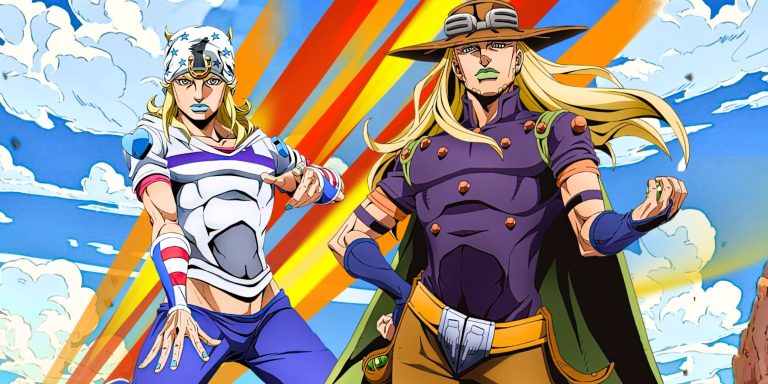
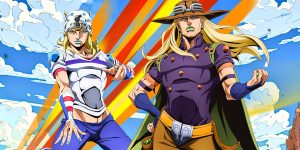
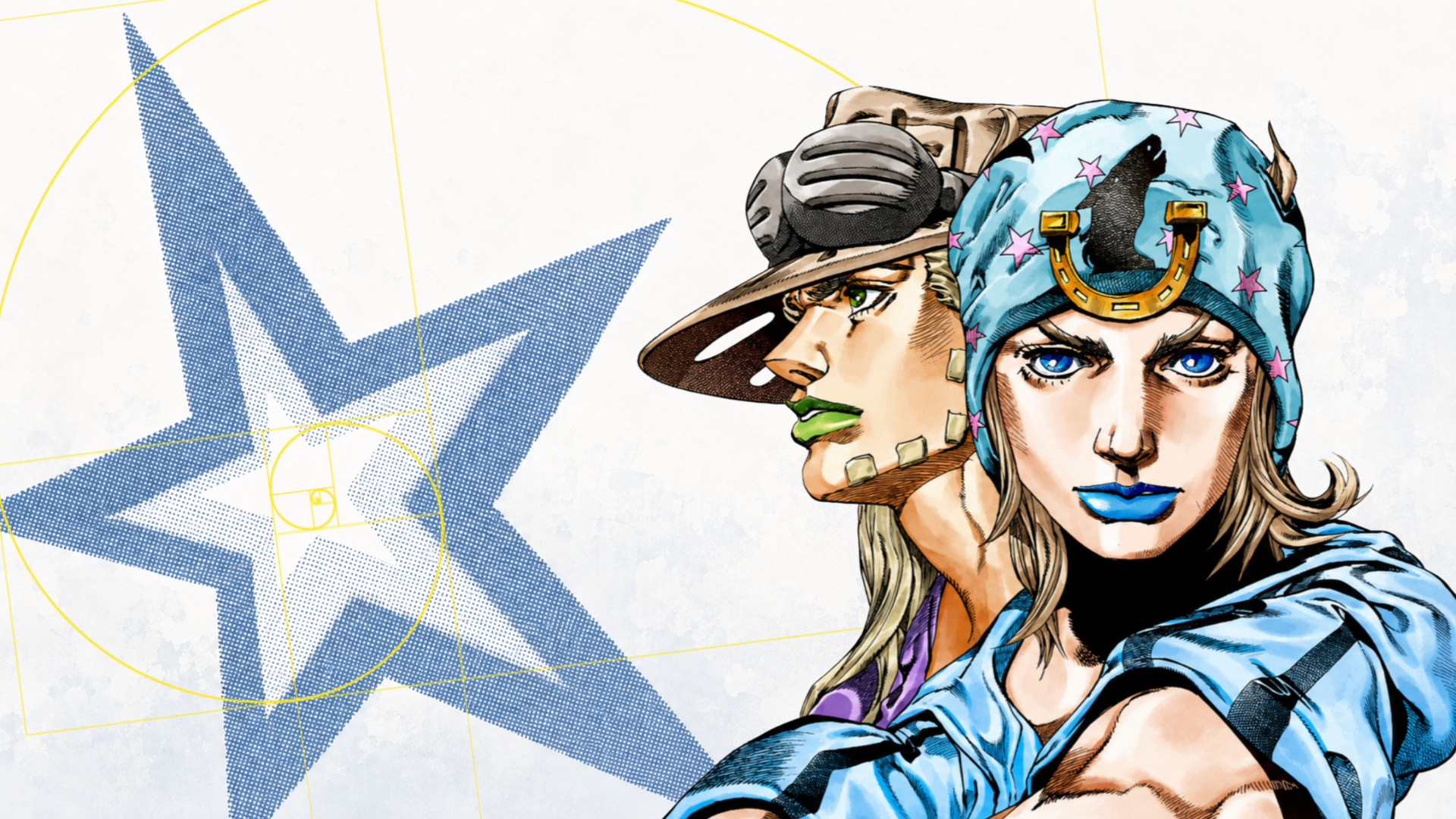
Beyond the logistical terror of galloping hooves lies the narrative bedrock that makes Part 7 an unassailable masterpiece: the raw, deeply human partnership between Johnny Joestar and Gyro Zeppeli. Up to this point, JoJo protagonists operated under varying shades of heroic bravado, stoic duty, or rebellious righteousness. Part 7 detonates that archetype entirely.
Johnny Joestar is introduced not as a champion, but as a fallen idol. Paralyzed from the waist down following an act of arrogant vanity, the former horse-racing prodigy is cynical, bitter, and spiritually hollowed. He joins the cross-country race not to save the world or defend family honor, but out of desperate, unabashedly selfish obsession after discovering that Gyro Zeppeli’s mysterious weapons briefly restore feeling to his legs. Araki paints Johnny with an aura of “dark determination”—a chilling, pitch-black psychological willingness to kill without hesitation if it means climbing out of his personal abyss of negative value.
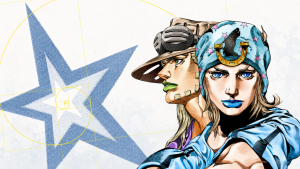
Balancing Johnny’s brooding nihilism is Gyro Zeppeli: flamboyant, grill-toothed, idiosyncratic, yet bearing the crushing moral weight of his family’s trade as Neapolitan royal executioners. Gyro is fighting to win amnesty for an innocent child marked for state execution, contrasting Johnny’s self-serving agenda with genuine compassionate sacrifice. Their campfire banter, operational chemistry, and gradual evolution from reluctant partners to soul-bound brothers represents the most meticulously written character dynamic Araki has ever penned. Capturing this nuanced emotional resonance will require an uncompromising vocal performance and razor-sharp directorial restraint.
From Hamon to The Spin: The Mathematical Esotericism of Seinen JoJo
Midway through the serialization of Steel Ball Run, Hirohiko Araki executed a monumental publishing maneuver, migrating the title from the demographic constraints of Weekly Shonen Jump to the adult-targeted monthly pages of Ultra Jump. This structural liberation revolutionized the series’ conceptual framework.
Gone were the straightforward brawls; in their place came The Spin (Kaiten), a metaphysical martial art rooted in the Fibonacci sequence and the sacred geometry of the Golden Ratio. By manipulating the kinetic energy of throwing steel spheres, the Zeppeli clan wields a technique capable of distorting muscle tissue, bypassing organic defenses, and ultimately piercing through space and dimensional fabric itself.
This mathematical sorcery seamlessly integrates into the universe’s rewritten Stand lore. Johnny’s Stand, Tusk, serves as an unforgettable visual and thematic metaphor for his progressive psychological reconstruction. As Johnny moves from dragging himself through the dirt to mastering the Golden Rectangle, Tusk physically evolves from a vulnerable, child-like sprite (ACT1) through grotesque, nail-firing stages of bodily alteration, culminating in the reality-fracturing, infinite-rotational behemoth that is ACT4. Translating this mind-bending geometric physics into fluid, high-octane visual spectacle will grant David Production a canvas unlike anything in modern shonen or seinen adaptation history.
Manifest Destiny Deconstructed: The Saint’s Corpse and Funny Valentine
No discussion of Steel Ball Run’s prestige can overlook its overarching sociopolitical crucible. The trans-American race is quickly unmasked as an elaborate front orchestrated by the 23rd President of the United States, Funny Valentine, to gather the scattered mummified relics of the Saint’s Corpse—heavily implied to be Jesus Christ Himself.
Valentine is arguably Araki’s most formidable antagonist, equipped with the dimensional-hopping Stand Dirty Deeds Done Dirt Cheap (D4C) and armed with a brand of radical, terrifyingly persuasive hyper-patriotism. Through Valentine’s iconic “First Napkin” philosophical monologue, Araki offers an incisive critique of imperialism, American exceptionalism, and the ethical horror of sacrificing the rest of the globe to guarantee domestic prosperity. The thematic complexity of Part 7 elevates it from an action-adventure thrill ride into a resonant philosophical meditation on power, divine providence, and existential resolve.
The Road to Anime Immortality
The anticipation surrounding David Production’s official confirmation of Steel Ball Run is more than routine seasonal anime hype; it is the anticipation of a watershed moment in pop-culture history. Adapting Araki’s western-supernatural magnum opus is a high-wire act where the stakes are stratospheric. Between conquering the intricate horrors of equestrian animation and honoring the deeply raw, mature character trajectories of Johnny and Gyro, David Production has an opportunity to redefine what the medium is capable of achieving.
The track is surveyed. The competitors are assembled at the San Diego starting line. All eyes are now turned toward Warner Bros. Japan and David Production to drop the checkered flag. When that gunshot finally echoes across the anime landscape, the race for immortality will officially begin.
Are you prepared for the golden-ratio spectacle of Johnny and Gyro? Do you think David Production should rely on high-end 3DCG for the horses, or wait for an unfeasible hand-drawn miracle? Sound off in the comments below with your dream voice cast and most anticipated Part 7 moments!