
When the first frame of Dragon Ball Daima flickered across screens worldwide, it did so under the heaviest emotional canopy the anime industry has experienced in decades. Following the heartbreaking passing of Akira Toriyama in March 2024, Daima ceased to be merely another anniversary marketing vehicle; it transformed into the maestro’s definitive swansong. Marking forty years since a monkey-tailed boy first set out across Mount Paozu with an intrepid teenage scientist, this premiere episode does not simply continue the sprawling franchise—it conducts an exquisite, reverent recalibration of its soul. For fans who grew up amid the screaming cataclysms of planet-busting Saiyans, Daima offers something far rarer and considerably more precious: the exuberant, mischievous, and tactile adventure that made Toriyama an untouchable titan of global pop culture.
Unveiling the Demon Realm: Toriyama’s Long-Awaited Deep Dive into Makai
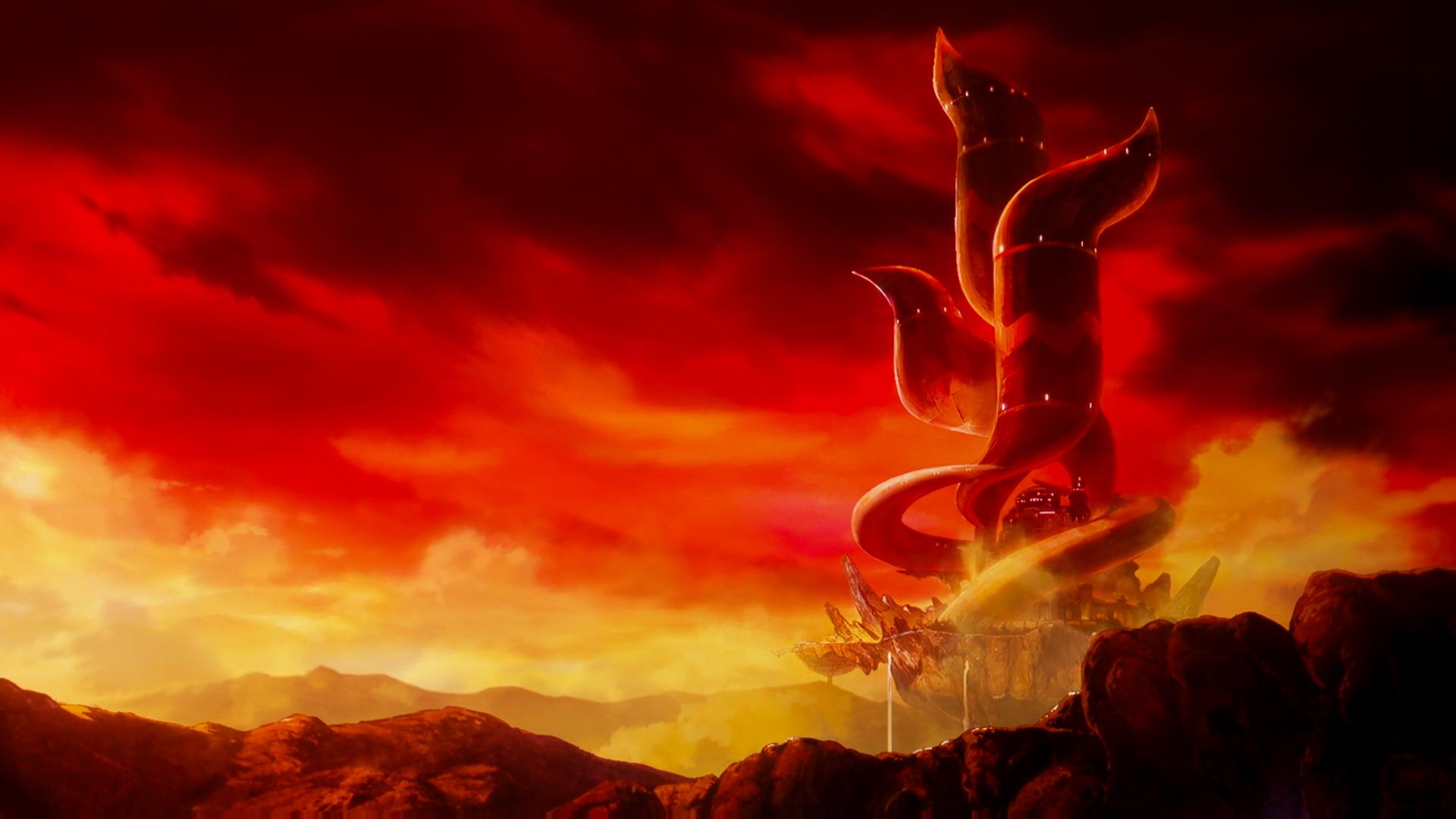
For decades, the “Demon Realm” (Makai) existed on the periphery of official Dragon Ball lore—a shadowy realm occasionally referenced in canonical dialogue by the Supreme Kai, expanded upon in non-canon video game spin-offs like Super Dragon Ball Heroes and Xenoverse, and embodied by the villainous Dabura. In the premiere of Daima, Toriyama rips open the cosmological veil, positioning the Demon Realm not as a grim, monolithic underworld, but as a vibrant, bureaucratic, and eccentric mirror universe complete with its own bizarre caste systems, technological curiosities, and political intrigue.
King Gomah, Degesu, and the Specter of Majin Buu
The premiere cleverly anchors its inciting incident within the established continuity, directly following the apocalyptic dust-up with Majin Buu. We are introduced to King Gomah, the newly minted Supreme King of the Demon Realm, and his calculating aide, Degesu—who happens to be the younger brother of the Glind Supreme Kai Shin. Rather than framing these characters as terrifying omnipotent deities, Toriyama infuses them with his signature idiosyncratic charm: they are petty, paranoid administrators watching VHS-style recordings of Goku’s triumphant Spirit Bomb over Buu with dropped jaws and cold sweat.
Gomah’s preemptive strike against Earth isn’t driven by grand conquest, but by pure, unadulterated survivalist terror. In an inspired lore revelation, we learn that the Demon Realm possesses its own distinct set of Dragon Balls, guarded by enigmatic beings known as the Tamagami and crafted by an ancient Namekian named Neva. By leveraging these dark orbs, Gomah makes the fateful wish that sets the narrative engine in motion: turning Goku, Vegeta, and the entire Earth defense contingent into miniature versions of themselves.
Reclaiming the Wonder: Why Turning “Mini” Reinvents Goku’s Combat Sandbox
When Toei Animation first revealed that Goku and company would be de-aged, a vocal subset of the fandom voiced immediate skepticism, drawing uncharitable parallels to the infamous setup of 1996’s Dragon Ball GT. However, Daima executes this trope with vastly different artistic intentions. This is not a regressive gimmick meant to sideline the supporting cast; it is a calculated mechanical reset intended to rescue the franchise from its own exhausting, multi-versal power escalation.
Power Creep Recalibration and the Nostalgic Return of the Nyoibo
Over the last decade, Dragon Ball Super pushed combat thresholds into the realm of the conceptual: Ultra Instinct, Ultra Ego, divine ki, and universe-shattering shockwaves. In doing so, the series inadvertently sacrificed the visceral, ground-level martial arts that defined classic Dragon Ball. By condensing Goku’s anatomical frame, Daima dramatically contracts his center of gravity, physical reach, and kinetic leverage.
The premiere delights in showing Goku testing his newly miniaturized form. When punches lack their familiar reach and physical momentum feels foreign, the solution is pure, distilled nostalgia: the return of the Nyoibo (the Power Pole). By dusting off Goku’s quintessential magical staff, Toriyama effectively resets the combat sandbox to favor agility, spacing, environmental weapon play, and orthodox choreography over generic energy beam volleys. It is a brilliant design pivot that honors martial arts fundamentals while allowing dynamic hand-to-hand combat to take center stage once more.
A Masterclass in Movement: Toei Animation’s Peak Production Values
It is impossible to discuss the Dragon Ball Daima premiere without marveling at its staggering technical pedigree. Unlike the famously troubled, rushed pre-production cycle that plagued early episodes of Dragon Ball Super in 2015, Daima benefits from an industry-leading schedule, deliberate creative direction, and an absolute murder’s row of animators assembled under directors Yoshitaka Yashima and Aya Komaki.
The Kinetic Legacy of Katsuyoshi Nakatsuru and Dynamic 2D Craftsmanship
Character designs provided by veteran animator Katsuyoshi Nakatsuru capture the rounded, warm, and volumetric aesthetic of Toriyama’s peak 1990s manga tankobon covers. The visual direction rejects flat digital compositing in favor of rich, hand-painted backgrounds, expressive facial squash-and-stretch, and remarkably fluid frame rates. The sequence recounting the Buu saga is entirely re-animated with modern theatrical fidelity, showcasing a level of linework density and weight that feels akin to a high-budget feature film.
This cinematic polish ensures that even mundane exposition—like Gomah and Degesu bickering over ancient scrolls—remains visually engaging. When movement explodes onto the screen, it carries genuine physical impact, tactile weight, and camera dynamism that proves Toei treats Daima not as serialized television filler, but as an irreplaceable monument to the medium’s most influential creator.
The Swansong of a Legend: Honoring 40 Years of Saiyan History
What elevates Dragon Ball Daima beyond mere fan service is the unmistakable authorial fingerprint of Akira Toriyama across every frame. Toriyama was famously hands-off with various past adaptations, but on Daima, he penned the overarching story, conceptualized the intricate lore of the Demon Realm’s three separate worlds, and personally designed the cast, including newcomers Glorio and Masked Majin.
The premiere functions as a philosophical return to the roots of Journey to the West. It remembers that at its core, Dragon Ball is not about apocalyptic dread; it is about wanderlust, the thrill of setting foot into unknown territories, and the unyielding joy of testing one’s limits against the unexpected. Toriyama’s narrative voice—dry, humorous, deeply whimsical, yet ruthlessly sharp during critical character beats—pervades the entire episode. Watching Goku enthusiastically devour a feast before gearing up for a rescue mission into the Demon Realm reminds us why the world fell in love with this franchise in the first place.
The Verdict: An Essential Journey Begins
The premiere of Dragon Ball Daima is a masterstroke of tone, reverence, and visual elegance. By daring to slow down, dismantle excessive power scaling, and journey into uncharted cosmological territory, the series promises a rich, character-driven odyssey that bridges the innocence of the 1984 original with the high-octane pedigree of the modern era. Akira Toriyama left us with one final, dazzling adventure—and if this opening chapter is any indication, the road through the Demon Realm will be an unforgettable farewell.
What were your favorite moments from the Dragon Ball Daima premiere? Do you think the lore of the Demon Realm will reshape franchise canon permanently? Let your voice be heard in the comments below, and stay tuned to Wibux.com for weekly episodic breakdowns, theories, and deep dives!