



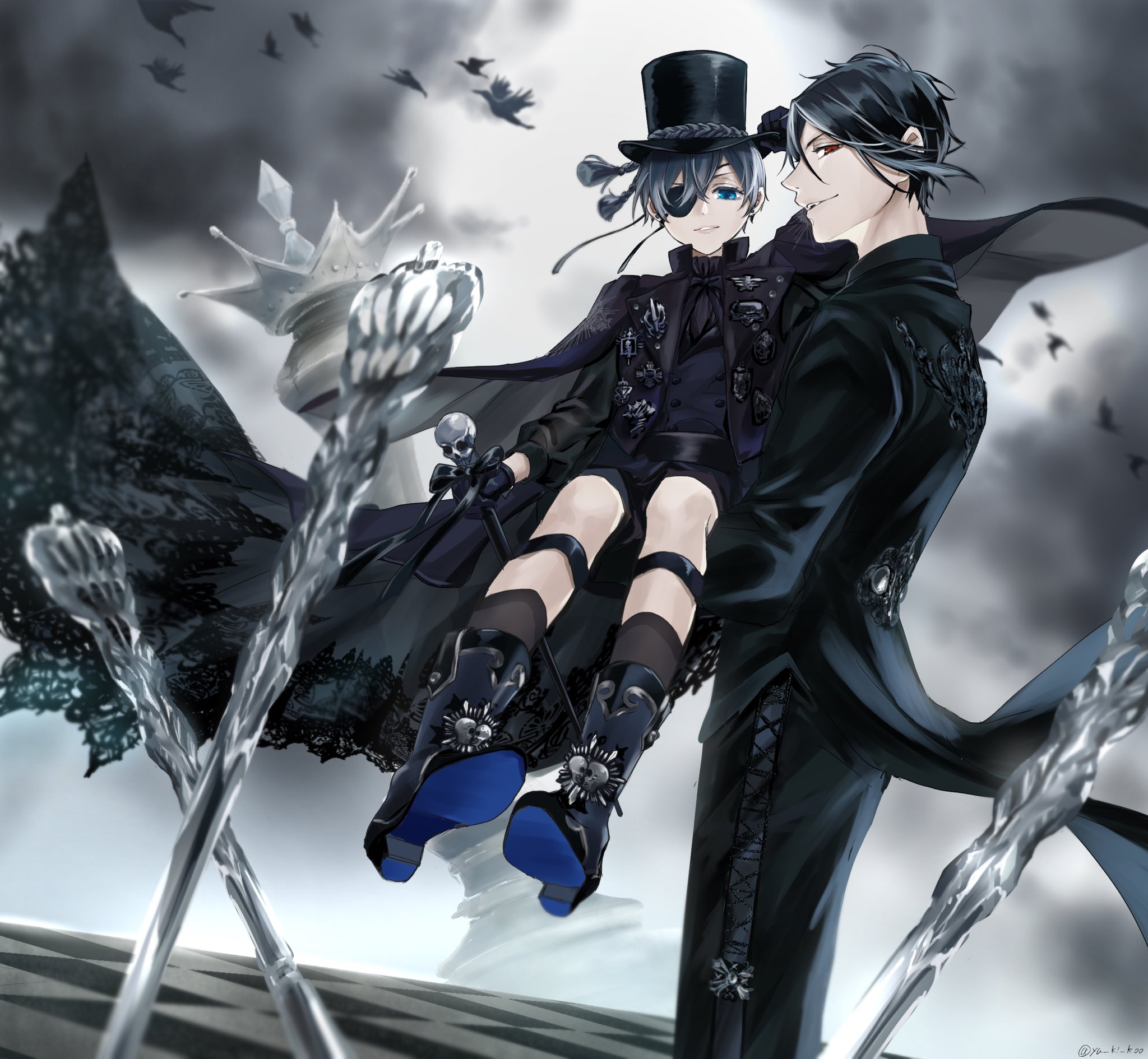
For more than a decade and a half, Yana Toboso’s Black Butler (Kuroshitsuji) has sustained one of the most uniquely resilient legacies in modern anime. What began in the late 2000s as a decadent, gothic melodrama burdened by divergence from its source material has undergone a quiet, methodical renaissance. Following the pristine critical triumph of CloverWorks’ adaptation of the Public School Arc, the franchise has officially crossed the Rubicon. The long-rumored, fiercely championed Emerald Witch Arc has been confirmed for screen adaptation, thrusting Queen Victoria’s loyal watchdog and his demonic butler into the mist-choked, folkloric terrors of nineteenth-century Germany.
For longtime readers of the manga, this announcement represents far more than just another serialized mystery. The Emerald Witch Arc (spanning chapters 86 to 107) marks a seismic structural pivot in Toboso’s sprawling narrative. By discarding the manicured lawns of Weston College and the opulent parlors of Victorian high society in favor of Germanic folk horror and supernatural miasma, the story exposes the absolute darkest facets of Ciel Phantomhive’s fractured psyche. It is an arc defined by lycanthropy, isolation, and a devastating collision between medieval superstition and modern industrial atrocity.
Venturing Beyond Victoria’s Realm: The Curse of the Werewolves’ Forest
The narrative foundation of the Emerald Witch Arc marks a deliberate disruption of the series’ domestic comfort zone. At the behest of Queen Victoria, Ciel Phantomhive and Sebastian Michaelis are dispatched across the English Channel to southern Germany. Their mission centers on an isolated, superstition-laden woodland known ominously as the Wolfsschlucht (the Werewolves’ Forest). Local whispers speak of trespassers dropping dead without a mark on their skin, their flesh cursed and their lives stolen by spectral, towering beasts that guard an archaic settlement hidden from the march of time.
From the moment the Phantomhive retinue—unusually bolstered by the full domestic household, including Baldroy, Mey-Rin, and Finnian—sets foot beneath the suffocating canopy, CloverWorks faces an alluring aesthetic challenge. Where the Public School Arc dazzled through pastel-tinged cricket matches and symmetrical British neo-gothic architecture, this production demands an atmospheric descent into pure European folk horror. Dense fog, twisted timber, and the chilling iconography of German fairytales replace silver tea sets and velvet waistcoats, immediately signaling to audiences that the rules of London society no longer apply.
Sieglinde Sullivan: The Tragic Genius Behind the Green Witchcraft
At the beating heart of this narrative lies one of Toboso’s most complex and heartbreaking creations: Sieglinde Sullivan, the titular Emerald Witch. Revering ancient customs, the isolated villagers regard this diminutive, sharp-tongued child as their spiritual protector, claiming her dark sorcery shields them from the wrath of the werewolves roaming the perimeter.
Sieglinde is a masterclass in subverted archetypes. Visually defined by her ornate, archaic mourning dress and her physically crippling custom of bound feet—an agonizing practice imposed to ensure she cannot abandon her sacred duties—she initially presents as an arrogant, sheltered sorceress. Yet, underneath the theatricality of her incantations lies a mind of staggering scientific brilliance, starved of genuine human warmth and brutally manipulated by those she trusts most.
The Shadow of Wolfram Gelber
Flanking Sullivan is her imposing, stoic butler and protector, Wolfram Gelber. Serving as a deliberate narrative foil to Sebastian Michaelis, Wolfram’s dynamic with Sieglinde provides an emotional anchor that directly challenges the transactional, predatory contract binding Ciel and Sebastian. Wolfram is rough, deeply conflicted, and burdened by a conscience—a stark divergence from Sebastian’s polished, monstrous efficiency that prompts uncomfortable psychological comparisons as the mystery unravels.
Deconstructing the Supernatural: Industrial Warfare Disguised as Myth
What elevates the Emerald Witch Arc from an atmospheric diversion into a towering masterpiece of thematic fiction is its devastating mid-point revelation. Without stripping away the story’s inherent occult underpinnings, Toboso pulls off an astonishing genre deconstruction. The “curse” turning travelers into breathless corpses is not demonic malice, nor are the werewolves spectral phantoms from Teutonic lore.
Instead, the narrative exposes the horrifying dawn of modern chemical warfare. The so-called witchcraft practiced by Sieglinde is revealed to be a carefully orchestrated military conspiracy designed to harness the girl’s extraordinary chemical genius to synthesize early prototypes of nerve gas—an unsettling precursor to the industrial horrors of World War I. The horrifying yellow-green miasma is not magical vengeance, but the calculated, weaponized suffocation of humanity.
By framing early chemical weaponry through the lens of medieval witchcraft, the narrative draws a profound thematic parallel between feudal superstition and the amoral march of imperial progress. Ciel and Sebastian find themselves trapped not between Heaven and Hell, but caught in the gears of military-industrial greed that views human lives as disposable collateral.
The Shattered Aristocrat: Ciel’s Deepest Psychological Collapse
Perhaps the most eagerly anticipated aspect of this adaptation is the rare, agonizing vulnerability it demands from Ciel Phantomhive. After inhaling a non-lethal dose of the synthetic miasma, Ciel undergoes a catastrophic psychological unraveling. The calculated, vengeful persona of the Queen’s Watchdog shatters entirely, plunging him into a protracted episode of severe post-traumatic stress.
In this vulnerable state, Ciel regresses into the terrified, violated child he was before sealing his Faustian pact. He rejects Sebastian with unbridled terror, curling into the protective, uncritical warmth of Finnian while violently weeping in the dark. For fans who have watched Ciel maintain his cold, aristocratic mask across hundreds of chapters, this descent is deeply harrowing.
Simultaneously, this regression strains the demonic contract to its breaking point. Sebastian is neither a compassionate guardian nor a surrogate father; he is an ancient predator waiting for a feast. Confronted with a broken, pathetic master incapable of fulfilling his oath of vengeance, Sebastian’s patience curdles into predatory contempt. The sheer tension of Sebastian standing over a shattered Ciel, contemplating whether to simply cut his losses and devour the boy’s soul prematurely, remains one of the most electrically charged confrontations in the entire franchise.
CloverWorks’ Gothic Pedigree and Fandom Reverence
The confirmation of CloverWorks continuing their stewardship of the franchise has been met with near-universal relief throughout the anime community. The studio demonstrated with the Weston College adaptation that they fundamentally respect Yana Toboso’s decadent line-work, historical tailoring, and deliberate narrative pacing. The production prioritized manga fidelity, successfully cleansing the palate of the anime-original divergences that muddied the waters of the series’ early seasons.
Adapting the Emerald Witch Arc requires an elevated sensory canvas. The sound design must balance the claustrophobic dread of rustling woods and unearthly wolf howls with the jarring, metallic dread of industrial sabotage. If early visual teases and CloverWorks’ recent artistic momentum are any indication, the upcoming season will deliver a visual feast that embraces both the romanticized beauty of gothic fiction and the visceral body horror native to Toboso’s artwork.
A Turning Point for the Phantomhive Legacy
The Emerald Witch Arc is not a self-contained detour; it is the linchpin that accelerates Black Butler toward its dramatic endgame. The geopolitical fallout, the introduction of Sieglinde Sullivan into London’s wider aristocratic circles, and the fractures left in Ciel’s relationship with Sebastian irrevocably alter the trajectory of the series, setting up the devastating revelations of the subsequent Blue Cult Arc.
As Ciel and Sebastian prepare to traverse the cursed paths of the Wolfsschlucht, anime-only viewers and veteran manga readers alike are poised for an unforgettable adaptation of the series’ darkest hour. Are you ready to witness the fall of the Queen’s Watchdog and the terrifying truths lurking within the Emerald Witch’s domain? Share your theories and reactions in the comments below, and stay tuned to Wibux.com for exclusive breakdowns as production updates emerge.