
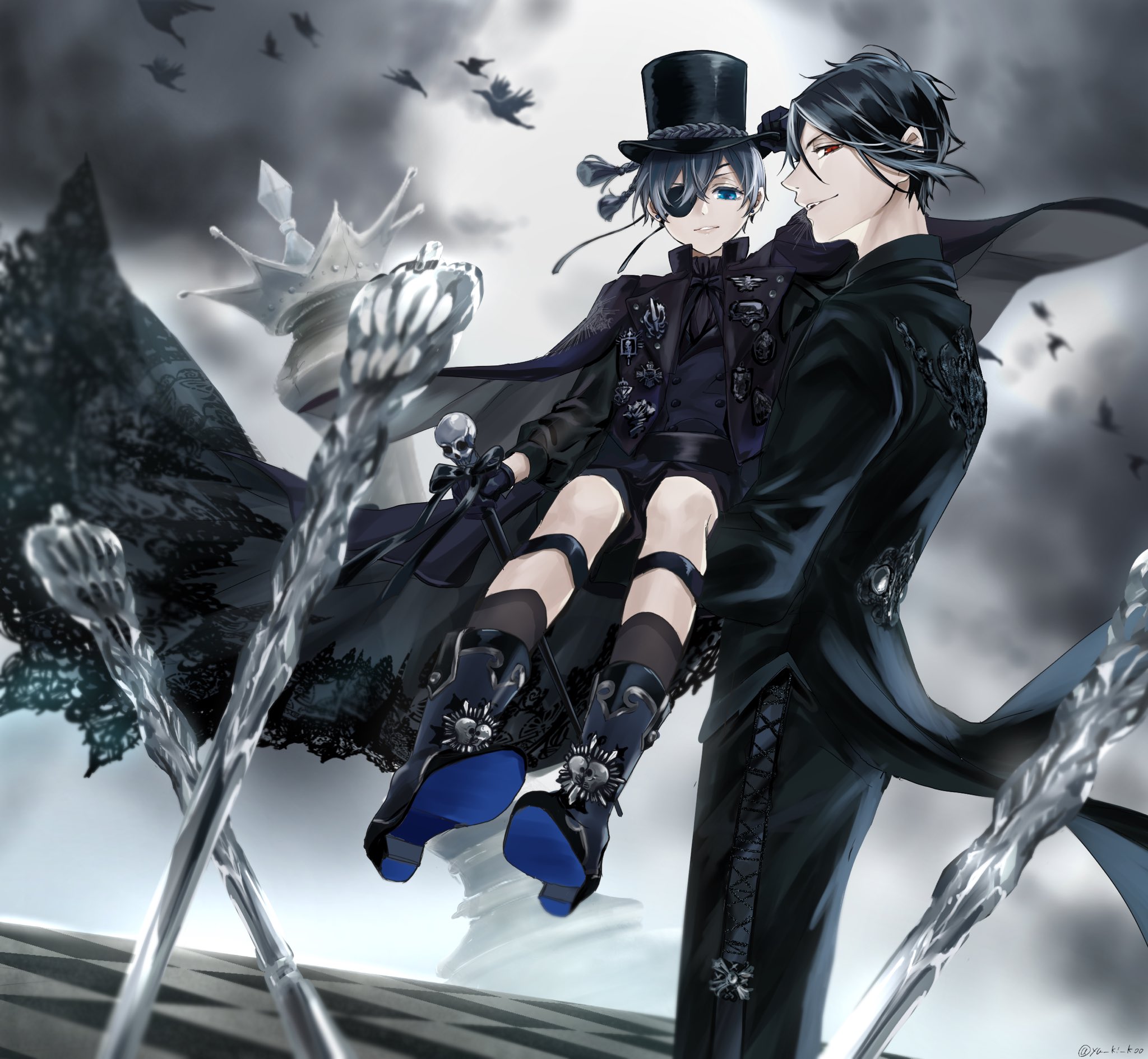
For nearly two decades, Yana Toboso’s Black Butler (Kuroshitsuji) has performed a delicate, razor-sharp waltz along the razor’s edge of gothic opulence and existential dread. What began in 2006 as a stylish supernatural manga about an orphaned Earl and his demonic servant has quietly evolved into one of the most meticulously researched, psychologically cruel period dramas in contemporary animanga. Following the critically praised and visually revitalized return of the series under CloverWorks with the Public School Arc, fans barely had time to catch their collective breath before the production committee dropped an absolute bombshell: the adaptation of the legendary Emerald Witch Arc is officially confirmed.
For longtime readers of the manga, this announcement carries monumental weight. The Emerald Witch Arc (known natively as the Midori no Majo-hen) is not merely another episodic mystery for Queen Victoria’s Watchdog. It represents a watershed moment in the narrative—a claustrophobic descent into Germanic folklore that strips Ciel Phantomhive of his aristocratic armor, exposes the fragile architecture of his trauma, and reframes the series’ supernatural conceits through the horrific lens of early industrial warfare. The fog of Victorian London is about to be replaced by the poisoned canopy of the Hexenwald, and the implications for the anime’s trajectory are staggering.
The Werewolf’s Curse: Gothic Folklore Meets Industrial Terror
The premise of the arc immediately disrupts the aristocratic comfort zones of earlier storylines. Dispatched by Her Majesty Queen Victoria to investigate a string of inexplicable, grotesque deaths in southern Germany, Ciel and Sebastian venture into a remote, myth-shrouded woodland known as the Werewolves’ Forest. Legend dictates that any outsider who enters will fall victim to a localized curse that rots the flesh, melts the lungs, and leaves victims either dead or violently deformed at the claws of ancient lycanthropes.
What makes this narrative trajectory so intoxicating is Toboso’s signature subversion of European superstition. Where lesser narratives would settle for conventional monster-hunting tropes, Black Butler constructs a labyrinthine mystery that interrogates the collision of medieval terror and modern depravity.
The Deceptive Myth of the Hexenwald
Upon breaching the fog-drenched perimeter of the forest, the Phantomhive retinue discovers an isolated settlement frozen in the sixteenth century: the village of Wolfsschlucht. Here, the populace lives under the absolute rule and protection of the “Emerald Witch,” a disabled young girl named Sieglinde Sullivan. The visual juxtaposition is classic Toboso—charming alpine cottages and traditional Germanic garb juxtaposed against lurking shadows, silent sentinels, and an omnipresent, suffocating dread. The narrative masterfully manipulates the viewer’s expectations: are these villagers victims of an ancient pagan reality, or participants in an elaborate, sinister masquerade?
Sieglinde Sullivan: The Tragic Genius of Wolfsschlucht
At the center of this narrative hurricane stands Sieglinde Sullivan, one of the most complex, tragic figures ever penned by Toboso. Introduced as a diminutive genius whose legs were deliberately crippled through the archaic practice of foot-binding to prevent her from fleeing her divine duty, Sieglinde acts as the spiritual matriarch and alchemical prodigy of the village. Flanked by her imposing, intensely protective butler Wolfram Gelzer, she commands ancient incantations to hold the vengeful forest beasts at bay.
Yet, the thematic core of the Emerald Witch Arc is the exploration of stolen childhoods. Sieglinde is an uncanny, painful mirror to Ciel Phantomhive. Both are intellectual savants burdened with adult authority far beyond their years; both are fundamentally trapped by the institutions and legacies that raised them; and both are isolated by their absolute reliance on a singular protector. However, while Ciel chose his damnation with open eyes and a thirst for vengeance, Sieglinde’s imprisonment is built upon an architecture of profound innocence and generational gaslighting. Her dawning realization of the truth behind the “curse” provides the emotional and moral backbone of the entire storyline.
The Real-World Horror Behind the Demon Miasma
Without wandering into reckless spoiler territory for anime-only viewers, the brilliance of the Emerald Witch Arc lies in how it bridges Victorian fantasy with the grim dawn of twentieth-century reality. The “flesh-rotting miasma” of the cursed forest is not merely demonic magic—it is an ominous precursor to modern chemical warfare. Toboso’s narrative functions as an incisive critique of military-industrial greed, patriarchal exploitation of female intellect, and the horrific pragmatism of nation-states that will gleefully weaponize both myth and science to secure geopolitical dominance.
Shattering the Earl: Psychological Collapse and the Faustian Abyss
While the broader political intrigue is riveting, the ultimate draw of the Emerald Witch Arc is its devastating deconstruction of Ciel Phantomhive. For years, audiences have watched Ciel maintain an icy, unflinching veneer of cynical maturity, navigating underworld syndicates, blood cults, and demonic contracts without breaking stride. In the Hexenwald, that facade is obliterated.
Exposed to the forest’s virulent environmental toxins, Ciel undergoes a violent physical and psychological breakdown. Trapped within hallucinations of his own past trauma—the horrific night of his family’s slaughter and his subsequent subjugation by an occult ring—Ciel regresses into a helpless, terrified child. He rejects his identity as the Queen’s Watchdog, repudiates his noble pride, and retreats into catatonic dread, relying entirely on his maid Mey-Rin and cook Baldroy to keep him anchored to reality.
Sebastian Michaelis: The Monster Unveiled
It is in this crucible that the true nature of Sebastian Michaelis resurfaces with chilling clarity. Stripped of the witty, romanticized banter of their daily dynamic, Sebastian’s fundamental nature as an immortal, predatory demon takes center stage. A broken, terrified, cowardly soul is an unpalatable meal to him; if Ciel ceases to be the relentless, revenge-driven master who commands him, the Faustian contract loses its worth.
The tension during this arc does not merely stem from external monsters or military conspiracies—it comes from the terrifying uncertainty of whether Sebastian will maintain his role as an impeccable butler, or simply snap his fingers, devour the shell of his broken master, and end the journey prematurely. It is the darkest, most psychologically claustrophobic character dynamic Black Butler has ever staged.
CloverWorks’ Aesthetic Challenge: From Westminster to the Woods
The confirmation that CloverWorks will continue handling the adaptation is a massive victory for fans. The studio proved its mettle with the Public School Arc, delivering razor-sharp compositing, dynamic character modeling, and an extraordinary fidelity to Toboso’s hyper-detailed period costuming. However, the Emerald Witch Arc demands a radically different visual and auditory language.
Where the Weston College storyline leaned into bright, sun-drenched cricket fields, immaculate school uniforms, and manicured Victorian lawns, the Hexenwald requires an oppressive, suffocating atmosphere. CloverWorks will need to balance deep, ink-stained shadows with the toxic, luminous green of the forest’s chemical haze. The kinetic horror of the werewolves—grotesque, towering, and relentless—will test the studio’s action choreography, while the surrealist nightmare sequences detailing Ciel’s fractured psyche offer room for avant-garde, expressionistic visual direction.
Furthermore, sound design will be paramount. The haunting silence of an ancient Bavarian wood, broken only by the rattle of gas masks, the distant baying of beasts, and the chilling hum of early industrialized science, must convey an overwhelming sense of dread. If their recent efforts are any indication, CloverWorks is primed to deliver a masterclass in gothic survival horror.
The Watchdog’s Bleakest Hour
The confirmation of the Emerald Witch Arc solidifies what is increasingly undeniable: Black Butler is undergoing one of the most triumphant canonical revitalizations in modern anime history. By shedding the fragmented filler legacies of its late-2000s adaptations and committing strictly to Toboso’s overarching manga narrative, the series is finally allowing international audiences to experience its absolute peak storytelling.
This is not a tale of whimsical aristocratic escapades or theatrical parlor tricks. The Emerald Witch Arc is an unflinching, emotionally brutal examination of trauma, weaponized childhood, and the chilling monstrosity of mankind’s technological ambition. Ciel Phantomhive and Sebastian Michaelis are walking into their deepest nightmare yet—and when they emerge from the cursed woods, neither the characters nor the audience will ever see the Queen’s Watchdog the same way again.
Are you prepared to enter the Hexenwald? Which moment from the manga’s most harrowing arc are you most desperate to see animated by CloverWorks? Let us know in the comments below, and stay tuned to Wibux.com for all your frontline anime news, thematic deep dives, and analysis!