


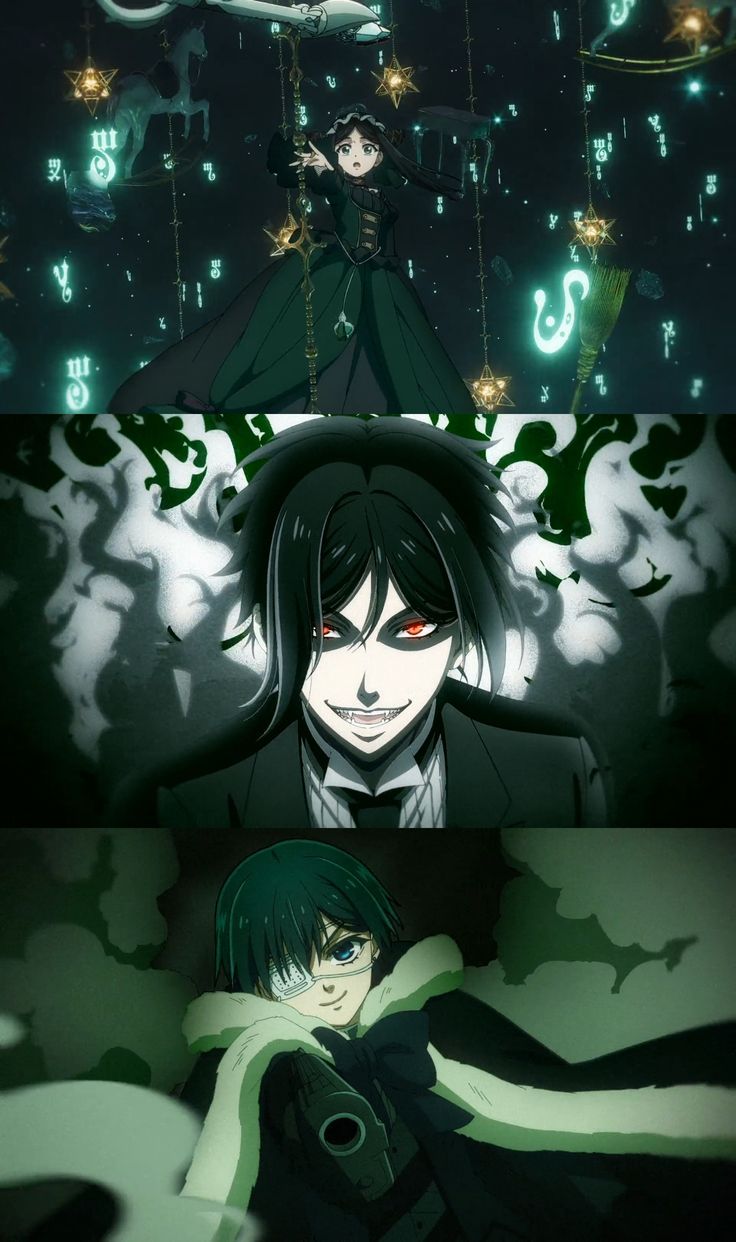
The gothic renaissance of Yana Toboso’s magnum opus is no longer a fleeting nostalgia trip—it is an undeniable, full-throttle resurrection. Following the stylistic triumph of the Public School Arc, Aniplex and studio CloverWorks delivered the revelation fans have held their breath for across an entire decade: the Emerald Witch Arc is officially slated for television adaptation. For readers of the manga, this announcement represents far more than just another checklist entry in the Phantomhive dossier. It signifies the adaptation of the narrative’s darkest, most philosophically intricate, and visually harrowing pivot—an arc where folkloric superstition collides violently with modern military horror.
Transporting the Queen’s Watchdog and his diabolical butler out of the manicured, pastel-hued courtyards of Weston College, the Emerald Witch Arc thrusts the narrative deep into the mist-choked, claustrophobic expanse of southern Germany. Here, the series sheds its episodic aristocratic posturing and plunges headlong into pure psychological terror, occult conspiracy, and visceral body horror.
Beyond the Classroom: Stepping Into the Gothic Abyss of the Wolfsschlucht
On paper, Ciel Phantomhive’s assignment appears to be an eerie detour into classical European mythology. Rumors reach Queen Victoria of the Wolfsschlucht—the Werewolves’ Forest—a secluded German woodland where trespassers are struck down by an ancient, rotting curse that rots their flesh and dissolves their sanity. Villagers whisper of monstrous, bipedal beasts stalking the canopy and an elusive, supernatural matriarch known solely as the Emerald Witch.
Yet, as Toboso’s storytelling consistently dictates, the supernatural is rarely what it seems, and monsters seldom require fangs to inflict catastrophic devastation. The genius of this arc lies within its brilliant structural subversion of classic Grimm-style fairy tales. Where earlier arcs played with the romanticism of Jack the Ripper or the opulent tragedy of the RMS Titanic, the Emerald Witch narrative operates as an uncompromising indictment of nineteenth-century militarism and imperialist deception.
The Illusion of Lycanthropy and the Dawn of Industrial Warfare
Without veering into excessive narrative spoilers for anime-only viewers, the true terror haunting the cursed forest has far less to do with lunar cycles and far more to do with the clandestine birth of chemical warfare. The “miasma” that melts the skin of wandering travelers is a devastating harbinger of early mustard and nerve agents—a chillingly grounded historical parallel that bridges Victorian superstition with the industrial butcheries of the approaching 20th century. By cloaking modern chemical devastation in the theatrical robes of witchcraft, the narrative strips away Ciel’s usual aristocratic safety nets. Against mustard gas and airborne neurotoxins, an exquisite silver cutlery set and demonic speed can only offer so much protection.
Sieglinde Sullivan: The Tragic Parallel to Ciel Phantomhive
At the beating heart of this macabre fairy tale stands Sieglinde Sullivan, the titular Emerald Witch. Physically minute, possessing a transcendent intellect, and bound by the archaic, agonizing practice of foot-binding, Sieglinde is introduced as the cloistered, revered ruler of her archaic village. She is an absolute triumph of character writing: simultaneously an ancient, authoritative crone by virtue of her theological role, and a desperately sheltered young girl completely ignorant of the outside world, sexuality, or the basic mechanics of human agency.
Her dynamic with Ciel Phantomhive serves as the arc’s primary emotional anchor. Sieglinde is not merely an asset to be recovered or an antagonist to be dismantled; she is Ciel’s dark mirror. Both are prepubescent prodigies whose childhoods were forcibly amputated on the altar of adult ambition. Both bear the excruciating physical and psychological burdens of carrying legacies engineered by manipulative benefactors.
Wolfram Gelz and the Mechanics of Manufactured Divinity
Standing beside Sieglinde is her monolithic butler and protector, Wolfram Gelz. Functioning as the terrestrial, imperfect foil to Sebastian Michaelis, Wolfram’s relationship with his young mistress is steeped in heavy guilt, unspoken duty, and profound affection. Where Sebastian’s loyalty is fundamentally transactional—a demonic apex predator patiently marinading his meal—Wolfram’s servitude is excruciatingly human, tethered to a soul-crushing moral dilemma that unravels steadily as Ciel and Sebastian puncture the village’s veil of divine deceit.
Psychological Fractures: When the Demon Butler Loses His Grip
For over fifteen years, the power fantasy at the core of Black Butler has rested comfortably on Sebastian Michaelis’s unfathomable, unflappable perfection. Sebastian solves the impossible; Sebastian parries bullets; Sebastian prepares Earl Grey at an exact temperature while snapping the necks of assassins. The Emerald Witch Arc permanently shatters that comfort zone.
When Ciel falls victim to the forest’s neurotoxic miasma, the resulting psychological collapse is the most profound regression the young Earl has suffered since the series’ inception. The airborne toxins strip away Ciel’s calculated stoicism, triggering a volcanic relapse of post-traumatic stress disorder rooted in the cult rituals of his childhood. He is reduced to a weeping, hyperventilating child clawing at his sheets in terror—blindly rejecting Sebastian’s touch, terrified of the demon who saved him only to eventually consume him.
The Faustian Contract on the Edge of Dissolution
This psychological severance creates unprecedented narrative friction between master and servant. Sebastian’s Faustian contract is bound by Ciel’s absolute, unwavering resolve for vengeance. When Ciel regresses into catatonia, that resolve evaporates, effectively threatening the validity of their pact. For the first time, audiences witness a Sebastian who is openly frustrated, cold, and calculatingly sinister—reminding viewers that beneath the immaculate tailcoat lies an ancient, amoral abomination whose patience is neither endless nor compassionate. The domestic interactions inside the Sullivan manor, featuring a frantic Phantomhive servant squad desperately attempting to shield their fractured master, provide some of the rawest emotional stakes in the franchise.
CloverWorks’ Visual Renaissance: Crafting Supernatural Grimdark
When CloverWorks inherited the franchise for the Public School Arc, critics universally lauded the studio’s luminous character designs, fluid choreography, and faithful preservation of Toboso’s delicate linework. However, the Emerald Witch Arc demands an entirely different visual grammar. The polished, ivory-and-gold prestige of public school cricket pitches must give way to damp Bavarian moss, rusted iron cauldrons, grotesque gas-mask silhouettes, and suffocating, chloropicrin-tinted emerald vapors.
Industry insiders anticipate that CloverWorks will lean aggressively into horror-adjacent direction, deploying dynamic lighting to accentuate Sebastian’s crimson eyes piercing through dense, bioluminescent forest fogs. Furthermore, the action sequences in this arc are notoriously frantic and kinetic, demanding high-level composite work to balance heavy period artillery against Sebastian’s supernatural, physics-defying acrobatics. If their recent work is any indication, CloverWorks has the pedigree to elevate this dark gothic chapter into the most visually ambitious anime release of its respective year.
The Verdict: A Watershed Moment for Modern Kuroshitsuji
The confirmation of the Emerald Witch Arc is more than an answered prayer for manga purists—it is the definitive turning point that sets the stage for the catastrophic, franchise-altering revelations of the Blue Cult Arc and beyond. By venturing into the German wilderness, the series sheds any remaining vestiges of its early 2000s monster-of-the-week frivolity, permanently cementing its status as a mature, pitch-black psychological tragedy wrapped in historical grandeur.
As Sebastian Michaelis prepares to draw his silver once more beneath the cursed canopies of the Wolfsschlucht, one reality remains crystal clear: neither Ciel Phantomhive nor the audience will emerge from these woods unchanged.
Are you prepared to face the horrors of the Werewolves’ Forest, or is the miasma already taking hold? Let us know your favorite moments from the manga and your visual expectations for CloverWorks in the comments below!