
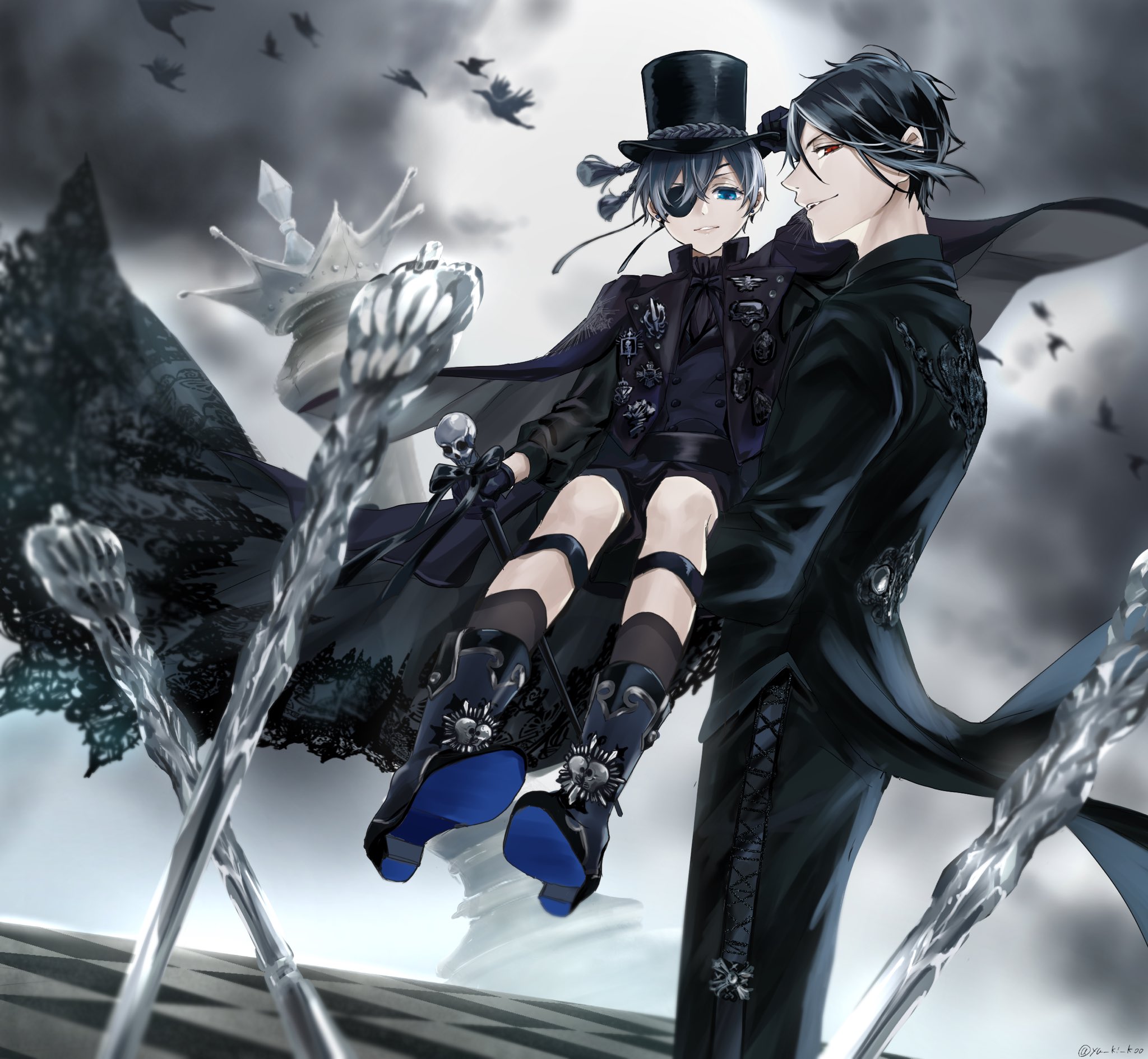
For more than a decade and a half, Yana Toboso’s Black Butler (Kuroshitsuji) has occupied a singular, ironclad throne within the gothic anime pantheon. When CloverWorks resurrected the franchise with the gorgeously produced Public School Arc in early 2024, it was more than just a nostalgic revival; it was an artistic reclamation of a canon long fractured by early filler diversions and disjointed cinematic releases. Now, the Victorian gears have turned once more. In an electrifying announcement that sent shockwaves through the global anime community, Aniplex and CloverWorks confirmed the adaptation of the manga’s undisputed narrative zenith: the Emerald Witch Arc (Midori no Majo-hen).
Slated to transport Earl Ciel Phantomhive and his infernal butler Sebastian Michaelis far beyond the cobblestone avenues of London, this upcoming chapter discards the academic politicking of Weston College in favor of claustrophobic, blood-drenched German folklore. Fans of the franchise have waited nearly ten years to see this specific storyline animated. Its confirmation is not merely another seasonal renewal—it represents the arrival of the most psychologically harrowing, historically complex, and visually ambitious arc in Black Butler history.
A Gothic Metamorphosis: Venturing into the Werewolves’ Cursed Forest
The Emerald Witch Arc fundamentally alters the series’ rhythm. Her Majesty Queen Victoria dispatches her young “Watchdog” across the English Channel to Southern Germany to investigate a succession of unexplained, grotesque deaths. British subjects and German locals alike are turning up deceased without a scratch, their skin contorted and their lungs collapsed, ostensibly claimed by the supernatural miasma of the Wolfsschlucht (the Wolf’s Glen)—a secluded woodland whispered to be governed by werewolves and an ancient, immortal sorceress.
What Ciel and Sebastian discover inside this mist-choked expanse is a jarring transition from Victorian society drama to unadulterated European folk horror. In the deep thicket, the aristocratic rules that Ciel wields like a rapier fail him. The local villagers live in primitive, perpetual terror, subservient to a protective covenant that shields them from the ravenous lycanthropes prowling outside their borders. By swapping out grand manors for timber cabins, cobblestone for ancient roots, and polite society for ritualistic obedience, Toboso constructs an environment where even Sebastian’s supernatural infallibility feels alien and scrutinized.
The Grimms’ Fairy Tale Reality
Unlike the romanticized folklore often found in fantasy anime, the Emerald Witch Arc leans aggressively into the grotesque traditions of the Brothers Grimm. The werewolves here are not noble creatures of moonlight; they are towering, misshapen horrors draped in ritualistic furs and mud, dispensing brutal violence. The forest is treated as a sentient, toxic entity, visually defined by towering pines, sickly pale flora, and an omnipresent green haze that signals immediate biological destruction. CloverWorks has a profound canvas here to push their visual direction into unsettling folk-horror surrealism.
The Genius in Shackles: Sieglinde Sullivan and Wolfram
At the beating heart of this nightmare sits one of the most brilliantly written figures in modern shonen/seinen storytelling: Sieglinde Sullivan, the Emerald Witch herself. A prepubescent prodigy who commands the esoteric arts and claims lordship over the cursed forest, Sieglinde immediately strikes a tragic and unnerving figure. Bound to an ornate wheelchair due to the archaic and agonizing custom of foot-binding—inflicted upon her to curb her mobility and preserve her status as a ritual sacrifice—she embodies an extreme manifestation of innocence perverted by ancestral duty.
Beside her stands Wolfram, her intimidating, fiercely loyal butler and lieutenant. Where Sebastian operates with theatrical, condescending elegance, Wolfram’s servitude is abrasive, human, and desperate. The dynamic between Sieglinde and Wolfram operates as a tragic, distorted mirror to Ciel and Sebastian:
Both Ciel and Sieglinde are hyper-intelligent children burdened with adult sovereignty, elevated to godhood by their respective domains, yet profoundly crippled by the systems that empower them. However, while Ciel chose his damnation in an act of furious vengeance, Sieglinde was manufactured into a living weapon by the very adults sworn to revere her. Watching Ciel confront a peer whose captive childhood parallels his own trauma constitutes some of the rawest psychological drama Toboso has ever penned.
Beyond the Supernatural: Industrial Warfare and the Birth of Modern Terror
To view the Emerald Witch Arc as merely a clash with werewolves and hexes is to misunderstand the subversive brilliance of Toboso’s world-building. Without venturing into terminal spoilers for anime-only viewers, this storyline serves as the historic turning point where Black Butler sheds its occult romanticism to expose the true monster of the nineteenth century: industrialized military science.
The “curse” of the forest, the supernatural miasma, and the inexplicable rot of flesh are ingeniously tied to the dawn of chemical warfare. This arc acts as a chilling, proto-World War I narrative, demonstrating how superstition was deliberately engineered and weaponized by geopolitical forces to conceal weapons of mass destruction—specifically prototypes of organophosphate nerve agents and blistering gases.
The Limits of Sebastian Michaelis
This thematic shift dramatically recalibrates Sebastian’s role. Throughout the series, the demon butler has easily dispatched occult cultists, renegade grim reapers, and aristocratic assassins. But how does an infernal entity combat the sheer, banal monstrosity of human chemical weapons? During their venture into the German wilderness, Sebastian is subjected to tactical vulnerability. More crucially, Ciel is exposed to an airborne neurotoxin that triggers a catastrophic, regressive PTSD episode, dragging the young Earl back to the blood-soaked altars of his early childhood abuse. For the first time, fans will witness Sebastian pushed to the brink of his contract, forced to deal with a broken master who can no longer articulate an order.
CloverWorks’ Gothic Ascendancy: Expectations and Production Value
The announcement that CloverWorks is retaining the mantle for the Emerald Witch Arc is music to fans’ ears. Their work on the Public School Arc proved that they understand the tactile, aesthetic weight of the source material. Where A-1 Pictures previously brought a clean, bright digital sheen to earlier seasons, CloverWorks introduced a cinematic, filmic texture—luxurious costume detailing, volumetric lighting, and a distinct appreciation for the manga’s intricate crosshatching.
For the Emerald Witch Arc, the studio faces an entirely different visual challenge:
The color palette must pivot from Weston College’s sunny cricket pitches and mahogany libraries to oppressive viridian greens, subterranean laboratory grays, and muddy sepia tones. Furthermore, the hallucinatory sequences induced by the poisonous forest gas require an avant-garde touch—blending psychological horror, distorted camera lenses, and body horror that borders on psychological thriller. With veteran voice actors Maaya Sakamoto (Ciel) and Daisuke Ono (Sebastian) reprising their iconic roles, the vocal performance for Ciel’s inevitable descent into delirium promises to be an absolute tour de force.
The Verdict: An Arc Destined to Redefine the Franchise
The confirmation of the Emerald Witch Arc is more than just another season crossed off a wishlist; it is the linchpin that binds the earlier, episodic gothic mysteries of Black Butler to the sprawling, apocalyptic master-plot that currently defines the manga. By intersecting Victorian folklore, the devastating reality of chemical warfare, and deep-seated childhood trauma, this arc stands as Yana Toboso’s magnum opus.
When the mist finally clears over the Wolfsschlucht, viewers will find that the monsters lurking among the German pines are not born of fairy tales, but of human ambition—and that even a demon’s grace struggles beneath the suffocating weight of modern malice.
Are you prepared to face the horrors of the Werewolves’ Forest? How do you think CloverWorks will handle the intense psychological shifts of this arc? Sound off in the comments below!