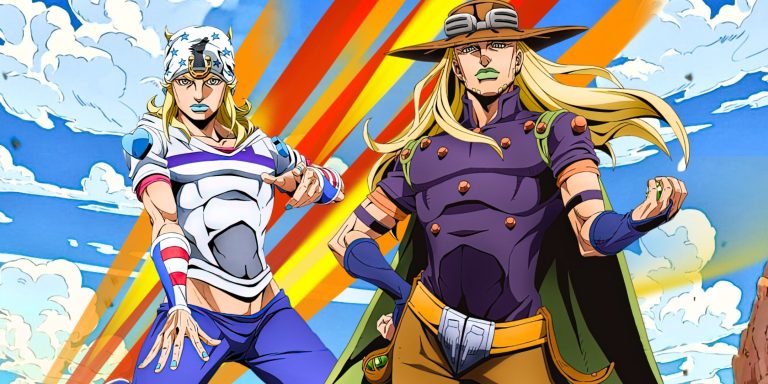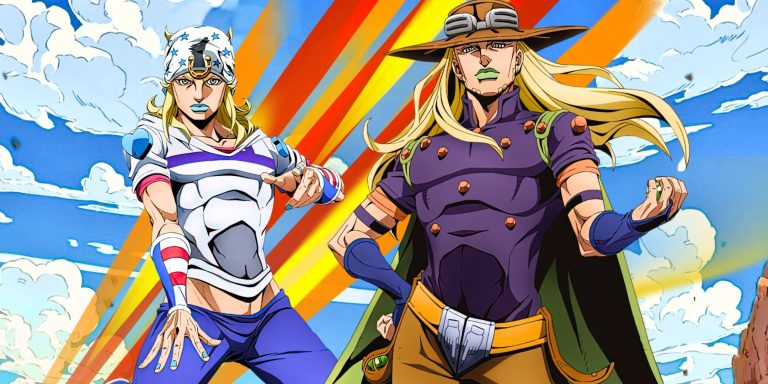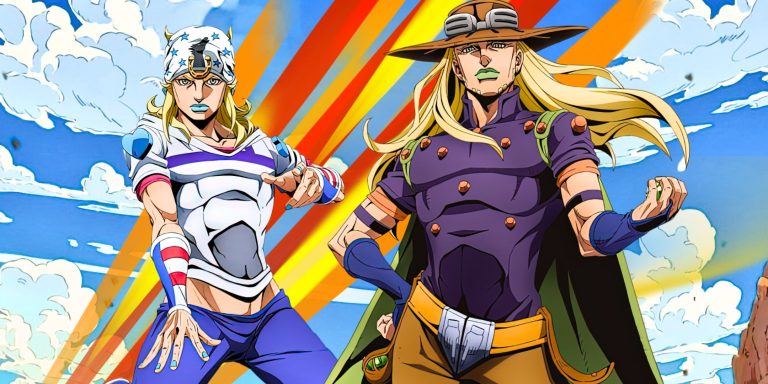
Ever since the melancholic, universe-resetting notes of Stone Ocean faded out, the anime community has lived in a perpetual state of breath-bated anticipation. For over a decade, David Production pulled off what was once deemed impossible: faithfully adapting the generational, genre-defying odyssey of Hirohiko Araki’s JoJo’s Bizarre Adventure. From the Victorian gothic horror of Phantom Blood to the neon-drenched Floridian prison yard of Jolyne Cujoh, the studio cemented JoJo as an untouchable pillar of contemporary pop-culture cool. Yet, throughout every multi-hued color palette shift and every iconic musical sting, a singular, almost mythic milestone loomed on the horizon: Steel Ball Run.
Widely celebrated by critics and manga purists as Araki’s undisputed magnum opus, Part 7 isn’t merely the next chapter in an anthology—it is a creative rebirth. Transporting audiences to a gritty, alternate 1890s America, it swaps the metropolitan claustrophobia of previous parts for the blistering expanse of a coast-to-coast equestrian race. As rumors swirl and production hushes descend upon David Production, the anime landscape finds itself bracing for an adaptation that promises to be both a transcendent artistic triumph and an unprecedented production challenge.
The Seinen Crucible: How Araki Redefined His Universe
To understand the sheer magnitude of the Steel Ball Run discourse, one must first recognize its pivotal place in manga history. In 2004, Araki began serializing Steel Ball Run in the pages of Weekly Shōnen Jump. However, midway through its run, the series made a legendary transition to Ultra Jump, Shueisha’s monthly seinen imprint. Free from the breakneck weekly release schedule and the demographic constraints of traditional teen magazines, Araki’s storytelling matured exponentially.
The result was a monumental, cinematic western that merged historical verisimilitude with supernatural grandeur. The Steel Ball Run race—spanning from the shores of San Diego to the streets of New York City—became a crucible of ambition, blood, and existential reckoning. Gone were the neatly drawn lines between righteous heroes and megalomaniacal villains. Instead, Araki populated this dusty, sun-scorched frontier with deeply broken human beings pursuing divine miracles.
A Clean Slate with Ancient Echoes
Narratively, Steel Ball Run stands as the apex of the franchise because it simultaneously functions as a completely accessible jumping-on point and a layered thematic reboot. It reimagines the legacy of the Joestar bloodline without the baggage of six generations of established lore, while maintaining the whimsical weirdness and hyper-stylized violence that define Araki’s DNA. This delicate balance makes the impending anime adaptation David Production’s ultimate ticket to crossover cultural ubiquity.
Broken Men and the Golden Spin: The Psychology of Johnny and Gyro
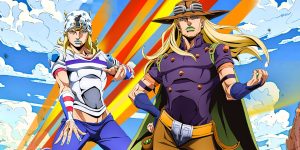
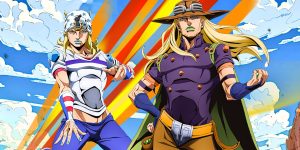
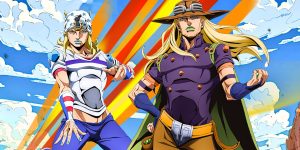
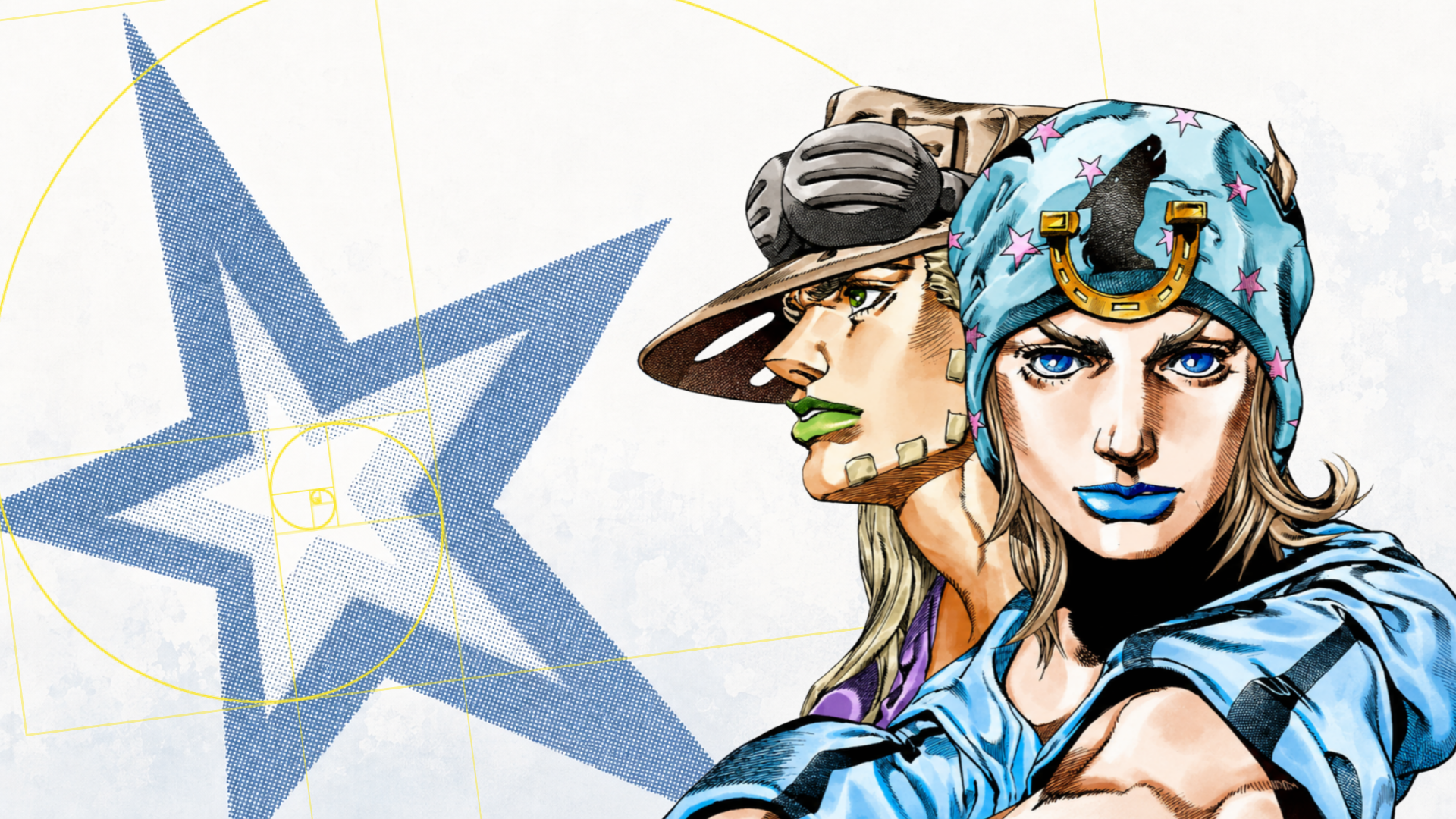
At the beating heart of this high-octane race is perhaps the most compelling duo in all of serialized fiction: Johnny Joestar and Gyro Zeppeli. Moving away from the stoic, chivalrous paradigms of Jonathan or the unyielding machismo of Jotaro, Johnny Joestar is an overtly flawed, bitter protagonist. Paralyzed from the waist down following a tragedy borne of his own arrogant hubris, Johnny begins the race not out of nobility or heroic duty, but out of a desperate, borderline-monomaniacal yearning to walk again.
Johnny’s psychology is fundamentally defined by what Araki terms “dark determination”—an icy, utilitarian willingness to kill or sacrifice his morality if it means regaining his dignity and sense of self. It is a startling, emotionally raw portrait of disability, trauma, and redemption rarely matched in the medium.
Counterbalancing Johnny’s brooding desperation is Gyro Zeppeli, a disgraced Neapolitan executioner’s son armed with twin steel orbs, bizarre puns, and an infectious, flamboyant charisma. Gyro enters the race not for personal glory, but to win the amnesty of a doomed, innocent child in his homeland. The dynamic between Johnny and Gyro anchors the entire narrative. Their fireside philosophical banter, petty squabbles, and gradual descent into brotherly devotion give the story its profound emotional resonance.
From Hamon to the Spin: A New Metaphysics
Beyond their complex bond, Part 7 radically reinvents the mechanics of combat. While Stands remain integral, they are grounded by the introduction of The Spin—an ancient Neapolitan martial art based on the mathematical beauty of the Fibonacci sequence and the Golden Ratio. Where Hamon was solar breathing and Stands were spiritual manifestations, the Spin is a cosmic force of nature. Translating this visual blend of sacred geometry, revolving iron spheres, and kinetic energy onto the screen will require a visual language entirely distinct from David Production’s previous JoJo efforts.
The Equestrian Nightmare: David Production’s Technical Crucible
Behind the fervor, however, lies an open secret in the anime industry: Steel Ball Run is universally regarded as an animator’s absolute worst nightmare. Horses are notoriously difficult to animate in hand-drawn 2D. Their complex musculoskeletal anatomy, four-legged galloping cadences, and dynamic weight shifts demand immense time and specialized technical expertise that modern seasonal production pipelines simply rarely afford.
When you amplify this baseline difficulty to include dozens of horses charging through mud, sand, and blizzards at 40 miles per hour—all while Stand users clash with gravity-defying powers atop their saddles—the logistical scale becomes staggering.
The 2D vs. 3D Dilemma
Industry observers and animators have long debated how David Production will surmount this hurdle:
- Full CGI Horse Integration: The most logistically viable route involves integrating high-end, cel-shaded 3D horse models, an approach popularized by studios like MAPPA (Attack on Titan) or Wit Studio (Vinland Saga). However, purists fear this could disrupt JoJo’s tactile, hyper-textured visual signature.
- Hybrid Keyframing: A more ambitious pipeline would see CGI models used for distant background choreography, with bespoke, hand-drawn 2D cuts utilized for tight camera angles, heroic charges, and close-quarters combat.
- Artistic Restyling: David Production has already proven its mettle with dynamic camera tracking and inventive compositing across parts 1 through 6. For Part 7, they will likely need to construct a custom production unit dedicated solely to equestrian physics and landscape visualization.
The studio’s prolonged silence since the conclusion of Part 6 is not a sign of abandonment, but rather of deliberate, meticulous preparation. Conquering the logistical dread of animating the trans-American sprint is the ultimate test of David Production’s pedigree.
The Saint’s Corpse and Funny Valentine: Stakes Beyond the Frontier
The narrative stakes of Steel Ball Run expand far beyond a simple athletic competition. As Johnny and Gyro cross the American heartland, they uncover the sinister, geopolitical agenda driving the race: the gathering of the dismembered mummified relics of the Saint’s Corpse, an artifact of unimaginable divine power that guarantees eternal prosperity to whichever nation possesses it.
At the center of this machination sits the 23rd President of the United States, Funny Valentine. Boasting the dimension-hopping Stand known as Dirty Deeds Done Dirt Cheap (D4C), Valentine stands as arguably the best-written antagonist in the entire JoJo canon. He is not a sociopathic vampire like Dio Brando or a paranoid serial killer like Yoshikage Kira; Valentine is driven by a terrifyingly pure, unyielding brand of hyper-nationalism. His twisted utilitarian philosophy forces the audience to question who truly holds moral superiority in the barren wastes of the frontier.
Verdict: The Horizon of a Masterpiece
The cultural buzz surrounding the Steel Ball Run anime is far more than garden-variety fan impatience; it is the collective acknowledgment that we are standing on the precipice of a definitive moment in modern animation. If David Production can navigate the minefield of equestrian animation, master the subtle psychological evolution of Johnny Joestar, and maintain the breathless pacing of Araki’s trans-continental epic, Part 7 will transcend seasonal hype to become a certified prestige masterpiece.
The track is laid, the horses are at the gate, and the Golden Ratio is spinning. When that starter pistol finally fires, the anime landscape will never be the same.
How do you think David Production should tackle the legendary horse animation? Will Part 7 cement itself as your top JoJo part of all time? Let us know your thoughts and theories in the comments below!