



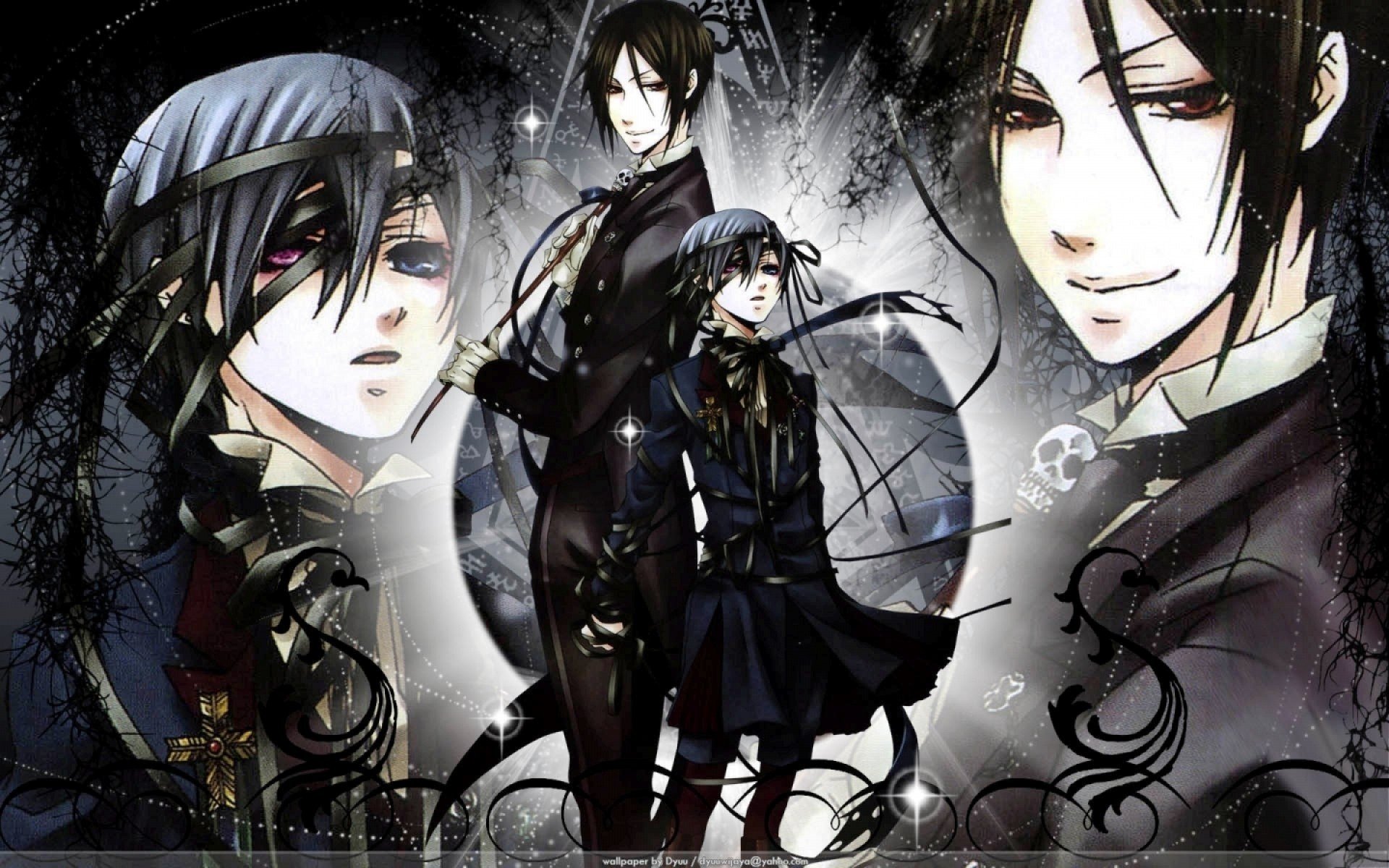
For more than a decade and a half, Yana Toboso’s Black Butler (Kuroshitsuji) has reigned as an indomitable pillar of modern dark fantasy. While countless seasonal anime flare up and fade into obscurity, the dark tale of Earl Ciel Phantomhive and his demon butler Sebastian Michaelis has retained a rare, obsessive cultural cachet. Following the triumph of the Public School Arc, which demonstrated that studio CloverWorks could resurrect the franchise with pristine visual fidelity and atmospheric poise, the anime adaptation is charging directly into what manga purists widely consider Toboso’s absolute magnum opus: the Emerald Witch Arc (Midori no Majo-hen).
This confirmation is far more than a routine continuation of an evergreen franchise; it signals a tectonic tonal shift for the series. Moving away from the locked-room social politics and pastel cricket pitches of Weston College, the Emerald Witch Arc plunges the Queen’s Watchdog into the primordial horrors of rural Germany. Here, Victorian gentility is stripped away, replaced by suffocating fog, ancient werewolves, and a haunting critique of nineteenth-century military ambition that borders on cosmic dread.
Descent into the Wolfsschlucht: When Victorian Splendor Yields to German Folklore
The Emerald Witch Arc immediately distinguishes itself by uprooting Ciel and Sebastian from the cobblestones of London and dropping them into the untamed wilderness of the German south—specifically the sinister depths of the Wolfsschlucht, or Werewolves’ Forest. Commissioned by Queen Victoria to investigate a string of mysterious deaths where travelers succumbed to an inexplicable “curse” that rotted their flesh, Ciel crosses the English Channel into territory governed not by British civil law, but by superstition, dread, and territorial isolationism.
The environmental storytelling here serves as a love letter to classic European Gothic romance and German folklore. In the manga, Toboso leaned heavily into the aesthetics of the Brothers Grimm, casting shadows that feel alive and establishing an eerie, sensory atmosphere choked with miasma. Where previous arcs flirted with aristocratic corruption and cultist underworlds, the Wolfsschlucht confronts the audience with seemingly genuine folklore: hulking lycanthropes prowling mist-blanketed canopies and a hidden, medieval village locked out of time.
For viewers who enjoyed the comparatively cerebral and dialogue-driven Public School Arc, this upcoming storyline offers a jolting pivot into survival horror. The aristocratic confidence that has carried the young Earl through underworld syndicates and high-society murders proves dangerously brittle beneath the dark canopy of the Black Forest.
Sieglinde Sullivan and the Cost of Imposed Divinity
At the beating heart of this arc sits one of Yana Toboso’s most compelling, tragic creations: Sieglinde Sullivan, the titular Emerald Witch. Revering her as their supernatural protector, the isolated villagers treat the young girl as an absolute matriarch, believing she alone commands the esoteric arts necessary to appease the werewolves and ward off the cursed miasma.
The Tragedy of the Bound Maiden
Visually and narratively, Sieglinde is a striking thematic mirror to Ciel Phantomhive. Both are intellectual prodigies burdened with authority far beyond their physical years, yet their circumstances diverge in heartbreaking ways. Sieglinde has been subjected to a brutal, localized iteration of foot-binding—leaving her unable to walk without assistance and literally trapping her in the gilded cage of her ancestral home. Flanked by her imposing, stoic butler Wolfram Gelber, Sieglinde projects an aura of untouchable mystical sovereignty while harboring the unvarnished curiosity and loneliness of a sheltered child.
A Parallel of Stolen Childhood
The friction between Ciel and Sieglinde constitutes the emotional core of the narrative. Unlike Ciel, who willingly bartered his immortal soul for revenge and clings fiercely to his cynical agency, Sieglinde’s isolation is a product of systemic exploitation. As Sebastian and Ciel pierce the mystical veneer surrounding the village, her discovery of the broader world—and the devastating reality behind her own existence—elevates the narrative from a gothic monster hunt into an agonizing exploration of manipulated innocence.
Breaking the Watchdog: Ciel’s Psychological Collapse
Perhaps the most monumental narrative gamble of the Emerald Witch Arc is its treatment of Ciel Phantomhive himself. Throughout the series, Ciel has operated as an unflinching, Machiavellian chessmaster. Even when bound to sacrificial altars or staring down reanimated corpses on the Campania, his resolve has remained ironclad. In the Werewolves’ Forest, that armor does not merely crack—it shatters.
Upon direct exposure to the forest’s virulent “curse,” Ciel suffers a catastrophic physical and mental regression. The toxic affliction triggers a full-blown relapse into the traumatic memories of his childhood captivity, breaking through years of calculated repression. Audiences will witness an Earl stripped of his haughty pretenses: weeping, catatonic, and terrified of the very demon he summoned to protect him.
This dynamic radically reconfigures the power balance between master and servant. For Sebastian Michaelis, an incapacitated Ciel is an existential frustration. Bound by the terms of an intricate Faustian contract that demands his master maintain his unyielding pursuit of vengeance, the demon butler must navigate a fragile boundary between pragmatic preservation and genuine, monstrous irritation. The psychological stakes are higher here than in almost any other chapter of the narrative, laying bare the terrifying precarity of their infernal partnership.
The Horror of the Modern Age: Chemical Warfare Dressed in Witchcraft
While the initial chapters lean into supernatural ambiguity, the genius of Toboso’s writing lies in its ruthless subversion of genre tropes. The Emerald Witch Arc is not, at its foundation, a story about ancient sorcery; it is an indictment of the encroaching horrors of the twentieth century, specifically the birth of industrialized warfare.
Without veering into excessive spoilers for anime-only audiences, the revelation of what the “miasma” truly represents strips away the romanticism of the gothic aesthetic to expose something far more hideous: early-stage chemical weaponry. By disguising the research of synthetic neurotoxins and mustard gas analogues as the “witchcraft” of a reclusive prodigy, the arc confronts the dawn of modern total war. The werewolves are not remnants of medieval folklore, but precursors to the military-industrial complex that would eventually tear Europe apart in the trenches of the Great War. This thematic bridge transforms a Victorian fantasy into an unsettling historical reflection on the ways governments weaponize human lives under the banner of national supremacy.
CloverWorks’ Gothic Mastery: Fulfilling Manga Readers’ Longest Wait
The transition of Black Butler’s production pipeline to CloverWorks has revitalized the franchise’s visual language. Where early adaptations occasionally leaned into inconsistent pacing or anime-original diversions, the current team has treated Toboso’s original panels with almost academic reverence. Adapting the Emerald Witch Arc demands exceptional craft; the visual palette must seamlessly shift between claustrophobic wooden villages, grand architectural designs, kinetic firearm engagements, and horrifying hallucinatory dreamscapes.
Community reception to the confirmation has been overwhelmingly euphoric. For over a decade, manga readers have considered this the arc that truly solidified Black Butler’s narrative complexity. Social media feeds and fan communities have erupted with praise for the decision to commit to this darker narrative timeline, validating the patience of a fandom that survived years of sporadic OVAs and broadcast hiatuses.
As production marches onward, the stage is set for a milestone anime release. The Emerald Witch Arc promises to bridge the divide between nostalgic fandom loyalty and prestige dark-fantasy anime, offering a journey steeped in terror, tragedy, and breathtaking aesthetic precision.
Are you prepared to watch Ciel and Sebastian brave the terrors of the Wolfsschlucht, or are you bracing yourself for the psychological toll this arc will take on our young Earl? Drop your thoughts in the comments below, and keep your browsers locked to Wibux.com for exclusive breakdowns, character spotlights, and trailer analysis!