When Jolyne Cujoh’s cosmic, bittersweet defiance brought the original Joestar timeline to a definitive halt at Cape Canaveral, an era ended for modern anime. For over a decade, David Production accomplished what vintage manga purists once considered impossible: adapting Hirohiko Araki’s generation-spanning, hyper-stylized odyssey into one of the most culturally dominant franchises in global entertainment. Yet, the instant the dust settled on Stone Ocean, an electric, ravenous whisper rippled through the fandom. The Ireneverse was merely the prologue to an even greater ambition. The ultimate white whale of modern anime adaptation was finally at the gate: JoJo’s Bizarre Adventure: Steel Ball Run.
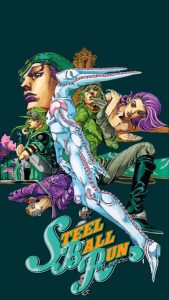
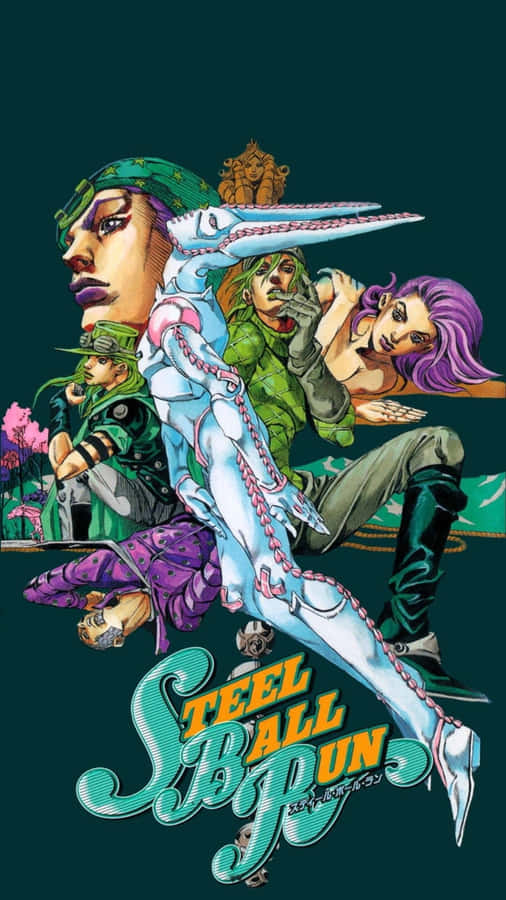
Widely regarded by critics, scholars, and longtime readers as Araki’s magnum opus, Steel Ball Run does not just reboot the franchise—it obliterates the standard shonen formula. Set against the sun-baked, unforgiving backdrop of late-19th-century America, Part 7 reimagines the Joestar legacy as a gritty, historical-supernatural western. But as anticipation reaches a fever pitch across online forums and industry convention halls, David Production faces their most daunting creative crucible yet. From the notorious technical nightmares of equine animation to the profound psychological deconstruction of its leads, the journey to adapt Steel Ball Run will either forge an all-time anime masterpiece or push its creators to their absolute limits.
A Trans-Continental Rebirth: Araki’s Leap into Seinen Royalty
To understand the immense weight of Steel Ball Run, one must understand its editorial genesis. Originally serialized in Weekly Shonen Jump in 2004 simply as Steel Ball Run—deliberately downplaying its direct connection to the JoJo moniker—the series made a historic migration in 2005 to the monthly seinen magazine Ultra Jump. This transition liberated Hirohiko Araki from the rigid demographic constraints, censorship limitations, and breakneck weekly deadlines that define mainstream teenage manga.
The result was an explosion of mature storytelling. In this alternate universe, the binary morality of classic heroes and theatrical villains gave way to deep psychological ambiguity, intense body horror, philosophical ruminations on destiny, and sociopolitical commentary on the American mythos. The narrative framing—a brutal, cross-country horse race spanning from San Diego Beach to New York City for a staggering fifty-million-dollar purse—provided an unyielding forward momentum. It is a work of breathtaking ambition that routinely battles Berserk for the top spot on global manga leaderboards, making its potential anime adaptation not merely another seasonal release, but an industry-defining event.
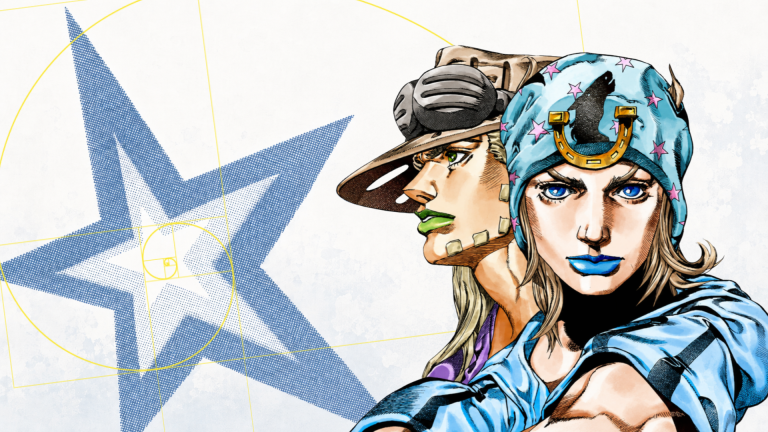
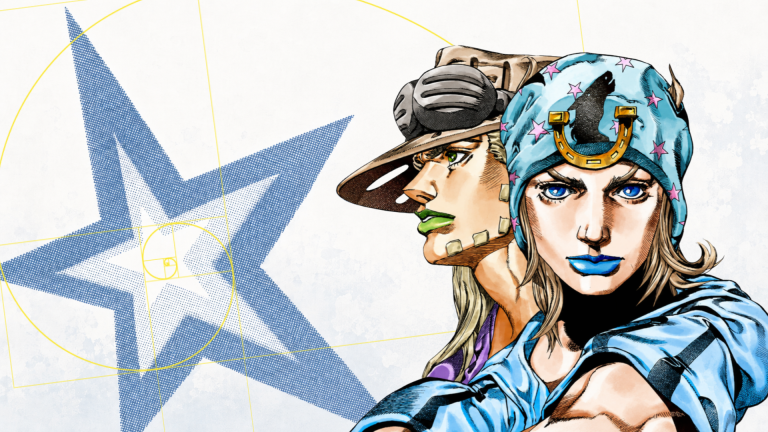
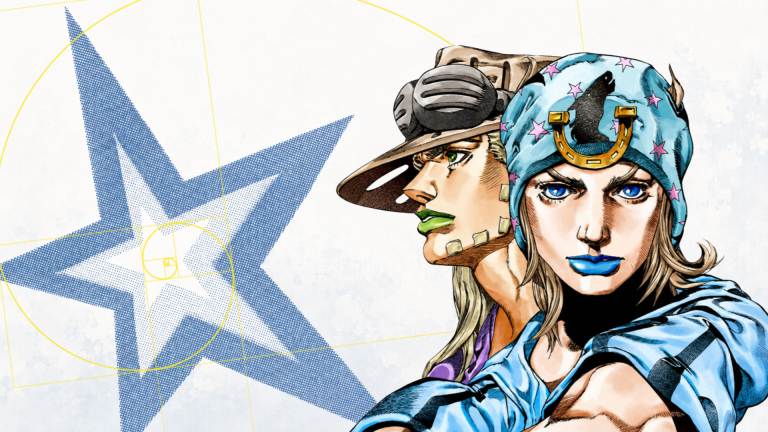
Johnny Joestar and Gyro Zeppeli: Subverting Shonen Heroism
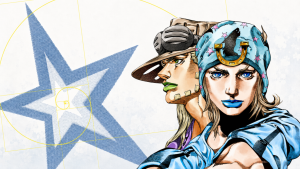
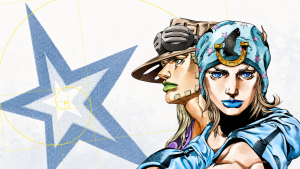
At the beating heart of Part 7’s critical acclaim is the dynamic between Johnny Joestar and Gyro Zeppeli—a partnership that stands as one of the most complex, emotionally resonant duos in modern sequential art.
Johnny Joestar: The Dark Determination of a Broken Prodigy
Unlike his chivalrous namesake Jonathan Joestar, Johnny begins his journey not as a champion of justice, but as a deeply flawed, self-loathing paraplegic. A former equestrian prodigy undone by his own arrogance and subsequently paralyzed by a gunshot wound, Johnny is an outcast drowning in cynicism. When he witnesses Gyro’s mysterious abilities, his desire to ride in the race is fueled entirely by a desperate, selfish hope: the remote possibility of regaining mobility.
Johnny does not seek to save the world; he fights to bring his life from a “negative” state back to “zero.” Throughout the race, Araki visually manifests Johnny’s psychological metamorphosis through his terrifying “dark determination”—an eerie, cold ruthlessness in his eyes that blurs the line between protagonist and antihero. Adapting this subtle, often unlikable descent into obsession requires a voice-acting performance and emotional framing far more nuanced than traditional shonen battle protagonists.
Gyro Zeppeli: The Weight of Steel and the Mastery of Spin
Serving as both mentor and co-lead, Gyro Zeppeli is a masterclass in Araki’s character writing. Hailing from the Kingdom of Naples as an executioner’s heir, Gyro participates in the deadly race to secure an imperial amnesty for an innocent child condemned to death. Behind his gold-plated teeth, absurdist Italian puns, and flamboyant exterior lies a man crushed by the moral weight of his family’s grim lineage.
Gyro introduces the narrative’s foundational magic system: The Spin (Kaiten). Unlike the breath-powered Hamon or the raw psychic manifestations of early Stands, the Spin is a physical and metaphysical martial discipline rooted in dynamic rotation, anatomical precision, and the mathematical harmony of the universe. The interplay between Gyro’s noble resignation and Johnny’s unyielding hunger creates an intoxicating, tragic camaraderie that anchors the sprawling narrative.
The Technical Everest: Equine Animation and the CGI Dilemma
If Steel Ball Run is a thematic triumph, it is simultaneously an animator’s worst nightmare. The central technical hurdle that has haunted discussions surrounding David Production is undeniably singular: animating horses.
Within the anime production pipeline, four-legged animals—especially equines—are universally feared. A galloping horse demands intricate anatomical accuracy, displaying constant muscular contraction, shifting bone structure, and rhythmic kinetic fluidity across multiple perspective planes simultaneously. When scaled to a massive race involving dozens of competitors navigating dust storms, forest ambushes, and river crossings, relying entirely on traditional 2D hand-drawn animation across forty to fifty episodes is practically impossible within standard studio budgets and timelines.
This reality points directly toward 3D computer-generated imagery (CGI). While the term historically triggers skepticism among anime enthusiasts scarred by poorly integrated 3D models, David Production has repeatedly demonstrated its prowess. From the visionary OP sequences crafted by Kamikaze Douga to the refined environmental rendering seen in Fire Force, the studio knows how to bridge the gap between 2D artistry and 3D assets. The true test for David Production’s next frontier will be developing hybrid, cel-shaded equine rigs that preserve Araki’s heavily cross-hatched, detailed aesthetic without sacrificing the chaotic, cinematic velocity of the race.
The Golden Ratio: When Mathematics Meets Divine Providence
As the race progresses, the narrative pivots from an eccentric sporting event into a supernatural conspiracy of apocalyptic scale. The true engine of the plot shifts toward the hunt for the scattered, petrified parts of The Saint’s Corpse—an enigmatic, divine relic rumored to grant unimaginable fortune and sovereign invincibility to whoever possesses it.
This escalation pushes combat into the realm of mathematical philosophy. Johnny’s Stand, Tusk, evolves in tandem with his psychological growth and his deepening comprehension of the Golden Ratio and the Fibonacci sequence. Transitioning from firing basic spinning fingernails in ACT 1 to tearing through dimensional barriers with the Infinite Rotation of ACT 4, the battles of Steel Ball Run demand extraordinary visual choreography. Facing off against the indomitable charisma of President Funny Valentine and his dimension-hopping Stand Dirty Deeds Done Dirt Cheap (D4C), the series trades punch-ghost brawls for mind-bending, existential chess matches where concepts of justice, patriotism, and sacrifice collide.
The Inevitable Horizon: What Lies Ahead for Wibux Readers
David Production has earned the industry’s patience. The prolonged radio silence following Stone Ocean is not a sign of abandonment, but rather evidence of a studio taking the time required to conceptualize a massive overhaul in production pipeline, art design, and directorial vision. With JoJo’s Bizarre Adventure serving as their flagship identity, rushing Part 7 would be artistic sacrilege.
When the visual teasers inevitably drop, they will likely signal the start of one of the grandest anime rollouts of the decade. Steel Ball Run is more than the continuation of a beloved franchise; it is a profound testament to Hirohiko Araki’s narrative maturation—a story where broken people ride across an unforgiving frontier, searching not for universal salvation, but for the personal resolve to stand on their own two feet.
What are your personal expectations for the Steel Ball Run anime? Do you believe David Production should embrace hybrid 3D CGI for the race sequences, or wait for an unprecedented hand-drawn approach? Drop your theories and favorite Part 7 moments in the comments below, and stay tuned to Wibux.com for breaking updates on the JoJo universe!