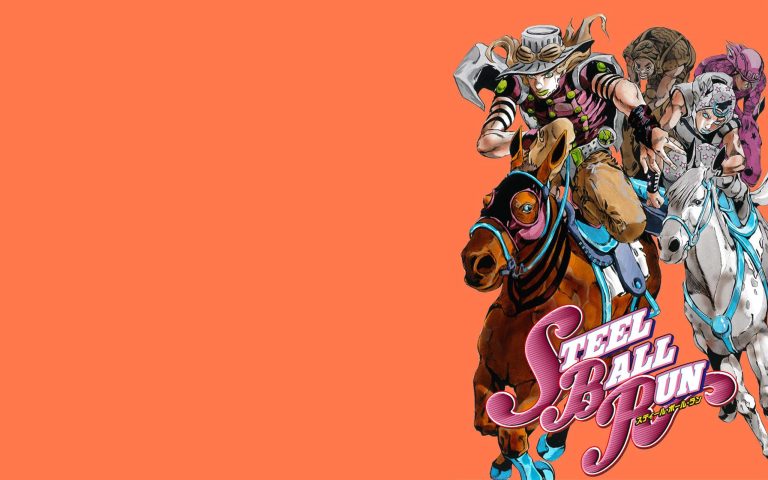
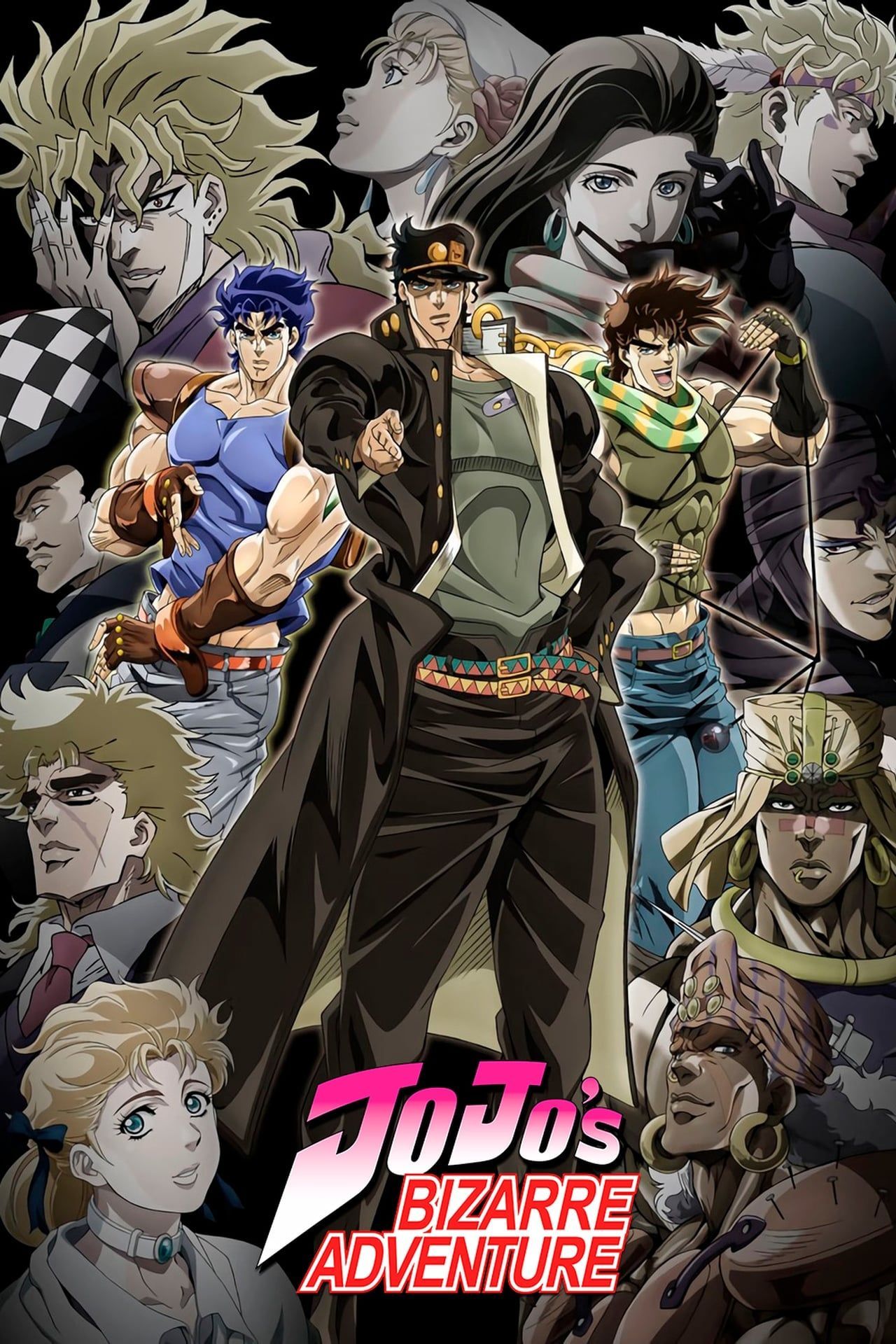
For more than a decade, the anime adaptation of Hirohiko Araki’s JoJo’s Bizarre Adventure has served as one of the medium’s most consistently astonishing triumphs. Under the stewardship of David Production, Araki’s kaleidoscopic, genre-defying generational saga transformed from a niche cult classic in the West into a dominant pillar of global anime culture. Yet, ever since the melancholic, universe-resetting finale of Stone Ocean landed on screens, an electric, impatient murmur has reverberated through every corner of the fandom: Steel Ball Run is next. Among manga literati, Part 7 is not merely another chapter in the Joestar lineage; it is widely heralded as Araki’s undisputed magnum opus—a masterclass in serialized fiction sitting shoulder-to-shoulder with titans like Berserk and Vagabond. As industry insiders and eagle-eyed fans scrutinize production schedules, trademark filings, and studio teasers, the impending arrival of Steel Ball Run represents both the pinnacle of anime anticipation and David Production’s greatest creative trial to date.
A Radical Rebirth: The Trans-American Odyssey and Seinen Liberation
To understand the sheer magnitude of the Steel Ball Run hype, one must understand its historical context within the manga industry. Serialized beginning in 2004, Part 7 initially bore little explicit connection to the preceding six parts. Araki took a creative gamble that few veteran mangaka would dare: he rebooted his established universe, transported the action to an alternate-history 1890s America, and traded urban street fights and claustrophobic prison blocks for the sweeping, dust-choked expanse of a transcontinental equestrian race. When the series shifted from the demographic constraints of Weekly Shonen Jump to the monthly, mature pastures of Ultra Jump in 2005, Araki was finally unbound.
The result was a transformative evolution in art style, pacing, and philosophical weight. Steel Ball Run chronicles the titular cross-country race organized by promoter Steven Steel—a grueling dash from San Diego to New York City boasting a fifty-million-dollar purse. However, underneath the veneer of athletic spectacle lies a high-stakes conspiracy steeped in American imperial ambitions and supernatural artifacts: the search for the scattered, sacred mummified remains of a divine figure known simply as the Holy Corpse. This shift into prestige historical fiction infused with horror, surrealism, and geopolitical intrigue fundamentally rewired what a JoJo story could achieve.
Deconstructing the Western Through an Avant-Garde Lens
Araki took classic tropes of the American frontier—lawless deserts, outlaw duels, indigenous mysticism, and cutthroat capitalism—and refracted them through his hyper-stylized lens. Rather than relying on simple standoffs, fights in Steel Ball Run turn into tactical, terrain-shifting nightmares. The vast geographical tapestry, spanning treacherous mountain ranges, frozen Great Lakes, and sweltering badlands, serves as a dynamic character in its own right, forcing the cast to battle not just opposing Stand users, but the unforgiving American wilderness itself.
Broken Heroes and Sacred Geometry: Johnny, Gyro, and the Spin
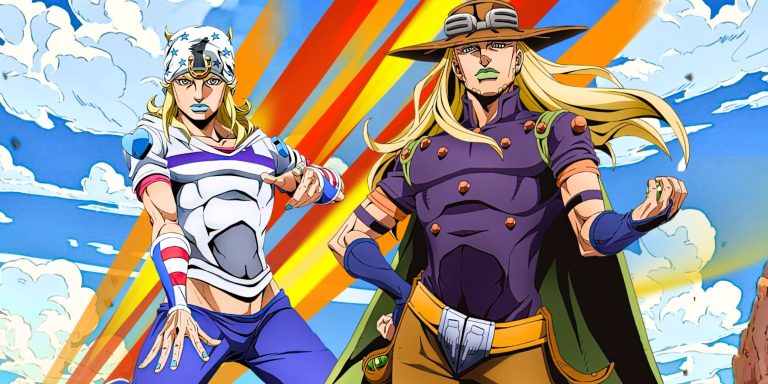
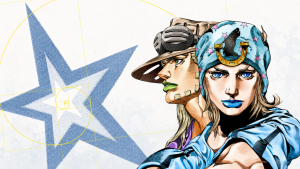
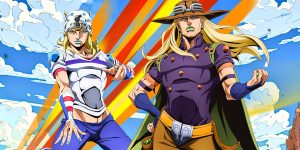
At the beating heart of Steel Ball Run is the electric, deeply moving dynamic between its two protagonists: Johnny Joestar and Gyro Zeppeli. In an unprecedented departure from the steadfast, morally righteous archetypes of Jonathan or Jotaro, Johnny begins his journey as an unlikable, fallen prodigy. Paralyzed from the waist down following an act of reckless arrogance, Johnny is a bitter, broken former jockey drowning in self-loathing. His encounter with Gyro Zeppeli—a flamboyant Neapolitan executioner armed with mystical steel orbs and gold-capped teeth—shatters Johnny’s despair when he witnesses Gyro’s kinetic technique temporarily cause his paralyzed legs to twitch.
What follows is arguably the best-written character arc in shonen or seinen history. Johnny is defined by what Araki calls “dark determinations”—a terrifying, remorseless drive to regain what he lost. He is not fighting to save the world; he is fighting to bring his personal value back to zero. Balancing Johnny’s cold resolve is Gyro, whose pragmatic nobility, bizarre eccentricities, and heavy familial burden create an unforgettable foil. Their camaraderie, cemented over campfires through surreal inside jokes and tragic confessions, provides the narrative with profound emotional resonance.
The Mechanics of the Golden Ratio
From a combat perspective, Steel Ball Run revitalizes the franchise’s power system by introducing The Spin—a forgotten rotational martial art based on the Fibonacci sequence and the Golden Ratio. Where Stands had previously dominated the series since Stardust Crusaders, the Spin merges ancient geometry, physics, and biological resonance. When channeled through Gyro’s steel spheres or Johnny’s evolution of his nail-firing Stand, Tusk, combat becomes an exquisite, mind-bending exhibition of kinetic trajectory and spatial distortion. For an anime adaptation, visualizing the mathematical perfection of the Spin presents an intoxicating visual frontier.
The David Production Dilemma: The Dreaded Equestrian Hurdle
If the creative upside of adapting Steel Ball Run is limitless, the technical logistical hurdles are terrifying. Within the animation industry, there is an unspoken axiom: horses are an animator’s worst nightmare. Capturing the quadrupedal biomechanics, muscular shifting, and sheer momentum of an equine sprint in fluid, traditional 2D hand-drawn animation is notoriously labor-intensive and prohibitively expensive. In Steel Ball Run, horses are not merely occasional set pieces; dozens of them are galloping through dynamic terrain in almost every single episode.
This reality has fueled relentless speculation regarding how David Production will tackle the series. Studio insiders and industry commentators widely agree that a hybrid approach—integrating meticulously shaded 3D CGI models for the mounts alongside hand-drawn riders—is the most feasible path forward. However, integrating 3D assets seamlessly into Araki’s distinctively tactile, high-contrast, hatch-heavy aesthetic without jarring the audience requires exceptional compositing talent. The studio’s work on the stylized kinetic sequences of Fire Force and the visual reinvention of Urusei Yatsura proves their technical growth, but Part 7 will inevitably demand the biggest production budget and most generous pipeline schedule in the studio’s history.
The Cultural Mythos: A Global Fandom on Tenterhooks
The online discourse surrounding a prospective Steel Ball Run announcement has evolved into a full-fledged cultural phenomenon. From viral fan animations rendering the beloved “Pizza Mozzarella” musical gag to breathtaking indie orchestrations of Johnny and Gyro’s speculative themes, the community has kept the fire burning with extraordinary creative fervor. Fans have already canonized dream voice casts, dissected potential split-cour release models to prevent the streaming-release pitfalls that hindered Stone Ocean‘s initial cultural momentum, and debated how Araki’s increasingly intricate political villain, Funny Valentine, will translate to international audiences.
This voracious appetite stems from the widespread perception that Steel Ball Run is the definitive apex of the JoJo mythos. It captures Araki at the absolute height of his illustrative and narrative powers—a bold, mature reinvention that bridges classical tragedy with pop-art absurdism. For David Production, getting this right is not merely about retaining an audience; it is about cementing their legacy among the premier animation studios of the modern era.
The Horizon Beckons
While David Production and Warner Bros. Japan remain tight-lipped, the narrative gravity of Steel Ball Run is impossible to escape. The adaptation is not a matter of if, but when and how. When the starting gun finally fires and the race across the American frontier begins in animated glory, it promises to be nothing short of a seismic event for the medium—a sprawling, emotionally devastating masterstroke of speed, spin, and supernatural spectacle.
How do you think David Production should tackle the legendary horse race—pure hand-drawn animation, or cutting-edge CGI hybrid? Drop your theories, voice-cast wishlists, and favorite Stand battles from Part 7 in the comments below!