

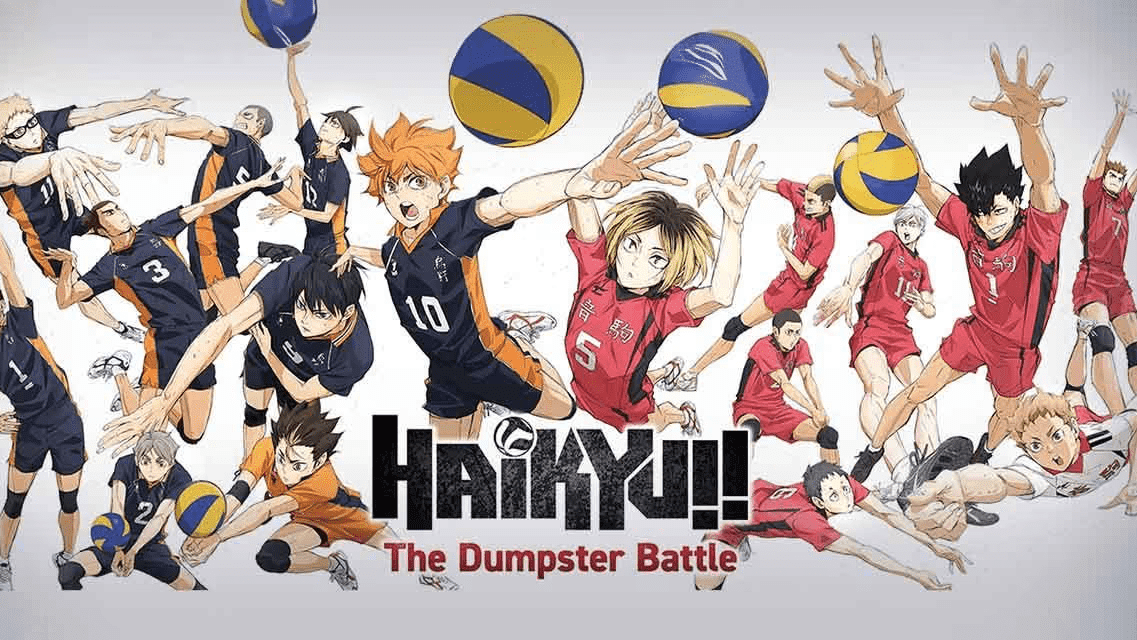
For nearly a decade, sports anime enthusiasts have lived with a singular, romanticized promise whispering through the gym rafters: the “Battle at the Garbage Dump.” It was a mythic appointment between two underdog programs—the high-flying, predatory crows of Karasuno High and the cerebral, blood-circulating felines of Nekoma High. When Haruichi Furudate first penned the generational handshake between former coaches Ikkei Ukai and Yasufumi Nekomata, it felt like an unattainable dream. Now, following a historic theatrical blitz that racked up over 11.5 billion yen in Japan alone, Haikyu!! The Dumpster Battle has officially landed on global streaming platforms, delivering an 85-minute masterclass in athletic storytelling that cements the matchup as the genre’s absolute emotional zenith.
Far from being just another high-stakes tournament bracket match, this streaming debut allows fans worldwide to dissect what makes this clash an anomaly in modern shonen. It is not an epic contest of good versus evil, nor is it a clash dictated by malice. Instead, The Dumpster Battle is an intimate, kinetic love letter to the sport of volleyball, an exploration of athletic mortality, and arguably the most technically accomplished entry in the entire Haikyu!! franchise.
A Rivalry Forged in the Dirt: The Weight of Inherited History
To understand why this specific showdown resonates on such a seismic level, one must first appreciate the generational architecture supporting it. Most contemporary sports anime rely on immediate, antagonistic conflict: the sneering rival, the seemingly invincible powerhouse, or the arrogant prodigy who must be humbled. Haikyu!!, however, constructed Karasuno and Nekoma’s rivalry on mutual reverence and inherited legacy.
From their first impromptu practice match in Season 1, Nekoma was never positioned as an enemy to conquer, but as a mirror. Where Karasuno was an engine of chaotic evolution—spearheaded by the dizzying velocity of Tobio Kageyama and Shoyo Hinata—Nekoma was an unyielding system of attrition. They were the cats who refused to let the ball touch the floor, moving like blood carrying oxygen to the brain. Over seasons of joint summer training camps, the two squads raised one another. Kuroo taught Tsukishima how to read-block; Kenma reluctantly indulged Hinata’s insatiable appetite for reps. When they finally step onto the bright, deafening stage of the Tokyo Metropolitan Gymnasium, the stakes are painfully singular: there are no practice rematches here. Lose, and the third-years hang up their jerseys forever.
The Psychological Cage: Kenma Kozume’s Algorithmic Masterclass
At the center of The Dumpster Battle lies a fascinating battle of wills that plays out more like a psychological thriller than a traditional athletic contest. The film firmly establishes Nekoma’s quiet, hyper-introverted setter, Kenma Kozume, as its thematic protagonist. Kenma does not play volleyball out of passion; he plays it because it is an intricate puzzle—an RPG encounter where the player’s job is to identify an exploit, corner the boss, and execute the strategy with cold, computational patience.
Clipping the Crow’s Wings
Kenma’s strategy against Hinata is terrifying in its quiet efficiency. Rather than trying to out-jump Karasuno’s pint-sized middle blocker, Kenma suffocates his runway. Through calculated tip-shots, deceptive setter dumps, and defensive funneling, Nekoma denies Hinata the physical space required for his signature broad jumps. The film visually conveys this as an increasingly claustrophobic cage, slowly dropping bars around Hinata until the once-buoyant decoy is reduced to a frustrated, grounded bird.
This is where the film’s character psychology ascends into perfection. Kenma’s goal is not merely to win the point; it is to strip the joy of the game from someone whose entire athletic identity is fueled by incandescent enthusiasm. Hinata’s counter—a towering, four-step open spike that defies Kenma’s algorithm—is not just an athletic breakthrough; it is a spiritual declaration. Hinata forces Kenma to abandon the comfort of his mental simulation and experience the visceral, terrifying rush of reality.
Kinetic Mastery: Susumu Mitsunaka and Production I.G’s Directional Triumph
When the film was first announced, fandom anxieties flared over the condensed runtime. How could a 33-chapter manga epic be compressed into an 85-minute feature without sacrificing structural integrity? Director Susumu Mitsunaka, returning to the helm after sitting out Season 4, answered those doubts with breathtaking cinematic economy.
The pacing is relentless, mimicking the breathless speed of an elite-level volleyball rally where a single lapse in concentration means instant elimination. Production I.G sheds the somewhat rigid, boxy character models of the fourth television season in favor of fluid, hyper-expressive line work. The spatial geometry of the court is maintained with razor-sharp precision, making every dig, block-touch, and set feel heavy with tactile consequence.
The First-Person Climax That Redefined Sports Animation
Nothing in modern sports anime prepares the viewer for the match’s climactic sequence: a protracted, un-cut rally animated entirely from Kenma Kozume’s first-person perspective. The camera heaves with every laboured gasp. Sweat droplets sting the periphery of the frame. Sound design drops the arena’s roar into a muffled, thumping heartbeat, punctuated only by squeaking sneakers and the violent slap of leather against forearms. It is a grueling, immersive showcase of pure athletic exhaustion—a sequence that strips away the romantic glamour of sports to reveal the gritty, raw terror of keeping a ball in the air when your lungs are on fire.
Subverting the Shonen Trophy: The Beauty of Inevitable Loss
The profound emotional resonance of The Dumpster Battle lies in its subversion of triumph. In traditional shonen storytelling, victory is cathartic, an explosion of fireworks and validation. But when the final ball slips from sweat-slicked fingers to hit the taraflex floor, the emotional payoff is devastatingly gentle.
There are no bitter tears or vows of vengeance. Instead, the film peaks with a quiet, breathless sentence whispered by a boy who spent years claiming he only played volleyball to pass the time: “Kuro… thank you for teaching me volleyball. It’s fun.” In that fleeting, vulnerable confession, years of training, rivalries, and childhood memories crystallize. Kuroo’s tearful, unprompted celebration of that singular sentence carries more emotional weight than any national championship trophy ever could.
The Verdict: An Unrepeatable Triumph for the Genre
Now that global audiences can replay, pause, and dissect every frame on streaming, Haikyu!! The Dumpster Battle stands tall as a masterwork of sports media. It honours its source material not by mechanically adapting every panel, but by amplifying the thematic core of Furudate’s magnum opus: that sports are fleeting, agonizing, and magnificent precisely because they end.
As Karasuno prepares for their forthcoming cinematic showdown against Kamomedai—the narrative trial of the Little Giants—the shadow of the Dumpster Battle looms large. It was the match promised across generations, executed with kinetic genius, and delivered with unmatched heart. It didn’t just meet impossible expectations; it reminded us why we fall in love with animation in the first place.
Did The Dumpster Battle live up to your years of anticipation, or do you wish Karasuno vs. Nekoma had been given a full episodic season? Drop your thoughts, favorite rallies, and emotional reactions in the comments below!