
Ever since the melancholic notes of Duffy’s “Distant Dreamer” brought the curtain down on the original Joestar lineage in the anime adaptation of Stone Ocean, a palpable, electric tension has gripped the anime community. For over a decade, David Production pulled off what was once considered functionally impossible: adapting Hirohiko Araki’s genre-defying, multi-generational saga with kinetic fidelity, stylistic swagger, and unwavering artistic reverence. Yet, despite the triumphant completion of Parts 1 through 6, every veteran fan knows that the true mountain still looms on the horizon. We have arrived at the precipice of Part 7: Steel Ball Run.
Currently standing shoulder-to-shoulder with Berserk at the absolute zenith of critically acclaimed manga ratings globally, Steel Ball Run is not merely another chapter in the franchise; it is Araki’s acknowledged magnum opus. An alt-universe reimagining of the mythos set against the dusty, sun-scorched backdrop of late-19th-century America, the series trades urban stand brawls for an epic, continent-spanning equestrian marathon. But as production rumors circulate and fans dissect every social media whisper from David Production animators, the burning question remains: can the studio adapt an equestrian-heavy epic that has long been dubbed the industry’s greatest technical nightmare?
The Seinen Evolution: Why Steel Ball Run Stands as Araki’s Masterpiece
To understand the unprecedented fervor surrounding Steel Ball Run, one must appreciate its unique publication history. When serialization began in 2004 in Weekly Shōnen Jump, it was initially presented without the iconic “JoJo” moniker explicitly tethered to its title. However, the seismic shift occurred in 2005 when the series moved to the monthly seinen imprint, Ultra Jump. Unshackled from weekly page constraints, censorship mandates, and shonen narrative clichés, Araki’s creative scope exploded.
The pacing transformed into a masterclass in atmospheric world-building. The cross-country Steel Ball Run race—a brutal, 6,000-kilometer gauntlet from San Diego to New York City offering a $50 million prize—became a living, breathing sandbox. Here, historical period drama, supernatural horror, spaghetti western tropes, and mind-bending tactical espionage collide. The shift to a monthly seinen cadence allowed Araki’s linework to attain hyper-detailed, neoclassical heights, making each panel of the sweeping American prairie feel monumentally cinematic.
From Hamon to the Golden Ratio: The Lore of the Spin
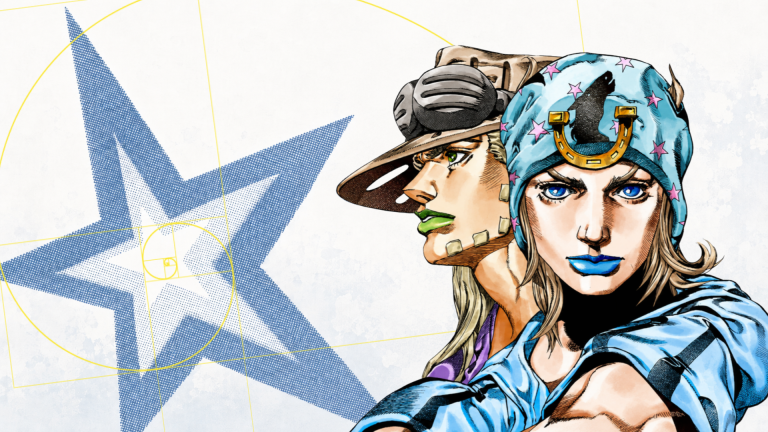
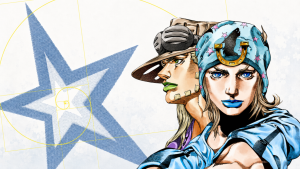
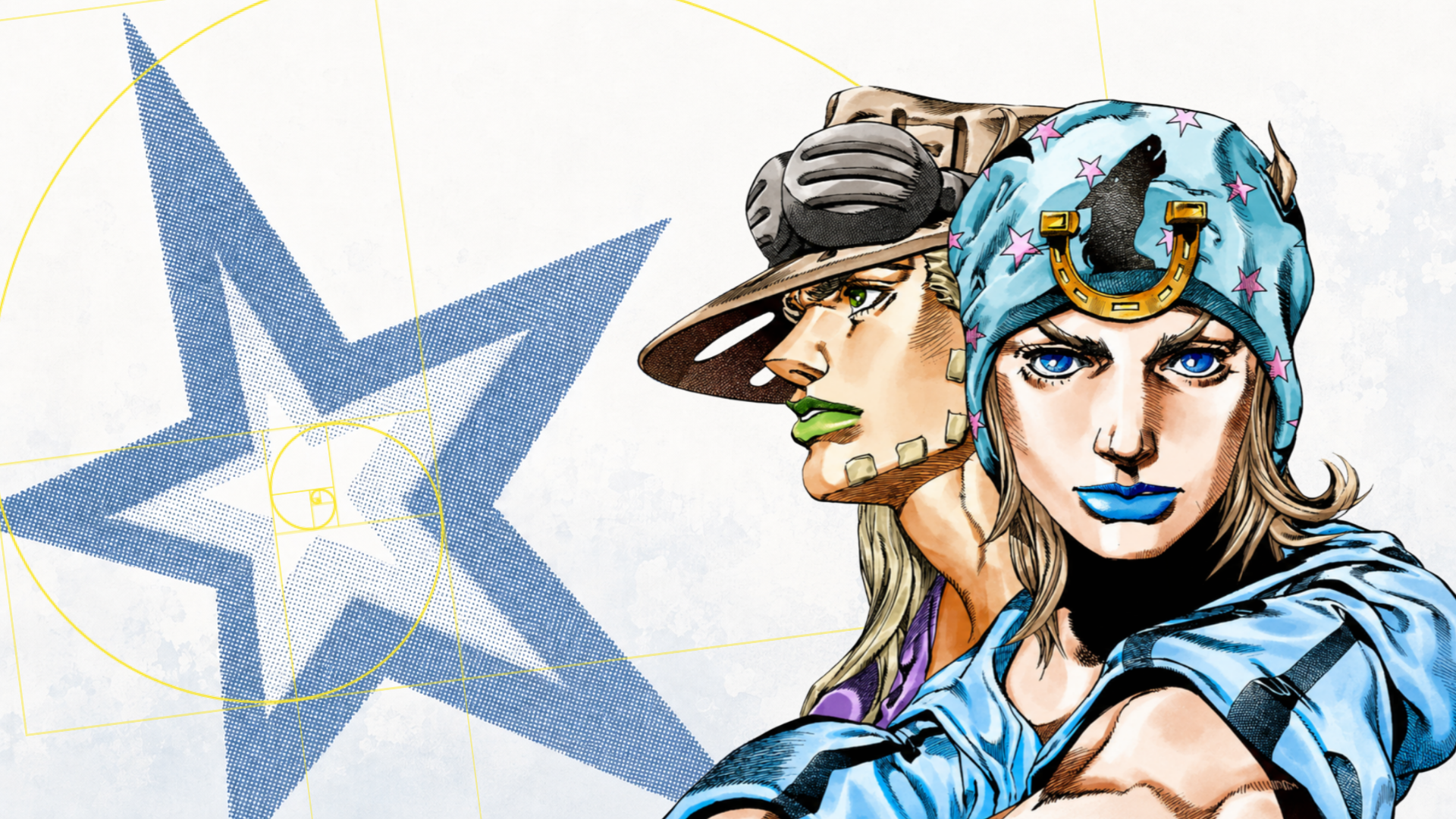
Narratively, Part 7 executes a complete paradigm shift by overhauling the series’ internal power systems. While Stands remain integral, they are no longer merely born from mystical arrows or lineage curses. Instead, Araki introduces the Spin—a forgotten martial and medicinal discipline rooted in the Fibonacci Sequence and the Golden Rectangle.
Utilized via specially weighted steel spheres, the Spin harnesses kinetic rotational energy to distort anatomy, redirect momentum, and tear through physical space. It feels tactile, grounded, and intensely scientific before escalating into interdimensional metaphysics. When married with Stand concepts, such as Johnny Joestar’s evolving companion Tusk, combat mechanics shed the episodic gimmicks of previous eras to favor visceral, high-stakes tactical chess where terrain, ammunition, and physical exhaustion play definitive roles.
Johnny Joestar and Gyro Zeppeli: A Study in Broken Souls and Brotherhood
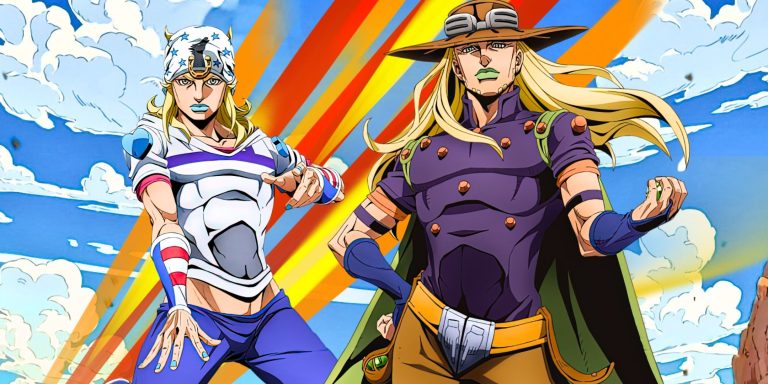
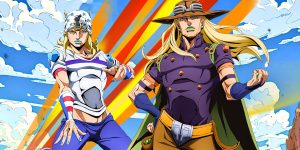
At the beating heart of this sprawling Western epic is arguably the greatest dual-protagonist dynamic ever conceived in modern manga: the symbiotic bond between Johnny Joestar and Gyro Zeppeli.
Unlike Jonathan Joestar’s peerless chivalry or Jotaro Kujo’s unshakeable stoicism, Johnny begins his journey as an anti-hero defined by profound moral compromise. Once an arrogant horse-racing prodigy whose hubris cost him the use of his legs, Johnny is a paraplegic hollowed out by trauma, cynical resentment, and familial estrangement. Araki boldly illustrates Johnny with “dark determination”—a cold, unblinking willingness to commit atrocities if it means recovering his lost dignity. His motivation isn’t to save the world; it is to find a way to reset his personal ledger from negative to zero.
The Disgraced Executioner and the Path to Absolution
Contrasting Johnny’s brooding gloom is Gyro Zeppeli, a disgraced executioner from the Kingdom of Naples entering the race to secure an imperial pardon for an innocent child condemned to death. Flamboyant, absurdly humorous (his terrible jokes and “Go! Go! Zeppeli” grillz remain legendary), and outwardly callous, Gyro masks a burden of tragic duty beneath his bravado.
Their partnership does not blossom through convenient anime sentimentality, but through mutually assured survival. Gyro becomes the reluctant mentor of the Spin; Johnny becomes the unforgiving mirror through which Gyro confronts his lineage. Their campfire conversations—drifting effortlessly from philosophical meditations on fate to nonsensical debates about pop songs—ground this monumental odyssey in genuine human intimacy. When the emotional crescendos land, they hit with the force of an oncoming locomotive.
The Elephant in the Room: The Terrifying Equestrian Animation Hurdle
If the narrative pedigree of Steel Ball Run is undisputed, why the hesitation? Why has David Production yet to drop a definitive teaser trailer? The answer boils down to one word: horses.
In the traditional 2D animation landscape, horses are universally recognized as an animator’s worst nightmare. Quadruped locomotion requires an astonishingly intricate interplay of skeletal movement, shifting muscle groups, and foreshortening. When you factor in multiple riders galloping side-by-side, dynamic camera rotations across vast desert expanses, and constant Stand battles unfolding at full speed, the logistical scope becomes terrifying.
The 2.5D Hybrid Puzzle Facing David Production
David Production cannot approach Steel Ball Run with the production pipeline of Diamond is Unbreakable or Golden Wind. Industry insiders and technical analysts recognize that adapting Part 7 will necessitate a radical, cutting-edge hybrid approach:
Integrating high-end, cel-shaded 3D CGI horse rigs seamlessly alongside hand-drawn 2D character models. Done poorly, it risks plunging the series into the jarring, stiff aesthetic that famously doomed other high-profile adaptations. Done correctly—perhaps leveraging stylistic techniques seen in Chainsaw Man‘s dynamic combat or the fluid environmental camerawork of modern Attack on Titan—it could redefine the visual standard for television anime.
The studio’s commitment to stylistic innovation gives reason for optimism. From the vibrant color-palette inversions that defined Part 4 to the lavish hyper-stylized sound-effect typography inherent to the JoJo brand, David Production has earned our trust. But adapting Steel Ball Run without sacrificing artistic fidelity will require an unprecedented budget, immense production runway, and perhaps an all-star roster of global freelance talent.
The Sacred Race for America’s Soul
Beyond the technical obstacles, what cements Steel Ball Run as a narrative leviathan is its antagonist and core philosophical conflict. In pursuit of the scattered relics of a prehistoric holy figure known simply as The Saint’s Corpse (heavily implied to be Jesus Christ), the racers become pawns in a terrifying political theater orchestrated by the 23rd President of the United States: Funny Valentine.
Valentine is not a mustache-twirling despot; he is a radically patriotic visionary whose Stand, Dirty Deeds Done Dirt Cheap (D4C), allows him to navigate parallel dimensions. His conviction that America must seize the “first napkin” to dictate the world’s fortune forces the audience to confront profound questions of imperialism, moral relativism, and sacrifice. The ideological clash between Valentine’s terrifyingly utilitarian patriotism and Johnny’s deeply selfish, individualistic pursuit of personal salvation elevates the story into an absolute philosophical tour de force.
Final Verdict: The Long Road to San Diego
The anticipation surrounding the anime adaptation of JoJo’s Bizarre Adventure: Steel Ball Run is not standard online hype; it is the culmination of nearly two decades of reverence for a storytelling masterwork. For David Production, it represents the ultimate crucible—a monumental technical challenge that will either showcase the limitations of modern television animation or secure the studio’s status in the anime hall of fame.
Whenever that fateful announcement finally drops and the first strains of a dusty, acoustic-western soundtrack echo over a teaser of the San Diego coastline, the anime landscape will shift on its axis. The starting gun for the Steel Ball Run hasn’t sounded just yet, but make no mistake: the race of a lifetime is inevitably coming.
What are your thoughts on David Production tackling Part 7? Do you think a hybrid 3D/2D approach can do justice to Johnny and Gyro’s journey, or should the studio take all the time they need? Sound off in the comments below!