


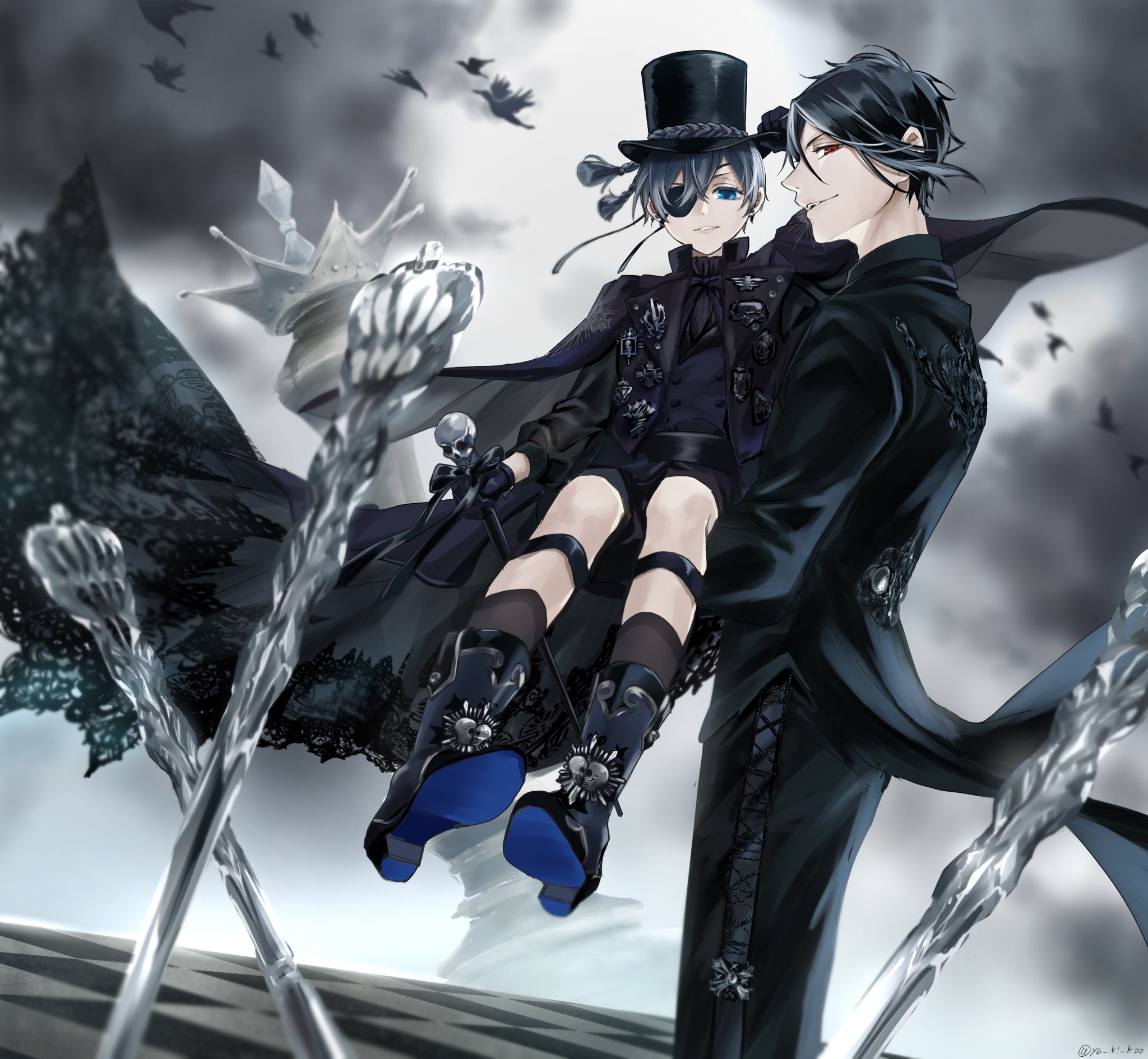
For more than a decade and a half, Yana Toboso’s Black Butler (Kuroshitsuji) has occupied a uniquely enduring throne within the modern animanga pantheon. While lesser gothic narratives have withered into mid-2000s nostalgia, the Faustian saga of Earl Ciel Phantomhive and his impeccably lethal demonic butler, Sebastian Michaelis, has persistently defied creative stagnation. Following the lavish, visually sumptuous adaptation of the Public School Arc, the announcement that CloverWorks is officially bringing the long-revered Emerald Witch Arc to the screen has sent seismic shockwaves through the fandom. This is not merely another episodic diversion for the Queen’s Watchdog; it marks a pivotal, pitch-black turning point in Toboso’s overarching mythos—a descent into Teutonic folklore, psychological trauma, and the weaponized terrors of emerging modern warfare.
Beyond Britannia: Venturing into the Werewolves’ Forest
The Emerald Witch narrative wrenches Ciel and Sebastian out of the familiar, soot-choked cobbles of Victorian London and plunges them into the primordial gloom of southern Germany. Tasked by Queen Victoria with uncovering the cause of a series of mysterious, grotesque deaths afflicting British subjects near the German border, the Phantomhive retinue crosses the English Channel into uncharted narrative territory. Rumors speak of the Wolfsschlucht (the Werewolves’ Forest)—a cursed expanse from which no interloper returns alive, guarded by shapeshifting lycanthropes and governed by an ancient curse that rots the flesh of the impure.
Historically and stylistically, this shift in geography allows Toboso to trade the refined drawing rooms of high-society London for the brooding, Brothers Grimm-esque architecture of Bavaria. Yet beneath the aesthetic veneer of Germanic folklore lies a suffocating, claustrophobic dread. The cursed forest is not merely a setting; it acts as an active, predatory ecosystem engineered to test the limits of both Ciel’s fragile humanity and Sebastian’s demonic omnipotence.
Sieglinde Sullivan: The Tragic Deconstruction of the “Witch”
At the beating heart of this impending tragedy stands Lady Sieglinde Sullivan, the self-proclaimed “Emerald Witch.” Confined to a wheelchair due to a brutal, institutionalized practice reminiscent of historical foot-binding, Sieglinde represents one of the most psychologically complex figures in the entire franchise. Brilliant yet woefully sheltered, she governs her secluded village of superstitious peasants under the impression that her magical incantations and alchemy are the sole ward holding the ravenous werewolves at bay.
A Dynamic of Isolation and Control
Sieglinde’s existence is defined by absolute paternalism and systemic deceit, enforced by her towering, perpetually stern steward, Wolfram Geltzer. Where Sebastian and Ciel’s relationship is governed by transactional cynicism and an explicit Faustian contract, Sieglinde and Wolfram’s bond introduces a far messier, emotionally fraught dynamic of genuine devotion intertwined with horrifying complicity. The impending animated clash between Sebastian’s theatrical perfection and Wolfram’s unyielding martial discipline promises some of the most dynamic choreography the series has ever attempted.
When Supernatural Myth Collides with Industrial Atrocity
What elevates the Emerald Witch Arc from a standard supernatural mystery into a masterwork of gothic fiction is Toboso’s surgical subversion of classic horror tropes. Without venturing prematurely into unsanctioned spoiler territory for anime-only viewers, the true nature of the “forest curse”—the miasma that liquefies lungs and induces madness—strips away romantic folkloric mysticism to expose the hideous vanguard of twentieth-century military science.
The arc functions as a harrowing meditation on how folklore is weaponized by imperialist machinations. By juxtaposing medieval witchcraft with the dawn of chemical warfare, Black Butler interrogates the dark realities of the Industrial Revolution: the realization that the cruellest monsters lurking in the European forests do not possess fangs or claws, but rather beakers, brass valves, and state-sanctioned research grants. It forces the audience—and Ciel himself—to confront the uncomfortable truth that humanity’s capacity for mechanized cruelty dwarfs even the darkest inclinations of Hell.
Demonic Impatience and Ciel’s Dark Night of the Soul
Perhaps the most anticipated aspect of this adaptation is its unflinching excavation of Ciel Phantomhive’s psyche. Confronted with the hallucinogenic horrors of the cursed forest, Ciel does not merely suffer a tactical defeat; he undergoes a catastrophic psychological regression. The trauma of his ritualistic abuse at the hands of the cult that summoned Sebastian resurfaces with paralyzing intensity, rendering the stoic young Earl functionally catatonic.
This regression disrupts the core engine of the series: the power dynamic between master and servant. Sebastian Michaelis is not an empathetic guardian angel; he is a ravenous apex predator playing a protracted game of culinary patience. When Ciel’s aristocratic will crumbles, Sebastian’s facade slips. The animosity, predatory frustration, and cold terror that Sebastian unleashes when his meal threatens to spoil mid-preparation is arguably the most terrifying sequence Toboso has ever penned. Animating this psychological collapse demands nuance, horror-adjacent pacing, and vocal performances of harrowing vulnerability.
CloverWorks and the Gothic Aesthetic Renaissance
Following their celebrated visual stewardship of the Public School Arc, CloverWorks’ continued tenure as the creative engine behind Black Butler is a massive coup for the franchise. The production house proved it could capture Toboso’s exacting eye for period-accurate textiles, opulent Victorian decor, and intricate character designs without sacrificing fluidity or atmospheric weight.
However, the Emerald Witch Arc will demand a completely different visual language. The warm cricket pavilions and sun-drenched cloisters of Weston College must now give way to:
- Muted, oppressive palettes dominated by sickly emeralds, ash greys, and pitch blacks.
- Surreal, hallucinatory dreamscapes reflecting Ciel’s fractured mental state.
- Visceral, fog-drenched creature designs that capture the unsettling uncanny valley of the forest’s guardians.
If the creative team can match the architectural fidelity and kinetic intensity of the source material, this arc could easily stand alongside the Book of Murder and Book of the Atlantic as the zenith of the franchise’s visual legacy.
The Verdict: An Essential Metamorphosis for Black Butler
The confirmation of the Emerald Witch Arc serves as definitive proof that Black Butler has fully transitioned into its mature, prestige era. Free from the non-canon detours that plagued its early anime adaptations, the series is now executing a faithful, ambitious translation of Toboso’s magnum opus. This arc will redefine Ciel and Sebastian’s dynamic, peel back the romanticism of the Victorian era to reveal the industrial nightmares festering underneath, and deliver some of the most emotionally devastating moments in modern dark fantasy.
Are you prepared to enter the Werewolves’ Forest, or do you fear the miasma will claim your soul? Head down to the comments section below and let us know your theories, expectations, and how you think CloverWorks will handle Ciel’s most harrowing psychological trial yet!